

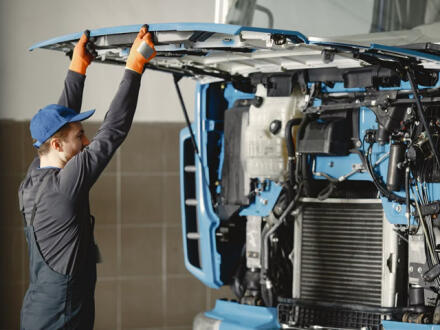
Diesel tech training can lead to steady work, but the cost of classes, tools, books, and transportation adds up fast. In Arkansas, students who want to work on heavy trucks, farm equipment, buses, or construction machines often need a mix of grants, scholarships, and school aid to make the numbers work.
That's where Arkansas diesel mechanic scholarships matter. They can reduce out-of-pocket costs, limit student loan debt, and make it easier for a student to stay focused on shop hours instead of extra job shifts. The good news: scholarship money for this path does not always sit under one perfect label. Some awards say diesel technology. Others fall under career and technical education, workforce training, transportation, agriculture, or general Arkansas student aid.
A student who understands those paths usually has a better shot at building a funding plan. The National Center for Education Statistics has reported that the average price of attendance at public colleges still runs into the thousands each year, even before tool costs and commuting are added. For a diesel student, that can mean a real budget gap.
This guide breaks the search into five practical scholarship paths. It shows where Arkansas high school students, college students, transfer students, and first-year students can look first, what paperwork usually matters most, and how industry-backed awards can connect school funding with future job leads.
1. High School Career And Technical Education Scholarships For Future Diesel Mechanics
High school is often the best time to start the scholarship search, especially for students already taking agriculture, transportation, welding, or shop classes. Many Arkansas diesel mechanic scholarships for high school students are not labeled only for diesel. They may sit inside broader career and technical education funding.
A smart student starts with three places:
- the high school counseling office
- the district career and technical education staff
- local community foundations and state aid programs
That early start matters. The U.S. Bureau of Labor Statistics has projected thousands of diesel service technician and mechanic job openings each year nationwide, largely because of retirements and worker turnover. That steady demand makes workforce training scholarships easier to justify than many students realize.
In Arkansas, a student headed toward diesel technology should also watch for state-level aid that can pair with local awards. For example, broader state support listed through the Arkansas Academic Challenge page can fit into a diesel funding plan even when the award is not trade-specific.
A concrete example helps. If a senior wins a $1,500 local CTE award, stacks a state scholarship, and avoids buying $900 in tools on a credit card, that student starts school in a much stronger spot.
Arkansas Diesel Mechanics Scholarships For High School Students
When students search for Arkansas Diesel Mechanics Scholarships for High School Students, they should think wider than the exact phrase. Good opportunities often appear under terms like technical education, workforce training, skilled trades, transportation, or agriculture mechanics.
High school applicants usually have the strongest results when they can prove three things:
- clear career direction, such as plans to enter diesel technology
- hands-on experience, such as FFA, 4-H, shop class, or part-time work
- local ties, such as service in a county, town, or school district
Community foundations are especially useful here. The Arkansas Community Foundation scholarships page is relevant because local funds often support practical career paths that keep skilled workers in the state.
Students from farm communities can make a strong case. A teenager who has spent 3 summers helping repair tractors, hay equipment, or diesel pickups already has a story that makes sense to scholarship committees. That story is far better than a generic line about "liking engines."
Good application proof can include:
- photos of projects completed in class
- a teacher note about attendance and shop safety
- certifications earned in high school
- exact GPA, class rank, or attendance records
Even a modest $750 award can cover books, safety boots, or a basic socket set. For a first semester, that kind of help is huge.
What To Prepare Before Senior Year Deadlines
Most students wait too long. That is the biggest mistake.
The strongest diesel scholarship applications are usually built 60 to 120 days before deadlines. A student who starts in late summer has time to collect records, ask for letters, and write a short personal statement that actually sounds real.
Before senior deadlines hit, students should gather:
- high school transcript
- attendance record if it is strong
- ACT or placement scores if required
- a simple resume with work, clubs, and shop projects
- 2 recommendation letters
- family financial documents for need-based aid
One practical move is to draft a 250-word statement that explains exactly why diesel work fits. For example: a student may want to maintain school buses, work on heavy equipment used in road construction, or service farm fleets in eastern Arkansas where every downtime hour costs money.
Need-based students should also review broad aid options early. The Arkansas Promise Scholarship can matter for qualifying students because income-based support often decides whether a student enrolls full time or drops to part time.
Counselors regularly say the same thing: students with complete files get considered first. A missing transcript or late letter can sink an otherwise strong application. And in a small local pool, that can be the difference between winning $2,000 and getting nothing.
2. Community College And Technical Institute Awards For Diesel Technology Students
For many students, community colleges and technical institutes are the most direct route into diesel work. They usually cost less than four-year schools, and the training is closer to the job itself: engines, hydraulics, brakes, electrical systems, and diagnostic tools.
That makes Arkansas diesel mechanic scholarships for college especially important at the two-year level. A student may face tuition, lab fees, steel-toe boots, commuting costs, and tool purchases in the same semester. At some schools, starter tools alone can run $800 to $2,500, depending on program requirements.
This path works well for students who want:
- fast entry into the workforce
- lower debt
- transfer options later
- employer connections during school
The best place to start is the financial aid office and the program chair. Diesel technology instructors often know about local employers, trucking companies, equipment dealers, and civic groups that fund small awards not heavily advertised online.
Students should also ask whether aid is tied to:
- GPA after the first term
- credit-hour minimums
- attendance in labs
- tool or textbook reimbursement
A good example is a student who attends a technical program three days a week and works at a repair shop two evenings. If that student lands a $1,200 departmental award plus a $600 local foundation grant, the money might cover both books and the first scan tool fee.
Arkansas Diesel Mechanics Scholarships For College
Students searching for Arkansas Diesel Mechanics Scholarships for College should focus on three buckets: school-based awards, state aid, and local trade-related funds. Most college-level scholarship stacks come from combining small and medium awards, not from waiting on one giant check.
A diesel technology student should ask the school these exact questions:
- Does the program have scholarships only for career and technical students?
- Are there awards for students with financial need?
- Is there aid for students who keep a certain GPA after the first semester?
- Are tool grants available through the department or bookstore?
Transferable state or campus awards also matter. A student heading to a university later may still benefit from aid that starts at the two-year level and frees up cash now. Some Arkansas institutions also run school-specific merit programs, such as the A-State Scholar listing, which shows how broader campus scholarship systems can support students in technical or related fields.
Another practical angle is local workforce demand. Arkansas has large transportation, agriculture, and construction sectors. A diesel student in a county with trucking firms or farm equipment dealers can frame an application around local labor needs. That is persuasive because the scholarship is not just helping one student: it is helping fill a skill gap.
If a student can say, "This program trains me to diagnose diesel fuel systems and reduce equipment downtime for local fleets," that lands harder than vague career goals. Specific beats generic, every time.
3. University And Transfer Funding Options For Advanced Diesel And Related Programs
Not every diesel career starts and ends in a two-year shop program. Some students move into management, engineering support, agricultural systems, fleet operations, or technical education. For them, a university or transfer path can make sense.
This is where Arkansas diesel mechanic scholarships for university come into play. These students may major in fields related to diesel work rather than diesel technology itself. Think operations management, agricultural systems technology, engineering technology, construction management, or transportation logistics.
A transfer student often brings a stronger scholarship profile than expected because they already have college grades, instructor references, and proof they can handle lab work. That matters. According to the Education Data Initiative, transfer pathways can save students thousands compared with starting all four years at a university.
Students should search for:
- transfer scholarships
- college-specific merit awards
- departmental awards in related majors
- scholarships tied to rural service or workforce needs
This path is a good fit for a student who wants to spend 2 years on diesel systems and then move into a role supervising maintenance teams or managing fleet operations across several counties.
Arkansas Diesel Mechanics Scholarships For University
Students looking for Arkansas Diesel Mechanics Scholarships for University should remember one thing: the award may not say "diesel" anywhere. The money might sit under transfer, STEM, agriculture, engineering technology, or campus leadership funding.
At the university level, committees often care about:
- cumulative college GPA
- completion of transfer credits
- leadership in clubs or work
- a clear career plan after graduation
For students from underrepresented groups in science and technical fields, programs such as the Louis Stokes scholarship listing can be relevant when the major connects to technical systems, engineering, or applied science.
Campus awards can help too. The Chancellor's Community scholarship page reflects the kind of institutional funding a transfer student should track while comparing schools.
A solid example is a student who finishes an associate program in diesel technology, then transfers into agricultural systems or engineering technology to work on equipment diagnostics, emissions systems, or fleet planning. That student is still on a diesel career path, just in a wider lane.
University funding can also support internships. One paid summer internship at $18 per hour for 10 weeks can bring in roughly $7,200 before taxes. That can cover a large share of tuition or housing.
When A Related Major Still Supports A Diesel Career Path
A related major supports a diesel career path when it builds skills used in heavy equipment, transportation, fleet maintenance, parts systems, diagnostics, or shop supervision. The title of the degree matters less than the job skills it develops.
Common related majors include:
- agricultural systems technology
- industrial technology
- engineering technology
- supply chain or logistics
- business management for service operations
This matters because modern diesel work is not only turning wrenches. Shops now rely on electronic diagnostics, emissions controls, telematics, inventory software, and technician scheduling. A student who understands both the machine and the operation can move up faster.
For example, a fleet with 42 trucks does not only need a mechanic. It also needs someone who can track preventive maintenance intervals, parts costs, and downtime patterns. A related major can prepare a student for that step.
Students should show the link clearly in essays. Instead of writing, "I want a degree in business," they should write, "I want to manage maintenance operations for commercial diesel fleets and use business training to reduce downtime and labor waste."
That one sentence tells a scholarship committee the plan is real, not random.
4. First-Year Student Scholarships That Reward Early Planning
First-year scholarships often reward organization more than brilliance. Students who apply early, file forms correctly, and meet enrollment steps on time can beat stronger students who simply wait too long.
That is why Arkansas diesel mechanic scholarships for first-year students deserve their own category. A first-year student may qualify for merit aid, need-based aid, placement-based support, campus awards, and program-specific funds all at once.
The first semester is also when costs hit hardest. Many students pay application fees, enrollment deposits, books, tools, and transportation costs within a few weeks. A first-year scholarship can relieve that early pressure.
A practical timeline helps:
- fall: build the scholarship list
- winter: complete state and school aid forms
- early spring: finish essays and references
- late spring: confirm enrollment and housing plans
Students who miss that timing can lose real money. At some schools, a student who files late may miss scholarship pools worth $500 to $5,000 even if they still qualify academically.
Arkansas Diesel Mechanics Scholarships For First-Year Students
Students searching for Arkansas Diesel Mechanics Scholarships for first-year students should look at both admission-based awards and program-related scholarships. First-year money often comes from the school first, then from trade groups and local donors.
This group should pay close attention to:
- admission deadlines
- FAFSA timing if required by the school
- full-time enrollment rules
- orientation or placement requirements
- residency rules for Arkansas aid
School-level awards can be broad but still useful for diesel students. The Arkansas Military Book Scholarships page, for example, shows how category-based support can reduce direct education costs even when the award is not diesel-specific.
Another useful piece is match-based search support. Platforms like StudentScholarships help students sort through awards faster, which matters when many applications take only a few minutes and students are juggling senior-year classes, work, and family obligations.
A good first-year applicant usually has a file with:
- one core essay adapted into several versions
- a short resume with exact dates and duties
- a list of 5 to 10 target scholarships
- copies of transcripts and score reports ready to upload
An example: a student applies to 8 scholarships, wins 2 awards worth $1,000 each, and gets a $750 school grant. That is $2,750 off the first-year bill. For a commuter student, that might cover books, fuel, and a big share of tuition.
Early planning is not flashy. But it works.
5. Association, Industry, And Employer-Sponsored Awards Across Arkansas
Association and employer money is one of the most overlooked parts of the diesel scholarship search. Students often focus on schools and skip the groups that actually hire diesel workers: contractors, equipment dealers, trucking businesses, agriculture organizations, and trade associations.
These awards can be valuable because they are often tied to local labor demand. In plain terms, the group giving the money wants more trained people in the pipeline.
For diesel students in Arkansas, likely sources include:
- construction associations
- transportation and trucking groups
- farm and cattle organizations
- equipment dealerships
- school transportation departments
- local employers offering tuition help
Employer support can be especially strong. A regional shop may offer tuition reimbursement of $1,500 per semester if the student works part time and stays employed after training. That kind of agreement can beat a one-time scholarship.
Some industry awards outside Arkansas can still matter if the student's career path fits heavy equipment or diesel repair. The AGC diesel scholarship listing is a good example of the kind of trade-backed funding students should watch because construction and equipment associations often support diesel training directly.
Arkansas Diesel Mechanics Association Scholarships
When students search for Arkansas Diesel Mechanics Association Scholarships, they should broaden the search to any association linked to diesel-powered industries. Arkansas may not always have one single, easy-to-find scholarship bucket with that exact name. The money may be sitting with related organizations.
Strong places to look include:
- contractor associations
- cattle and farm groups
- school facility or fleet groups
- county and regional foundations
- employers with apprenticeship-style hiring
For example, agriculture-related groups can make sense for students who plan to repair combines, tractors, irrigation engines, or feed-truck fleets. The Arkansas Cattlemen's scholarships page shows how industry-connected aid can still support a student whose future work keeps agricultural equipment running.
Students should also think beyond scholarships and ask employers these questions:
- Do you reimburse tuition after each semester?
- Will you pay for tools after 6 months of work?
- Do you sponsor certifications?
- Can a student shadow technicians before applying?
A concrete scenario: a student works 15 hours a week at a diesel shop, receives a $1,000 employer award, gets used tools from the shop owner, and enters school with direct job experience. That package can be worth far more than the dollar amount alone.
This path has another benefit too. Industry-backed aid often leads to references, internships, and first interviews. In a field built on trust and skill, those contacts matter almost as much as the scholarship itself.
Arkansas Diesel Mechanics Scholarships - Frequently Asked Questions
What types of scholarships are available for Arkansas high school students interested in diesel mechanics?
High school students should explore scholarships labeled under career and technical education, transportation, agriculture, or workforce training. Local community foundations and state aid programs, like the Arkansas Academic Challenge, often provide awards that support diesel career paths.
How can community college students in Arkansas find scholarships for diesel technology programs?
Students should check with their school's financial aid office and program chair for school-based awards, local trade-related grants, and state aid. These scholarships may require maintaining a GPA, lab attendance, or justifying tool and textbook costs.
Are there university scholarships related to diesel mechanics in Arkansas?
Yes, university scholarships may be available under related majors like agricultural systems, engineering technology, or business management. Transfer students often qualify for merit awards and departmental aid tied to workforce needs, like the University of Arkansas Chancellor's Community Scholarship.
What documents should Arkansas diesel mechanic scholarship applicants prepare before applying?
Applicants should gather high school or college transcripts, recommendation letters, a resume of work and projects, test scores if required, and a personal statement explaining their career goals. Early preparation improves chances of securing awards.
How do industry and employer-sponsored scholarships support Arkansas diesel mechanic students?
Associations, contractors, and employers often offer tuition reimbursement, tool grants, and job opportunities. Awards from groups like agriculture or construction associations can connect students to training and future employment, as seen with the Scholarship Application - AGC NYS Diesel Scholarships.
Can first-year diesel mechanic students in Arkansas receive scholarships to offset initial costs?
Yes, first-year students may receive merit and need-based aid including program-specific funds that help cover first-semester expenses like books, tools, and transportation. Timely application and full-time enrollment are often required, with resources such as the Arkansas Promise Scholarship assisting eligible candidates.




