

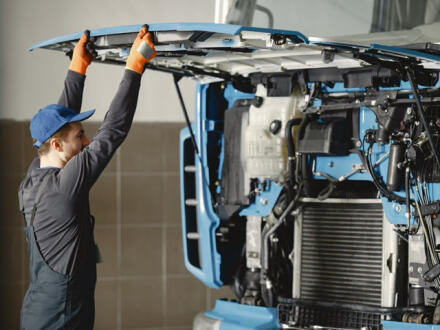
Diesel training is practical, hands-on, and often much faster than a four-year path. But the price can still hit hard once tuition, tools, boots, diagnostic fees, and certification costs stack up. In New Jersey, a student can easily face several thousand dollars in out-of-pocket expenses before landing that first full-time job in a shop or fleet yard.
That's why New Jersey Diesel Engine Mechanic Scholarships matter so much. They can reduce tuition, cover tool kits, and lower the need for loans. And the good news is that students do not have to rely on one big award. Many build a funding plan from school scholarships, state aid, employer support, and smaller local awards.
This guide walks through 10 practical ways students can find funding without wasting weeks on random searches. It covers options for high school seniors, community college students, first-year applicants, and students in related technical programs. It also shows how to build a better application, where to ask for tuition help, and how to combine smaller awards into one solid package.
For students who want a quicker way to sort options, scholarship platforms such as StudentScholarships can help narrow the list by state, field, and eligibility. That saves time. More important, it helps students focus on awards they can actually win.
1. Start With New Jersey Diesel Engine Mechanic Scholarships Offered By Trade Schools
The first place to look is the school itself. Many students skip this step and jump straight to national databases, even though school-based aid usually has fewer applicants and clearer eligibility rules.
A diesel or heavy equipment program may package aid under several names:
- program scholarships
- skilled trades grants
- foundation awards
- equipment or tool stipends
- need-based institutional aid
That matters because a diesel student might not see the word "diesel" in the award title. A scholarship listed under transportation technology or applied mechanics could still fit.
A good rule is simple: ask the admissions office, financial aid office, and program chair the same question. "What funding is set aside for students entering diesel, heavy truck, or power systems training?" Asking all three often turns up different answers.
Here's a concrete example. A school may advertise a $1,000 entrance award on its website, but the department chair may also know about a separate $750 tool voucher funded by a local donor. That extra $750 can cover a torque wrench set, work lights, and safety glasses.
Students should also ask for these details in writing:
- exact deadline
- GPA minimum
- enrollment status requirements
- whether FAFSA filing is required
- whether the award renews each term
Trade schools tend to move fast. Some close scholarship review 30 to 45 days before classes begin, which catches late applicants off guard. Starting with the school gives students the shortest path to real dollars.
2. Target New Jersey Diesel Engine Mechanic Scholarships For High School Students Early
Students in grades 11 and 12 have an advantage that older applicants often lose: time. New Jersey Diesel Engine Mechanic Scholarships for High School Students often reward planning, shop experience, attendance, and local involvement before graduation.
High school counselors, vocational instructors, and automotive teachers usually know which awards repeat each cycle. A student in a county vocational school can also ask whether transportation, welding, agricultural mechanics, or construction awards allow diesel-related plans.
The New Jersey Department of Education supports county vocational and career-focused pathways across the state, which makes high school career offices a strong starting point for leads. In many schools, one counselor may handle 250 students or more, so the student who asks early often gets better direction.
Useful early targets include:
- county education foundations
- local unions and contractors
- civic groups like Elks, Kiwanis, and Rotary
- memorial scholarships through high schools
- state-specific awards for seniors
Some general New Jersey awards can still help a future diesel mechanic. For example, the New Jersey Education Association scholarships and the American Legion Department of New Jersey scholarships may fit students who meet their family or academic criteria.
A strong timeline works like this:
- September: build a list of 15 awards
- October: request 2 recommendation letters
- November: draft the personal statement
- December through February: submit applications in batches
That schedule prevents the last-minute rush that leads to missed signatures, weak essays, and blank activity sections.
3. Compare New Jersey Diesel Engine Mechanic Scholarships For College Students Across Community Colleges
Community colleges are one of the smartest places to search for New Jersey Diesel Engine Mechanic Scholarships for College students. Tuition is usually lower than private trade schools, and many county colleges offer local aid that outside applicants never hear about.
Even when a college does not have a program named "diesel engine technology," it may still support related tracks such as:
- automotive technology
- heavy equipment maintenance
- industrial maintenance
- mechatronics
- transportation logistics
The key is to compare the full cost, not just sticker tuition. One college may charge less per credit but require a $1,200 tool package. Another may cost more upfront but include shop supplies and testing fees.
A simple comparison table helps.
| Cost Area | What To Compare | Why It Matters |
|---|---|---|
| Tuition | Per-credit or program total | Base cost can vary by county and residency |
| Fees | Lab, technology, registration | Fees can add 10% to 18% to the bill |
| Tools | Starter kit or required purchases | Can add $600 to $2,000 |
| Aid | Departmental and foundation scholarships | Often the easiest money to win |
Students should also ask whether unused aid can carry into summer terms. That matters if the program runs year-round.
One practical example: if College A offers a $1,500 scholarship and waives a $350 lab fee, while College B offers no scholarship but has lower tuition by $600, College A still wins by $1,250 overall. Those side-by-side comparisons make better decisions than guesswork.
4. Look For New Jersey Diesel Engine Mechanic Scholarships For University Programs With Related Technical Majors
Not every future diesel mechanic goes straight into a narrow trade-school track. Some students choose a university program tied to engineering technology, operations, or equipment management and then move into diesel diagnostics, fleet maintenance, or service leadership.
That is where New Jersey Diesel Engine Mechanic Scholarships for University searches should widen a bit. A student may qualify through a related major even if the award title does not mention diesel.
Strong related majors include:
- mechanical engineering technology
- industrial technology
- construction management
- agricultural systems technology
- supply chain or fleet operations
This broader search matters because large equipment businesses often want more than wrench skills. They need techs who can read data, manage service schedules, and understand emissions systems. Modern diesel work blends mechanical repair with software and electronics.
A student aiming for a service manager path could use a technical major plus internships at a truck dealership or public works fleet. That combination can make a scholarship essay stand out.
University-based aid can also be bigger. While some trade awards land in the $500 to $2,000 range, technical college foundations sometimes issue awards of $3,000 or more for students with strong grades and a clear career plan.
Students should search these offices, not just the scholarship portal:
- engineering school dean's office
- technology department foundation
- workforce development office
- veterans' services office
One targeted email to each office can reveal 4 or 5 extra opportunities. That is much better than relying on a single campus search box.
5. Prioritize New Jersey Diesel Engine Mechanic Scholarships For First-Year Students Before Enrollment Deadlines
A lot of aid is front-loaded. Schools want to attract new students, so New Jersey Diesel Engine Mechanic Scholarships for first-year students often have the best timing and the least competition from returning students.
The mistake is waiting until after acceptance. By then, some funds are gone.
Students should apply for first-year funding as soon as they have:
- a school list
- a draft essay
- one transcript copy
- one resume
- two references
That small prep packet can cover a big share of applications.
State-based aid should also be part of the plan. The New Jersey Educational Opportunity Fund can support eligible students from educationally and economically disadvantaged backgrounds, and the New Jersey Part-Time Tuition Aid Grant may help county college students who are not enrolled full time.
For official state aid information, students can use HESAA, which manages New Jersey financial aid programs. That matters because application status, document requests, and deadlines can change, and students need the source system.
A practical example: a student who files state aid forms 21 days earlier than classmates may fix a document issue before the deadline, while others lose eligibility over one missing record.
First-year students should also ask whether a scholarship is renewable. A $1,000 renewable award across four terms is really worth $2,000 or more, depending on the program length. That single question can change where the student enrolls.
6. Search New Jersey Diesel Engine Mechanic Association Scholarships And Industry Foundation Awards
Industry money is often the best fit because it comes from people who already understand the job. New Jersey Diesel Engine Mechanic Association Scholarships and foundation awards may favor students entering construction equipment, trucking, agricultural machinery, or heavy repair.
These groups usually want proof that the student plans to stay in the trade. That helps diesel applicants because they can talk about specific goals instead of writing a generic college essay.
A few examples from the wider New Jersey skilled-trades space include the ACCNJ Foundation scholarships, which connect to the construction field, and the AGC NYS diesel scholarships, which are especially relevant for heavy equipment and diesel-focused students in the region.
When students search association funding, they should think beyond the word "mechanic." Useful keywords include:
- diesel technician
n- heavy equipment
- construction trades
- transportation maintenance
- truck service
- equipment dealers foundation
Industry groups often give 2 to 3 awards per cycle rather than hundreds. That sounds small, but the applicant pool can also be tiny. A scholarship with 60 applicants and 3 winners gives a 5% success rate. A local award with 18 applicants and 2 winners gives an 11.1% success rate. That is more than double.
Students should also ask instructors whether tool brands, trucking associations, or equipment distributors sponsor local awards. A quiet $800 industry check can cover certification testing and fuel for commuting to class.
7. Use State Workforce Grants And CDL-Adjacent Training Funds To Expand Your Options
Diesel students should not limit themselves to scholarships alone. Workforce grants, training vouchers, and related transportation funding can fill big gaps, especially for adult learners and part-time students.
This works because diesel training overlaps with sectors that New Jersey regularly supports:
- commercial transportation
- construction equipment
- logistics and warehousing
- public works maintenance
- agricultural operations
A student may not want a CDL job full time, but CDL-adjacent funding can still matter if the training path supports truck, fleet, or equipment maintenance roles. Some programs also support short-term credentials tied to employability.
Students should search county workforce boards, One-Stop Career Centers, and school workforce offices. They should ask one direct question: "Are there grants for transportation, heavy equipment, or technician training that can be used with diesel coursework?"
General New Jersey scholarship pools can also help close smaller gaps. The Community Foundation of New Jersey scholarships may support eligible students through broader educational giving, while the New Jersey Riding into the Future scholarship can be useful for students whose profiles fit that program.
One useful scenario: if tuition is $6,800, a workforce grant covers $3,000, a school scholarship covers $1,500, and a local award adds $750, the remaining balance drops to $1,550. That turns an impossible bill into something a student can handle with part-time work and a payment plan.
And that is the point. More buckets mean more ways to pay.
8. Build A Strong Application Around Hands-On Experience And Career Goals
A diesel scholarship application should feel concrete. Reviewers respond better to real shop details than to broad claims like "they love working with engines."
The strongest applications usually include three things:
- hands-on proof
- clear job goals
- evidence of follow-through
Hands-on proof can come from school shop classes, part-time work, FFA projects, restoring an old pickup, helping on a farm, or maintaining landscaping equipment. Even 120 documented hours fixing small engines or assisting in a bus garage tells a stronger story than vague interest.
Career goals should be specific. "They want to become a diesel technician at a fleet service company, earn brake and electrical certifications, and move into diagnostic work within 3 years" is much stronger than "they want a good job."
A short essay structure works well:
- Explain where the interest started.
- Show what work they have already done.
- Name the training they need next.
- Connect the scholarship to a real cost.
For example, a student might write that a $1,200 award would pay for a starter tool chest, steel-toe boots, and two certification exam fees. That feels real because it is real.
Students should also include numbers anywhere they can:
- GPA: 3.4
- attendance rate: 96%
- volunteer hours: 84
- work hours: 18 per week
Specific facts make the application easier to trust. They also make recommendation letters stronger, because teachers can back up the same numbers.
9. Ask Employers, Dealerships, And Fleet Service Companies About Tuition Support
A surprising amount of tuition help never appears on public scholarship lists. Employers offer it quietly to recruit and keep entry-level techs.
That makes sense. Replacing one skilled technician can cost a company thousands in recruiting, downtime, and training. So a shop may gladly pay part of a student's tuition if it leads to a dependable future employee.
Good places to ask include:
- truck dealerships
n- school bus contractors
- municipal fleets
- construction equipment dealers
- waste management companies
- agricultural equipment shops
Students should not wait for a job posting to mention tuition support. They should ask directly during applications or interviews: "Do you offer reimbursement, tool assistance, or sponsorship for diesel training?"
Some employers cover costs after grades post. Others pay a flat amount like $1,500 per term if the student stays employed 20 hours per week. A few will pay for specific certifications only.
Students with family circumstances may also qualify for broader support options. For instance, the Kids' Chance of New Jersey scholarship helps certain students affected by a parent's serious workplace injury, and other private awards may fit depending on background and employer connections.
A concrete example: if a fleet company pays $2,000 per year and the student earns $18 per hour for 16 hours each week, that package can cover commuting, books, and much of the remaining tuition. It also gives them experience before graduation, which may matter even more than the money.
10. Stack Smaller Awards To Cover Tools, Tuition, Fees, And Certification Costs
Many students wait for one big scholarship and never apply for the smaller ones. That is a mistake. Three or four modest awards can cover more of the real bill than one headline-grabbing check.
Diesel training comes with layered costs:
- tuition
- lab fees
- books
- tools
- uniforms
- safety gear
- certification tests
- transportation
A student who wins $500 for books, $750 for tools, and $1,000 for tuition has already cut $2,250 from the total cost. That can be the difference between attending full time and delaying enrollment.
The best stacking plan is to assign each award a job. One pays tuition. One pays tools. One pays testing. That keeps the student from losing track of where the money goes.
Scholarships That Pair Well Together
The strongest combinations mix different funding types rather than similar awards with the same restrictions.
A smart stack might include:
- one school-based entrance scholarship
- one state aid award
- one industry foundation scholarship
- one local community scholarship
- one employer reimbursement plan
Students with broader eligibility should also scan awards such as the Masonic Charity Foundation scholarships. Even if the award is not diesel-specific, it can still pay a diesel-related expense.
One sample stack could look like this:
| Funding Source | Amount | Best Use |
|---|---|---|
| School scholarship | $1,000 | Tuition |
| Local foundation | $750 | Tools |
| State aid | $1,200 | Fees and books |
| Employer support | $1,500 | Certification costs |
That adds up to $4,450. For many certificate students, that covers a large share of the full cost.
Application Mistakes That Cost Students Funding
Most lost funding comes from small errors, not lack of ability.
Common mistakes include:
- missing the deadline by 1 day
- uploading the wrong transcript
- leaving the intended major blank
- writing one generic essay for every award
- forgetting to sign a form
- failing to explain diesel goals clearly
Students should build one master checklist with every deadline, document, and login. A 15-minute review before submission can save weeks of work.
It also helps to have one adult read the essay for specifics. If the essay does not mention diesel engines, tools, diagnostics, fleet work, or heavy equipment, it is probably too generic. Reviewers can spot that in about 30 seconds.
New Jersey Diesel Engine Mechanic Scholarships FAQs
What types of scholarships are available specifically for New Jersey diesel engine mechanic students?
New Jersey diesel mechanic students can find scholarships offered by trade schools, industry foundations like the ACCNJ Foundation, state programs such as the New Jersey Educational Opportunity Fund, and local community scholarships to help cover tuition, tools, and certification costs.
How can high school students in New Jersey prepare early to qualify for diesel mechanic scholarships?
High school students should start by connecting with vocational instructors and counselors for leads on awards from local unions, county education foundations, and civic groups. Early preparation includes building a list of scholarships, requesting recommendation letters, and drafting personal statements well before deadlines.
Are there scholarship options for college or university students studying diesel engine technology in New Jersey?
Yes, community colleges and universities often offer scholarships for diesel-related or related technical majors like mechanical engineering technology or industrial maintenance. Students should compare financial aid offers carefully and explore department foundation awards in addition to school-wide scholarships.
Can New Jersey diesel engine mechanic students combine multiple smaller scholarships to fund their education?
Absolutely. Many students stack smaller awards from schools, local foundations, state aid like the New Jersey Part-Time Tuition Aid Grant, and employer reimbursements. Assigning each award to specific expenses—tuition, tools, or certification fees—helps manage funds effectively and reduce out-of-pocket costs.
Where can students find state aid programs to support diesel mechanic training costs in New Jersey?
Students can access state-funded programs such as the New Jersey Educational Opportunity Fund and the Part-Time Tuition Aid Grant. Applications and status can be managed through HESAA. These programs help eligible students reduce tuition and fees alongside scholarships.
How important is hands-on experience when applying for New Jersey diesel engine mechanic scholarships?
Hands-on experience is critical. Scholarship committees look for proof like documented work hours in shops, agricultural projects, or apprenticeship, coupled with specific career goals. Detailed applications that connect scholarship funds to real costs and training stand out among others.




