

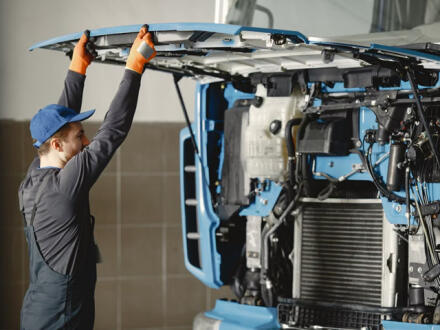
Paying for diesel tech training in Idaho can feel like trying to lift an engine block alone. Tuition, tools, boots, safety gear, and commuting costs add up fast. At many public two-year schools, in-district tuition and fees can still run into the thousands, and that does not count housing or lost work hours.
The good news is simple: Idaho diesel engine mechanic scholarships are not limited to one big state award. Students can stack help from state programs, high school awards, community colleges, trade schools, employers, farm groups, and industry associations. A student who finds three awards worth $1,500 each cuts $4,500 from the bill right away.
This guide gives 10 practical ways to find funding for diesel technology, heavy equipment repair, and related programs. It also covers where high school seniors should look first, how college students can widen their options, and what makes first-year applicants especially competitive.
The focus stays on real places students already touch: school counselors, financial aid offices, dealerships, FFA chapters, trucking fleets, and scholarship search tools. For students who want a faster way to sort options, free match platforms such as StudentScholarships.org can help narrow the list and reduce time spent hunting through dead pages.
For many applicants, the goal is not one perfect scholarship. The goal is building a funding mix that makes diesel school in Idaho cost a lot less.
1. Start With Idaho Career And Technical Education Scholarship Programs
State and career-tech funding should be the first stop because it is often built for Idaho residents and workforce needs. That matters for diesel students. Idaho employers need technicians who can keep trucks, ag equipment, and construction machines on the job instead of sitting in a yard.
A strong starting point is the Idaho Opportunity Scholarship, which can support Idaho students attending eligible schools in the state. State-backed programs usually have clearer residency rules, posted deadlines, and public eligibility details, so students can screen themselves quickly.
Students should ask three direct questions:
- Is the award need-based, merit-based, or both?
- Can it be used at a community college or technical program?
- Does it renew each year or pay once?
A useful benchmark: if a scholarship pays $3,000 and a student wins two similar awards, that can cover a full semester of tuition at some public technical programs. That is a bigger dent than most students expect.
Career and technical education offices also know about smaller local awards that never rank well in search results. Those "quiet" scholarships may attract 25 applicants instead of 400. And that raises the odds.
Students should collect deadlines in one sheet and start at least 90 days early. Missing one upload box or transcript request is one of the most common ways people lose money.
2. Look For Idaho Diesel Engine Mechanic Scholarships For High School Students
Idaho Diesel Engine Mechanic Scholarships for High School Students often hide in places teenagers already know: the counselor's office, FFA, 4-H, SkillsUSA, and local education foundations. Many seniors skip these because they assume diesel scholarships only open after college enrollment. That is not true.
Students involved in agriculture or shop classes should look hard at the GEAR UP Idaho Scholarship and the Idaho FFA Foundation Scholarships. FFA and similar youth programs matter because diesel careers overlap with farm equipment, welding, mechanics, and heavy machinery maintenance.
A high school senior can raise the odds by showing proof of hands-on interest, such as:
- Auto or ag mechanics coursework
- Shop projects, like rebuilding a small engine
- Part-time work at a ranch, repair shop, or equipment yard
- Competition experience in FFA, SkillsUSA, or similar groups
Here is a concrete example. A student with a 3.2 GPA, 140 volunteer hours at county fair events, and one summer spent changing filters and belts on tractors often reads stronger than a student with a slightly higher GPA but no field experience.
Counselors should also be asked about school-specific local funds. A district may have a memorial scholarship worth $750 to $2,000 that gets only a dozen applications. For a student buying a starter tool set, that amount is real money, not pocket change.
3. Target Community College Awards For Diesel Technology Students
Community colleges are one of the smartest places to search for Idaho Diesel Engine Mechanic Scholarships for College. Diesel programs often live inside applied technology divisions, and those divisions may have their own donor funds separate from general academic scholarships.
Students should start with the college financial aid office, then move to the diesel department chair, workforce office, and foundation office. Those are four different doors, and each one may know of different money.
At schools tied to related industries, students can also look at awards such as the Idaho AGC Education Foundation Construction Scholarship. Construction and diesel repair overlap because heavy equipment needs technicians who understand hydraulics, preventive maintenance, and downtime costs.
A practical checklist helps:
- Ask if program-specific scholarships exist for diesel or transportation tech
- Ask if funds cover tools, books, or lab fees
- Ask whether part-time students qualify
- Ask whether GPA minimums are 2.5, 3.0, or higher
One often-missed detail is total cost beyond tuition. A diesel student may spend $900 to $2,500 on tools, gloves, steel-toe boots, and diagnostic supplies, depending on the program. A small $1,000 departmental award can cover gear that federal aid does not fully handle.
Students who email one clean paragraph to a department chair and include their program, start term, and career goal often get better leads than students who only search online.
4. Search Idaho Diesel Engine Mechanic Scholarships For College Students Through Trade Schools And Technical Programs
Trade schools and technical programs often keep scholarship information closer to admissions than to the public website menu. That means students need to ask directly. A five-minute phone call can uncover awards that never show up in big scholarship databases.
For Idaho Diesel Engine Mechanic Scholarships for College, students should contact three offices at each school:
- Admissions
- Financial aid
- Program advising or department staff
This matters because different offices track different money sources. One office may know about grants. Another may know about scholarships funded by a local employer who hires graduates each year.
A useful model is to compare aid packages. If School A offers $2,000 in institutional aid and School B offers $5,500 plus a used-tool stipend, the higher sticker price at School B may still produce the lower final cost.
Students looking beyond standard academic awards can use resources like the AGC NYS diesel award page as an example of how trade-linked scholarship pages are structured. Even when a specific scholarship is outside Idaho, it teaches students what to search for: industry sponsor, award amount, program eligibility, and annual cycle.
A solid search phrase works better than a broad one. "Diesel technology scholarship Idaho technical college" usually returns better results than just "mechanic scholarships." Specific searches save hours and cut clutter.
5. Explore Idaho Diesel Engine Mechanic Scholarships For University Students In Related Programs
Not every future diesel mechanic follows a pure certificate path. Some students choose university programs tied to ag systems, industrial technology, engineering technology, operations, or fleet management. That is where Idaho Diesel Engine Mechanic Scholarships for University can overlap with broader technical funding.
University aid offices can be useful for students who want diesel-adjacent careers in equipment management, service leadership, or field diagnostics. Idaho State University, for example, outlines grants, loans, scholarships, and work-study through its financial aid office.
Students should not assume "university" means "wrong fit." A student interested in running a service department for a farm equipment dealer may benefit from a degree that mixes mechanics with business or operations.
Related scholarships may come from:
- Agriculture departments
- Engineering technology programs
- Rural workforce funds
- Industry memorial scholarships
Here is a real-world angle. A student training for diesel diagnostics plus fleet supervision might earn $2,500 from an ag scholarship, $1,500 from a leadership fund, and $2,000 from a university donor award. None says "diesel mechanic" in giant letters, yet all support the same career path.
Students should match their application language to the program. If the major title is broader, the essay should clearly connect that major to diesel engines, heavy equipment reliability, and Idaho employer demand.
6. Prioritize Idaho Diesel Engine Mechanic Scholarships For First-Year Students
The first year is prime scholarship season. Schools and donors like funding new students because that is when enrollment decisions happen. So Idaho Diesel Engine Mechanic Scholarships for first-year students often have wider eligibility and larger applicant pools, but also more total awards.
A good example of an Idaho-focused early-college option is the Idaho Governor's Cup Scholarship. Awards like this can support students before they settle into a program-specific search.
First-year applicants should move fast on these tasks:
- File financial aid forms as early as possible
- Request transcripts before holiday or graduation bottlenecks
- Ask two recommenders at least 30 days ahead
- Write one core essay and adapt it for each application
Timing matters. A student who submits six polished applications in October often beats a student who sends two rushed applications in March.
A clear budget helps too. If tuition is $4,800, tools are $1,400, books are $600, and transportation is $1,200, the total need is $8,000. That number gives the student a target. It also helps in essays because donors can picture exactly what their money covers.
Why First-Year Applicants Often Have A Wider Scholarship Pool
First-year students can apply to both general freshman scholarships and trade-specific awards. That is a wider pool than many second-year students realize.
Schools also use scholarships to improve yield, which means they want accepted students to enroll. In plain terms, money is sometimes strongest right when a student is deciding where to go.
Another reason is donor preference. Some awards are written to support "students beginning postsecondary study," which shuts out transfer and returning applicants. A senior who starts searching in the fall can tap those funds before the pool shrinks.
One student applying to 12 first-year awards at an average of $1,250 each is not chasing fantasy money. That is a $15,000 opportunity set on paper, even if the student wins only a fraction of it.
7. Check With Dealerships, Trucking Companies, Farms, And Heavy Equipment Employers
Employers are one of the most overlooked sources of diesel school funding. Dealerships, trucking fleets, farm operations, and heavy equipment companies all lose money when equipment sits idle. A technician who can diagnose fuel, electrical, and hydraulic issues quickly has real value.
That is why students should ask employers about:
- Tuition reimbursement
- Tool allowances
- Apprenticeship pay
- Scholarships for employees or employees' children
- Work commitments after graduation
An employer-sponsored award can be more practical than a generic scholarship. For example, a local truck shop may offer $2,000 for tuition plus 20 paid hours per week in the shop. At $18 per hour, that work adds roughly $360 per week before taxes. Over 12 weeks, that is about $4,320 in wages on top of the scholarship.
Farm groups matter too, especially in Idaho counties where agriculture drives equipment demand. Students active in livestock, row crop, irrigation, or farm service work should ask local cooperatives and carry out dealers whether they support students entering diesel careers.
A short script works well: state the program, expected start date, and interest in returning to work locally. Employers respond better when they hear a path back to the region. Hiring is expensive, and local loyalty can be a strong selling point.
8. Review Idaho Diesel Engine Mechanic Association Scholarships And Industry Foundation Awards
Industry associations can be gold for students who fit a narrow lane. Idaho Diesel Engine Mechanic Association Scholarships may not always use that exact wording, so students should search by related sectors: construction, trucking, agriculture, contractors, equipment dealers, and workforce foundations.
One useful example from Idaho's agriculture side is the Idaho Friends of 4-H College Scholarship. Another broad workforce-related option is the Idaho Power Company Memorial Scholarship. Neither is a pure "diesel mechanic only" award, but both can fit students whose goals connect to technical work, rural communities, or industry support.
Why do association awards matter? Because they often have smaller, more qualified applicant pools. A national scholarship with 3,000 applicants is a long shot. A state or sector award with 60 applicants is a different game.
Professional Associations And Industry Groups To Watch
Students should monitor these categories:
- Associated General Contractors chapters and foundations
- FFA and 4-H related groups
- Trucking associations
- Equipment dealer associations
- Farm bureaus and commodity groups
A smart move is to search each group's site for "scholarship," "foundation," and "workforce." Then set a monthly reminder. Many scholarships open on the same cycle every year, and the student who remembers that pattern saves a lot of scrambling later.
9. Build A Strong Application With Hands-On Experience And Career Goals
A weak application says, "I like engines." A strong one says exactly what the student has done, what the student plans to do, and why the training matters in Idaho. Specificity wins.
Hands-on proof can include:
- Rebuilding a small diesel or gas engine
- Logging 120 hours in a farm shop
- Shadowing a fleet mechanic for 8 Saturdays
- Completing welding or ag mechanics coursework
- Fixing hydraulic hose failures during harvest
Numbers make the story believable. "Helped maintain 14 tractors and 3 combines during fall harvest" is stronger than "worked on farm equipment." The reader can picture grease on gloves, dust in the air, and a machine that has to be ready by sunrise.
Career goals should also be direct. Instead of saying "work with engines," the student can say: "They plan to become a diesel technician for a heavy equipment dealer in southern Idaho and earn manufacturer certifications within 24 months." That gives donors a target.
Recommendation letters matter more when the recommender can mention behavior under pressure. A shop teacher noting that a student stayed after class for 17 sessions to finish a brake job says a lot.
Students using scholarship platforms can speed up discovery and applications. On StudentScholarships.org, many opportunities are organized to reduce search friction and save time that can be spent improving essays instead.
10. Use Scholarship Search Platforms To Find New Idaho Opportunities Faster
Scholarship platforms help students find fresh leads without opening 40 browser tabs. That matters because deadlines move, pages disappear, and smaller awards are easy to miss.
The best method is not "search once and hope." It is search, save, filter, repeat. Students should set alerts for diesel, mechanic, technical, Idaho, agriculture, heavy equipment, and skilled trades.
A few good search habits make a big difference:
- Filter by state residency and major or career field
- Save every deadline in one spreadsheet or phone reminder
- Reuse one base résumé and one base essay
- Recheck platforms every 2 weeks
Students who want a broad mix of local and national options can use pages like the Idaho Turn Around Scholarship Fund and the Idaho Pointe Pest Control Scholarship as reminders that useful funding is not always tied to the exact major name.
University-bound students can also compare campus aid pages. Boise State's financial aid and scholarships explain core aid types and application steps, which helps students line up institutional aid with outside scholarships.
A student who spends 45 minutes every other Sunday updating applications will usually beat the student who tries to do everything in one exhausting weekend. Small, steady effort finds more money.
Idaho Diesel Engine Mechanic Scholarships - Frequently Asked Questions
What scholarships are available specifically for Idaho diesel engine mechanic students?
Idaho diesel engine mechanic students can explore scholarships such as the Idaho Opportunity Scholarship, Idaho FFA Foundation Scholarships, and awards from community colleges and trade schools like the Idaho AGC Education Foundation Construction Scholarship. Many programs also offer funding for tools and gear, reducing overall training costs.
How can high school students in Idaho qualify for diesel mechanic scholarships?
High school students should engage in relevant activities like FFA, 4-H, SkillsUSA, or agricultural mechanics coursework. Demonstrating hands-on experience such as rebuilding small engines or working at repair shops significantly improves scholarship chances. Options include the GEAR Up Idaho Scholarship and local school foundation awards.
Where should college students look for diesel technology scholarships in Idaho?
College students should start with their community college’s financial aid and diesel program offices. Trade schools often have dedicated scholarships linked to industry employers. For example, students can apply for the Idaho AGC Education Foundation Construction Scholarship or employer-sponsored awards that may include tuition reimbursement and tool allowances.
Are there scholarship opportunities at Idaho universities for students pursuing diesel-related careers?
Yes, students can find scholarships through university programs related to agriculture, industrial technology, or fleet management. These scholarships often support technical and leadership development, such as awards from agricultural departments or the Idaho Power Company Memorial Scholarship. Aligning essays with diesel and heavy equipment career goals helps leverage these funds.
Why should first-year diesel mechanic students in Idaho prioritize applying for scholarships early?
First-year applicants have access to a broader pool of scholarships, including general freshman awards like the Idaho Governor's Cup Scholarship. Early and thorough applications increase chances of winning multiple awards, building a funding mix to offset tuition and equipment costs effectively.
How can students find new Idaho diesel mechanic scholarship opportunities more efficiently?
Using scholarship search platforms and setting alerts for keywords like 'diesel,' 'mechanic,' and 'Idaho' helps students discover fresh awards regularly. Maintaining a spreadsheet of deadlines and reusing base essays and résumés streamlines applying. Platforms like StudentScholarships.org host listings such as the Scholarship Application - AGC NYS Diesel Scholarships for expanded search results.




