

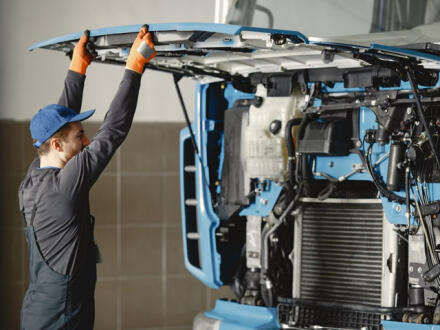
Paying for diesel training in Hawaii can feel rough at first. Tuition, tools, books, safety gear, and transportation can add up fast, especially for students who are still in high school or just starting college.
The good news is that Hawaii diesel engine mechanic scholarships do exist, even when they are not labeled with the exact word "diesel." A lot of useful funding sits inside broader career and technical education awards, transportation scholarships, community foundation programs, and skilled-trades grants. That means students who want to work on heavy equipment, trucks, buses, marine engines, or fleet vehicles often have more options than they think.
This guide breaks down 6 practical scholarship and funding paths that Hawaii students should put on their list. It covers local foundation awards, community college support, high school transition scholarships, first-year student aid, association-backed funding, and national trade scholarships that can still be used in Hawaii.
The goal is simple: help students find money that actually fits their path. A diesel student might need $1,200 for tools, $3,500 for tuition gaps, or enough aid to cut part-time work from 20 hours a week to 8. Even a smaller award can make a real difference when lab fees and living costs hit all at once.
For students comparing options, the smartest move is to apply broadly, stay organized, and treat diesel scholarships like a numbers game with strategy behind it.
1. Hawaii Community Foundation Scholarships With Career And Technical Education Options
The Hawaii Community Foundation is one of the strongest starting points for students searching for Hawaii diesel engine mechanic scholarships. Even when an award is not named after diesel repair, it may still support career and technical education, workforce training, or students attending two-year programs.
The biggest reason this path matters is volume. Community foundations often manage dozens of scholarship funds through one application system, which gives students more chances with less repeated paperwork. That matters when a student is balancing classes, work, and financial aid forms.
A practical example: a diesel student needing $2,850 for tuition and shop fees may qualify for a general career award, a donor-specific local scholarship, and a need-based education fund all in the same cycle. That stack can cover more than one bill.
Students should pay close attention to these common filters:
- Hawaii residency
- Financial need
- Community service
- Trade or technical education goals
- School location or island preference
A broad search often works better than waiting for a scholarship with "diesel mechanic" in the title. The platform listing for Hawaii Community Foundation awards can help students spot programs that line up with technical training goals.
Another useful local example is the Hawaii State FCU scholarship, which shows how Hawaii-based organizations often support students across practical career paths, not only four-year academic majors.
Why These Awards Matter For Hawaii Trade-Bound Students
These awards matter because trade students often face costs that look different from university costs. A diesel student may need:
- Steel-toe boots for lab work
- Hand tools costing $600 to $1,800
- Program fees for shop access
- Gas money for commuting to campus or job sites
That makes flexible scholarship money especially valuable. A student who receives $1,500 may not wipe out full tuition, but that same amount can cover starter tools and let them begin training on time instead of delaying a semester.
There is also a strong workforce case behind this path. The U.S. Bureau of Labor Statistics reports median annual pay of $60,640 for diesel service technicians and mechanics. For students who want solid earnings without a long university track, that number makes scholarship hunting worth the effort.
For Hawaii trade-bound students, the best move is to treat community foundation awards as a base layer. They are broad, local, and often more realistic than hyper-specific scholarships with only one winner.
2. University Of Hawaii And Community College Diesel Program Scholarships
For students already enrolled, or planning to enroll, this is one of the most direct paths to Hawaii Diesel Engine Mechanic Scholarships for College. The University of Hawaii system and community colleges may offer institutional aid, department-level support, and campus foundation scholarships that can be used for diesel or transportation-related study.
Many students miss this because they only search public scholarship databases. But schools often keep smaller awards in program offices, financial aid pages, or campus foundation listings. A $900 department award and a $2,100 need-based grant can do real work when combined.
Students interested in diesel technology should ask three exact questions:
- Are there scholarships tied to transportation, automotive, or applied trades?
- Are there scholarships only for current students after the first term?
- Are there emergency completion grants for students close to finishing?
This matters because retention aid is common. Schools would rather help a student stay enrolled than lose that student over a $700 unpaid balance.
Institution-based research also helps students compare related fields. Listings like AFCEA Hawaii STEM scholarships show how some funding pools support technical learners beyond classic academic majors.
For students using a scholarship search platform, scholarship listings can surface trade-friendly options faster than manual searching across many campus pages.
Best Fits For Hawaii Diesel Engine Mechanic Scholarships For College
The best fits usually include students in certificate, associate, or career-pathway programs tied to diesel repair, fleet maintenance, transportation systems, or heavy equipment service. This is where Hawaii Diesel Engine Mechanic Scholarships for University and community college funding can overlap.
Strong-fit applicants often have:
- A declared technical major
- A GPA of 2.5 or higher
- FAFSA or other need documentation
- A short statement with a job goal like transit fleet mechanic or heavy equipment technician
Specificity helps. "They want to work with engines" is weak. "They want to maintain municipal bus fleets and earn ASE certifications within 18 months" is much stronger.
One concrete example: a student attending a community college diesel-related program who spends 14 hours each week in labs can explain why outside work hours need to drop. That connects the scholarship request to program success.
College applicants should also ask whether tool allowances, transportation stipends, or book awards are available. Some campuses do not advertise these widely. And those smaller awards can close the exact funding gap that blocks registration.
3. High School To Trade School Scholarships For Future Diesel Mechanics In Hawaii
This is the path many students should start building before graduation. Hawaii Diesel Engine Mechanic Scholarships for High School Students often appear through school counseling offices, local nonprofits, credit unions, memorial funds, and community organizations that support workforce training.
The timing matters. A senior who starts in the final 30 days before deadlines will miss a lot of options. A senior who starts 4 to 6 months earlier can line up transcripts, recommendation letters, and a clean personal statement without panic.
High school students aiming for diesel careers should not limit themselves to mechanic-only awards. Scholarships for technical education, vocational training, and local workforce development can still apply. The student's job is to make the fit obvious.
That means their essay should include real details such as:
- The type of engines they want to work on
- The training program they plan to enter
- The cost of tuition, tools, or commuting
- A local need, such as fleet, trucking, construction, or marine maintenance
A student who writes, "My program starter tool list costs $1,340, and my round-trip commute is 26 miles," sounds prepared. That is stronger than generic passion talk.
Community-based awards outside diesel can still help. Programs such as the Hawaii Korean Chamber scholarships show how local groups often back students with clear career goals.
Where Hawaii Diesel Engine Mechanic Scholarships For High School Students Usually Come From
Most of these scholarships come from local sources, not huge national brands. That is good news, because smaller local pools often mean fewer applicants.
Common sources include:
- High school senior awards nights
- Island community foundations
- Credit unions and local banks
- Trade associations
- Family memorial scholarships
- Civic clubs and chambers of commerce
A useful comparison helps here. A national scholarship may draw 5,000 applicants for one award. A local scholarship from a community group may get 42 applicants for three awards. The odds are simply better.
Students can also widen the net by looking at neighboring technical fields. For example, the Frank Der Yuen Hawaii aviation scholarship reflects how transportation and mechanical career funding may exist outside diesel labels but still reward students with hands-on training goals.
Counselors, shop teachers, and career coordinators are often the best first stop. They usually know which scholarships favor practical career plans, strong attendance, or students staying in Hawaii for training.
4. First-Year Student Scholarships For Diesel, Transportation, And Skilled Trades
First-year students sit in a useful middle spot. They are no longer high school seniors, but they also have not yet exhausted campus aid options. That makes Hawaii Diesel Engine Mechanic Scholarships for first-year students worth a separate search.
A lot of scholarships split students by academic stage. Some are only for incoming freshmen. Others open after a student completes 12 credit hours or one term in good standing. So first-year students should apply in both categories when the rules allow it.
This stage is also when students can prove momentum. A first-semester transcript with a 3.1 GPA, solid attendance, and instructor comments from the shop carries more weight than a vague plan written in high school.
The most useful first-year funding buckets are often:
- Retention scholarships
- Major-specific awards
- Need-based completion grants
- Transportation and industrial technology scholarships
Some related Hawaii scholarship listings can help students think laterally. The Hawaii Land Surveyors scholarship is a reminder that industry-tied aid often exists for hands-on career tracks, even if the field is adjacent rather than identical.
How To Target Hawaii Diesel Engine Mechanic Scholarships For First-Year Students
First-year students should build a short application file and reuse it smartly. That file should include:
- A 120-word bio
- A 350-word personal statement
- One resume
- One unofficial transcript
- One budget showing costs like tuition, tools, and fuel
That budget matters more than people think. If a student shows a $4,420 gap after grants and family help, scholarship committees can picture the problem clearly.
The strongest first-year applications usually do three things:
- They show commitment with attendance, grades, or lab progress.
- They explain the career outcome in plain language.
- They connect the award to a specific expense.
A sharp line sounds like this: "This scholarship would cover my diagnostic meter set and lab fees, which total $780." That is concrete. It sticks.
Students should also ask whether the school has foundation awards that open after the first term. Many do. Those smaller awards may range from $500 to $2,500, and that is enough to keep momentum going when the first-year budget gets tight.
5. Association, Union, And Industry-Sponsored Awards For Diesel Students
This category is often overlooked, which makes it valuable. Hawaii Diesel Engine Mechanic Association Scholarships may come from trade groups, labor organizations, contractor associations, equipment groups, and employers tied to transportation or construction.
These awards can be a strong fit because the sponsor already understands the field. A committee made up of industry people knows that diesel students need socket sets, torque tools, coveralls, and time in the lab. They do not need a long speech about why hands-on work matters.
In some cases, the award can also come with a hiring pipeline. A student who wins $2,000 from an industry group may also gain an internship contact, a mentor, or early access to apprenticeship openings. That is worth as much as the money sometimes.
This path works especially well for students interested in:
- Heavy equipment repair
n- Truck fleet service
- Construction machinery
- Marine diesel work
- Public transit maintenance
A useful example is the AGC diesel scholarship application, which shows the kind of industry-backed support diesel students should watch for even outside their immediate state search.
How To Find Hawaii Diesel Engine Mechanic Association Scholarships
Students usually find these awards by searching the sponsor first, scholarship second. Instead of typing only "diesel scholarship," they should search combinations like:
- Hawaii contractors association scholarship
- Hawaii transportation scholarship
- Hawaii equipment dealer student award
- union training scholarship Hawaii
That search method works because many industry groups file scholarships under "education," "workforce," or "foundation," not under "diesel."
Another smart move is to review related professional fields. For instance, the Hawaii Education Association scholarships and the Hawaii Chapter ASLA scholarship are not diesel awards, but they show how Hawaii associations structure member-backed scholarship programs.
A concrete strategy helps here. Students can build a sheet with 25 organizations, then track deadline, amount, eligibility, and contact name. Even if only 8 of 25 end up being a match, that is still a strong list.
Industry scholarships often favor students who can state exactly where they want to work. "They want to stay on Oahu and service municipal fleets" is memorable. It sounds like someone an employer could hire.
6. National Skilled Trades Scholarships Hawaii Students Can Use For Diesel Training
Students should not stop at Hawaii-only funding. National skilled trades scholarships can still be used by Hawaii residents if the rules allow accredited trade schools, community colleges, or diesel technology programs in the state.
This matters because national trade funds can be larger. A local award might be $500 to $1,500. A national skilled-trades scholarship may be $2,500, $5,000, or more. One good application can cover a full term, tool package, or major chunk of living costs.
The catch is competition. National programs often ask for cleaner essays, stronger transcripts, and more complete documentation. Students need to show that they are serious, not just curious.
The best national-fit applications usually include:
- A clear trade goal
- A realistic training budget
- Work or volunteer history
- Strong attendance or GPA
- A short explanation of why diesel is the right path
A student who writes that they spent 180 hours helping in a family repair yard or school shop stands out. That detail feels real.
Another reason to apply nationally is flexibility. Some scholarships support broad skilled trades, transportation technology, or industrial maintenance. Diesel students can fit those categories well if they explain the connection plainly.
When comparing local and national options, students should apply to both. Local awards may offer better odds. National awards may offer bigger dollars. The strongest funding plan mixes the two.
One last tip: students should keep a master file with essays, proof of residency, transcripts, and cost sheets. Reusing those materials can cut application time from 90 minutes down to 20 minutes per scholarship, which makes it easier to submit 12 solid applications instead of 3 rushed ones.
Hawaii Diesel Engine Mechanic Scholarships FAQs
What types of scholarships are available for diesel engine mechanic students in Hawaii?
Hawaii offers scholarships through community foundations, community colleges, high school programs, industry associations, and national skilled trades funds. These awards often support technical education, tool purchases, tuition gaps, and transportation costs to help diesel students financially.
How can high school students in Hawaii prepare to apply for diesel mechanic scholarships?
High school students should start early, gathering transcripts, recommendation letters, and writing detailed personal statements about their diesel training goals, tuition needs, and specific programs. Applying broadly to local awards through counseling offices and community groups increases their chances.
Are there specific scholarships through Hawaii community colleges or the University of Hawaii for diesel mechanics?
Yes, both community colleges and the University of Hawaii offer institutional and department scholarships for applied trades, transportation, and diesel technology programs. Students can inquire about support for tuition, tools, and retention aid to stay enrolled.
Can industry associations and unions in Hawaii provide scholarships for diesel mechanic training?
Industry groups, unions, and contractor associations often sponsor scholarships for diesel students, particularly those working with heavy equipment, truck fleets, or marine engines. These awards may also offer mentorships, internships, or apprenticeship opportunities alongside financial support.
What benefits do national skilled trades scholarships provide to Hawaii diesel students?
National scholarships often offer larger awards than local funds and support broad technical careers including diesel repair. Though competition is higher, these can cover significant tuition or tool costs and increase a student's financial stability during training in Hawaii.
How should first-year diesel mechanic students approach scholarship applications in Hawaii?
First-year students should apply early and maintain strong attendance, grades, and clear career goals. A concise application with transcripts, budget showing tuition and tool needs, and a personal statement can improve chances for retention scholarships and major-specific awards.







