

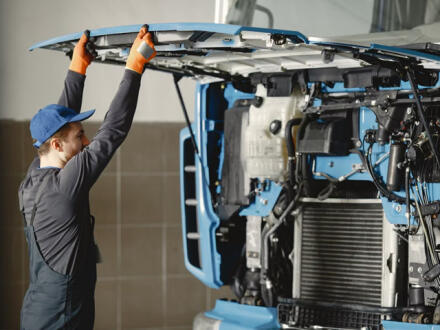
Training for diesel work in Alaska can lead to solid pay, steady demand, and hands-on careers in trucking, heavy equipment, marine service, mining, and remote power systems. But the bill for school can hit hard fast. A one-year certificate might cost several thousand dollars before tools, boots, fuel, and housing even show up on the budget.
That's why Alaska Diesel Engine Mechanic Scholarships matter so much. The right mix of local awards, school aid, trade-group funding, and first-year grants can cut a big chunk off the total cost. For one student, a $2,000 award might cover tools and safety gear. For another, stacking three smaller awards could wipe out an entire semester.
This guide breaks the search into 7 practical moves. It focuses on scholarships for high school seniors, first-year students, college programs, university routes, and industry-backed awards that many applicants miss. The goal is simple: help students find real money, apply earlier, and make stronger applications without turning the process into a second full-time job.
1. Start With Alaska-Specific Scholarships For Diesel And Skilled Trades Students
Students usually do best when they begin close to home. Alaska-specific scholarships often have a smaller applicant pool than national awards, which can improve the odds right away.
That matters in skilled trades. A national scholarship may draw 5,000 applicants, while a local or Alaska-based fund may draw a fraction of that. Even a $1,500 award can cover a term of books, a diagnostic meter, or part of a housing payment in a training town.
A smart first pass should include scholarships tied to:
- Alaska residency
- Skilled trades or workforce training
- Construction, transportation, or equipment repair
- Rural community service
- Employer-connected training paths
Students can build an early list from broad Alaska funds that may fit diesel, heavy equipment, or related technical training. For example, the Harry H. Hirshik award supports Alaskan students, and the AGC Alaska program is worth checking for applicants interested in construction and equipment-focused careers.
They should also think wider than the exact phrase "diesel mechanic." Many funds sit under labels like industrial technology, workforce development, heavy equipment, engineering support, transportation, or construction trades.
A simple tracking sheet helps. Useful columns include:
- Award amount
- Deadline
- GPA minimum
- Alaska residency rule
- Program type accepted
- Essay required
- Renewal option
A student with 12 applications at $1,000 each is not guaranteed money, of course. But that list creates more realistic odds than waiting for one "perfect" diesel scholarship to appear.
2. Look For Alaska Diesel Engine Mechanic Scholarships For High School Students
The biggest mistake high school students make is waiting until spring of senior year. By then, some of the best local money is already gone.
Alaska Diesel Engine Mechanic Scholarships for High School Students often sit inside broader state and career-readiness awards. Strong candidates are students who already show a pattern: shop classes, welding, auto tech, FFA, SkillsUSA, part-time repair work, or family experience with trucks, boats, or equipment.
One of the clearest Alaska starting points is the Alaska Performance Scholarship. It rewards students who prepare early in high school and can often pair well with other funding. For students from utility-service communities, the AVEC scholarship may also fit technical and workforce goals.
High school applicants should gather proof that shows they are serious about diesel work:
- Shop or CTE course transcripts
- Teacher recommendation from welding, mechanics, or math
- Photos of projects, if allowed
- Work hours from a garage, fleet yard, or family business
- A short resume with tools and equipment used
Concrete details help a lot. "Interested in engines" is weak. "Rebuilt a snowmachine carburetor, changed injectors on a pickup, and logged 146 hours helping in a maintenance shop" is much stronger.
Counselors and CTE teachers can also point students toward local awards that never show up in big search tools. That includes co-op, union, and community foundation funding tied to career training.
Build A Shortlist Before Senior Year Deadlines
The best time to build a shortlist is before the final year starts. A student who creates a list in late summer can beat deadlines that hit early in the school year.
A practical shortlist should have 10 to 15 scholarships split into three buckets:
- 3 reach awards with tougher competition
- 5 solid-match awards tied to Alaska, trades, or academics
- 4 to 7 local awards with smaller pools
That spread matters. If each application takes 45 to 90 minutes, a 12-scholarship plan is still manageable across several months.
Students should also pre-write three reusable pieces:
- A 150-word career goal statement
- A 300-word story about hands-on experience
- A short paragraph on why Alaska needs diesel technicians
Those drafts save hours later. On a free search platform such as StudentScholarships.org, students can sort through broad scholarship options and keep building a list without paying a fee.
3. Target Alaska Diesel Engine Mechanic Scholarships For First-Year Students
A lot of students assume scholarships mostly go to seniors in high school. That's not true. Alaska Diesel Engine Mechanic Scholarships for first-year students can be some of the most useful because they arrive right when tuition bills turn real.
First-year applicants should search four places at once:
- The school's financial aid office
- Departmental or program awards
- Alaska workforce and foundation scholarships
- Trade and employer-sponsored awards
This matters because first-year costs often include more than tuition. A diesel student might face $5,400 in tuition, $1,100 in tools, $420 in boots and gear, and $900 in transportation over a term. A scholarship that looks "small" on paper can still close a painful gap.
Students interested in technical or engineering-adjacent paths can also review Alaska-based funds such as the Alaska Engineering Education Foundation awards. Even when a scholarship is not labeled diesel, it may still fit a program tied to machinery, maintenance, or applied technology.
The first-year search also works better when students ask direct questions. Good ones include:
- Does this award cover certificate students?
- Are less-than-full-time students eligible?
- Can tools or required equipment count in the cost of attendance?
- Is there a separate application for program scholarships?
At schools with formal aid support, the UAA financial aid office explains how students can access grants, scholarships, and other aid channels. That matters for diesel students because many awards stack better when the base aid file is already complete.
Prioritize Awards That Renew Beyond Year One
A renewable scholarship can beat a larger one-time prize. Students should always calculate the total value across the whole program, not just the first term.
For example:
- $1,500 one time = $1,500 total
- $1,000 renewable for 2 years = $2,000 total
- $750 per term for 4 terms = $3,000 total
That math changes decisions fast.
Applicants should look for renewal rules such as:
- Minimum GPA, often 2.5 or 3.0
- Satisfactory progress in the program
- Full-time or half-time enrollment
- Continued Alaska residency
- Annual FAFSA or school aid renewal
When students compare Alaska Diesel Engine Mechanic Scholarships for first-year students, the better question is not "Which one is biggest?" It is "Which one keeps paying while they finish training?"
A certificate or associate student who keeps a renewable award plus one local trade scholarship may reduce borrowing far more than someone chasing only a flashy one-time check.
4. Compare Alaska Diesel Engine Mechanic Scholarships For College Programs
Not every diesel path runs through the same kind of school. Some students choose a short certificate. Others go for an associate degree with more theory, troubleshooting, and electrical systems work. That means Alaska Diesel Engine Mechanic Scholarships for College should be compared against the exact program type.
A clear comparison helps students avoid applying for money that won't actually pay their bill. Some awards only work at degree-granting colleges. Others allow technical certificates, workforce credentials, or community college training.
Here's a simple way to compare options:
| Program path | Typical length | Best scholarship fit | Common extra costs |
|---|---|---|---|
| Certificate | 9 to 12 months | Workforce, trade, employer, local awards | Tools, safety gear, transport |
| Associate degree | 2 years | College aid, state awards, foundation funds | Tuition, fees, books, labs |
| Applied technology track | 2 years or more | Departmental, engineering-adjacent, industry awards | Math courses, software, equipment |
The Bureau of Labor Statistics lists $60,640 as the median annual wage for bus and truck mechanics and diesel engine specialists. That number is useful because it gives students a rough way to weigh program cost against earning potential.
Focus On Certificate, Associate, And Community College Pathways
Certificate and community college routes often make the most financial sense for students who want to work sooner. A student who completes a 10-month program and starts earning faster may come out ahead even if a university option sounds bigger on paper.
When comparing Alaska Diesel Engine Mechanic Scholarships for College, students should sort awards by pathway:
- Certificate-friendly awards for fast entry into the field
- Associate-degree awards for broader technical training
- Community college funds for local or commuter students
They should also check whether related scholarships can apply to diesel-adjacent programs. The EMC Engineering award is one example of a fund that may fit students on technical routes connected to machinery or applied engineering.
A good rule: if the program teaches engines, hydraulics, electrical diagnostics, preventive maintenance, or fleet repair, it may qualify under more scholarship categories than the title suggests.
That broader view is often what turns a short list of 3 diesel scholarships into a workable list of 15 to 20 funding options.
5. Search For Alaska Diesel Engine Mechanic Scholarships For University Options
Not every diesel student wants a shop-only route. Some want a university path that connects diesel systems to mechanical engineering, fleet management, transportation systems, logistics, or heavy equipment operations.
That's where Alaska Diesel Engine Mechanic Scholarships for University come in. These awards may not use the exact diesel label, but they can still support students who plan to work with engines, power systems, maintenance planning, or industrial equipment after graduation.
University searches should include:
- Engineering scholarships
- Transportation and logistics funds
- Rural workforce awards
- Energy and infrastructure scholarships
- Industry-supported academic grants
Students from Alaska sometimes overlook broader regional funds that support technical careers tied to infrastructure. The Sven & Lorraine Eriksson Alaska Fund can be part of that wider search strategy.
A university path can cost more. One student might face $8,700 in tuition and fees, plus housing, books, and travel. So the scholarship search needs to be broader too.
And there's another angle: employers in remote and equipment-heavy sectors often value graduates who can mix theory with field reality. A student who understands diagnostics, thermodynamics, and maintenance planning may move faster into lead tech or supervisor roles.
Check Engineering, Transportation, And Workforce-Development Funds
This is where students win by using related keywords instead of only "diesel mechanic." University aid offices may file awards under categories like:
- Applied science
- Engineering technology
- Petroleum and energy support
- Transportation systems
- Workforce development
That makes Alaska Diesel Engine Mechanic Scholarships for University easier to find through adjacent fields. The Alaska Section Scholarship is one example worth reviewing for students whose path overlaps with energy, equipment, or industrial operations.
Students should also read award descriptions carefully for clues such as:
- "Students in technical fields"
- "Careers supporting Alaska industry"
- "Programs tied to engineering or operations"
- "Preference for residents from rural communities"
A student aiming for fleet reliability at a mine site, for example, may fit both an engineering support scholarship and a workforce-development fund. That kind of overlap is exactly what lowers net cost.
6. Explore Alaska Diesel Engine Mechanic Association Scholarships And Industry Awards
Some of the best money is hidden in plain sight. Alaska Diesel Engine Mechanic Association Scholarships and trade-linked awards can be less crowded because fewer students think to look beyond schools and big scholarship databases.
Industry groups care about the same thing students care about: getting trained people into real jobs. In Alaska, that can mean trucking, marine repair, mining support, construction equipment, power generation, and rural utility maintenance.
A good search should include:
- Contractor associations
- Trade unions
- Utility cooperatives
- Equipment dealers
- Marine and transportation groups
- Local employers with training pipelines
The AGC NYS Diesel scholarships are not Alaska-specific, but they show how industry-backed diesel funding often works: direct support for students entering the field, usually with practical career intent. That model can help students recognize similar awards in Alaska and nearby sectors.
Concrete example: a dealership-backed award of $2,500 plus a paid summer internship can beat a general scholarship worth the same amount. The student gets cash, hours, references, and often a hiring path.
Use Trade Groups, Unions, And Employer Partners To Find Hidden Funding
Many hidden awards never rank well in search results because they live on association pages, PDF flyers, or member newsletters. Students need a manual search plan.
A strong method is to build a contact list of 20 organizations and email or call each one with a short message. The message should ask whether they offer:
- Scholarships
- Tool grants
- Apprenticeship support
- Tuition reimbursement
- Paid internships tied to training
Students should also ask their program instructors which employers hire graduates. Those companies often know about local money that the public misses.
Employer-linked scholarships can come with conditions, so students should confirm:
- Whether there is a work commitment
- Whether the award is taxable
- Whether GPA rules apply
- Whether the job site is seasonal or year-round
This is also where local reputation matters. A student with 2 letters of recommendation, 180 documented shop hours, and a clear goal such as "heavy equipment field service in Interior Alaska" often stands out fast in Alaska Diesel Engine Mechanic Association Scholarships and industry award pools.
7. Strengthen Every Application With Career Goals, Hands-On Experience, And Local Demand
Finding scholarships is only half the job. The other half is making the application feel real.
Reviewers read a lot of vague essays. They remember students who sound like they've already been in a shop at 7:15 a.m., with cold fingers, a torque wrench, and a machine that has to run by noon.
The strongest Alaska diesel applications usually include three things:
- Clear career goals
- Proof of hands-on experience
- A direct link to Alaska job demand
Career goals should be specific. "They want to work on engines" is flat. "They want to maintain heavy equipment for road construction on the North Slope" is much stronger.
Hands-on experience can come from more places than students think:
- School shop projects
- Family repair work
- Boat or snowmachine maintenance
- Farm or construction equipment work
- Part-time jobs in garages or fleet yards
- Volunteer maintenance in a village or community setting
Local demand matters because Alaska has unique conditions. Long distances, severe weather, marine use, remote power needs, and heavy equipment dependence all create demand for people who can keep engines and machinery running.
Students should mention that reality in concrete terms. For example, if one delayed machine can stall a worksite for 8 hours, the cost of downtime can easily exceed the amount of a scholarship.
A winning application package often includes:
- A resume limited to 1 page
- One short personal statement of 300 to 500 words
- 2 recommendation letters from instructors or supervisors
- A transcript
- Optional project photos or certifications, if allowed
They should also keep a reusable "brag sheet" with exact details:
- Hours worked
- Tools used
- Equipment types touched
- Certifications earned
- GPA
- Community service numbers
That one sheet can cut application time by 30 to 45 minutes per form.
Students using StudentScholarships.org can save time by keeping scholarship searches, career ideas, and application planning in one place instead of hunting across dozens of random pages.
Alaska Diesel Engine Mechanic Scholarships - Frequently Asked Questions
What types of Alaska Diesel Engine Mechanic Scholarships are available for high school students?
High school students can apply for Alaska Diesel Engine Mechanic Scholarships through broader state and career-readiness awards such as the Alaska Performance Scholarship and the AVEC scholarship. These often reward early preparation, shop courses, welding, or part-time repair experience.
How can first-year diesel engine mechanic students find scholarships in Alaska?
First-year students should check their school's financial aid office, program-specific awards, Alaska workforce and foundation scholarships, and trade or employer-sponsored awards. Scholarships might cover tuition, tools, gear, and transportation costs, making early inquiry and application critical.
Are there renewable scholarships for Alaska diesel mechanic students, and why are they important?
Yes, many scholarships offer renewal based on criteria like GPA and program progress. Renewable scholarships provide continuous support, often exceeding one-time awards in total value, which helps reduce borrowing over the entire training period.
Can university students studying diesel-related fields in Alaska access scholarships?
Certainly. Scholarships for university students often include engineering, transportation, logistics, rural workforce, and industry-supported grants. These awards may support studies connected to diesel mechanics, heavy equipment, or energy infrastructure.
What are some effective strategies to find hidden scholarships from Alaska diesel mechanic associations or industry groups?
Manual research is key: contacting contractor associations, trade unions, utilities, equipment dealers, and marine groups directly can uncover scholarships, tool grants, apprenticeships, or tuition assistance. Employer-linked awards may also come with paid internships and hiring pathways.
How can applicants strengthen their Alaska Diesel Engine Mechanic Scholarship applications?
Strong applications clearly state career goals, provide proof of hands-on experience, and link to Alaska’s local demand for diesel technicians. Including detailed resumes, recommendation letters, transcripts, and project photos or certificates improve competitiveness.







