

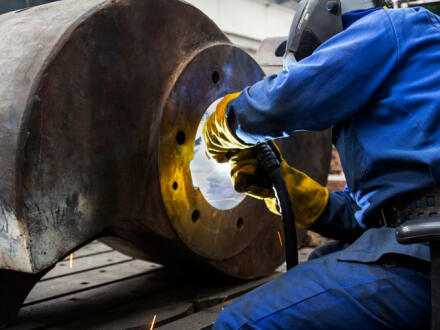
Trade school can cost less than a four-year degree, but millwright training in Hawaii still adds up fast. Tuition, tools, safety gear, books, transportation, and exam fees can push the total bill into the thousands before a student earns the first paycheck.
That's why Hawaii Millwright Scholarships matter. A single $1,000 award can cover a semester of books and hand tools. Two or three smaller awards can wipe out fees that often stop students from enrolling at all.
Students looking for Hawaii Millwright Scholarships for High School Students, Hawaii Millwright Scholarships for College, or Hawaii Millwright Scholarships for University programs usually miss one simple fact: the money is rarely in one place. It sits across trade associations, unions, community foundations, workforce programs, and scholarships tied to related fields like welding, industrial maintenance, and mechanical technology.
This guide breaks the search into 10 practical moves. Each one gives a clear place to look, what to prepare, and how to raise the odds of getting funded. The goal is simple: help students spend less, apply smarter, and keep more options open while they train for a hands-on career that keeps equipment, plants, and heavy systems running.
1. Start With Hawaii Millwright Association Scholarships
Students should begin with Hawaii Millwright Association Scholarships because trade-specific awards usually face less competition than broad general scholarships. A pool of 80 applicants is much easier to beat than a pool of 2,000.
The first move is simple: build a list of associations connected to millwright work in Hawaii. That includes groups tied to industrial maintenance, construction trades, mechanical systems, and heavy equipment support. Even if the scholarship title does not say "millwright," the work may still match.
A strong search list should include:
- Millwright and mechanical trade associations
- Construction and contractor groups in Hawaii
- Industry chapters tied to maintenance or manufacturing
- Local scholarship directories with trade filters
Students should also look at statewide scholarship hubs. For example, the Hawaii Community Foundation listing matters because community-based awards often support career training, not just academic majors.
One useful filter is mission fit. If an association supports skilled labor, workforce development, or technical education, a millwright applicant likely belongs in that stack.
A concrete example helps. If a student has OSHA safety training, 120 volunteer hours, and a 3.1 GPA, that student may look average on a general scholarship application but strong on a trade-focused one. Scholarship committees often care more about reliability and job intent than perfect grades.
The key point: start narrow, not broad. A trade-specific search often produces the fastest wins.
2. Look For Union-Connected Millwright Training Awards In Hawaii
Union-connected awards can be one of the best routes for future millwrights. They often connect money with a direct training path, which means less guesswork after the award is won.
Millwright work commonly overlaps with apprenticeship systems. Students should search union sites, training centers, and local labor organizations for scholarships, grants, stipends, and boot allowances. Some programs do not use the word "scholarship" at all. They may call it trainee assistance, apprenticeship support, or education reimbursement.
What students should search for:
- Apprenticeship readiness funds
- Union training trust awards
- Tool or boot stipends
- Tuition reimbursement for related classroom instruction
This matters because apprenticeship pay can grow while a student trains. According to the U.S. Bureau of Labor Statistics, millwrights had a median annual wage above $60,000 nationally, which makes early training support especially valuable because it helps students reach a solid earning track faster.
Students should also check school legitimacy before paying deposits. The state authorization database helps confirm whether a postsecondary program is properly authorized in Hawaii.
A practical example: a student who gets a $750 tuition grant plus a $300 tool allowance reduces upfront cost by $1,050. That can cover a hard hat, steel-toe boots, precision measuring tools, and transportation for the first month.
Union-connected money is often less flashy than major merit awards. But it is often more useful because it lines up with the real costs of starting the trade.
3. Prioritize Hawaii Millwright Scholarships For High School Students
Students should not wait until graduation week to start. Hawaii Millwright Scholarships for High School Students often open while seniors are still finishing classes, and some deadlines hit months before final transcripts are ready.
This is where timing beats talent. A student with a 3.0 GPA who applies to 18 well-matched scholarships usually has better odds than a 3.8 student who submits 3 rushed applications.
High school applicants should search four places first:
- School counseling offices
- Career and technical education programs
- Local credit unions and community groups
- Statewide scholarship databases
Public school students can ask counselors about trade pathways and local aid options tied to career education. The state school system serves tens of thousands of students across the islands, so local counseling offices often know about smaller awards that never trend in search results.
Students should also widen the net to scholarships that support first-generation students, island residents, Native Hawaiian students, or STEM-related career plans. A trade applicant with strong attendance and shop experience can fit several categories at once.
The AFCEA Hawaii STEM awards can also make sense for students whose millwright interest overlaps with mechanical systems, industrial technology, or engineering-related coursework.
What High School Applicants Should Prepare Early
High school students should gather materials at least 8 to 12 weeks before deadlines. That window gives enough time for transcript requests, recommendation letters, and essay edits.
A solid prep file includes:
- Unofficial transcript and class rank, if available
- Resume with shop class, robotics, welding, or work experience
- Attendance record and certifications
- One basic essay and one trade-specific essay
- Two references, ideally one teacher and one employer or coach
Specific details matter. "Helped repair farm equipment on weekends for 14 months" is stronger than "likes working with tools." "Completed 36 hours in welding lab" lands better than "has trade interest."
Scholarship readers want proof. Early prep gives students time to turn rough experience into clean, concrete evidence.
4. Target Hawaii Millwright Scholarships For First-Year Students
Many students miss Hawaii Millwright Scholarships for first-year students because they assume aid only exists before school starts. That is a costly mistake. A big share of scholarships open after a student has already enrolled and shown that they can stick with training.
First-year applicants should focus on awards that ask for:
- Proof of enrollment
n- A minimum GPA after the first term
- Instructor recommendations
- Progress in a technical or trade program
Why does this matter? Retention is a real issue in postsecondary education. Students who complete the first term and keep attendance strong often look safer to committees than brand-new applicants.
A first-year student can build a better case with numbers. For example, saying "completed 15 credits, kept a 3.2 GPA, and missed 0 lab sessions" tells a committee that the applicant is reliable. That's what schools and donors want.
Students using scholarship search platforms should also sort by class standing. On a free search platform such as StudentScholarships.org, a first-year student can identify awards that fit current status instead of wasting time on senior-only or graduate-only listings.
This stage is also a good time to ask program staff about retention grants. Trade departments sometimes know about department-level funds that are not easy to find on large search engines.
The best rule: after the first term ends, the scholarship hunt should restart from scratch. First-year status opens doors that did not exist six months earlier.
5. Search For Hawaii Millwright Scholarships For College Students In Related Trades
Students should not search only for the word "millwright." That search is too narrow. Hawaii Millwright Scholarships for College often hide inside related trade categories such as welding, machining, industrial maintenance, diesel technology, HVAC, electrical systems, and construction technology.
Millwright work blends alignment, rigging, mechanical repair, blueprint reading, and machinery installation. That overlap gives students room to qualify for more aid than they expect.
Related scholarship categories to search:
- Mechanical technology
- Industrial maintenance
- Manufacturing and fabrication
- Construction trades
- Applied technology or technical education
A student taking 12 credits in industrial maintenance may qualify for trade scholarships even if the program title never says millwright. Committees often read for career direction, not just exact major wording.
That is why targeted cross-searching works. For example, the land surveying award page shows how trade-adjacent groups support technical learners. It may not fit every millwright student, but it shows the kind of industry-specific support that broader searches miss.
Students with a cultural, community, or family connection should also check broader Hawaii-based programs. The Office of Hawaiian Affairs option can matter for eligible students building a long-term education plan.
A practical search method is to build a spreadsheet with 25 keywords and track results. Students who expand from 3 keywords to 25 often double or triple their scholarship list within one afternoon.
6. Expand Your Options With Hawaii Millwright Scholarships For University Programs
Some students start in a trade pathway and later move into supervision, project management, engineering technology, or industrial operations. That is where Hawaii Millwright Scholarships for University programs come in.
A millwright career does not have to stop at a certificate. University study in areas like mechanical engineering technology, occupational safety, industrial management, or construction management can support long-term growth.
Students should look for university-connected aid if they plan to move into:
- Maintenance leadership
- Reliability planning
- Plant operations
- Safety compliance
- Technical management
Hawaii offers multiple postsecondary routes, and students can compare campuses based on program fit, transfer options, and support services. Schools such as UH Hilo and UH Maui College give students more than one academic setting to explore while keeping Hawaii-based career ties.
Concrete example: a student earns a trade certificate, works 18 months, then returns for a bachelor's path tied to operations or management. If that student secures a $2,500 transfer scholarship, that may cover a big chunk of semester tuition or housing costs.
Students should also consider scholarships tied to broad academic identity, not just trade identity. The Hawaii State FCU award page is one example of the local funding streams that can support a student during that step up.
University money is worth chasing because it supports the second stage of a skilled-trades career, where wages and responsibility often rise.
7. Apply For Apprenticeship And Pre-Apprenticeship Funding Opportunities
Apprenticeship and pre-apprenticeship funding can cut costs faster than traditional scholarships because it often supports training, gear, and placement at the same time. For many future millwrights, this is the most direct road into paid work.
Pre-apprenticeship programs can help students build math, safety, and tool-handling basics before full entry. Some also help with transportation, books, and work clothes. That matters in Hawaii, where island-to-island travel and commuting can add real cost.
Students should ask each program 5 direct questions:
- Is tuition covered in full or in part?
- Are tools and PPE included?
- Is there a paid work component?
- What percentage of trainees finish?
- How many graduates move into jobs within 6 months?
Those numbers matter more than marketing language. If one program costs $4,800 and places 82% of completers, while another costs $6,200 and places 54%, the better value is obvious.
County resources can also help students find training, transport, and local workforce contacts. For island-specific planning, Hawaii County resources can help students think through commute, residency, and local service access.
Students should keep every receipt tied to training. A $145 pair of boots, a $62 safety vest, and a $210 tool kit may be reimbursable under some workforce or apprenticeship support programs.
This category rewards persistence. Many students stop after one application, while the funded students often apply to four or five related programs.
8. Use Hawaii Workforce, Trade School, And Community Foundation Scholarships
Students should cast a wider net with workforce boards, trade schools, and community foundations. This is where many practical awards live, especially smaller grants in the $500 to $2,500 range.
Community foundations matter because they often manage dozens or even hundreds of donor funds with different rules. One application can sometimes place a student in several scholarship pools at once.
That makes this category efficient. The community foundation site highlights how broad local giving can be across education and workforce needs.
Students should also search for aid from civic groups, financial institutions, and regional organizations. For example, the local credit union scholarship model shows how non-trade groups still support career training. Another useful example is the Korean chamber awards, which may fit students through heritage, community, or academic criteria.
Workforce and community-based scholarships often reward:
- Residency in a specific area
- Service to local communities
- Financial need
- Clear job plans in Hawaii
A student living on one island, attending a local campus, and planning to work in industrial maintenance after graduation can present a strong "stay and serve" case. That story is powerful because donors often want local talent to remain local.
Students should never ignore a $500 award. Stack 4 of them, and that is $2,000 off the bill. That can mean one less private loan, or none at all.
9. Strengthen Your Application With Millwright-Focused Experience And Career Goals
A weak application says, "They want to work with their hands." A strong application says, "They spent 9 months repairing conveyors at a family business, earned an OSHA card, and want to maintain industrial equipment in Hawaii." Details win.
Scholarship committees read fast. They remember applicants with specific experience, clear goals, and proof that the trade choice is real.
Good evidence includes:
- Shop, welding, robotics, or mechanics classes
- Part-time work in construction, repair, or maintenance
- Volunteer projects using tools or equipment
- Certifications in safety, first aid, or technical skills
- A career goal linked to Hawaii employers or industries
The story should also show progression. Example: a student starts with high school auto shop, moves into weekend equipment repair, then enrolls in industrial maintenance training. That sequence feels believable.
Even broader scholarships can reward that focus. The Exclusive Hawaii award page is a reminder that not every fund is trade-labeled: committees still respond to a sharp personal story.
What Scholarship Committees Want To See In Trade Applicants
Committees usually want three things: readiness, reliability, and reason. They want proof the student can handle the work, finish the program, and explain why this path matters.
A strong trade application often includes exact facts such as:
- GPA: 3.2 instead of "good grades"
- Attendance: 97% instead of "shows up"
- Work history: 11 months at 18 hours per week
- Certifications: OSHA 10, CPR, forklift awareness, or welding hours
The essay should answer two simple questions. Why millwright work? Why Hawaii?
A good answer might mention local infrastructure, tourism facilities, food processing, utilities, or construction support. Those are concrete reasons a student's training would matter close to home. When the goal sounds real, the application feels real too.
10. Track Deadlines, Stack Awards, And Reapply Every Year
Scholarship success is often less about one perfect application and more about a repeatable system. Students who track deadlines carefully and reapply every cycle usually collect more total aid than students who chase only one big prize.
A simple tracking sheet should include:
- Scholarship name
- Amount
- Deadline
- Eligibility notes
- Required documents
- Submission status
- Reapplication allowed or not
This system saves time. If a student applies to 20 scholarships and each application takes 45 minutes after the first draft is built, that is 15 hours of work. But if the same student reuses a resume, activity list, and essay bank, the average time can drop to 20 minutes each. That cuts the total to about 6 hours and 40 minutes.
Students should also stack awards whenever rules allow it. A $1,200 local scholarship, a $750 workforce grant, and a $500 book award add up to $2,450. That can cover tuition plus supplies at many technical programs.
Reapplying matters because circumstances change. A student may be ineligible as a high school senior but qualify later as a first-year student, a continuing college student, or an apprentice.
Using a search platform with updated listings helps here. StudentScholarships.org is useful because students can sort opportunities by fit instead of digging through random search results for hours.
The students who win often are not magical applicants. They are organized applicants.
Hawaii Millwright Scholarships FAQs
What types of scholarships are available specifically for Hawaii millwright students?
Hawaii millwright students can find scholarships through trade associations, unions, community foundations, workforce programs, and scholarships in related fields such as industrial maintenance, welding, and mechanical technology, providing diverse funding opportunities tailored to their trade education.
How can high school students prepare to increase their chances of winning a Hawaii millwright scholarship?
High school students should start early by gathering transcripts, resumes highlighting relevant shop or work experience, attendance records, certifications, essays focused on millwright goals, and strong recommendations to build a detailed, trade-specific application before scholarship deadlines.
Are there scholarship options specifically for first-year millwright students in Hawaii?
Yes, many scholarships are available to first-year students who demonstrate proof of enrollment, maintain minimum GPA standards, show progress in technical programs, and obtain instructor recommendations, helping support students after they begin training.
Can millwright students apply for scholarships in related trades, and why is this beneficial?
Absolutely; searching for Hawaii scholarships in related trades like welding, industrial maintenance, or construction technology broadens funding opportunities since millwright skills overlap with these fields, increasing scholarship eligibility and support.
What role do union and apprenticeship programs play in funding millwright training in Hawaii?
Union-connected scholarships and apprenticeship programs provide funds for tuition, tools, stipends, and sometimes paid work opportunities, aligning education with job placement and reducing upfront training costs for Hawaii millwright students.
Why is it important for millwright students to track scholarship deadlines and reapply annually?
Tracking deadlines and systematically reapplying allows students to maximize funding by applying to multiple awards, stacking smaller scholarships, and qualifying at different education stages, thereby increasing total financial support throughout their training.







