

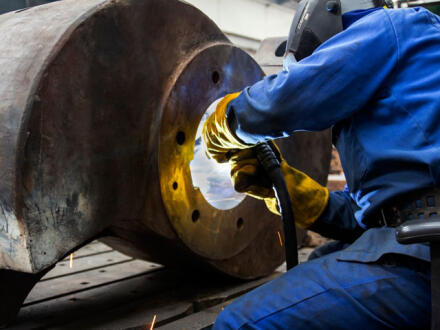
Paying for welding, fabrication, machining, or manufacturing training in North Carolina can feel expensive fast. Tuition, lab fees, steel-toe boots, helmets, gloves, textbooks, and gas money for commuting can turn a one-semester bill into a real strain.
That's why North Carolina metal fabrication scholarships matter so much. They can cut tuition, cover tools, and reduce the amount a student needs to borrow. And the best options do not come from one place. Some are tied to trade groups. Others come from community colleges, local foundations, employers, apprenticeship programs, or national skilled-trades funds.
For students and families, the smart move is to build a funding stack. That means combining several smaller awards instead of waiting for one big scholarship. A student who wins a $1,000 local award, a $750 school scholarship, and a $2,000 trade scholarship can reduce costs by $3,750 in one cycle.
This guide breaks down 11 strong funding paths for North Carolina Metal Fabrication Scholarships for High School Students, first-year students, college students, and university engineering majors. It also shows where applicants should look, what to verify, and how to improve the odds of getting selected.
1. North Carolina Metal Fabrication Association Scholarships
Trade associations are often the most direct source of industry-specific aid. For students searching North Carolina Metal Fabrication Association Scholarships, these awards are worth first attention because they usually favor applicants entering welding, sheet metal, fabrication, industrial maintenance, or related programs.
A state or regional fabrication association may fund scholarships through member dues, charity tournaments, or workforce campaigns. Awards often range from $500 to $2,500 per student, though some can go higher when employers add matching dollars.
What makes these scholarships useful is the fit. Reviewers usually want students who already show commitment to the trade. That can include:
- CTE coursework in welding or manufacturing
- OSHA or safety certificates
- FFA or SkillsUSA participation
- Shop projects, such as building a gate, trailer frame, or welded table
- A plan to work in North Carolina after training
A student who has already explored union and sheet metal options may also benefit from the sheet metal scholarship application, which aligns with fabrication-adjacent training paths.
What First-Year Students Should Verify Before Applying
First-year applicants should confirm the basics before spending 3 hours on essays and recommendation requests. A missed detail can kill an otherwise solid application.
They should verify:
- Program match. Some awards say "welding," but exclude four-year engineering majors.
- Enrollment status. A scholarship may require 6, 9, or 12 credit hours.
- School approval. The program may need to be at an accredited North Carolina college.
- Residency rules. Some awards are state-only: others also cover bordering states.
- Use of funds. A few can pay for tools and PPE, not just tuition.
A good benchmark: if the application checklist has 8 required items, students should gather all 8 before writing the essay. That simple habit cuts last-minute errors and usually improves submission quality.
2. Community College Welding And Fabrication Scholarships In North Carolina
Community colleges are one of the best places to find practical aid for fabrication training. They often have lower tuition than four-year schools, and their scholarship offices may bundle institutional money with foundation awards.
In North Carolina, welding and fabrication students should check program pages, financial aid offices, and college foundations at schools with strong technical pathways. For example, Coastal Carolina Community College serves students in Onslow County and offers career-focused technical education that can pair well with local scholarship searches. On the coast, College of The Albemarle is another community college option students may review when comparing manufacturing and skilled-trades routes.
These scholarships often support:
- Welding technology diplomas
- Associate degrees in manufacturing systems
- CNC and machining certificates
- Short-term fabrication credentials
Award amounts vary, but many community-college scholarships fall in the $500 to $2,000 range per semester. Some schools also provide emergency grants for books, fuel, or certification exam fees.
Students using Studentscholarships.org can widen the search beyond one campus. Someone comparing local awards with national trades funding might also consider the Metal of Honor fund application while building a broader list.
The key advantage here is speed. Community-college scholarship cycles are often shorter, less crowded, and easier to complete than large national contests.
3. North Carolina Metal Fabrication Scholarships For High School Students
For juniors and seniors, the best time to start is before graduation, not after. North Carolina Metal Fabrication Scholarships for High School Students often reward early planning, especially for students in CTE, welding, construction, or manufacturing tracks.
North Carolina public school students can use the state education system to review CTE pathways, district contacts, and program direction. That matters because scholarship committees like to see a real training plan, not a vague note that says a student "might do welding."
Strong high school applicants usually bring at least 3 concrete proof points:
- A fabrication or shop class transcript
- A teacher recommendation from a welding, STEM, or CTE instructor
- A project portfolio with photos and short captions
A good example is a student who built a smoker trailer, logged 42 shop hours, and explained the weld types used. That says much more than "I like working with my hands."
North Carolina students can also mix trade-specific applications with broader state awards. For instance, a high school senior from a qualifying region may look at the Triangle area scholarships if location and eligibility line up.
Students should start in the fall, request transcripts early, and keep a simple spreadsheet with deadlines, award amounts, and required essays. Even 5 applications at 45 minutes each can produce better results than one rushed submission.
4. North Carolina Metal Fabrication Scholarships For First-Year Students
First-year students sit in a useful middle spot. They already have admission or enrollment proof, but they still qualify for many "new student" awards. That makes North Carolina Metal Fabrication Scholarships for first-year students a strong category to target.
Committees often like first-year applicants because they can picture the exact path ahead: program name, expected graduation date, and likely career outcome. A student starting a welding technology diploma in August can write a much sharper essay than a senior who is still deciding between three schools.
Good first-year applications usually include:
- A clear program and school name
- An explanation of career goals, such as pipe welding or structural fabrication
- Financial need details with exact costs
- Proof of persistence, like work hours or family responsibilities
Here's a concrete example. If tuition and fees cost $2,184, books cost $486, and safety gear costs $275, the essay becomes more believable. Numbers help reviewers trust the story.
Students comparing trade-school aid should also scan the trade school scholarship listing, which can fit applicants entering skilled training right after high school.
The biggest mistake first-year students make is assuming federal aid is enough. In many cases, a small outside scholarship covers the exact gap that would otherwise go on a credit card: gloves, grinding disks, boots, or a certification testing fee.
5. North Carolina Metal Fabrication Scholarships For College Students In Technical Programs
Once students are already enrolled, they should not stop applying. North Carolina Metal Fabrication Scholarships for College students often open after the first semester, when grades and attendance prove they are serious.
Technical-program students can stand out with evidence that reviewers love to see:
- GPA in welding or manufacturing classes
- Attendance records
- Instructor references
- Completed projects with measurements or tolerances
- Certifications, such as OSHA 10 or welding procedure tests
A second-semester student with a 3.4 GPA, 96% attendance, and one completed GTAW certification attempt is often more competitive than a new applicant with no college record yet.
This is also where broad state scholarship tools help. CFNC supports college planning and paying-for-school research in North Carolina, which makes it useful for students balancing institutional aid, grants, and outside awards.
Students who qualify for statewide need-based options may also review the Aubrey Lee Brooks scholarships as part of a wider search, even if the award is not trade-specific.
The practical move is to reapply every term. A student who wins $1,200 in fall and $1,000 in spring has already offset a large share of a community-college technical program without adding loan debt.
6. North Carolina Metal Fabrication Scholarships For University Engineering And Manufacturing Majors
Not every fabrication career starts in a welding booth. Some students pursue mechanical engineering, industrial engineering, materials science, or manufacturing systems and still need North Carolina Metal Fabrication Scholarships for University study.
University students can frame fabrication as part of a bigger production chain. Sheet design, robotics, CNC systems, heat transfer, metallurgy, and quality control all connect to metal fabrication work. That broader view often helps them qualify for engineering, manufacturing, and workforce awards that a strict "welding scholarship" search might miss.
At a large research campus such as NC State University, students may find engineering pathways that connect classroom work with manufacturing labs and employer recruiting. Applicants there can also use scholarships and financial aid resources to compare campus aid with outside industry awards.
A strong university applicant usually includes:
- CAD, machining, or materials coursework
- Team design projects
- Internship goals in aerospace, automotive, or plant manufacturing
- A direct explanation of how scholarship money covers costs
For example, an engineering student who needs $1,640 for housing gap costs and $620 for lab materials and software fees should say that plainly. Specific budgets beat generic hardship language almost every time.
These students should also search manufacturing associations, engineering societies, and employer funds tied to plant operations in the state.
7. Employer-Sponsored Scholarships From North Carolina Manufacturers
Many students miss one of the most practical funding paths: the local employer. North Carolina manufacturers often need welders, machine operators, maintenance technicians, and production specialists. Scholarships are one way they build that pipeline.
Employer-sponsored aid may come with a catch, but not always a bad one. Some companies ask for:
- A summer internship
- A plant tour or interview
- A promise to apply for work after graduation
- Minimum GPA or attendance standards
These awards can be generous because they solve a business need. A manufacturer facing 18 open skilled-trade positions has a real reason to support students now instead of waiting two years for applicants to appear.
Students should look for metal stampers, industrial contractors, HVAC fabricators, machine shops, trailer builders, and defense suppliers. Human resources departments, not just scholarship offices, may know about these programs.
A student entering trade school could also compare employer help with the second Metal Supermarkets scholarship listing, especially if outside trade support is needed to fill a tuition gap.
The best applications sound job-ready. If a student can explain that they want to run MIG welding on structural assemblies, work second shift, and build toward inspection credentials, employers pay attention. That level of clarity feels real.
8. Apprenticeship-Linked Scholarships And Tuition Assistance For Fabrication Training
Apprenticeships can lower costs in two ways at once: students earn wages while they train, and they may receive tuition support. For fabrication students, that combination can beat a traditional full-time school plan.
Apprenticeship-linked aid may come from unions, contractors, workforce boards, or employer groups. In many cases, the student attends class part time and works part time or full time. That means less debt and faster entry into paid work.
Typical benefits include:
- Partial or full tuition coverage
- Paid on-the-job training
- Tool stipends
- Raises tied to skill milestones
A student earning $17.50 per hour for 24 hours a week while receiving tuition assistance is in a very different position from a student borrowing for both school and living costs.
Regional and demographic scholarships can sometimes stack on top of apprenticeship support. For example, an eligible applicant may also consider the North Carolina Hispanic college fund listing if family background and enrollment plans match the rules.
The tradeoff is schedule pressure. Apprenticeship students often juggle work boots at 6 a.m., classes at night, and little free time. But for many fabrication students, that route turns training into income instead of debt.
9. Workforce Development Grants For Short-Term Metal Fabrication Credentials
Not every student wants a two-year or four-year degree. Some want a short credential that leads to a job fast. That is where workforce grants matter.
North Carolina workforce development funding often supports short-term training in welding, machining, industrial systems, and related fields. These grants may be offered through community colleges, local workforce boards, or state-supported training initiatives.
Short-term aid works best for students who need speed. A 12-week, 16-week, or one-semester credential can move someone from low-wage retail work into entry-level fabrication much faster than a longer academic route.
Common covered costs include:
- Tuition
- Registration fees
- Certification testing
- Books and materials
- Sometimes PPE or transportation assistance
The numbers can be meaningful. If a short welding credential costs $1,876 total, a workforce grant that covers even $1,200 cuts the out-of-pocket share by nearly two-thirds.
Students should ask one direct question: "Does this program qualify for workforce grant funding?" That sentence alone can uncover money not listed on the main scholarship page.
This path is especially useful for adults returning to school, students changing majors, or recent graduates who want a job in months rather than years.
10. Local Foundation And Regional Industry Scholarships Across North Carolina
Local foundations are often less flashy than national scholarships, but they can be easier to win. The applicant pool may be limited by county, school district, or hometown, which cuts competition hard.
That matters in North Carolina, where regional scholarships can support students heading into technical education, community college, or industry-related majors. A local foundation might give $750, $1,500, or $2,500 to a student from one county rather than sorting through 4,000 applicants nationwide.
Examples include community and area-based funds. Students from western counties may review the Western North Carolina scholarship pool, while those in central regions may run into foundation-supported options through groups such as the Central Carolina Community Foundation.
Students should search in these places:
- County community foundations
- Chamber of commerce websites
- Education foundations
- Regional manufacturing alliances
- Civic clubs and trade groups
The best part is fit. A student from a small town who writes about commuting 38 miles each way to welding class sounds relevant to a local review panel. Regional committees often know exactly what those travel costs, family work schedules, and job prospects look like on the ground.
These awards are rarely one-and-done. Several local applications can stack into a meaningful package.
11. National Skilled Trades Scholarships North Carolina Students Can Use
North Carolina students should not limit the search to in-state awards. National skilled-trades scholarships can often be used at eligible trade schools, community colleges, or technical programs inside the state.
This is where students can widen the funnel. A fabrication student in North Carolina may qualify for national welding, sheet metal, manufacturing, or blue-collar workforce scholarships if the program meets the sponsor's rules.
Useful national categories include:
- Trade school scholarships
- Skilled labor foundation awards
- Manufacturing workforce grants
- Union-linked education funds
- Women-in-trades scholarships
Even one national award can matter. A $2,000 scholarship might cover tuition, while a local grant handles books and PPE.
Students who want another broad in-state option while applying nationally may look at the state employees association scholarship listing if their family background fits the rules.
This is also where Studentscholarships.org is genuinely useful. The platform helps students sort through many listings faster, and some applications take under 2 minutes, which makes it easier to apply widely without burning an entire weekend.
The smart approach is simple: apply local, apply statewide, and apply national. Students who submit 12 strong applications usually give themselves much better odds than students who stop at three.
North Carolina Metal Fabrication Scholarships FAQs
What types of scholarships are available for metal fabrication students in North Carolina?
North Carolina offers various scholarships including trade association awards, community college scholarships, employer-sponsored aid, apprenticeship-linked tuition assistance, local foundation grants, and national skilled trades scholarships that support welding, fabrication, machining, and engineering students.
How can first-year students qualify for North Carolina metal fabrication scholarships?
First-year students should verify program match, enrollment hours, school accreditation, and residency eligibility. Including clear career goals, financial need, and proof of persistence in applications improves chances for scholarships targeting new students entering welding or manufacturing programs.
Where can students find community college scholarships for welding and fabrication in North Carolina?
Students can explore technical pathways and scholarship opportunities at community colleges such as Coastal Carolina Community College and College of The Albemarle, which offer awards to support welding diplomas, associate degrees, and short-term credentials.
Are there scholarships linked to apprenticeships for metal fabrication training in North Carolina?
Yes, many apprenticeships provide paid on-the-job training plus tuition assistance. These combined benefits reduce debt by allowing students to earn wages while completing part-time classes, often with tool stipends and raises tied to skill milestones.
Can university engineering and manufacturing students access metal fabrication scholarships in North Carolina?
Yes. University students in mechanical, industrial, or materials engineering can qualify for scholarships by connecting their studies to fabrication processes, citing relevant coursework, projects, internships, and how the scholarship helps cover housing, lab, or software costs.
How can North Carolina metal fabrication students leverage employer-sponsored scholarships?
Local manufacturers may offer scholarships to support workforce needs like welders or technicians. Applicants benefit by demonstrating job readiness and career plans, as some awards require internships, plant tours, or commitments to work locally after graduation.






