

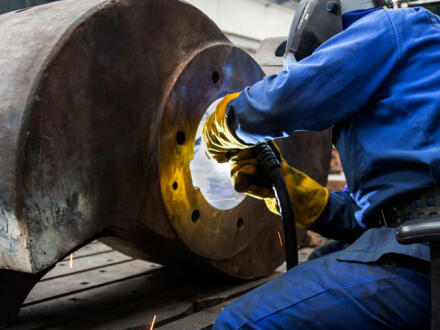
Paying for training in the skilled trades can feel bigger than the tuition bill itself. A future ironworker in Alaska may need money for class fees, tools, work boots, travel between home and campus, and sometimes temporary housing near a training site. For one student, that can mean a gap of $2,000 to $8,000 even after basic aid.
That's why Alaska Ironworking Scholarships matter. They can reduce debt, make an apprenticeship start easier, and help students say yes to training they might otherwise postpone. Some awards are built for high school seniors. Others fit first-year students, college students in related programs, or university students heading into construction management or engineering.
This guide breaks the search into 12 practical funding paths. It covers association scholarships, union and apprenticeship options, state aid, university awards, employer-backed support, and regional community funds. The goal is simple: help students and families spot real options faster.
Students looking for Alaska Ironworking Scholarships for High School Students, Alaska Ironworking Scholarships for College, or Alaska Ironworking Scholarships for University often miss opportunities because the awards sit in different places. Some are listed under construction, welding, engineering, workforce development, or technical education instead of "ironworking." That's the trick. The best search usually combines trade-specific awards with nearby fields that feed directly into ironworking careers.
1. Alaska Ironworking Association Scholarships
Alaska Ironworking Association Scholarships are usually the first place students expect help, and for good reason. Trade associations often fund the exact pipeline they need: people who want to build, weld, rig, reinforce, and install structural steel.
A student may not always find an award labeled word-for-word as "ironworking." In Alaska, the better move is to search association funds tied to construction, steel, welding, and contractor groups. One solid example is AGC Alaska scholarships, which support students entering construction-related fields.
What these scholarships often look for:
- Alaska residency
- Enrollment in a trade, construction, or related program
- A GPA floor such as 2.5 or 3.0
- A short essay on career goals
- Instructor or employer references
A practical example helps. If a student plans to take structural welding classes and later enter an ironworker apprenticeship, an association may treat that path as part of the same workforce need.
Students should also look at award size. A $1,000 scholarship may cover hand tools, fall-protection gear, and textbooks. A $3,500 award might cover one term of tuition plus travel. Small awards count. Stack three smaller scholarships, and the total can be more useful than chasing one big prize.
2. Ironworkers Union And Apprenticeship Scholarship Opportunities In Alaska
Union and apprenticeship funding is one of the strongest paths for future ironworkers because it connects money with direct job training. In many cases, apprentices earn while they learn, which changes the math fast.
For Alaska students, the best opportunity may come through union locals, joint apprenticeship committees, or training trust funds. These programs can help with classroom costs, books, safety gear, or related instruction. The U.S. Department of Labor notes that registered apprenticeships combine paid work with structured training, and many programs lead to wage increases as skills grow.
Students should ask specific questions:
- Is there a tool allowance?
- Are tuition costs fully covered or partly covered?
- Is travel help available for rural students?
- Does the program offer wage progression every training period?
A useful parallel is Steel Intern Scholarship, which shows how steel-industry funding often supports students moving toward field experience. Students who are still comparing trade-school and apprenticeship routes can use that model to spot similar programs.
A real-world difference matters here. If an apprentice starts at 60% of journey-level pay and gets periodic increases, that can offset costs that a traditional student has to borrow for. For many families, that makes union-based Alaska Ironworking Scholarships and apprenticeship aid the most practical option on the list.
3. Alaska Ironworking Scholarships For High School Students Entering The Trades
Alaska Ironworking Scholarships for High School Students often hide inside broader state or career-readiness programs. That means seniors should search beyond "ironworker scholarship" and include terms like trades, CTE, welding, and construction.
One of the most important options is the Alaska Performance Scholarship. That program helps Alaska students who meet academic and coursework standards continue into qualifying education or training after high school.
High school students should focus on four things early:
- Completing required math and science classes
- Joining shop, welding, or construction courses
- Recording volunteer or work hours
- Asking for references at least 30 days before deadlines
Concrete examples matter. A student who spent 120 hours in a school welding lab, earned a forklift safety card, and wrote a clear goal statement about entering structural steel work will stand out more than a student who submits only grades.
Students can also search local scholarship platforms that gather many awards in one place. A broad scholarship database can help seniors find construction, trade, and workforce awards that still fit an ironworking goal.
This section is where families save the most time. Starting in the fall semester instead of waiting until graduation season can open 5 to 15 more applications, especially for students pursuing Alaska Ironworking Scholarships for High School Students.
4. Alaska Ironworking Scholarships For First-Year Students Starting Training Or College
Alaska Ironworking Scholarships for first-year students are valuable because that first term is often the most expensive. New students buy PPE, tools, books, and program-specific supplies all at once. A basic starter kit can run $600 to $1,800, depending on the training path.
First-year students should target awards that support transition into postsecondary education, pre-apprenticeship, or technical training. Even scholarships from nearby trade systems can help students understand what providers want in an application. For example, pre-apprentice funding highlights the kind of support often built around early hands-on trade training.
A strong first-year application usually includes:
- Proof of enrollment or acceptance
- A budget showing tools, tuition, and transport costs
- Evidence of trade interest, like welding class hours
- A short, direct career statement
Students entering training through schools such as Alaska Career College should also ask whether institutional aid can be combined with outside scholarships. Some schools allow stacking, which may reduce out-of-pocket costs by $2,500 or more.
The best first-year strategy is simple: apply widely, not narrowly. A future ironworker might qualify for construction scholarships, workforce awards, welding support, and general technical education funds all at once. That wider net gives first-year students a much better shot at staying enrolled.
5. University Of Alaska Scholarships For Students Pursuing Construction And Skilled Trades
The University of Alaska system can be a smart route for students who want construction technology, welding, occupational endorsements, or related skilled-trades education. Not every future ironworker needs a four-year degree. Some need short-term certificates or university-based technical training with aid attached.
Financial aid offices matter here. The UAA financial aid office explains how students can combine grants, scholarships, work-study, and loans through one process. That matters because many students leave money unclaimed when they apply only for outside awards.
Students should search for:
- Campus-specific scholarships
- Program-based awards in construction or industrial fields
- Need-based grants through FAFSA results
- Department awards tied to academic progress
A practical example: a student enrolled in a construction certificate could use a Pell Grant, a campus award worth $1,200, and a small private scholarship to cover tuition plus gear. That stack is common, and it works.
The University of Alaska system also includes campuses with different strengths, including UAF programs and UAS options. Students who search across multiple campuses often find more aid than those who limit themselves to one location.
For students comparing trade school with public postsecondary options, this path deserves real attention. University-based skilled-trades funding can be more flexible than people expect.
6. Alaska Ironworking Scholarships For College Students In Related Programs
Alaska Ironworking Scholarships for College are often easiest to find through related majors rather than ironworking by name. That includes welding technology, industrial maintenance, construction technology, drafting, heavy equipment, and occupational safety.
This matters because the ironworking field overlaps with several technical skills. A student studying welding may move into reinforcing steel, ornamental work, or structural steel erection. A student in safety or construction tech may move into field supervision later.
One useful option is American Welding Society scholarships. Welding awards can directly support a future ironworker because welding is one of the most marketable companion skills in the trade.
Students in related college programs should build applications around direct field relevance:
- Mention blueprint reading
- List welding certifications or lab hours
- Include OSHA training if completed
- Show part-time work in fabrication or construction
A concrete case: a student with 240 lab hours in welding and a 3.1 GPA has a stronger case than one who says only "I like working with my hands." Specific proof wins.
This is also where scholarship-search platforms help. Students using a free matching tool through StudentScholarships.org can sort through broader trade and technical awards faster, which is useful when deadlines pile up across the semester. For many applicants, related-program funding becomes the bridge that pays for an ironworking career path.
7. Alaska Ironworking Scholarships For University Students In Construction Management And Engineering
Alaska Ironworking Scholarships for University students can apply to those studying construction management, civil engineering, mechanical engineering, or structural design. These students may not become field ironworkers themselves, but many work side by side with iron crews on commercial and industrial projects.
That connection matters to scholarship committees. Alaska needs people who understand both drawings and jobsites. A university student who can explain how design decisions affect steel erection, crane picks, and safety planning stands out.
Two strong examples are engineering education awards and the EMC engineering scholarship. These awards show how engineering support can feed the same construction workforce pipeline.
Students should highlight measurable experience:
- 1 summer internship with a contractor
- 80 hours of site observation or lab work
- CAD, BIM, or estimating skills
- Research or design work tied to steel systems
A good example is a civil engineering student who studied load paths in steel frames and then interned with a contractor doing field layout. That student connects classroom work to real ironworking conditions.
For Alaska Ironworking Scholarships for University students, the strongest applications usually show one thing clearly: the student understands how steel projects move from plan set to finished structure. That practical link makes engineering and construction management awards far more relevant than they may seem at first glance.
8. Career And Technical Education Scholarships Through Alaska Schools And Training Centers
Career and Technical Education, usually called CTE, is one of the most overlooked funding lanes for future ironworkers. Alaska schools, regional training centers, and technical campuses often support students heading into hands-on fields even when the award title never mentions ironworking.
CTE funds may cover tuition, equipment, credential testing, or transportation. For students in rural areas, transportation alone can be a major barrier. A single round-trip flight for training can cost hundreds of dollars, so a modest scholarship can have a big effect.
Students should ask counselors and training staff about:
- CTE incentive awards
- Workforce credential funding
- Dual-enrollment trade support
- School foundation scholarships
The official state site can help students identify public education and workforce resources connected to Alaska programs. Local high schools and technical centers may also track grants that never show up in major scholarship searches.
A concrete example: a student completing a school welding pathway and earning 2 industry credentials may qualify for local CTE support even before full college enrollment. That can reduce the cost of entering a pre-apprenticeship or certificate program right after graduation.
This path works especially well for students who are organized. Asking one counselor, one shop teacher, and one financial aid contact can uncover 3 to 7 extra funding leads that do not appear in national scholarship lists.
9. Need-Based Grants And State Aid That Can Support Ironworking Students In Alaska
Need-based aid is not flashy, but it often pays the largest share of the bill. Students chasing Alaska Ironworking Scholarships should still file the FAFSA because grants can cover costs that private scholarships don't fully handle.
The biggest federal example is the Pell Grant. Eligible students can receive several thousand dollars based on financial need and enrollment status. Unlike a loan, grant aid does not need to be repaid in normal cases.
Students should build a simple aid stack:
- Federal grants
- State aid
- Institutional scholarships
- Private trade scholarships
- Part-time work or apprenticeship wages
A realistic budget shows why this matters. If tuition and required costs total $7,400, and a student gets $3,200 in grant aid plus $1,500 in scholarships, the gap drops to $2,700 before work income. That is a very different problem from paying the whole bill alone.
Students can also search regional awards like the AHFC education scholarship, which may help students whose education goals line up with community workforce needs.
For students in lower-income households, need-based aid should come first on the checklist, not last. It is often the foundation that makes Alaska Ironworking Scholarships and trade-specific awards truly useful instead of merely helpful.
10. Employer-Sponsored And Industry-Partner Scholarships For Future Ironworkers
Employer-sponsored scholarships can be a direct line from classroom to paycheck. Contractors, steel fabricators, utilities, and construction partners sometimes fund students because they need trained workers close to home.
These awards may be less public than national scholarships, but they can be more practical. Some come with a summer internship, part-time work, or a preferred interview after training. For a student, that turns scholarship money into a career foothold.
Students should ask local employers whether they offer:
- Tuition reimbursement
- Paid internships
- Tool stipends
- Scholarship competitions for dependents or local residents
One strong Alaska example is the Alaska Village Electric Cooperative scholarship. While not ironworking-specific, utility and infrastructure awards often support students entering technical fields that serve construction and industrial work.
A concrete scenario helps. A student wins $2,000 from an industry partner, works a 10-week paid summer placement, and finishes with a supervisor reference. That is far stronger than money alone.
Employer-backed support is especially useful for students in smaller communities. Local companies are more likely to invest in someone who plans to stay, train, and work in Alaska. For future ironworkers, that local connection can be the deciding factor between training later and training now.
11. National Trade And Ironworker Scholarships Open To Alaska Residents
National scholarships should stay on the list even for students who want to work only in Alaska. Many trade, steel, and construction awards accept applicants from any state, which gives Alaska students access to a much larger pool.
One useful example is AIST steel scholarships. Steel-focused awards can fit students pursuing welding, metallurgy, fabrication, structural systems, or related construction tracks that connect to ironworking.
National trade scholarships often reward students who show both academic effort and industry commitment. Helpful proof includes:
- 1 or more internships
- Trade club membership
- Welding or safety credentials
- A clear statement of career direction
A strong application might describe a student who worked 18 hours per week in a fabrication shop while completing college classes. That detail tells a committee the student already understands the pace of the trade.
Students should also pay attention to smaller national awards. A $500 or $1,000 award may look modest, but it can pay for certification exams, travel, PPE, or welding consumables.
For Alaska residents, national scholarships are often the best way to widen the search. They add options beyond local deadlines and can fill gaps when Alaska Ironworking Scholarships alone do not cover the full cost of training.
12. Local Community Foundation And Regional Workforce Scholarships In Alaska
Community foundations and regional workforce groups are often where students find the scholarships everyone else missed. These organizations support local education because they want stronger communities, stronger employers, and more residents trained for good jobs.
The Alaska Community Foundation is a strong example of how regional giving supports local students through funds with different geographic and career priorities. Some awards focus on a home region, a family background, or a workforce need rather than a specific major.
Students should search by:
- Borough or town name
- Tribal or regional organization
- Community foundation fund
- Workforce development board
A practical example: a student from a coastal or interior community may qualify for a regional award worth $1,500 simply because they live there, plan to train in a needed field, and submit a clean application on time.
These scholarships can also pair well with college or university awards. A student may combine a local foundation scholarship, a campus grant, and a trade-specific award to cover most direct costs.
This funding path is often the most personal. Committees may know the school, the town, or the local employer pipeline. That gives students a chance to tell a grounded story about why they want to build a career in Alaska, not somewhere else.
Alaska Ironworking Scholarships - Frequently Asked Questions
What types of scholarships are available for aspiring ironworkers in Alaska?
Alaska offers various scholarships including association scholarships, union and apprenticeship awards, state aid, university scholarships, employer-sponsored funding, and regional community scholarships to support ironworking training and education.
How can high school students in Alaska qualify for ironworking scholarships?
High school students should complete required math and science courses, participate in trade-related classes like welding or construction, record volunteer/work hours, and apply early to programs such as the Alaska Performance Scholarship to increase eligibility.
What benefits do union and apprenticeship scholarships provide for Alaska ironworkers?
Union scholarships often cover tuition, tools, and safety gear, while apprenticeships combine paid work with training, providing wage progression that helps offset educational costs for ironworkers in Alaska.
Are there scholarship options for university students studying related fields to ironworking?
Yes, students pursuing construction management, engineering, or welding technology can access scholarships like those from the Alaska Engineering Education Foundation or American Welding Society to support their training linked to ironworking careers.
Can students combine multiple scholarships when pursuing ironworking training in Alaska?
Absolutely. Students are encouraged to stack smaller awards from associations, universities, and community foundations to cover costs such as tools, travel, and tuition effectively, boosting their financial support.
Where can Alaska students find local or regional scholarships for ironworking?
Local community foundations like the Alaska Community Foundation and employer-sponsored programs often offer scholarships based on region or workforce needs, helping students overcome financial barriers specific to their communities.






