

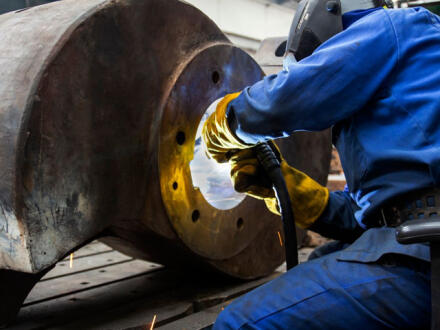
Paying for welding school in New Mexico can feel bigger than the weld itself. Tuition, fees, books, safety gear, and travel costs add up fast, whether a student is aiming for a short-term certificate or a longer degree in welding, manufacturing, or industrial technology.
The good news is simple: New Mexico welding scholarships come from more than one place. State programs, community colleges, universities, trade groups, employers, and local foundations all offer money that can shrink the bill. In some cases, a student can combine several awards and cut out thousands of dollars in out-of-pocket costs.
That matters because welding training is not cheap. A basic welding setup can run $250 to $900 for personal protective gear, hand tools, boots, and supplies before class costs are even counted. Add tuition for 12 to 15 credit hours, and the total can jump quickly.
This guide breaks down 10 practical funding options for students looking for New Mexico Welding Scholarships for High School Students, New Mexico Welding Scholarships for College, and even New Mexico Welding Scholarships for University programs. It also covers options for New Mexico Welding Scholarships for first-year students who need help right away.
The goal is not just to list awards. It is to show where the money comes from, who usually qualifies, and how students can piece together several forms of aid without making the process harder than it needs to be.
1. New Mexico Opportunity Scholarship For Welding And Skilled Trades Students
The New Mexico Opportunity Scholarship is one of the strongest starting points for welding students at public colleges. It is built for residents who want job training in high-demand fields, and welding usually fits that skilled-trades lane well.
In plain terms, this program can cover up to 100% of tuition and required fees after other financial aid is applied at eligible public schools. That makes it especially useful for students who do not receive a full Pell Grant or who still have a gap after federal aid.
A student in a welding certificate at a community college might use it like this:
- Pell Grant covers part of tuition
- Opportunity Scholarship fills the remaining tuition gap
- The student pays for gloves, jackets, and fuel gas supplies separately
That kind of stack can reduce a bill by several thousand dollars over one academic cycle.
Students should still file the FAFSA early. Even when state aid is the main target, the FAFSA often determines how much "last-dollar" support a student can receive. The New Mexico Higher Education Department outlines statewide financial aid programs and college funding rules, which helps students confirm whether their welding program is covered.
For students comparing New Mexico Welding Scholarships for College, this option is often the first one to check because it applies broadly across public institutions rather than to only one school or one donor.
2. New Mexico Legislative Lottery Scholarship For Recent High School Graduates Entering Welding Programs
The New Mexico Legislative Lottery Scholarship is a familiar option for recent high school graduates who move straight into college or trade training. For welding students, it can be a strong bridge between graduation and a certificate or associate degree.
This scholarship usually works best for students who enroll full-time at an eligible public college soon after high school. In many cases, students need to complete a qualifying first term and maintain a minimum 2.5 GPA while taking the required credit load, often 12 or more credits.
That structure matters for welding majors because shop-heavy schedules can be demanding. Missing classes in a lab course is not like missing a lecture. One lab can include 3 to 5 hours of hands-on work, and makeup time is not always available.
Students trying to sort out deadlines often compare official campus guidance with student-friendly scholarship tools. A listing for the lottery scholarship details can help them spot basic eligibility points before they dig into campus financial aid steps.
For a first-year student living at home, this award can be the difference between paying only for books and gear versus paying full tuition. That is why it stays near the top of the list for New Mexico Welding Scholarships for High School Students entering college right after graduation.
3. College-Specific Welding Scholarships At New Mexico Community Colleges
Community colleges are one of the best places to find targeted welding aid. They often have smaller scholarship pools than large universities, but those pools can be easier to access because the applicant group is smaller too.
A few colleges also bundle institutional scholarships with local donor funds, emergency grants, and workforce support. That means a student may apply once and be matched with 3 or 4 separate awards.
Examples students should research include:
- program scholarships through financial aid offices
- foundation scholarships tied to skilled trades
- department awards for welding, machine tool, or industrial technology
- emergency completion grants for tools and test fees
At New Mexico Junior College, students can review school-specific programs while comparing tuition and certificate pathways. Southeast New Mexico College is another strong school to review for career and technical education options tied to regional workforce demand.
A practical example: a student at a community college could receive a $750 departmental tool award, a $1,000 foundation scholarship, and state tuition help in the same term. That kind of package can cover the welding hood, FR clothing, textbooks, and certification testing.
This category matters because New Mexico Welding Scholarships for College are not only statewide programs. Sometimes the most useful money sits inside the college foundation office, not on a giant national scholarship page.
4. New Mexico Welding Scholarships For High School Students In CTE And Dual Credit Pathways
High school students do not need to wait until graduation to start lowering future welding costs. Career and Technical Education programs, dual credit classes, and pre-apprenticeship tracks can open the door early.
A student in a CTE welding pathway may already be building the exact record scholarship committees want. That includes attendance, instructor recommendations, lab performance, OSHA safety habits, and a clear plan for what comes next.
Strong places to look include:
- school district CTE offices
- local community college dual credit programs
- foundation awards for seniors entering trades
- regional scholarships focused on rural students
For example, a senior who completes 6 dual credit hours in welding or industrial technology may start college with fewer classes left to pay for. That can cut one semester bill by hundreds or even thousands of dollars, depending on the school.
Students searching for New Mexico Welding Scholarships for High School Students should also cast a wider net than "welding only" awards. General New Mexico awards can still support a future welder. A listing for the state scholar program can fit students who show academic promise even if the award is not trade-exclusive.
This is where planning ahead pays off. One recommendation letter from a welding instructor, one resume with competition hours, and one short essay can be reused across 5 to 10 applications with only small edits.
5. New Mexico Welding Scholarships For First-Year Students Starting Certificate Or Degree Programs
First-year students face a weird funding gap. They often know their tuition bill, but they do not yet know the real cost of welding supplies, transportation, or certification exams. That is why New Mexico Welding Scholarships for first-year students deserve their own category.
These students should look for money aimed at beginners, not just continuing students. Some donors like supporting first-semester students because the risk of dropping out is highest early on. According to federal student success data, retention often slips most during the first year, so scholarship committees sometimes focus money there.
Good first-year targets include:
- scholarships for recent graduates
- awards for new certificate students
- need-based campus grants
- first-generation college aid
- tool and equipment stipends
A realistic first-term budget can include:
- $1,200 to $2,500 for tuition after aid gaps
- $300 to $800 for PPE and supplies
- $100 to $250 for textbooks or online codes
- $50 to $150 for welding test or lab fees
Students using a free match platform can save time by filtering for fast applications and trade-friendly awards. On Studentscholarships.org, many listings take under 2 minutes to start, which helps students apply to more opportunities before deadlines pass.
The main point is simple: first-year welders should not wait for "big" scholarships only. Several smaller beginner awards can often solve the immediate cash problem faster.
6. University And Technical Program Aid For Manufacturing, Welding, And Related Fields
Some students start in welding and later move into welding engineering technology, manufacturing, construction management, or industrial systems. That is where New Mexico Welding Scholarships for University programs become relevant.
Universities may not always label aid as "welding," but related majors still qualify for funding connected to metals, fabrication, engineering, and applied technology. A welder who wants to become a welding inspector, production supervisor, or manufacturing manager should pay attention here.
At Eastern New Mexico University, students can compare technical and transfer-friendly pathways that may connect welding experience with broader applied degrees. At large public universities, aid offices also help students pair departmental awards with general institutional aid.
For example, a student moving from a community college welding program into a technical bachelor's path might stack:
- a transfer scholarship worth $1,500
- a departmental award worth $1,000
- federal aid like a Pell Grant of up to $7,395
Students interested in manufacturing-linked funding should also scan related scholarship databases. An award like the engineering foundation aid may support fields that connect naturally with welding, fabrication, and industrial careers.
This route is not for everyone. But for students who want long-term growth beyond the booth, university and technical aid can turn welding skills into a broader career ladder.
7. New Mexico Welding Association Scholarships And Industry-Sponsored Awards
Trade associations and industry donors are some of the best sources of focused welding aid. These awards are usually built for students who are serious about the craft, not just filling out random scholarship forms.
That matters because a welding association may value hands-on proof more than class rank. A student with 240 shop hours, a strong instructor letter, and one fabrication project can sometimes stand out more than a student with a polished essay alone.
National and industry-connected options can include awards for women in welding, skilled trades students, and members of welding-related groups. For example, the women in welding award supports a specific part of the pipeline that employers want to grow. Broader trade support can also come from options like the Hastings welding fund, which connects to welding education and industry development.
For students looking specifically for New Mexico Welding Association Scholarships, this category is worth extra effort because the applicant pool is often more focused but smaller than general state scholarships.
Eligibility And Application Tips For Association-Based Awards
Association-based awards usually ask for more trade-specific detail. That can actually help welding students.
Students should be ready to show:
- a clear welding or fabrication career goal
- proof of enrollment or acceptance
- instructor or employer recommendations
- photos of projects or competition work, if allowed
- a short essay with exact plans, not vague interest
A better essay says, "They want to earn a structural welding certificate and test for AWS D1.1 within 12 months." That is stronger than saying they "love working with metal."
Small details matter too. If a donor asks for 2 references, sending 1 usually kills the application.
8. Employer-Sponsored Scholarships, Apprenticeships, And Workforce Training Grants
Employers often need welders badly enough that they help pay for training. In areas with energy, construction, manufacturing, pipelines, or heavy equipment repair, this can be one of the most practical funding options on the list.
Employer-backed support comes in several forms:
- tuition reimbursement
- paid apprenticeships
- sponsored certification testing
- sign-on training grants
- workforce board funding for short-term credentials
A common setup looks like this: a student works 20 to 30 hours per week in a shop, receives partial tuition help, and commits to staying with the employer after training. That is not "free money," but it can reduce debt fast while adding real job experience.
Public universities and colleges sometimes connect students with these routes through financial aid and career offices. The UNM financial aid office is a good example of how students can track institutional aid while also asking about work-study, workforce partnerships, and outside sponsorships.
Students should also search local awards that are not welding-exclusive but still help with school costs. A regional option like the Davis New Mexico award can free up cash for tools, gas, commuting, or testing even if the scholarship itself is not trade-specific.
This category works especially well for students who want income now, not just tuition support later.
9. National Welding Scholarships Open To New Mexico Students
Students should not stop with in-state aid. Some of the best welding money is national, and New Mexico residents are fully eligible as long as they meet the program rules.
National awards can be more competitive, but they also tend to be larger. A single scholarship worth $2,500 or $5,000 can wipe out a big share of certificate costs at a public college.
Two useful examples are scholarship databases connected to welding trade organizations and donors. Students can compare the AWS national awards with other skilled-trades options like the tradesperson scholarship. Even when one award is not New Mexico-specific, it may still pair well with local aid.
A smart application plan usually includes:
- 3 in-state scholarships
- 3 school-based scholarships
- 3 national scholarships
That gives a student 9 total shots instead of only 2 or 3. If each application takes 20 to 40 minutes, that is a manageable project over a few weekends.
This section matters because New Mexico Welding Scholarships for College do not need to come only from New Mexico. The student's mailing address does not limit every dollar available to them.
10. Local Foundation, Tribal, And Regional Scholarships That Can Be Combined With Welding Aid
Local money is often overlooked, which is strange because it can be easier to win. Many local foundations, tribal education offices, county groups, churches, and regional nonprofits receive fewer applications than national programs.
That smaller pool can change the odds fast. A national scholarship may draw 1,000 applicants. A county or tribal award may draw 25 to 80. Even a $500 award matters when it covers boots, a jacket, and a semester parking pass.
Regional examples can include foundation and community-based opportunities. The Southwestern New Mexico award is the kind of local listing students should not skip, especially if they live in the matching service area. Students from tribal communities should also ask directly about education grants, since some programs support tuition, books, and living costs together.
Broader community funding can come through organizations such as the New Mexico Community Foundation, where students may find scholarship directories or local giving programs connected to place-based support.
These awards are perfect add-ons for students already using state aid, federal aid, or campus-based grants.
How To Stack Smaller Awards To Reduce Out-Of-Pocket Costs
Stacking means combining several smaller awards instead of waiting for one huge one. In welding, that strategy works well because many costs are small but immediate.
A sample stack might look like this:
- $1,000 state tuition aid
- $750 college foundation award
- $500 local community scholarship
- $400 tribal book grant
- $300 employer tool stipend
That adds up to $2,950.
For a student at a public college, $2,950 can cover one term's remaining tuition gap plus PPE, textbooks, and test fees. It is not flashy. But it is effective.
New Mexico Welding Scholarships - Frequently Asked Questions
What is the New Mexico Opportunity Scholarship and how does it support welding students?
The New Mexico Opportunity Scholarship covers up to 100% of tuition and fees for resident students pursuing welding and other skilled trades at public colleges, helping fill gaps not covered by federal aid like Pell Grants.
How can New Mexico high school students benefit from welding scholarships before graduating?
High school students can access welding scholarships through Career and Technical Education (CTE) and dual credit programs, earning early credits and gaining qualifications that strengthen scholarship applications for future welding studies.
Are there college-specific welding scholarships available at New Mexico community colleges?
Yes, many New Mexico community colleges offer targeted welding scholarships through their financial aid offices, foundations, or welding departments, which can include aid for tuition, tools, and supplies alongside state-funded scholarships.
What types of welding scholarships are available for first-year welding students in New Mexico?
First-year students can find scholarships focused on beginners, including need-based campus grants, tool stipends, and awards for new certificate students, helping cover initial costs like PPE, textbooks, and certification fees.
Can welding students in New Mexico receive scholarships from industry associations or employers?
Yes, trade associations and employers often provide scholarships, apprenticeships, and workforce training grants that reward hands-on experience and commitment, offering practical funding and job opportunities in welding.
How can students effectively combine multiple welding scholarships in New Mexico to reduce costs?
Students can 'stack' scholarships by combining state aid, college foundation awards, local grants, tribal scholarships, and employer stipends to cover tuition gaps and expenses like gear, testing, and transportation, substantially lowering out-of-pocket costs.






