

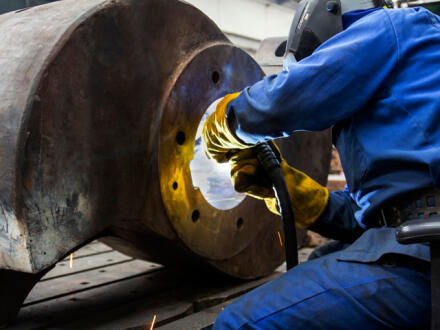
Welding school can cost less than a four-year degree, but it still hits hard when tuition, books, gear, testing fees, and gas are all due at once. A student in Georgia might pay for boots, gloves, a jacket, helmet, grinders, and lab supplies before the first big weld bead even cools. That's why Georgia welding scholarships matter so much.
The good news is that students are not stuck with one funding option. They can stack local trade scholarships, technical college foundation awards, employer aid, national skilled-trades programs, and state financial aid. In many cases, a student who applies to 8 to 12 solid opportunities has much better odds than someone who sends only 2 applications.
This guide breaks the search into clear paths for high school seniors, first-year technical college students, students already in certificate or diploma programs, and university students in welding-related engineering tracks. It also covers Georgia Welding Scholarships for High School Students, Georgia Welding Scholarships for College, Georgia Welding Scholarships for University, and several less obvious funding sources that can reduce out-of-pocket costs fast.
One smart habit helps from the start: keep a simple spreadsheet with deadlines, award amounts, and document requirements. Students who track even 10 applications in one place usually miss fewer deadlines and reuse essays more efficiently. That can save several hours and prevent the kind of last-minute scramble that sinks otherwise strong applications.
1. Georgia Welding Association Scholarships For Students Pursuing Skilled Trades
Trade groups are often the first place students should look because their awards are built for people entering hands-on careers, not broad academic majors. For students focused on welding, fabrication, pipe work, or metal joining, Georgia Welding Association Scholarships can be more relevant than a general merit award.
These scholarships usually favor applicants who can show three things:
- A clear trades goal
- Proof of training or enrollment
- A real connection to welding work
That connection can come from shop class, dual enrollment, FFA projects, SkillsUSA, part-time work in a fabrication shop, or even repairing farm equipment with a parent or mentor. A short essay that explains a real project often lands better than generic lines about "wanting to work with hands."
A student who writes, "They rebuilt a 12-foot utility trailer and learned how poor fit-up adds 40 extra minutes of grinding," sounds more convincing than someone who stays vague.
Eligibility Priorities And Typical Award Criteria
Most welding association scholarships look at a mix of practical and academic signals. The GPA bar is often lower than it is for pure academic scholarships, but effort still matters. A 2.5 GPA, strong attendance, and instructor support can beat a 3.4 GPA with a weak application.
Typical criteria include:
- Enrollment in a welding, manufacturing, or related skilled-trades program
- Georgia residency or attendance at a Georgia school
- A transcript showing steady progress
- One or two recommendation letters
- An essay with career goals
- Sometimes financial need
Students should also cross-check national welding awards that can pair well with local association funding. One example is the national welding awards page, which can help students compare broader trade-focused options while they apply locally.
A practical target is 5 applications in 30 days. That pace is manageable and gives students enough volume to improve their odds without burning out.
2. Georgia Welding Scholarships For High School Students Starting Early
Students do not need to wait until graduation to chase welding money. In fact, Georgia Welding Scholarships for High School Students are often easiest to win when a student starts during senior year and can still use shop instructors, counselors, and CTE coordinators for help.
Starting early matters because many scholarship packets require a transcript, attendance history, recommendation letters, and proof of program participation. Pulling all of that together can take 2 to 3 weeks, especially when school offices are busy.
A strong high school welding applicant usually has at least one of these on the record:
- Completion of welding or metals classes
- CTE pathway participation
- SkillsUSA, FFA, robotics, or construction projects
- Community service or work experience
- A postsecondary plan tied to a certificate, diploma, or associate path
Students from rural areas should not assume fewer local options means no help exists. Georgia-based scholarships tied to agriculture, utilities, engineering, and workforce development can overlap with welding goals. For example, a student interested in structural welding for mining or heavy industry may find adjacent options through the Georgia Mining Foundation award.
Small awards matter too. A $750 scholarship can cover a helmet, gloves, jacket, safety glasses, and part of a tool kit.
Best-Fit Opportunities For Seniors In Career And Technical Education Programs
CTE seniors are often stronger scholarship candidates than they think. They already have the proof many scholarship committees want: attendance in a trade pathway, lab hours, instructor feedback, and project work that shows follow-through.
The best-fit opportunities usually reward students who can point to specific output, not just interest. That might include:
- A completed weld test coupon
- A trailer, gate, or smoker build
- OSHA or safety training hours
- Placement in a SkillsUSA event
- Work-based learning hours at a local shop
A student who logs 96 hours in a school lab and 120 hours in work-based learning has a concrete story to tell. Numbers like that make an essay feel real.
This is also where counselor support helps. Schools that feed students into technical colleges often know about state aid handled through the Georgia Student Finance Commission, including grant and scholarship programs that may combine with private awards.
For students who want a fast application pipeline, a searchable scholarship database can cut time sharply. Platforms with filtered results, such as the larger scholarship listings page, can help seniors compare deadlines and avoid spending 45 minutes hunting for basic eligibility details on each site.
The key move is simple: apply before graduation chaos hits. Once finals, senior events, and work hours pile up, good opportunities get missed.
3. Georgia Welding Scholarships For First-Year Students Entering Technical College
First-year students often face the nastiest money gap. They may have tuition due, but they also need transportation, steel-toe boots, lab fees, and personal protective equipment right away. That makes Georgia Welding Scholarships for first-year students especially useful.
Technical college students should look in four places first:
- School foundation scholarships
- Program-specific awards through welding or industrial departments
- State aid and grants
- National trade scholarships open to certificate students
The first semester is not too early. It is actually the right time. Some programs award aid after enrollment is confirmed, and others have rolling or term-based deadlines.
A realistic budget shows why first-year scholarships matter. If a student spends $185 on boots, $140 on a helmet, $65 on gloves and sleeves, and $90 on books, that is $480 before routine living costs even enter the picture.
Students should ask both the admissions office and the financial aid office one direct question: "Which scholarships are only for enrolled welding students?" Those quieter awards often have fewer applicants.
This is also a good point to search specialized trade listings such as the JFLF welding awards. Niche awards can be a better fit than broad scholarships because the essay can focus on real welding goals, certifications, and shop experience instead of generic college ambitions.
4. Georgia Welding Scholarships For College Students In Certificate And Diploma Programs
Students already enrolled in a certificate or diploma track have one big advantage: they can prove commitment. Scholarship committees love that. A student who has already passed shop safety, shown up for labs, and completed weld assignments looks less risky than someone who only says they plan to start.
That is why Georgia Welding Scholarships for College can open up after the first term. Colleges, donors, and trade groups often want to fund students who have momentum.
Strong applicants in certificate and diploma programs usually show:
- Solid attendance in lab courses
- A passing or above-average GPA
- Instructor feedback on work ethic
- Progress toward AWS-aligned skills or testing
- A clear employment plan after completion
Concrete progress helps. If a student improved from failing bend tests to passing 8 out of 10 practice coupons, that tells a stronger story than "worked hard all semester."
Students in related trade areas should also stay open to adjacent awards. For example, someone aiming for welding in utilities or infrastructure could reasonably review the water professionals scholarship if their career path overlaps with public systems, plant maintenance, or pipe-related work.
And students planning to continue into a higher-level technical or engineering path can also compare options at institutions such as Kennesaw State, where advanced manufacturing and engineering-related studies may connect with longer-term welding careers in inspection, management, or design.
How To Strengthen A Welding Scholarship Application In College
College students can improve an average application in one afternoon if they stop writing in general terms. Scholarship committees do not just want ambition. They want evidence.
The best college applications usually include these details:
- Exact lab hours completed or courses passed
- Specific welding processes studied, such as SMAW, GMAW, GTAW, or FCAW
- One project example with a result
- One instructor quote or recommendation with detail
- A short career plan with job targets
For example, "They completed 144 lab hours, earned a 3.2 GPA, and want to test for structural plate work within 6 months" sounds concrete and believable.
Students should also clean up three common weak spots:
- Essays that never mention welding processes
- Recommendation letters with vague praise
- Missing budget details
A budget matters more than students think. If an applicant explains that $1,250 would cover tuition balance, PPE replacement, and a certification test fee, the committee can picture exactly where the money goes.
Students who need more trade-specific options can also compare awards such as the Glenn W. Oyler technical scholarship. The bigger lesson is simple: specific numbers, course names, and project results beat motivational language almost every time.
5. Georgia Welding Scholarships For University Students In Welding-Related Engineering Paths
Not every welding student follows a straight shop-to-job route. Some move into welding engineering, mechanical engineering, industrial systems, manufacturing, materials, or construction management. That is where Georgia Welding Scholarships for University students come into play.
These students may not be pursuing a basic welding certificate, but their path still connects directly to welding work. Think weld design, metallurgy, quality control, nondestructive testing, production planning, and automation.
Scholarship committees in this lane often value:
- Higher math and science performance
- Engineering or manufacturing coursework
- Research, robotics, or capstone projects
- Internships with plants, contractors, or fabrication companies
- Clear links between engineering study and welding applications
A university student who designed a fixture that cut setup time by 18 minutes per run has a very strong story. That is the kind of number that separates an application.
Georgia engineering students should cast a wider net than just welding-named awards. Programs tied to engineering foundations or technical innovation can still fit a welding-related path. One useful example is the Georgia engineering scholarships page.
Students can also review engineering and manufacturing programs at institutions such as the University of North Georgia or the University of West Georgia when building a transfer or long-range funding plan. A student who starts in technical college and later transfers may be able to combine trade funding with university aid if deadlines are tracked early.
6. Technical College Foundation Scholarships That Support Welding Training In Georgia
Technical college foundations are one of the most overlooked places to find welding money. That is a mistake. These funds are often set up by local donors, employers, alumni, and community groups who want to support students in that exact region.
Because the applicant pool is smaller, the odds can be better than for national awards. A campus-wide scholarship with 60 applicants is a very different fight from a national program with 2,000 applicants.
Foundation scholarships may cover:
- Tuition balances
- Books and lab fees
- Emergency expenses
- Tools and protective gear
- Transportation or childcare in some cases
Students should look for awards through the college foundation, not just the main financial aid page. The welding department chair, dean, or student success office may know about scholarships that are lightly advertised.
Good application timing matters here. Many foundation cycles open before the term starts or early in the semester. A student who waits until the bill is overdue may already be late.
A smart move is to prepare one reusable packet with:
- Resume
- Unofficial transcript
- Short essay of 250 to 400 words
- One budget summary
- One recommendation letter
That packet can be reused across multiple awards in under 20 minutes per application once the core documents are ready. For students juggling class and work, that time savings is huge.
7. Employer-Sponsored Welding Scholarships, Apprenticeships, And Workforce Grants
Some of the best welding funding does not come from a scholarship committee at all. It comes from employers who need trained workers. Shops, manufacturers, contractors, shipyards, utilities, and industrial plants often help pay for training because hiring skilled welders is expensive and time-consuming.
This path can include:
- Tuition reimbursement
- Paid apprenticeships
- Sponsorship for certification testing
- Workforce grants through regional programs
- Sign-on support tied to training completion
For a student, the appeal is obvious. Earning $16 to $24 per hour during training can reduce the need for loans faster than a one-time small award.
The tradeoff is commitment. Employer-backed funding may require a student to maintain grades, complete a set number of work hours, or stay with the company for a defined period.
Students should ask local employers specific questions:
- Do they pay for welding school or test fees?
- Do they sponsor apprenticeships?
- Is there a work commitment after training?
- Which welding processes do they hire for most?
This route can pair nicely with private scholarships. For example, a woman entering the trade could layer employer support with an industry-specific award like the Women of Gases & Welding scholarship.
A concrete example: if an employer covers $2,000 in tuition and a student wins $1,000 in private aid, that combined $3,000 can wipe out a large share of a short-term certificate program.
8. National Skilled Trades Scholarships Georgia Students Can Use For Welding Education
Students should not stop at state lines. National skilled-trades scholarships can be used by Georgia residents if the program rules allow training at an eligible school. That matters because national awards may offer bigger amounts or more specialized trade categories than local scholarships.
These opportunities often support:
- Welding certificate students
- Community and technical college students
- Women in welding and manufacturing
- Students entering industrial trades
- Apprentices or pre-apprentices
The main advantage is scale. A national program may award $2,500, $5,000, or more, which can cover a serious chunk of tuition and gear.
The main challenge is competition. A national committee may read hundreds of applications, so the essay must be sharper. Students need specific details about projects, work experience, career targets, and why welding fits them.
This is a good lane for students who already have a decent packet and want to widen their search beyond Georgia. A focused national application can also support students with unusual goals, like underwater welding support roles, aerospace fabrication, or welding inspection.
Students who want one more example of a trade-focused option can review the Dennis' Welding scholarship. Even when an award is competitive, a precise application with real project details has a much better shot than a rushed one.
Where To Search, Compare, And Apply Faster For Georgia Welding Scholarships
The search gets easier when students stop hunting one scholarship at a time and start using a repeatable system. The goal is not just to find more awards. The goal is to submit more good applications with less wasted time.
A fast system usually looks like this:
- Build a list of 12 to 20 scholarships
- Mark deadlines in one spreadsheet
- Save transcripts and essays in one folder
- Reuse a core essay, then customize 20 to 30 percent for each award
- Ask for recommendation letters at least 14 days early
Students should search in layers:
- High school or college foundation awards
- Georgia trade and workforce scholarships
- National welding and skilled-trades scholarships
- Employer-sponsored training support
This is where a platform built for quick matching helps. Students using a scholarship finder with short applications and personalized results often avoid the usual maze of duplicate forms. On StudentScholarships.org, pages such as the Donald F. Hastings award show the kind of individual listing students can compare quickly when building a shortlist.
The biggest speed gain comes from preparation. A student with a saved resume, transcript, budget sheet, and 350-word essay can often complete a new application in under 10 minutes instead of starting from zero each time.
Georgia Welding Scholarships – Frequently Asked Questions
What types of Georgia welding scholarships are available for high school students?
High school students in Georgia can apply for welding scholarships that reward completion of welding classes, CTE pathway participation, and involvement in SkillsUSA or FFA projects. These awards often require transcripts, recommendation letters, and proof of program participation.
How can first-year technical college students in Georgia find welding scholarships?
First-year students should explore school foundation scholarships, program-specific awards from welding departments, state aid through the Georgia Student Finance Commission, and national trade scholarships. Early application is crucial due to deadlines and first-semester expenses like gear and lab fees.
What should welding students include in their scholarship applications to increase their chances?
Strong applications detail exact lab hours completed, specific welding processes studied, project examples, instructor recommendations, and a clear career plan. Including a budget explanation for how scholarship funds will be used also makes applications more convincing.
Are there welding scholarships in Georgia specifically for university students studying welding-related engineering?
Yes. University students pursuing welding-related fields such as mechanical, industrial, or manufacturing engineering can apply for scholarships that value math and science performance, relevant coursework, research projects, internships, and clear welding application connections. Institutions like the University of North Georgia and University of West Georgia offer relevant programs.
Can welding students in Georgia benefit from employer-sponsored scholarships or apprenticeships?
Absolutely. Many employers in manufacturing, fabrication, and industrial sectors offer tuition reimbursement, paid apprenticeships, certification funding, and workforce grants. Such support often requires work commitments but can significantly offset training costs and can be combined with private scholarships like the Women of Gases & Welding Scholarship.
Where can Georgia welding students find national scholarships and how do those differ from local awards?
National skilled trades scholarships often award larger sums, support diverse trade categories, and can be used by Georgia residents at eligible schools. These programs are more competitive but offer opportunities for specialized goals like underwater welding or aerospace fabrication. Students with strong local applications can expand their search through these national awards for added funding.







