

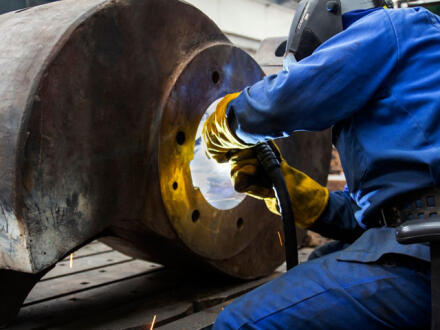
Welding training can cost a lot faster than most students expect. Tuition, lab fees, safety gear, boots, helmets, books, and travel can push a short certificate into the thousands and a longer degree much higher.
That's why Colorado welding scholarships matter. They can cut tuition, reduce tool costs, and make it easier for students to stay in school instead of picking up extra shifts just to cover class expenses.
For students in Colorado, the good news is simple: money exists at the local, state, school, and national level. Some awards focus on high school seniors. Others help first-year students, returning college students, or university students studying welding-related fields such as manufacturing, industrial technology, or engineering.
This guide breaks the search into six practical scholarship lanes. Instead of one giant list, it shows where each kind of student should look first, what committees often care about, and how to build a stronger application. It also points to real examples, including Colorado-based opportunities and national trade awards that can still help a student in Pueblo, Greeley, Grand Junction, Denver, or Durango.
A quick fact helps explain the need: the U.S. Bureau of Labor Statistics reports a median annual wage of $51,000 for welders, cutters, solderers, and brazers. That makes welding one of the clearest paths from school to paid skilled work. The right scholarship can make that path much cheaper.
1. Colorado Welding Association Scholarships Worth Prioritizing First
Students should usually start with Colorado Welding Association Scholarships and other local trade-backed awards before chasing broad national programs. Local groups often want to support the next welder, inspector, or fabricator who will work in their own shops, unions, and industrial plants.
That local angle matters. A committee in Colorado may recognize a student's CTE instructor, know the labor needs in the region, or care about whether the applicant plans to stay and work in-state after training.
Awards in this lane can vary a lot. Some cover $500 to $2,500 for tuition, while others help with tools, PPE, testing fees, or welding supplies. In welding programs, even a small award can go far. A quality auto-darkening helmet alone can cost $150 to $400, and steel-toe boots can add another $120 to $220.
Students should also widen the local search to trade and workforce funds. Colorado applicants looking at construction or industrial paths often find related support through programs such as construction aid, which can overlap with welding-heavy training routes.
Eligibility, Award Types, And What Local Committees Usually Look For
Most local welding committees review a short group of basics first:
- Colorado residency or strong Colorado ties
- Enrollment in a welding or closely related program
- A minimum GPA, often 2.5 to 3.0
- A teacher, employer, or shop supervisor recommendation
- A statement of career goals
After that, many committees look for proof that the student is serious about the trade. That proof can include:
- CTE welding classes
- FFA, SkillsUSA, or 4-H projects
- Part-time shop work
- Metal fabrication projects
- AWS student chapter activity
A strong application often sounds concrete, not generic. "They built six trailer gate hinges in class and earned a 94% on bend-test welds" lands harder than "they love welding."
Students in rural areas should not count themselves out. Community-based funders, including groups linked to regional philanthropy like the Western Colorado Community Foundation, often support workforce training across smaller towns where skilled-trade shortages are easy to see.
One more practical tip: apply early even if the award seems small. Three scholarships worth $1,000 each can cover a large share of a one-semester certificate at a community college.
2. Colorado Welding Scholarships For High School Students Entering Skilled Trades
Colorado Welding Scholarships for High School Students often reward students who already showed up in the shop before graduation. That means seniors in welding classes, dual-enrollment students earning college credit, and teens who used summer work to prove they can handle the trade.
This group has a real advantage: committees like momentum. A senior who finished a fabrication project, earned OSHA-10, and can name the school they plan to attend looks ready to use the money right away.
Colorado's CTE pipeline helps here. According to the Colorado Department of Higher Education, workforce and career pathways remain a major state focus, especially for students heading into high-demand technical fields. Students can use state education and workforce data from Colorado higher ed resources to strengthen an essay about job demand and training value.
High school applicants should also search scholarships that are not labeled "welding" but still fit trade-bound students. For example, students with agricultural or project-based backgrounds may find room through 4-H support if welding has been part of livestock, equipment, or metalwork projects.
Best Opportunities For Seniors, CTE Students, And Dual-Enrollment Applicants
The best opportunities usually fall into four buckets.
1. School-linked scholarships
High school counselors, CTE directors, and district foundations often know about local donor money before it appears in a broad search. A counselor may have a list of 8 to 20 local awards with deadlines between January and April.
2. Entering-freshman awards
Some scholarships are built for Colorado residents starting college for the first time, including resident freshman funding. These are useful when a student plans to study welding at a community college or a related technical major at a four-year school.
3. Trade-specific national awards
National programs still matter for Colorado seniors. A student planning arc welding training can start with national welding awards, which often support applicants entering formal welding education.
4. Women in welding support
Female students should pay close attention to scholarships tied to representation in the trade. Programs such as the women in gases and welding award can be especially useful because they speak directly to a smaller applicant pool.
For a better shot, seniors should submit a portfolio with 3 to 5 photos of welds or shop projects, one instructor recommendation, and a short essay with a clear plan: school, credential, and target job.
3. Colorado Welding Scholarships For First-Year Students Starting Strong
Colorado Welding Scholarships for first-year students are different from high school senior awards. Once a student has graduated, committees often shift from "promise" to "proof." They want to know if the student enrolled, showed up, and started building skills.
That makes the first term important. A student who completes the opening semester with a 3.2 GPA, strong attendance, and instructor feedback can become much more competitive by the next deadline cycle.
Trade school students should also look beyond scholarships with "welding" in the title. Funding may sit under categories such as workforce development, technical education, manufacturing, construction, or industrial careers. On a broad search platform like scholarship listings, a first-year student can filter for residency, trade fields, and short application windows in one place.
Colorado schools with technical and hands-on pathways can also matter. Institutions such as Colorado Mountain College offer certificate and associate-level options that fit students who want a lower-cost start before moving into full-time work.
How To Find Awards For New Trade School, Community College, And Freshman Applicants
First-year students should search in layers, not randomly.
- Layer 1: Financial aid office awards for enrolled students
- Layer 2: Program or department scholarships tied to welding, manufacturing, or industrial tech
- Layer 3: State resident awards based on GPA or need
- Layer 4: Employer, union, and trade foundation support
A smart search plan looks like this:
- Confirm enrollment status and FAFSA-related requirements with the school.
- Ask the welding department whether faculty nominate students internally.
- Request a cost sheet that lists tuition, fees, tools, and testing.
- Match each cost to a scholarship type.
That last step helps a lot. If the welding kit costs $975, the student can say exactly how a small award will be used. Committees respond well to a clear money plan.
Students attending a four-year Colorado school as freshmen should also scan broader merit options, especially if they plan to shift into a welding-related major later. Pages featuring Colorado resident merit aid can help bridge the first year while the student builds a stronger trade or engineering profile.
In short, first-year applicants win by showing that the plan already started, not that it might start someday.
4. Colorado Welding Scholarships For College Students Who Are Already Enrolled
Colorado Welding Scholarships for College students often favor persistence. By the time a student is already enrolled, scholarship reviewers can judge more than hope. They can review grades, attendance, completed lab work, and instructor comments.
That matters because trade programs can be demanding. A returning student who made it through blueprint reading, safety labs, and out-of-position weld tests has already done something measurable.
Program-specific funding is common at this stage. A community college or technical school may reserve awards for second-semester or second-year students who are progressing toward a certificate, associate degree, or welding credential. One instructor recommendation plus a transcript can be enough to make the shortlist.
Students should also watch for donor scholarships that support technical fields more broadly. Awards such as the Glenn Oyler technical fund or the William Howell memorial award can fit enrolled students whose training connects to technical or workforce goals.
Where Returning Students Can Find Program-Specific And Merit-Based Funding
Returning students should search in five places.
- Department offices: welding, manufacturing, industrial tech, applied science
- Foundation offices at the college
- Local employers that need fabrication talent
- Professional associations tied to welding or metals
- Community scholarships based on merit, need, or geography
The best applications show results with numbers. Examples include:
- Completed 24 credit hours
- Earned a 3.4 GPA in shop and classroom work
- Logged 96% attendance
- Passed a plate certification practice test
- Worked 18 hours per week while staying enrolled
Students can also turn work history into an advantage. If they helped repair farm equipment, assisted in a fab shop, or welded brackets for a local contractor, that practical story matters.
At schools with strong hands-on reputations, returning students may find campus-based options through aid offices and foundations. For example, Fort Lewis College highlights applied learning, which can help students connect classroom work to career outcomes in scholarship essays.
For students balancing school and bills, even a $1,200 award can cover a semester of fuel, consumables, and testing fees. That may be the difference between finishing on schedule and stopping out.
5. Colorado Welding Scholarships For University Students In Welding-Related Fields
Not every student aiming for a welding career attends a pure welding program. Colorado Welding Scholarships for University students may apply to majors linked to welding, such as mechanical engineering, industrial technology, manufacturing, metallurgy, construction management, or supply chain work tied to fabricated products.
This group should think in terms of connection. If a student studies design, materials, or production systems that support welding and fabrication, they may still qualify for industry scholarships.
That's especially true because advanced welding work now overlaps with automation, quality control, inspection, and materials science. The American Welding Society notes that welding careers span far beyond torch-on-metal shop roles, including engineering and inspection tracks.
University students should also look at industry-adjacent scholarships. A student interested in steelmaking, fabrication systems, or manufacturing plants might fit programs like steel career funding, even if the degree title does not say "welding."
Options For Engineering, Industrial Technology, And Advanced Manufacturing Majors
University applicants usually do best with a wider scholarship frame.
Engineering students can emphasize weld design, heat effects, failure analysis, and materials selection. A solid essay might mention a capstone project, finite element work, or a lab report on steel properties.
Industrial technology students can stress production flow, shop safety, fabrication methods, and quality systems. If they improved a shop process by 12% in a class project, that belongs in the application.
Advanced manufacturing students should highlight automation. Robotic welding cells, CNC integration, sensors, and inspection systems are a real part of modern fabrication.
Students at Colorado universities can also pair school-based aid with outside scholarships. Institutions such as the University of Northern Colorado and the CU scholarship office maintain campus aid systems that may stack with trade or industry funding.
One precise strategy works well here: build a resume that shows the welding link in plain language.
- Senior design project on welded structures
- Materials lab on tensile strength and fracture
- Internship at a steel or fabrication company
- OSHA or safety coursework
- CAD work for fixtures or jigs
That translation matters. Reviewers should not have to guess why the student belongs in the applicant pool.
6. Welding Scholarships In Colorado From National Trade And Industry Organizations
National trade and industry organizations can expand a student's options fast. Even when the scholarship is not Colorado-only, a Colorado resident can still use it to pay for local training, a community college program, or a university degree tied to welding and fabrication.
This is where students often find some of the biggest awards. National foundations may offer $1,000 to $10,000 depending on the program, and some pair scholarships with internships, conference access, or career connections.
For welding students, the biggest names usually include the American Welding Society, steel and fabrication organizations, and workforce funds backed by industry donors. The money is great, but the network can be just as valuable. A student who meets an employer through a scholarship program may gain interviews months before graduation.
How AWS, Fabrication, And Workforce Scholarships Expand Your Colorado Options
AWS is the obvious first stop. Programs such as AWS national support and JFLF welding awards can support students in arc welding education, training, and career development.
Steel and metals groups matter too. University or advanced manufacturing students should consider industry-focused awards such as the steel internship award, which can connect scholarship money with real work experience.
These national awards help Colorado students in three clear ways:
- They widen the pool beyond local donors
- They raise award size beyond many hometown scholarships
- They add credibility to a resume before graduation
A good application package usually includes:
- A resume with shop, lab, or plant experience
- A transcript with trade or technical classes
- One strong recommendation from an instructor or supervisor
- A short essay with a specific job target
A specific job target beats a vague dream. "They want to earn AWS certifications and work as a structural welder in the Denver metro area within 18 months" sounds real.
Students should also mention labor demand when relevant. The Bureau of Labor Statistics projects about 45,800 welder job openings each year on average in the United States, mostly from worker replacement and labor demand. That kind of number helps explain why donors keep funding the pipeline.
For Colorado students, national scholarships are not a backup plan. They are a main lane.
Colorado Welding Scholarships - Frequently Asked Questions
What types of Colorado welding scholarships are available for different student groups?
Colorado welding scholarships cater to various groups including high school seniors, first-year students, returning college students, and university students in welding-related fields. They range from local trade-backed awards to national programs supporting tuition, tools, and training costs.
How can Colorado high school students increase their chances of winning welding scholarships?
High school students should showcase real welding experience such as CTE classes, projects, OSHA certifications, and plans for further training. Portfolio submissions with photos, recommendations, and clear career goals also strengthen applications for scholarships focused on skilled trades.
What qualities do local Colorado welding scholarship committees typically look for in applicants?
Local committees seek Colorado residency, enrollment in welding programs, a minimum GPA (2.5–3.0), strong recommendations, and a statement of career goals. Demonstrated commitment through participation in welding clubs, projects, or part-time shop work is highly valued.
Where can first-year welding students in Colorado find specialized scholarships?
First-year students should explore financial aid offices, welding or industrial tech department scholarships, state resident scholarships, and employer or trade foundation awards. Showing enrollment, a solid GPA, and a clear spending plan for funds improve competitiveness.
Are there welding scholarships in Colorado for university students studying related fields?
Yes, university students majoring in mechanical engineering, industrial technology, or advanced manufacturing can qualify. Highlighting welding-related projects, internships, safety training, or production improvements helps connect their studies to the welding industry and scholarship criteria.
Which national welding scholarships can Colorado students apply for, and what advantages do they offer?
Colorado students can apply for prestigious national scholarships like those from the American Welding Society and JFLF’s Welding Awards Program. These awards often provide larger funding amounts, internships, and valuable industry connections that enhance career prospects.







