

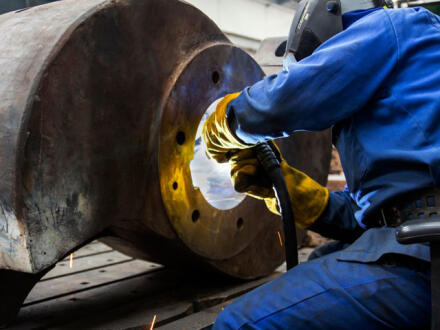
Paying for welding school in Arizona can feel harder than the actual welding test. Tuition, tools, PPE, gas, books, and certification fees add up fast. A basic student welding kit can cost $400 to $1,200, and program tuition often runs much higher depending on the school, length, and lab hours.
That's why Arizona welding scholarships matter. They can lower out-of-pocket costs, reduce loan pressure, and make it easier for students to finish a certificate, associate degree, or related technical program. For many students, even a $500 award can cover gloves, a helmet, boots, and testing fees. A larger award might cover a full term.
This list breaks down 11 practical scholarship and funding paths for high school students, first-year trade students, college students, and university students in technical majors. It also includes options tied to merit, financial need, employers, unions, and national welding organizations.
The goal is simple: help students find funding they can actually use. Some awards are built for straight-A students. Others are meant for students with strong hands-on skill, financial gaps, or a clear plan to enter the trades. Arizona has more than one path into welding, and the money does too.
1. Arizona Welding Association Scholarships For Career-Focused Students
Students who already know they want a welding career should start with association-backed aid. These awards usually favor applicants who can explain their path clearly, show commitment to the trade, and point to real goals such as pipe welding, fabrication, aerospace work, or inspection.
A strong reason to prioritize this category: the American Welding Society says it distributes more than $2.5 million in scholarships each year. That makes welding associations one of the biggest funding channels in the trade.
For Arizona students, the best move is to look for state and district opportunities first, then national programs that allow in-state study. A solid application often includes:
- A short career statement
- Proof of enrollment or planned enrollment
- GPA or instructor recommendation
- A resume with shop, FFA, SkillsUSA, or work experience
Students comparing options can also use the national welding awards page to spot programs that fit trade-school goals. Another useful fit for technical students is the Oyler technical award, especially for applicants whose strength shows up in lab performance and instructor feedback.
The biggest mistake here is vague writing. "I like working with my hands" is forgettable. "They completed 180 shop hours and earned a 3G plate certification goal" is much better.
2. Arizona Welding Scholarships For High School Students Starting Early
Arizona Welding Scholarships for High School Students can be easier to win than students think. The reason is simple: many seniors wait too long, apply too broadly, or skip trade-specific awards because they assume scholarships are only for four-year colleges.
That assumption costs money. A student who starts applications in fall can build a list of 10 to 15 realistic scholarships before spring deadlines hit. That alone raises the odds.
High school students should focus on proof that they are serious about the trade. Good evidence includes:
- CTE welding classes
- FFA or SkillsUSA participation
- Teacher references from shop instructors
- Attendance records and safety habits
- Photos or logs of completed projects
Arizona students can strengthen local applications by showing they understand the state's labor market. The Arizona Board of Regents regularly tracks workforce and education trends, and those numbers can help a student explain why skilled trades training makes sense in Arizona.
Girls and young women entering welding should also scan targeted funding. The women in welding award stands out because focused scholarships often have smaller applicant pools than broad general aid.
A good example: a senior who welded livestock panels for a family ranch, logged 120 classroom hours, and placed in a regional skills event has a real story to tell. That kind of detail beats generic ambition every time.
3. Community College Welding Scholarships Across Arizona
Community colleges are one of the strongest routes for affordable welding training. In Arizona, they often combine lower tuition with hands-on labs, local employer ties, and stackable credentials. For many students, that mix beats a more expensive private option.
This matters because the total cost of attendance is never just tuition. A student may need:
- Lab fees
- Steel and consumables
- Transportation to campus
- Safety gear
- Certification test costs
Those extra costs can reach $1,500 or more over a program, even when tuition looks manageable at first glance.
Students searching Arizona Welding Scholarships for College should ask each community college about three buckets of money: institutional scholarships, foundation awards, and department-level trade scholarships. Financial aid offices often know about small awards that never rank well in search results.
Training fit matters too. Schools and trade campuses such as ETI School of Skilled Trades show how welding programs can be structured around direct job preparation, which helps students compare cost against lab time and employer value.
A smart application tactic is stacking funds. One student might combine a $750 foundation grant, a $500 local award, and a $1,200 Pell Grant equivalent package piece to reduce the term bill sharply. Small awards are not small if three or four land at once.
4. Arizona Welding Scholarships For First-Year Students Entering Trade Programs
Arizona Welding Scholarships for first-year students often reward momentum. Schools and donors like applicants who have just committed to a trade program and can show they are ready to finish, not drift.
That first term is usually the most expensive one. New students often buy a helmet, jacket, gloves, boots, hand tools, measuring tools, and textbooks before they even strike a clean bead in lab. A realistic startup budget can hit $800 to $1,600.
First-year applicants should make their case with specifics:
- The exact program they plan to enter
- Start date and credential goal
- Expected costs for gear and fees
- A short work plan after graduation
Some awards are built around skilled-trade entry and practical training. The welding awards form is one example worth reviewing for students headed straight into arc welding education.
This is also the point where students should compare school outcomes, not just brochure claims. Programs connected to testing and employer needs, such as those highlighted by Welder Training & Testing Institute, can help students judge whether a school's price lines up with actual skills and certification prep.
The best first-year essays sound concrete. "They need help buying a hood, FR shirt, and test coupons totaling $914" is stronger than "they need money for school."
5. Arizona Welding Scholarships For College Students Needing Ongoing Support
Some students win money before school starts, then hit a funding wall in term two or three. That is where ongoing support matters. Arizona Welding Scholarships for College students are not only for freshmen: many awards accept continuing students who can prove progress.
This group should track renewal rules closely. A scholarship may require:
- A minimum GPA such as 2.5 or 3.0
- Full-time or half-time enrollment
- Satisfactory academic progress
- A faculty recommendation each term
Continuing students usually have an edge because they can point to real performance. Instead of promises, they can show completed coursework, instructor comments, attendance, and passed weld tests.
Students in construction-linked welding paths may find related trade support through the construction trades aid page. Industry-adjacent scholarships can be useful when a student's training overlaps structural steel, fabrication, maintenance, or field installation.
A practical example: a second-semester student with a 3.2 GPA, 94% lab attendance, and two passed bend tests is more fundable than a new applicant with only intent. That record shows discipline.
Students should also ask instructors which awards past students actually won. Shop faculty often know that one local scholarship gets 18 applications, while another gets only 4. That inside detail can change an entire funding plan.
6. Arizona Welding Scholarships For University Students In Related Technical Majors
Not every future welder follows a certificate-only path. Some students study welding-adjacent majors at a university, including mechanical engineering technology, industrial technology, manufacturing, metallurgy, construction management, or materials science. That is where Arizona Welding Scholarships for University students come into play.
These scholarships usually support students whose work connects welding to bigger systems: design, production, quality control, steel processes, or industrial operations. A student may never spend every day under a hood and still build a career tied directly to welding.
A useful benchmark here is earnings. The U.S. Bureau of Labor Statistics reports median pay around $51,000 for welders and related workers, while technical and engineering roles tied to fabrication can run higher depending on specialization and location. That makes technical majors a valid path for students who like both shop work and problem-solving.
Students interested in metals and industrial production can review the steel industry scholarships. Those programs fit well when a student's coursework touches steelmaking, manufacturing systems, or plant operations.
Strong university applicants should highlight:
- Lab or research work
- CAD or blueprint reading skill
- Internship plans
- Welding process knowledge
- Clear ties between major and industry role
An engineering student who studies weld failure, heat-affected zones, or fabrication efficiency can be just as relevant to this funding category as a hands-on welder.
7. Merit-Based Welding Scholarships For Strong Academic And Skills Performance
Merit-based awards reward performance, but "merit" in welding is wider than GPA alone. A strong candidate might have a 3.6 GPA, top attendance, clean safety habits, and excellent hands-on work. Another student may hold a modest GPA but dominate in lab, competition, and instructor evaluations.
For welding scholarships, merit often shows up in four places:
- Grades in math, shop, or technical classes
- Competition results such as SkillsUSA placement
- Welding certifications or test scores
- Letters that describe work ethic in detail
A smart recommendation letter does more than say a student is hardworking. It gives numbers. For example: "They completed 27 coupons with zero safety violations and ranked first out of 18 students in fit-up accuracy." That kind of detail is hard to ignore.
Students pursuing steel or industrial internships can also look at the steel internship award. Merit-based funding often favors students who can show both technical promise and a clear path into industry.
This category is a good fit for students who do not qualify for high-need aid but still need help paying bills. Their strongest move is to build a brag sheet before asking for references. Instructors write better letters when they have numbers, project names, hours, and results in front of them.
8. Need-Based Arizona Welding Scholarships For Students With Financial Gaps
Need-based funding helps students whose finances could block enrollment or force them to stop out. In welding, that gap is often painfully specific. A student may have tuition covered but still lack $620 for PPE, $180 for books, and $300 for testing fees.
That is why the best need-based applications are detailed. They show the exact gap, not just a general struggle. Reviewers respond better when they can picture the bill.
Students should be ready to provide:
- FAFSA-based aid information if required
- Household income details
- A short explanation of hardship
- Itemized school and equipment costs
- Proof of enrollment or acceptance
Need-based aid can come from schools, private donors, trade groups, churches, and community foundations. Students should also search broad scholarship databases when local leads run thin. A large searchable pool such as the scholarship directory can help uncover smaller awards that fit trade students with tight budgets.
The key is honesty with numbers. If a student works 24 hours per week at $16 per hour and still cannot cover a term shortfall of $1,480, that should be stated plainly.
Need is not weakness. For many welding students, it is just math: bills, tools, fuel, rent, and a training schedule that leaves little room for extra shifts.
9. Employer-Sponsored And Union-Backed Welding Scholarships In Arizona
Employer and union funding is one of the most overlooked options in this whole list. Yet it can be one of the best. Why? Because these groups often need trained workers badly enough to put real money behind recruitment.
In practice, support may come as:
- Scholarships before enrollment
- Tool allowances
- Paid internships or apprenticeships
- Tuition reimbursement after a term
- Job placement help after completion
This route fits students who already know the kind of work they want, such as pipe, structural, fabrication, or maintenance welding. It also fits students who are open to joining a contractor, plant, or union pathway right after school.
Arizona-based companies in manufacturing, energy, transportation, and automotive supply may sponsor small awards through local partnerships. For example, students with interest in automotive systems and mechanical trades may find overlap in the AutohausAZ support award, even if their long-term plan mixes welding with repair or fabrication work.
The financial value can extend past the award itself. A $1,000 scholarship tied to a summer position paying $19 per hour for 10 weeks can create more than $8,000 in total value before taxes.
Students should ask one direct question when speaking with employers: "Do they fund training, tools, or certification for entry-level welders?" That single question opens doors more often than people expect.
10. National Welding Scholarships Arizona Students Can Use At In-State Schools
Students should not stop at state-only awards. Many national welding scholarships can still be used at Arizona schools, including community colleges, trade institutes, and universities with related technical programs.
This matters because national programs often have larger pools of funding. Some support welding directly. Others fund metallurgy, steel, manufacturing, industrial maintenance, or engineering paths connected to welding work.
The best national applications usually include:
- A focused personal statement
- Enrollment proof at an eligible Arizona school
- Trade or technical references
- A resume with work, projects, or competitions
Students looking for donor-backed technical support can compare options such as the Hastings memorial award. National scholarships also tend to reward students who can explain not just what they study, but where that study leads.
A concrete example helps. A student attending an Arizona college for welding technology who plans to test in SMAW and GMAW, then move into structural fabrication, has a cleaner application story than someone who writes only that they want "a good career."
Even a single national award of $2,500 can cover a large chunk of a trade-school balance. And because many students ignore these programs, Arizona applicants who take the extra hour to apply may face less competition than they assume.
11. Local Foundation And Regional Trade Scholarships Worth Applying For
Local and regional scholarships deserve more attention than they get. These awards are often smaller, but they can be easier to win because the applicant pool is limited by county, school district, trade focus, or family background.
A local foundation may award $500 to $2,000, which is enough to pay for a term's books, welding jacket, testing fee, and gas money to campus. Four small awards can add up fast.
Students should search beyond the word "welding." Good regional fits may be filed under:
- Skilled trades
- Career and technical education
- Manufacturing
- Construction
- Workforce development
A student applying close to home should also ask counselors, instructors, chamber groups, rotary clubs, utility cooperatives, and community foundations. Those sources often fund practical students who plan to stay local and work locally.
Where To Find The Best Opportunities Before Deadlines Close
The best opportunities usually go to students who build a system, not students who panic in the final week. A simple spreadsheet with 12 columns can track award name, amount, deadline, essay need, transcript need, references, and submission status.
Students should look in five places first:
- High school counseling offices
- College financial aid and welding departments
- Community foundations
- Trade associations and employers
- Free match platforms with trade filters
On a free platform such as StudentScholarships.org, students can sort through awards faster and avoid wasting time on poor-fit applications. That matters when each strong application can take 45 to 90 minutes to finish well.
The students who win most often are not always the smartest. They are usually the ones who submit 8 to 20 clean applications before the deadline clock gets loud.
Arizona Welding Scholarships FAQs
What types of welding scholarships are available for students in Arizona?
Arizona offers a variety of welding scholarships including those from state associations, community colleges, employers, unions, and national organizations. Awards cater to high school students, first-year trade students, college students, and university majors related to welding.
How can high school students in Arizona increase their chances of winning welding scholarships?
High school students should demonstrate commitment to welding through CTE classes, involvement in organizations like FFA or SkillsUSA, strong teacher references, and a clear understanding of Arizona's labor market. Early application and detailed proof of skills enhance chances.
Are there scholarships specifically for women pursuing welding in Arizona?
Yes, scholarships like the Air Products Women of Gases & Welding Scholarship support women entering the welding trade in Arizona. These targeted awards often have smaller applicant pools and focus on encouraging diversity in the field.
What costs do Arizona welding scholarships typically cover?
These scholarships often help with tuition, tools, personal protective equipment (PPE), gas, books, and certification fees. Some awards cover basic welding kits costing $400 to $1,200, while larger scholarships may fund a full term's expenses.
Where can students find welding scholarships and financial aid resources in Arizona?
Students should explore high school counseling offices, community college financial aid departments, trade associations, local foundations, and free platforms like StudentScholarships.org. They can also check programs at schools like ETI School of Skilled Trades and the Welder Training & Testing Institute.
Can welding scholarships in Arizona be combined with other financial aid?
Yes, students can stack multiple scholarships such as foundation grants and local awards along with federal aid like Pell Grants. This strategy can significantly reduce out-of-pocket costs for welding training programs.







