

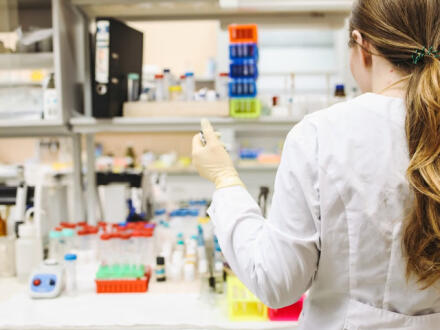
Paying for a toxicology path in Hawaii can feel tricky at first. The field is specialized, and there usually is not a giant list labeled only for toxicology. But that does not mean the money is not there.
Students often build a funding plan from several directions at once. They combine Hawaii Toxicology Association Scholarships, STEM awards, biology and chemistry scholarships, research grants, campus department funds, and community-based aid. One student might stack a $1,500 local STEM scholarship, a $2,000 campus award, and a $500 lab assistant grant to cover books, fees, and part of tuition.
That matters because college costs add up fast. A single 3-credit science course can also come with a lab fee, safety gear costs, and textbook expenses. For a student taking 15 credits, even "small" awards of $500 to $2,500 can close a real gap.
This guide walks through 12 Hawaii toxicology scholarships and funding paths that students can actually use. It covers options for high school students, first-year students, college and university students, research-focused applicants, and students looking at public health, environmental health, biology, chemistry, pharmacology, healthcare, and forensic science. The goal is simple: help students in Hawaii find more matches, apply earlier, and build a smarter funding list instead of waiting for one perfect scholarship to appear.
1. Hawaii Toxicology Association Scholarships To Put On Your Radar
Students searching for Hawaii Toxicology Association Scholarships should start with the obvious truth: some awards are direct, and some are adjacent. Toxicology sits at the intersection of chemistry, biology, health, and lab science, so the best funding list is usually wider than the major name.
A good target is any scholarship tied to:
- toxicology or laboratory science
- STEM in Hawaii
- environmental or public health
- pre-health research
- forensic or analytical science
For Hawaii students, state and community scholarship hubs matter. The Hawaii Community Foundation options often matter because HCF manages multiple funds with different eligibility rules. One application can open the door to more than one pool of aid, which saves time.
Students should also track local association scholarships that fund nearby fields. A toxicology-minded applicant with a 3.4 GPA, one science fair project, and 40 volunteer hours in a health setting can still be competitive even if the scholarship title says "STEM" instead of "toxicology."
A practical rule helps here: build a list of 12 to 20 scholarships. If even 3 awards land at $1,000 each, that is $3,000 toward tuition, books, or housing. For many students, that is the difference between borrowing and staying current.
2. Hawaii Toxicology Scholarships For High School Students Planning Ahead
Hawaii Toxicology Scholarships for High School Students often hide under STEM, health science, or research headings. That is good news for juniors and seniors, because it means more doors are open than the search term suggests.
High school students should look for awards that value early science interest. Strong signals include:
- AP or dual-credit chemistry and biology
- science fair or HOSA participation
- environmental club work
- volunteer service in hospitals, clinics, or community health programs
- essays about public health, water safety, or chemical exposure
The AFCEA Hawaii STEM route is worth attention because STEM scholarships often welcome students planning majors related to toxicology. A student with a 3.6 GPA, SAT math strength, and a lab-based senior project already has material for a solid application.
School-based planning helps too. The Hawaiʻi public school system serves a statewide student population across multiple islands, so students should ask counselors early about island-specific awards, nomination deadlines, and transcript timing.
A useful benchmark: students who start scholarship tracking 6 to 9 months before college deadlines usually submit better applications. They have time to request 2 recommendation letters, revise 1 personal statement, and reuse core material across 8 or more applications.
3. Hawaii Toxicology Scholarships For First-Year Students Starting Strong
Hawaii Toxicology Scholarships for first-year students can be easier to win than students expect. Once a student has one semester of grades, a lab course, and a clearer major direction, applications often get stronger.
First-year students should focus on proof of follow-through. Toxicology-adjacent committees like to see that a student did not just say "I love science" in high school, but actually enrolled in chemistry, statistics, biology, or public health courses and handled the work.
Good first-year evidence includes:
- 12 to 15 completed credits
- at least 1 lab science course
- a GPA above 3.0
- office hours or faculty engagement
- volunteer or work experience tied to healthcare or research
Community and identity-based funding can also matter early. The Office of Hawaiian Affairs program may fit Native Hawaiian students building a science path, including one that leads toward toxicology, environmental testing, or health research.
A simple example shows the value. If a first-year student wins a $1,200 scholarship for spring, that can cover 4 months of bus costs, lab manuals, and a used laptop battery replacement. Small awards are not small when they remove the exact expense that would have forced a credit card charge.
Students should also reapply. Many scholarships are not one-time-only in practice: they are won by students who come back with better grades and a sharper story.
4. Hawaii Toxicology Scholarships For College Students In STEM Majors
Hawaii Toxicology Scholarships for College students are often strongest when the student frames toxicology as a STEM application, not just a title. Committees understand chemistry, molecular biology, biochemistry, environmental science, and health science. Students should connect those majors directly to toxicology work.
That connection can be concrete. A chemistry major might explain interest in compound analysis. A biology student might focus on cellular response to toxins. An environmental science student might study runoff, reef exposure, or drinking water safety.
Local STEM funding can help fill those gaps. The Hawaii Education Association awards are not toxicology-specific, but they illustrate how Hawaii students can widen the search beyond one narrow major label.
Students should mention measurable academic readiness, such as:
- 2 semesters of chemistry
- 1 statistics course
- 1 research methods course
- a GPA of 3.25 or higher
- 50 hours in a campus lab or clinic
A realistic budget example helps. If books cost $840 for a semester, lab fees run $160, and transportation adds $90 per month, a $2,000 scholarship covers more than "extra expenses." It covers the costs that often push STEM students to reduce credits.
That is why broader STEM awards belong on every toxicology student's list.
5. Hawaii Toxicology Scholarships For University Students Pursuing Research
Hawaii Toxicology Scholarships for University students get stronger when research enters the picture. Once a student can point to a faculty mentor, a poster session, or data collection work, the application becomes much more specific.
Research-focused funding may come from departments, campus programs, or foundations. A student studying pesticide exposure in soil samples, heavy metals in water, or medication safety can present a toxicology angle even if the official award says biology, health, or undergraduate research.
Campus setting matters here. Students at UH Hilo may find opportunities through science departments and undergraduate research culture, especially when projects tie island ecosystems, agriculture, or public health to lab analysis.
Applicants should show evidence such as:
- 1 faculty mentor
- 1 research question
- 1 method they can describe clearly
- 20 to 100 lab hours
- a poster, abstract, or class presentation
A sharp example beats a broad claim. "They processed 32 water samples and tracked nitrate and contaminant indicators" is stronger than "they enjoy research."
Research awards also stack well. A student might receive a $1,500 campus research grant, a $750 travel award, and a $1,000 community scholarship. That $3,250 package can fund supplies, conference costs, and one semester's worth of lab-related expenses.
6. Public Health And Environmental Health Scholarships That Overlap With Toxicology
Public health and environmental health are two of the best overlap areas for toxicology funding. Students interested in poison prevention, exposure science, food safety, air quality, or water contamination should search these terms directly.
This overlap matters because toxicology is often applied science. It answers practical questions: What happens after exposure? At what dose? Through which route? With what effect on people, animals, or ecosystems?
Community-based scholarship systems are helpful here. The Hawaii Community Foundation supports a broad culture of local giving, and that matters for students whose goals touch public service, environmental protection, or community health.
Students should search scholarship databases using combinations like:
- environmental health Hawaii
- public health scholarship Hawaii
- water quality student award
- community health STEM scholarship
- environmental science undergraduate grant
One concrete scenario: a student studying runoff near coastal areas can frame a project around exposure pathways, sample testing, and public health communication. That kind of application feels real because it ties lab work to people's daily lives.
Even a modest $750 award can cover gloves, field supplies, software access, and printing costs for a poster presentation. For students pursuing toxicology through environmental or public health work, those adjacent scholarships are often the fastest win.
7. Biology, Chemistry, And Pharmacology Awards That Can Fund A Toxicology Path
A lot of toxicology students get funded through core science awards. Biology, chemistry, and pharmacology scholarships are a natural fit because toxicology borrows methods, concepts, and coursework from all three.
Biology scholarships work well for students focused on cells, genetics, physiology, or ecology. Chemistry awards suit students interested in analytical testing, organic compounds, or instrument work. Pharmacology-related aid fits students thinking about drug action, dosing, and adverse effects.
This is where students should write with precision. Instead of saying they "want to help people," they can say they want to study how chemical exposures affect liver enzymes, drug metabolism, or aquatic organisms. One sentence like that can make an essay feel 10 times more credible.
Some general Hawaii scholarships also support students with strong academic profiles across majors. The Exclusive Hawaii award can be useful as part of a wider funding stack, even if the title does not mention science.
A concrete class pattern also helps applicants show fit:
- General Chemistry I and II
- Organic Chemistry I
- Intro Biology I and II
- Human Physiology
- Statistics
That is 5 subject areas directly tied to toxicology readiness. If a student has already passed 3 of them with grades of B or higher, that is strong evidence for scholarship committees.
8. Hawaii-Based Healthcare And Laboratory Scholarships Worth Exploring
Healthcare and laboratory scholarships in Hawaii deserve a close look. Toxicology students often work in spaces that overlap with clinical testing, pathology, public health labs, hospital systems, and diagnostic science.
That means students should not limit themselves to "toxicology" in the scholarship search bar. They should also search:
- medical laboratory science
- healthcare workforce scholarship
- allied health scholarship
- clinical lab training
- diagnostic science funding
Local community groups can matter more than students expect. The Korean Chamber scholarship is one example of how cultural and business organizations can support higher education goals, including science and health paths.
Students at institutions such as Hawaii Pacific University may also find healthcare-related support through campus advising, departmental notices, and career offices that track private scholarships.
A practical example: a student working 12 hours per week as a lab assistant may need $1,100 for certification-related materials, scrubs, and transportation. A local healthcare scholarship can cover those career-entry costs faster than a large national award with 5 essay rounds.
For lab-focused students, one strong paragraph about sample handling, safety procedures, or quality control often says more than a long generic essay.
9. National Toxicology And Forensic Science Scholarships Open To Hawaii Students
National scholarships matter because Hawaii students are not limited to island-based aid. Many toxicology, forensic science, chemistry, and biomedical scholarships accept applicants from all 50 states, which gives Hawaii students access to much larger pools.
Forensic science is especially relevant. Toxicology and forensic toxicology overlap in drug testing, postmortem analysis, chain of custody, and analytical methods. A student interested in blood alcohol testing or controlled substance screening can often apply to both toxicology and forensic funding lines.
Strong national applications usually include exact evidence:
- GPA of 3.3 or higher
- 1 to 2 faculty recommendations
- 1 personal statement under 1,000 words
- lab or volunteer hours
- a resume with technical coursework
Students should also use broad scholarship search tools efficiently. On scholarship search pages, filters for major, state, ethnicity, and study level can quickly surface new matches that do not appear in a simple Google search.
A realistic payoff makes the effort worth it. If a student submits 15 national applications and wins just 1 award worth $2,500, that single result can cover a big part of semester tuition or housing. National searches take more time, but they can produce the largest dollar amounts on the list.
10. Indigenous, Local, And Community-Focused Scholarships For Hawaii Students
For many students, local identity-based funding is one of the strongest options available. Indigenous, community, and place-based scholarships often look beyond grades alone. They may value service, cultural connection, family background, and long-term commitment to Hawaii.
That is especially useful for students building a toxicology path through public service. A future environmental toxicologist, public health analyst, or lab scientist can make a strong case by linking science goals to community benefit.
The OHA scholarship page is one meaningful route for eligible students. Community-rooted scholarships can also reward students who plan to return skills to local schools, clinics, or environmental programs.
Students should highlight specifics such as:
- 80 volunteer hours with a local nonprofit
- family ties to a community issue like water safety
- Hawaiian language or cultural engagement
- interest in serving rural or neighbor island communities
A concrete essay theme works well here. A student might describe collecting stream samples after heavy rain, then connecting that experience to a future in exposure science or environmental health.
These awards can range from $500 to several thousand dollars. And because they often receive smaller applicant pools than national programs, the odds may be better than students think.
11. Institutional Grants And Department Awards From Hawaii Colleges And Universities
Campus money is often overlooked, which is a mistake. Institutional grants and department awards can be some of the best funding paths because they are meant for enrolled students, and the applicant pool is naturally smaller than a national competition.
Students should ask 3 places every term:
- the financial aid office
- the department chair or program coordinator
- faculty who supervise labs or undergraduate research
That simple habit can uncover emergency grants, merit awards, donor-funded science scholarships, textbook support, and conference travel money. Even one department with 40 majors may offer a scholarship that only 12 students apply for.
Students at campuses such as Hawaii Community College or other Hawaii institutions should pay attention to internal scholarship calendars, because many department deadlines arrive earlier than students expect.
Specialized but non-toxicology awards can still help. The land surveyors scholarship shows how field-adjacent technical funding exists across disciplines, which is why students should ask about every STEM-related opportunity on campus.
A small internal grant of $600 might cover microscope fees, printing, and software. A larger departmental award of $2,000 might cover a full semester of books and lab costs. Those are real numbers, not side benefits.
12. Fast-Application Scholarship Platforms And Search Tools For Finding New Matches
Fast-application platforms can help students keep momentum. That matters because scholarship success is often a volume game. A student who applies to 20 solid matches usually has better odds than a student who spends 3 weeks polishing only 1 application.
The best platforms make matching easier with filters for state, major, grade level, and identity-based eligibility. They also reduce repeat work by letting students reuse core details like GPA, school, intended major, and activity history.
Students looking for Hawaii Toxicology Scholarships for College or university study should keep a weekly routine:
- spend 25 minutes searching
- save 5 new matches
- submit 2 fast applications
- update 1 essay draft
- request 1 recommendation early
That routine adds up to roughly 8 applications per month. In one semester, that can mean 32 applications. Even a 6% win rate would produce about 2 awards.
For students who want speed, personalized matching on Studentscholarships.org fits well because applications can be quick and the scholarship list stays broad enough to include toxicology-adjacent awards. The platform works best when students search both narrow and wide terms, from "toxicology" to "chemistry," "public health," and "STEM Hawaii."
A good search tool does not replace strong essays. But it does keep students from missing deadlines and hidden matches.
Frequently Asked Questions about Hawaii Toxicology Scholarships
What types of scholarships can Hawaii toxicology students apply for?
Hawaii toxicology students can apply for a variety of scholarships including Hawaii Toxicology Association Scholarships, STEM awards, biology and chemistry scholarships, research grants, campus department funds, and community-based aid. Combining several awards often creates a successful funding strategy.
How can high school students in Hawaii prepare to get toxicology scholarships?
High school students should focus on STEM-related activities such as AP chemistry and biology courses, science fairs, HOSA participation, and volunteer work in health settings. Early scholarship tracking and school counselor guidance can improve application strength significantly.
Are there specific scholarships for Native Hawaiian students pursuing toxicology?
Yes, programs like the Office of Hawaiian Affairs Scholarship support Native Hawaiian students building science paths related to toxicology, environmental testing, or health research, valuing cultural connection and community service as part of eligibility.
How important is research experience for university students seeking toxicology scholarships in Hawaii?
Research experience is highly valuable. Having a faculty mentor, a clear research question, lab hours, and participation in presentations or poster sessions strengthens applications for research-focused scholarships at universities like the University of Hawaii at Hilo.
Can students pursuing toxicology in Hawaii access national scholarships?
Absolutely. Hawaii students can apply for many national toxicology, forensic science, chemistry, and biomedical scholarships, which often require strong GPA, faculty recommendations, volunteer experience, and focused technical essays to be competitive.
What resources can help Hawaii toxicology students find scholarships efficiently?
Fast-application platforms like Studentscholarships.org offer personalized matching with filters for major, state, and identity eligibility, helping students find a broad range of toxicology-adjacent scholarships and manage applications effectively.







