

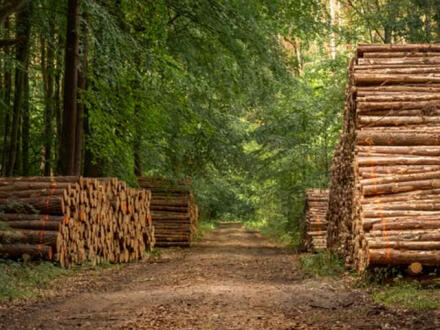
Students interested in forestry often assume funding is limited to broad agriculture or science awards. That's not true in Illinois. There are multiple scholarship paths for students who want to study forest resources management, conservation, land stewardship, natural resources, or related fields.
For a student who plans to work with timber, urban forestry, wildlife habitat, invasive species control, or public land management, the strongest strategy is usually not to chase one perfect scholarship. It is to build a short list of association awards, college-based aid, conservation scholarships, and local foundation funding and apply across all four.
That matters because forestry programs can carry real costs beyond tuition. A student may need field gear, boots, GPS tools, mileage for field labs, and summer travel for internships. At a public university, annual in-state costs can easily reach the five-figure range once housing, fees, books, and transportation are added.
This guide breaks down Illinois Forest Resources Management Scholarships into seven practical categories. It shows where high school seniors, first-year students, and continuing college students are most likely to find money. It also explains what committees usually look for, what documents help, and how a student can build a stronger application without sounding rehearsed.
1. Illinois Forest Resources Management Association Scholarships For Aspiring Forestry Students
Association scholarships are often the most direct fit for forestry majors because they come from people who already know the field. A forestry association, woodland group, or conservation trade organization usually understands the difference between a student who likes hiking and a student who has actually measured basal area, volunteered on a trail crew, or helped with tree ID surveys.
That makes Illinois Forest Resources Management Association Scholarships especially valuable. Even when the award amount is smaller than a full tuition grant, a focused award of $1,000 to $2,500 can cover textbooks, chainsaw safety training, PPE, or part of a summer field course.
Students should look closely at application language. Committees often reward:
- a stated plan to work in forestry or conservation
- coursework in biology, ag, environmental science, or soils
- local involvement such as park district work or FFA
- evidence that the student understands land management, not just general sustainability
A practical example helps. A senior who spent 42 volunteer hours removing bush honeysuckle from a county forest preserve will usually read as more prepared than a student who only says they "care about nature."
Students using scholarship search platforms can also sort related awards such as the Foresters program and compare it with agriculture-adjacent support like the Farm Credit award. Those aren't identical to forestry association aid, but they often overlap with land-use careers.
Who Usually Qualifies And What These Awards Often Cover
The most common qualifiers are pretty consistent. A student usually needs to be an Illinois resident or to attend an Illinois school, plan to enroll in a forestry-related major, and submit a transcript, essay, and one or two recommendations.
Many committees favor students with a GPA of 3.0 or higher, but field experience can matter just as much. In some applicant pools, a student with a 3.1 GPA and 120 hours of conservation service stands out more than a student with a 3.8 GPA and no hands-on work.
These awards often help pay for:
- tuition and fees
- books and lab supplies
- field equipment
- travel tied to internships or practicum work
- room and board in some cases
Students should also read for hidden extras. Some association awards include conference access, mentorship, or job leads. One contact made at a forestry meeting can matter as much as the check itself.
2. Illinois Forest Resources Management Scholarships For High School Students Planning Ahead
High school students have a real advantage if they start early. Many scholarships that support forestry, conservation, and natural resources are open before college begins, and committees often like applicants who can already explain why they want this path.
That is why Illinois Forest Resources Management Scholarships for High School Students deserve special attention. A student does not need to have run a forest inventory. But they should show a clear pattern: science classes, outdoor service, ag education, FFA, 4-H, park volunteering, or work tied to land and water.
A strong senior application might include:
- AP Environmental Science or biology
- FFA forestry, land use, or soil judging experience
- summer work at a nursery or park district
- volunteer hours with a forest preserve cleanup
- a career goal such as urban forester, consulting forester, or restoration ecologist
Illinois-specific awards can sometimes sit beside broader state support. A student comparing options may weigh targeted programs against the state scholarship route, especially when household income matters.
For context, the U.S. Forest Service has long noted ongoing workforce demand in conservation and land management roles, particularly as agencies handle wildfire risk, invasive species, and reforestation. Even in Illinois, where forestry looks different than in heavily timbered states, trained professionals are needed for urban canopy work, watershed protection, and public land stewardship.
Best-Fit Programs For Seniors Exploring Forestry, Conservation, And Natural Resources
The best-fit scholarships for seniors usually come from three buckets: conservation groups, agriculture organizations, and university-adjacent donor funds. Students should not limit themselves to awards with "forestry" in the title.
For example, a senior interested in forest soils, habitat, or restoration may also fit the Illinois Conservation Achievement award. A student from a rural county may find local awards through civic groups, co-ops, or township organizations.
The strongest applications usually do three things well:
- Name a specific career goal. "Natural resources" is broad. "County forester focused on invasive species control" is sharper.
- Show proof of interest. A log with 63 volunteer hours is better than vague enthusiasm.
- Connect place to purpose. If a student grew up near oak-hickory woods, floodplain timber, or an urban tree equity project, that story sticks.
Committees remember concrete detail. They remember a student who spent Saturday mornings collecting acorns for a school nursery project. They rarely remember a generic essay about loving the outdoors.
3. Illinois Forest Resources Management Scholarships For First-Year Students Entering College
The first year of college is a prime time for scholarship applications because students now have a declared major, a college transcript in progress, and often clearer career goals. That makes Illinois Forest Resources Management Scholarships for first-year students a strong category to target.
A student entering college should apply in layers:
- one set of scholarships tied to the college or department
- one set tied to forestry, conservation, or agriculture groups
- one set tied to hometown or regional donors
- one set tied to financial need
This matters because first-year costs hit fast. Tuition is only part of the bill. Many students spend $700 to $1,400 on books, software, lab fees, and field supplies in the first academic cycle.
At public institutions, official aid offices such as the Illinois student aid office explain cost categories clearly, and those numbers can help students justify need in an application. A first-year applicant who shows the gap between aid offered and actual field-program expenses often makes a stronger case.
Students should also use scholarship databases that reduce search time. On a site built for fast matching, a student can line up a forestry-related award with a broader donor option in under a few minutes instead of chasing scattered PDFs across dozens of websites.
How To Stand Out With Coursework, FFA Experience, Volunteering, And Career Goals
Committees want evidence, not just interest. First-year students should treat the application like a short case file.
Helpful proof points include:
- Coursework: dendrology, environmental science, GIS, biology, soils, ag mechanics
- FFA or 4-H: forestry CDEs, land judging, public speaking, chapter leadership
- Volunteering: trail work, seed collection, invasive removal, river cleanup, campus arboretum events
- Career goals: forest inventory, urban forestry, state park management, consulting, extension work
A good example is stronger than a polished phrase. If a student can say they mapped 18 ash trees on a school property during an emerald ash borer project, that sounds real.
Students who may branch into related majors should also compare neighboring fields. Someone studying plant systems or land use could still fit awards such as the crop sciences scholarship, especially if their interests overlap with soils, vegetation management, or restoration planting.
4. Illinois Forest Resources Management Scholarships For College Students Continuing Their Degree
Returning students often have the strongest scholarship profile because they can show college grades, fieldwork, and faculty support. That makes Illinois Forest Resources Management Scholarships for College especially promising for sophomores, juniors, and seniors.
By this point, a student may already have:
- a college GPA in major courses
- a summer internship with a forest preserve or conservation district
- leadership in a natural resources club
- research or data collection experience
- a resume that shows paid or volunteer field labor
Those details matter. A continuing student who completed 160 internship hours marking invasive brush plots or collecting stand data gives reviewers something concrete to score.
This is also the stage where students should ask professors directly about department lists, donor funds, and small memorial scholarships. Many awards get fewer applicants than students expect because they are posted on a bulletin board, a department email, or a one-page internal portal.
Students with broad land-management interests can widen the search without losing focus. For example, someone studying forestry plus community land use may fit the landscape contractors scholarship. Someone with strong regional ties may also fit community-based awards such as Northern Illinois scholarships.
One more edge: ask for letters early. A faculty member who has seen a student in field lab, tree ID quizzes, and a weekend prescribed-burn assist can write a far better letter than someone given 48 hours of notice. That difference shows up on paper.
5. Illinois Forest Resources Management Scholarships For University Programs In Forestry And Natural Resources
University-based funding is often the steadiest source of aid because it can combine merit awards, need-based aid, alumni gifts, and department money. Students looking for Illinois Forest Resources Management Scholarships for University programs should study both the main financial aid office and the specific school or department.
Large public campuses often split money across several systems. One office may handle federal and institutional aid, while a college of ACES, natural resources, or environmental sciences may control donor-funded awards separately. On some campuses, that means a student can submit one general FAFSA-linked aid file and then complete two to five extra departmental applications.
Official university sites can help students verify deadlines and cost assumptions. Students comparing public options may use the University of Illinois for program context and the UIC aid office for examples of how campus financial aid systems explain grants, scholarships, and total cost of attendance.
Comparing Departmental Awards, School-Specific Aid, And Donor-Funded Opportunities
These three funding types look similar, but they work differently.
| Funding type | Typical source | Common award size | What often matters most |
|---|---|---|---|
| Departmental awards | Academic department | $500 to $3,000 | Major, GPA, faculty input |
| School-specific aid | College within university | $1,000 to $5,000 | Need, merit, enrollment status |
| Donor-funded scholarships | Alumni, estates, private gifts | $750 to $10,000 | Essay fit, region, career interest |
Departmental awards are often the best fit for forestry students because reviewers understand course rigor. A 3.2 GPA in dendrology, soils, and GIS can look stronger than a higher GPA in unrelated classes.
School-specific aid can be broader. A student in environmental science, natural resources, or park management may qualify even if the major title does not say forestry.
Donor-funded awards are where details matter most. Some are restricted by county, first-generation status, farm background, transfer status, or intended public service. Southern Illinois students, for instance, may find overlaps with the heritage scholarship program when their academic home and geography line up.
The smartest move is simple: apply to all three.
6. Conservation, Environmental Science, And Land Stewardship Scholarships That Also Fit Forestry Students
Not every forestry student will find enough money from forestry-only awards. That is normal. Some of the best funding paths sit one step to the side in conservation, environmental science, habitat management, watershed work, and land stewardship.
This category matters because forestry training overlaps with a lot of neighboring work. A student who studies timber stand improvement may also work on stream buffers, prairie-woodland edges, pollinator plantings, or stormwater tree planning.
That overlap opens more doors. A student with interests in restoration ecology, public land management, or ag-adjacent conservation may qualify for awards that never use the phrase forest resources management.
Good fit areas include:
- conservation leadership
- soil and water stewardship
- wildlife habitat improvement
- urban forestry and arboriculture
- environmental education
- sustainable land use
Some programs are especially useful for students with a service profile. A student who led 27 classmates in a creek cleanup, documented erosion points, and presented the findings to a township board can fit both environmental science and forestry narratives.
Broader scholarships can also include community, cultural, or identity-based options. Depending on eligibility, students may compare awards such as the Forest County Potawatomi scholarships or regional donor pools like Illinois CCFRV scholarships.
The key is honest positioning. A student should not force a forestry essay into a marine biology scholarship, obviously. But if the award supports land stewardship, conservation practice, or environmental careers, forestry students often fit very well.
7. Local Illinois Community Foundations, Rural Organizations, And Employer-Sponsored Awards
Local money is often overlooked because it feels small. But small awards stack. Three local scholarships worth $1,500, $1,000, and $750 add up to $3,250, which can cover a semester of housing utilities, books, and field gear for some students.
Community foundations, rural electric co-ops, county farm bureaus, township groups, banks, and local employers often support students who plan to return and serve the region. Forestry applicants can be a good match because their work connects directly to land, public spaces, and local resource use.
Strong local angles include:
- family ties to a county or township
- service in parks, trails, or youth conservation events
- work experience in landscaping, nursery care, or groundskeeping
- interest in public-sector or community land management careers
Students should not dismiss employer-sponsored awards either. A park district, tree service company, conservation nonprofit, or ag business may offer aid to employees or dependents. Even awards outside strict forestry language can still support a student headed into forest resources management.
Examples of local or organization-based options can include the Township Officials scholarships and broader education-related donor funds such as the Illinois Education Foundation scholarships.
Application Timeline Tips For Fall, Spring, And Rolling Scholarship Deadlines
Timing can decide who gets paid. A strong applicant who applies late often loses to a decent applicant who applies on time with clean documents.
A simple schedule works well:
- August to October: build resume, request transcripts, draft core essay
- November to February: submit major state, university, and association applications
- March to May: target local foundations, civic groups, and departmental awards
- Year-round: watch rolling deadlines and emergency aid options
Students should aim to finish each application 7 days before the posted deadline. That buffer helps when a recommender forgets, a portal rejects a PDF, or a family needs extra tax paperwork.
A useful system is a spreadsheet with five columns: award name, amount, deadline, documents, and status. Students who track 12 to 20 applications this way usually miss fewer opportunities than students who rely on memory alone.
Illinois Forest Resources Management Scholarships: Frequently Asked Questions
What types of scholarships are available for Illinois students studying forest resources management?
Illinois offers diverse scholarships including association awards from forestry groups, college-based aid, conservation scholarships, and local foundation funding tailored for forestry, conservation, and natural resources students.
How can high school students best prepare for applying to forest resources management scholarships in Illinois?
High school students should demonstrate relevant coursework like AP Environmental Science, volunteer experience such as park cleanups, and clear career goals like urban forestry to enhance their applications for scholarships.
What criteria do Illinois Forest Resources Management Association Scholarships committees focus on?
Committees typically look for Illinois residency or school enrollment, a forestry-related major, a GPA around 3.0 or higher, meaningful fieldwork or volunteering, a clear conservation plan, and strong supporting documents like essays and recommendations.
Why is it beneficial for first-year college forestry students in Illinois to apply to multiple scholarship categories?
Applying across college-specific, forestry association, regional donor, and financial need-based scholarships maximizes funding opportunities since first-year expenses include tuition, field gear, lab fees, and travel.
What advantages do continuing college students have when applying for Illinois forestry scholarships?
Continuing students can leverage their GPA, documented field internships, leadership in natural resource clubs, faculty recommendations, and completed coursework to strengthen scholarship applications.
Are there scholarships for forestry students that also cover related fields like conservation and environmental science?
Yes, many scholarships support broader fields such as soil and water stewardship, wildlife habitat, urban forestry, and sustainable land use, making them suitable for forest resource majors with overlapping interests.







