

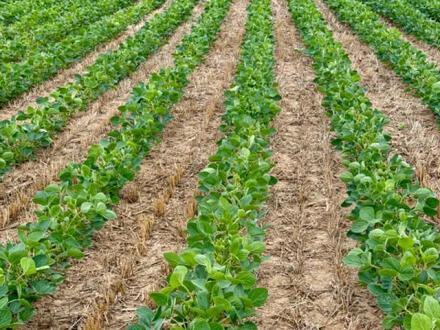
Paying for an agriculture degree can feel like trying to spot one soybean seed in a full grain bin. Tuition, lab fees, books, housing, and travel add up fast. For students interested in agronomy, plant science, soils, precision agriculture, or crop production, the good news is simple: South Carolina crop science scholarships do exist, and they're often less crowded than broad national awards.
That matters because agriculture is a major part of the state economy. South Carolina has more than 24,000 farms covering about 4.7 million acres, according to the USDA Census of Agriculture. Crop science connects directly to that work. Farmers, researchers, extension agents, seed companies, and agribusiness employers all need trained people who understand how to grow more with fewer losses.
Students often miss money for one basic reason: they search too broadly. They type "scholarships for college" and compete against thousands of applicants. A smarter move is to target South Carolina Crop Science Scholarships for High School Students, South Carolina Crop Science Scholarships for College, and university-specific awards tied to agriculture.
This list breaks the search into 10 practical moves. Each one shows where students should look, what selectors usually value, and how to improve the odds of getting noticed. The goal is not just to find one award. The goal is to build a stack of funding from state programs, agriculture groups, colleges, and smaller local sources.
1. South Carolina Crop Science Association Scholarships Should Be Your First Stop
Students who want South Carolina Crop Science Association Scholarships should start with professional groups tied to agronomy, crop production, and agricultural education. These organizations often offer the most relevant awards because they support the exact field a student plans to enter.
That focus matters. A general scholarship may draw 2,000 applicants. A crop science association award might draw 40 to 120 applicants, which gives a qualified student much better odds.
Students should look for associations connected to:
- agronomy
- crop protection
- seed production
- soil and water conservation
- agricultural leadership
A strong search method is to pair the organization name with terms like scholarship, student award, foundation, and memorial fund. Many agriculture groups keep scholarship pages buried under "resources" or "members," so a quick search is often faster than clicking through menus.
This is also where niche examples help. A student comparing state-specific and field-specific awards can study a page like the crop sciences example to understand how specialized agriculture scholarships are usually structured.
Students should prepare these items before they search:
- unofficial transcript
- resume with FFA, 4-H, or farm work
- one agriculture-focused essay
- one reference from a science or ag teacher
And they should move early. Many agriculture associations open applications months before college bills arrive. Missing a small $1,500 award may not seem huge, but stacking four awards of $1,500 equals $6,000, which can cover a full year of books, tools, and part of housing at many public colleges.
2. Clemson University Programs Can Open Doors To South Carolina Crop Science Scholarships For University Students
For many students, Clemson is the most obvious place to look for South Carolina Crop Science Scholarships for University students. That makes sense. Clemson University has deep agriculture roots, strong research programs, and industry connections that can lead to both scholarships and paid experience.
Students interested in crop science should not stop at the main scholarship office. They should also search by:
- college
n- department
- major
- research center
- extension program
- student organization
Department-level awards are often missed because students assume one admissions application covers everything. It usually doesn't. Some awards require a separate form, faculty nomination, or a short personal statement about career goals in agronomy or plant systems.
Clemson-related funding can also interact with broader state aid. For example, students comparing tuition support options often review the LIFE program details alongside department awards to estimate a realistic net cost.
Concrete details help applications stand out. Instead of writing "I like farming," a stronger student might write: "They logged 186 hours helping manage irrigation schedules, tissue sampling, and herbicide timing on a family row-crop operation." That sounds real because it is real.
Clemson is especially useful for students who can show one of these:
- strong biology or chemistry grades
- supervised agricultural experience records
- field trial work
- interest in crop research
- commitment to South Carolina agriculture after graduation
One extra tip: students should email an advisor or department contact with 3 specific questions. A short, thoughtful message can reveal hidden scholarships, lab jobs, or faculty-run funding that never appears in a broad search.
3. Land-Grant Agriculture Departments Often Offer South Carolina Crop Science Scholarships For College Students
Land-grant schools were built to serve agriculture, science, and practical education. That mission still matters for South Carolina Crop Science Scholarships for College students because agriculture departments often manage funds from alumni, commodity groups, and donor families.
Even when a scholarship is not labeled "crop science," it may still fit students in:
- agronomy
- plant and environmental sciences
- agricultural education
- soil science
- horticulture with crop production goals
Students in South Carolina should widen the search beyond one campus. Nearby institutions and related public universities can have agriculture-friendly aid or transfer pathways. A student exploring coastal or regional options may compare academic routes at Coastal Carolina University or review broader aid structures through the financial aid office at the state flagship level.
Data backs up the value of this search. Public land-grant and state agriculture programs often distribute scholarships in smaller pools by major, which means a student may face dozens of applicants instead of thousands. That difference can decide whether the application gets funded.
Students should search for words like:
- endowed scholarship
- college of agriculture awards
- departmental scholarship
- incoming student funding
- continuing student award
A good application angle is service to agriculture in the state. For example, a student from Orangeburg or Darlington can connect crop science study to weed resistance, soil fertility, drought stress, or pest pressure in local fields.
That local tie is persuasive because selectors often want graduates who will stay connected to regional agriculture, not just earn a degree and disappear.
4. High School Seniors Can Target South Carolina Crop Science Scholarships For High School Students Early
The best time to search for South Carolina Crop Science Scholarships for High School Students is before senior year gets crowded. Once classes, testing, sports, and graduation events hit full speed, deadlines slip by.
Students who start early can build a cleaner application file. That file should include:
- transcript
- activity list
- FFA or 4-H record book
- one master essay
- contact list for recommenders
- spreadsheet of deadlines
This group should look at both crop-specific and broader South Carolina awards. State grants and scholarships can lower the total cost before a major-specific award is even applied. Some students pair agriculture-focused applications with the need-based grant option or an early-state award like the Hope scholarship route.
A practical example: one student might earn $6,000 in state aid, $2,000 from a local agriculture group, and $1,500 from a department scholarship. That $9,500 stack can turn a stressful college decision into a workable one.
High school seniors should prove interest with specifics, not vague enthusiasm. Good evidence includes:
- greenhouse work for 72 hours
- placement in an agriscience fair
- supervised ag project yield records
- job experience at a feed, seed, or farm supply store
The earlier they start, the better their recommendations will sound too. A teacher writes a stronger letter when the student asks 4 to 6 weeks ahead instead of two days before the deadline. That one habit alone can improve the quality of every application they submit.
5. First-Year Enrollees Should Prioritize South Carolina Crop Science Scholarships For First-Year Students
Students entering college should focus on South Carolina Crop Science Scholarships for first-year students because many schools reserve money for that transition point. Colleges know that first-year retention matters, so they often fund incoming students who show both academic promise and a clear major path.
That means a student does not need a perfect record to compete. A solid GPA, strong attendance, and real agriculture experience can beat a generic high-score application with no field connection.
First-year students should search in three buckets:
- automatic scholarships based on grades or test scores
- separate agriculture or crop science applications
- foundation or donor awards for incoming majors
Some families also combine niche agriculture awards with broader South Carolina scholarship options, including pages such as the Sunshine scholarship listing, to build a wider first-year funding plan.
A useful benchmark: if a student applies to 12 targeted scholarships with an average award of $1,250, even winning 2 can produce $2,500. That can cover a meal plan upgrade, lab fees, or a semester of housing costs.
What First-Year Applicants Need To Prove
First-year applicants need to show that they are ready for college-level science and serious about agriculture.
The clearest proof usually includes:
- academic readiness, such as a B average in biology, chemistry, algebra, or environmental science
- agricultural commitment, such as FFA competitions, crop scouting, or field work
- career direction, such as wanting to work in agronomy sales, extension, seed research, or farm management
- reliability, shown through attendance, leadership, and follow-through
A sharp essay might mention a real field problem. For example, a student could describe walking a peanut field at 6:15 a.m., noticing yellowing leaves in sandy rows, and realizing that nutrient management affects yield as much as weather. That kind of image sticks.
6. County Farm Bureaus And Local Agribusiness Groups Can Fund Smaller But Valuable Awards
Local awards are often the easiest money to miss and the easiest money to win. County Farm Bureaus, fertilizer dealers, equipment companies, co-ops, grain businesses, and civic foundations may each offer $500 to $2,500 awards tied to agriculture.
A lot of students ignore these because the dollar amount looks small. That's a mistake. Three local awards worth $1,000 each can beat one competitive national scholarship that never comes through.
Students should ask around in these places:
- county Farm Bureau office
- local extension office
- school counseling office
- FFA advisor
- agribusiness employers
- community foundations
Comparable pages on scholarship platforms can also hint at where local-industry money shows up. For example, the food industry scholarship page shows how regional business groups often support education tied to supply chains, production, and workforce needs.
Community foundations matter too. South Carolina donors often route education funds through organizations such as the Central Carolina Community Foundation, where local interest areas can include agriculture, rural leadership, and technical study.
The smart play is to build a county-level list with names, deadlines, and award amounts. Students should note whether each group wants:
- proof of county residency
- FAFSA information
- agriculture major intent
- volunteer service
- interview attendance
Selectors for local awards often know the schools, families, and farms in the area. That means generic essays fail fast. A student from a tobacco, cotton, soybean, or vegetable background should say exactly what they did and what problem they want to solve in agriculture.
7. USDA, Extension, And FFA-Related Opportunities Can Support Crop Science Pathways
Students interested in crop science should not limit the search to scholarships with "crop science" in the title. USDA programs, extension partnerships, and FFA-connected awards can support the same career path.
This matters because crop science is broader than one major name. A student interested in nutrient management, irrigation, pest control, soil health, or field research may qualify through agriculture, plant science, natural resources, or leadership programs.
South Carolina's education and agriculture systems create useful search lanes. Students can track statewide resources through the South Carolina Department of Education and broader higher-ed guidance through the Commission on Higher Education. Those pages won't replace niche scholarships, but they help students spot official programs, deadlines, and state-level aid patterns.
FFA remains one of the strongest signals for scholarship committees. Students who can document chapter leadership, CDE participation, supervised agricultural experience hours, or state convention involvement often stand out quickly.
Best Organizations To Monitor Throughout The School Year
A smart student watches the same organizations month after month instead of searching once and hoping for the best.
The strongest list usually includes:
- USDA student and workforce programs
- county and state extension offices
- FFA chapter, district, and state updates
- college agriculture departments
- commodity boards for crops such as soybeans, cotton, corn, or peanuts
- local conservation districts
A practical routine works well: spend 20 minutes every two weeks updating deadlines and saving application requirements. Over a school year, that is about 8 hours and 40 minutes of tracking. That small habit can uncover several thousand dollars in funding.
Students who stay organized often apply better too. They reuse activity descriptions, update one essay core, and avoid the rushed errors that sink otherwise strong applications.
8. Academic Merit Plus Agricultural Experience Can Make You More Competitive
Scholarship committees rarely pick winners based on grades alone. For South Carolina crop science scholarships, the strongest applications usually mix classroom performance with proof that the student has actually spent time around agriculture.
That combination is powerful because crop science is applied science. A 3.8 GPA looks good. A 3.5 GPA plus 140 hours of scouting fields, mixing greenhouse media, or logging yield data can look even better for a field-focused award.
Students should frame their experience in measurable terms. Instead of saying "worked on the farm," they should say:
- measured stand counts across 32 acres
- kept spray records for 18 treatment days
- assisted with irrigation checks on 240 acres
- tracked germination rates in greenhouse trays
That level of detail gives selectors something solid to trust.
Awards outside strict crop science categories can still support agriculture students. A student with broad state residency and leadership credentials might also compare options like the MCA South Carolina listing when building a larger funding mix.
Committees also like students who show growth. A lower grade from freshman year matters less if the transcript shows steady improvement in chemistry, math, or science writing.
The best applications often connect three threads:
- academic ability
- hands-on agriculture experience
- a clear goal after graduation
When those threads line up, the student looks ready not just to enter college, but to finish and contribute to South Carolina agriculture in a concrete way.
9. A Strong Application Essay Should Connect Crop Science To South Carolina’s Agricultural Needs
The essay is where students stop sounding like a list of grades and start sounding like a real future agronomist. For many scholarship committees, the essay decides who makes the final cut.
A strong crop science essay should connect personal experience to a real need in South Carolina agriculture. The state grows crops such as corn, cotton, peanuts, soybeans, tobacco, and specialty produce. Each crop faces practical pressure from weeds, insects, disease, heat, water stress, and input costs.
That means the best essay topics are often specific, like:
- reducing yield loss from pest pressure
- improving soil fertility on sandy ground
- using precision tools to lower waste
- helping farmers protect profit margins
- supporting sustainable production in rural counties
One sharp example beats ten fuzzy claims. A student might describe kneeling in a field after a heavy rain, squeezing wet soil in one hand, and realizing compaction was keeping roots shallow. That image feels honest. It also shows observation.
Students can strengthen the essay with a simple structure:
- opening scene from a farm, greenhouse, class, or ag event
- problem they noticed
- what they learned through study or work
- how college training will help solve it
- how they plan to serve South Carolina agriculture
Even broad scholarship applications can benefit from this approach. A student applying for something like the Garden Club scholarship page can still use crop science goals to create a memorable story.
Good essays are usually tight. In 500 words, students can say a lot if every sentence carries one clear point.
10. Scholarship Search Platforms Can Help You Track Deadlines And Match With Niche Awards Faster
A good scholarship platform saves time because it reduces random searching. Instead of opening 27 tabs and forgetting half of them, students can use one system to organize matches, deadlines, and application status.
That is especially helpful for niche searches like South Carolina Crop Science Scholarships for College or South Carolina Crop Science Scholarships for University, where relevant awards may be buried under state, major, and organization filters.
On a free platform focused on student matching, a user can often find related South Carolina opportunities, save them, and apply to some in just a few minutes. Students building a wider list may cross-reference agriculture-specific searches with state pages like the SC-focused holiday award or broader student opportunities such as the chairman's scholarship entry.
The real advantage is speed plus consistency. If a platform helps a student identify 15 qualified scholarships in 45 minutes instead of 15 in 3 hours, that saves 2 hours and 15 minutes. Over one semester, those time gains add up.
Students should still verify each award carefully. The best routine is:
- save the scholarship
- confirm eligibility
- write down the deadline
- note required documents
- customize the essay
- submit early
Search platforms work best when students use precise filters. "Agriculture" is okay. "Crop science," "agronomy," "plant science," "South Carolina," and "first-year" are better. Specific filters produce better matches, and better matches mean less wasted effort.
South Carolina Crop Science Scholarships - Frequently Asked Questions
What types of scholarships are available specifically for crop science students in South Carolina?
South Carolina offers specialized scholarships through crop science associations, university programs like Clemson University, land-grant agriculture departments, and local agribusiness groups focusing on agronomy, plant science, soils, and related fields.
How can Clemson University students access crop science scholarships?
Clemson University provides crop science scholarships via its college, department, research centers, extension programs, and student organizations. Students should explore beyond main scholarship offices and contact advisors for hidden opportunities linked to agronomy and plant systems.
When should high school students begin applying for South Carolina crop science scholarships?
High school seniors should start searching early, ideally before their senior year becomes busy. Early preparation with transcripts, activity lists, and agriculture essays improves application quality and helps secure multiple awards for stacking funding.
What qualities increase chances of winning South Carolina crop science scholarships?
Strong applicants combine academic merit in science courses with hands-on agricultural experience, like FFA involvement, fieldwork, or agriscience projects. Essays connecting personal experience to South Carolina's agricultural challenges also strengthen applications.
Are there local or county-level scholarships available for crop science students in South Carolina?
Yes, County Farm Bureaus, local extension offices, agribusinesses, and community foundations offer smaller scholarships ($500–$2,500) for students with ties to regional agriculture, which can significantly supplement broader awards.
How can students manage and improve their South Carolina crop science scholarship search?
Using scholarship platforms tailored to agriculture and South Carolina helps students track deadlines, save qualified awards, and efficiently apply. Searching with specific terms like 'crop science' across state and institution filters maximizes matches and reduces wasted effort.




