

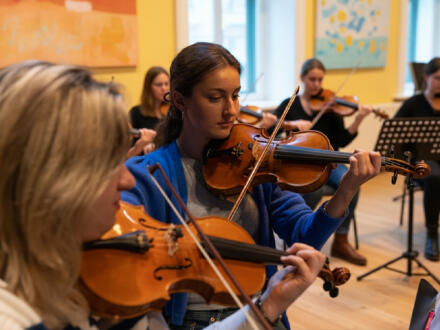
Paying for a music degree in Georgia can feel expensive fast. Tuition, fees, private lessons, accompanists, audition travel, and instrument care can pile up long before a student even walks into the first theory class.
That's why Georgia Music School Scholarships matter so much. The right scholarship can cut a bill by $1,000, $5,000, or more, and some awards can stack with state aid, institutional merit aid, and need-based grants. For students who sing, play, compose, conduct, or plan to teach music, that can mean the difference between borrowing heavily and starting college on stronger footing.
This guide breaks down 9 Georgia Music School Scholarships That Can Help Students Pay For College. It focuses on options connected to Georgia music programs, music associations, and colleges that regularly support undergraduate students. It also explains how students can compare awards and build a smarter application plan.
The article is written for high school students, college students, and first-year applicants who want practical details, not fluff. Each section explains who the scholarship fits, what the school or organization usually values, and how students can improve their odds. And because scholarship hunting takes time, the final sections cover how to find more opportunities and apply faster without missing deadlines.
For students looking into Georgia Music School Scholarships for High School Students, Georgia Music School Scholarships for College, or Georgia Music School Scholarships for University, this list is a solid place to start.
1. Georgia Music Educators Association Scholarships For Aspiring Music Majors
The Georgia Music Educators Association is one of the first places many students should look when searching for Georgia Music School Association Scholarships. It has strong ties to music education across the state, which makes it especially relevant for students who plan to major in music performance, music education, or a related field.
This option tends to appeal most to students who already participate in organized school music. Think all-state bands, choruses, orchestra programs, solo and ensemble events, or church and community performance groups. A student with 4 years in band and 2 leadership roles usually reads stronger on paper than a student with talent alone but little documented involvement.
The biggest advantage here is fit. Association-based scholarships often reward students who have shown commitment to music in actual school settings, not just raw audition skill. That helps disciplined applicants stand out.
A practical approach is to pair association opportunities with broader state aid. For example, many Georgia students also review the HOPE scholarship application because state merit aid can sometimes work alongside institutional music awards. Students comparing costs should also review statewide aid guidance from the Georgia Student Finance Commission, which oversees major Georgia aid programs.
Eligibility Requirements And Typical Award Details
Eligibility varies, but students usually need to meet several basics:
- Georgia residency or attendance at a Georgia high school
- Intent to major in music or enter a closely related field
- Acceptance to, or application at, an accredited college or university
- Evidence of musical involvement, such as ensembles, honors groups, or leadership
- Sometimes a teacher recommendation, transcript, short essay, or audition recording
Award amounts can differ a lot. Some music association scholarships land around $500 to $1,000, while stronger state or school-linked awards can go higher. Even a $1,000 award matters. At many campuses, that can cover a semester of books, lesson fees, and part of instrument maintenance.
Students should prepare a simple scholarship packet with:
- A one-page arts résumé
- Unofficial transcript
- Repertoire list
- Recommendation contacts
- A 60- to 90-second personal statement draft
That prep can save 3 to 5 hours every time a new application opens.
2. University Of Georgia Music Scholarships For First-Year And Returning Students
The University of Georgia offers music scholarship opportunities that can help both new and continuing students reduce costs. For families researching Georgia Music School Scholarships for first-year students, UGA is often high on the list because it combines academic reputation with a large university setting.
UGA music awards usually connect to auditions, ensemble participation, department needs, and overall academic strength. A first-year trumpet player with a polished audition and strong ensemble record may compete well, but a returning student can also earn support by showing steady growth and active participation.
That matters because some students assume scholarships are mostly front-loaded for freshmen. In reality, many university music programs reassess talent each year. A student who improves after the first semester can still become competitive.
Students should pay close attention to deadlines for admission, school of music auditions, FAFSA-related aid steps, and separate scholarship forms. Missing one document can shut the door on an otherwise strong file. Broader campus awards may also matter, especially for students combining music with another academic interest, so some applicants also compare options like the Georgia Presidential scholarship page.
A useful rule: if a student can stack $3,000 in institutional aid, $2,000 in music funds, and state merit support, the annual savings become meaningful fast. Over 4 years, that can easily pass $20,000. For college musicians paying for lessons, accompanists, concert clothes, and travel, that kind of gap changes the whole college decision.
3. Georgia State University School Of Music Scholarships For Undergraduate Students
Georgia State University is a strong option for students looking for Georgia Music School Scholarships for College in a major metro area. The School of Music supports undergraduate study across performance, jazz, composition, music education, and more, so it attracts students with very different goals.
At Georgia State, scholarship decisions often reflect a mix of audition quality, academic profile, program fit, and current ensemble needs. A jazz pianist and an opera vocalist may face different expectations, but both usually need clear preparation and a polished audition package. The program's own School of Music pages outline academic and artistic offerings that can help students judge fit before applying.
Location adds another practical benefit. Students in Atlanta may find more gigging, teaching, church music, and internship opportunities while in school. That side income can matter. If a student earns even $150 per weekend accompanying choirs or playing weddings twice a month, that adds up to roughly $3,600 over a 12-month stretch.
Applicants should also look beyond music-only awards. State and local scholarships can supplement campus aid, and some Georgia students build a mixed package from general scholarships plus departmental funds. For example, a student with strong academics and financial need might pair school aid with the Georgia Higher Foundation scholarship.
The smartest applicants treat Georgia State as one part of a funding plan, not the whole plan. That usually means applying to at least 8 to 12 scholarships total, including music, academic, state, and community options.
4. Mercer University Music Scholarships For High School Seniors And Incoming Freshmen
Mercer University is worth serious attention for Georgia Music School Scholarships for High School Students and incoming freshmen who want a private university experience. Music scholarships there often reward a mix of artistic promise, academic performance, and the ability to contribute to campus ensembles.
Private colleges can look expensive at first glance. But sticker price and actual price are rarely the same. A student who earns $12,000 in merit aid and $4,000 in music scholarship support can bring the net cost much closer to a public option than many families expect.
Mercer can be especially appealing for students who want smaller class sizes and direct faculty contact. That setup often helps singers and instrumentalists who want more face time in lessons and rehearsals.
Students should also keep building a wider application list. A high school senior interested in both performing arts and academics might cast a wider net with options such as the Georgia Thespian scholarships if theater or musical theater experience overlaps with music training.
Audition Expectations And Application Tips
Mercer applicants usually need a well-prepared audition. That often includes contrasting pieces, scales or technique work for instrumentalists, and evidence that the student can follow musical direction in real time.
A strong music scholarship audition often includes:
- 2 polished selections with different styles or tempos
- Clean rhythm and intonation
- Clear diction for vocalists
- Professional presentation, even if the setting is informal
- A résumé showing ensembles, honors, and leadership
Application tips that actually move the needle:
- Record a practice audition and watch it back. Students often catch posture, tempo, or tuning issues in under 10 minutes.
- Ask a director or private teacher for 1 blunt round of feedback at least 2 weeks before the audition.
- Keep repertoire realistic. A clean Grade 4 or 5 piece usually beats a shaky showpiece.
- Submit all forms early. Turning in materials 7 days before the deadline gives time to fix transcript or portal problems.
One concrete example: a clarinet student who practices the audition set 30 minutes a day for 42 days logs 21 hours of focused prep. That is usually enough time to make noticeable gains in consistency and confidence.
5. Shorter University Music Scholarships For Performance And Worship Arts Students
Shorter University stands out for students interested in performance and worship-related study. That makes it relevant for applicants searching Georgia Music School Scholarships for University programs that blend conservatory-style work with faith-based campus life.
For worship arts students, fit matters as much as funding. A student who plans to lead worship, arrange music for church ensembles, or combine voice study with ministry training may find stronger alignment here than at a larger research university. That kind of fit can influence both scholarship chances and long-term success.
Shorter's music scholarships may favor students who show:
- Consistent ensemble or church music involvement
- Audition readiness
- Strong work ethic
- Clear interest in performance or worship leadership
Students should document specifics. "Played piano at church" is vague. "Played twice a month for an 85-member congregation and rehearsed 90 minutes weekly" is stronger and easier for scholarship readers to evaluate.
This is also a good place to mention overlap with non-music awards. Students from North Georgia, for example, may expand their list with opportunities such as the North Georgia community scholarships. Combining local awards with departmental aid can lower borrowing significantly.
A realistic target is to build a package from 3 sources:
- Institutional merit aid
- Music department scholarship
- Outside scholarships from state or local groups
Even if each source averages only $2,500, that total reaches $7,500 per year. For many families, that covers a large share of remaining tuition or housing costs.
6. Columbus State University Schwob School Of Music Scholarships For College And University Applicants
The Schwob School of Music at Columbus State University has a strong reputation among Georgia music programs, especially for students focused on serious performance study. For applicants researching Georgia Music School Scholarships for College and Georgia Music School Scholarships for University, it often belongs on the shortlist.
Scholarship support here is often tied closely to audition strength. Faculty want students who can contribute right away to ensembles, studios, and productions. That means technique, musicianship, tone, rhythm, and stage presence all matter.
A violinist with excellent intonation and ensemble awareness may rank above a flashier player who misses shifts and loses tempo. Scholarship auditions are not talent shows. Faculty are usually judging how teachable and dependable a student seems over 4 years.
Students should also think about total value, not just the headline award. If Columbus State offers $4,000 in music aid, but another school offers $6,000 with much higher living costs, the lower award may still be the better deal.
Applicants who want to widen the search beyond music-specific aid can pair university applications with Georgia-focused awards such as the Georgia United Foundation scholarships. That strategy helps because music scholarships are often competitive and sometimes dependent on studio openings.
One smart tactic is the "cost per year" worksheet. Students list tuition, fees, housing, meals, books, travel, and estimated music extras like reeds, strings, or accompanist fees. A voice major, for example, might spend $400 to $900 a year on sheet music, audition clothing, and accompanist costs alone. That number belongs in the comparison.
7. Berry College Music Scholarships For High School Students Planning To Study In Georgia
Berry College can be a strong choice for students who want a smaller liberal arts setting while still staying active in music. For Georgia Music School Scholarships for High School Students, Berry is especially attractive to students who want music to remain central even if they double major or pursue another academic path.
That flexibility matters. Not every student entering college is fully sure about majoring in performance, music education, or composition. Some want music plus biology, business, or English. Schools like Berry can work well for that mix.
Berry music scholarships often support participation in ensembles and private study, and they may reward students who show clear musical involvement before college. A student who has spent 6 semesters in choir, taken 3 years of piano lessons, and served as section leader brings the kind of record scholarship committees can measure.
Applicants should present music experience with numbers and outcomes:
- Number of years in ensemble
- Number of weekly practice hours
- Leadership roles held
- Solo ratings or festival results
- Community performances completed
That level of detail turns a generic application into a credible one. Students who are building a broad scholarship list can also add non-music awards such as the Georgia high school senior scholarship for future teachers if music education is part of the plan.
A good Berry applicant usually does two things well: they show artistic commitment, and they show they will contribute to campus life. Colleges notice both.
8. How To Compare Georgia Music School Scholarships For High School Students, College Students, And First-Year Applicants
Comparing Georgia Music School Scholarships is not just about picking the biggest dollar amount. Students need to compare the real value of each offer, the strings attached, and how likely the award is to continue after year one.
A simple comparison table helps. Students can score each scholarship from 1 to 5 in a few categories.
| Category | What to check |
|---|---|
| Award amount | Exact annual dollars, not estimates |
| Renewal rules | GPA, ensemble participation, audition review |
| Stackability | Can it combine with HOPE, Pell, or merit aid? |
| Extra costs | Lessons, accompanists, housing, travel, instrument care |
| Fit | Teacher, campus size, degree path, performance chances |
Students should ask direct questions:
- Is the award one-time or renewable for 4 years?
- Does it require a minimum GPA such as 3.0?
- Must the student join a specific ensemble each term?
- Can the amount change after a jury or re-audition?
This section matters because a "bigger" scholarship can lose value fast. A $5,000 award that requires expensive off-campus housing may be weaker than a $3,500 award with lower total costs.
Students building a broader funding plan should compare music-specific awards with general Georgia scholarships like the Georgia Realtors college scholarship. And for students who want a larger pool of opportunities in one place, the scholarship database can help them sort options by profile and deadline.
The best choice is usually the school where the student can afford to stay all 4 years, not the school with the flashiest first offer.
9. Where To Find More Georgia Music School Scholarships And Apply More Efficiently
Students rarely pay for music school with one scholarship alone. Most build a package from 5 to 15 applications, then stack whatever wins. That is why search strategy matters almost as much as audition skill.
A good scholarship search covers 4 buckets:
- College music departments in Georgia
- State aid programs and grant agencies
- Arts associations and local music groups
- General scholarships that can be used at Georgia colleges
Efficiency matters because seniors and college students are busy. Between classes, rehearsals, jobs, and auditions, wasting 2 hours on every application adds up fast. Platforms that simplify matching and shorten forms can save serious time. On StudentScholarships.org, students can sort through broad scholarship options and often complete straightforward applications quickly, which helps when deadlines bunch up in the same month.
Students should keep a reusable file with:
- Master résumé
- Transcript PDF
- Test scores if required
- 2 recommendation contacts
- 3 essay versions at 150, 300, and 500 words
- Repertoire list
- Headshot or performance photo if needed
That system can cut the average application from 45 minutes to 15 minutes once the first set of materials is ready. Students may also branch into adjacent arts or memorial awards, such as the GMBS music scholarship or the John W. Youtsey memorial scholarship, depending on eligibility.
For wider perspective, students sometimes compare how music schools present funding and training across institutions, including programs like Belmont's music school. That kind of comparison can sharpen a student's list and help them write more specific scholarship essays.
FAQs About Georgia Music School Scholarships
What types of scholarships are available for music students in Georgia?
Georgia offers various music scholarships including those from the Georgia Music Educators Association, universities like UGA and Georgia State, and private institutions like Mercer and Berry College, each with different eligibility and award amounts.
How can I increase my chances of winning a Georgia Music School Scholarship?
Students should demonstrate consistent musical involvement, prepare polished audition materials, maintain good academic standing, and submit complete applications early, including arts résumés and recommendation letters.
Can Georgia Music School Scholarships be combined with other aid such as the HOPE Scholarship?
Yes, many music scholarships in Georgia can stack with state aid programs like the HOPE Scholarship and institutional merit awards, increasing overall financial support.
Are music scholarships only awarded to incoming freshmen at Georgia universities?
No, universities like the University of Georgia reassess scholarship eligibility yearly, so continuing students who show growth and active participation can also receive funding.
Where can I find more scholarship opportunities for music students in Georgia?
Beyond school-based awards, students can explore scholarships through the Georgia Student Finance Commission, local music associations, and platforms listing 2026 College Scholarships for streamlined applications.
What should I include in my scholarship application packet for Georgia music scholarships?
A strong packet typically contains a one-page arts résumé, unofficial transcript, repertoire list, personal statement draft, and contacts for recommendations, which helps streamline multiple applications.