

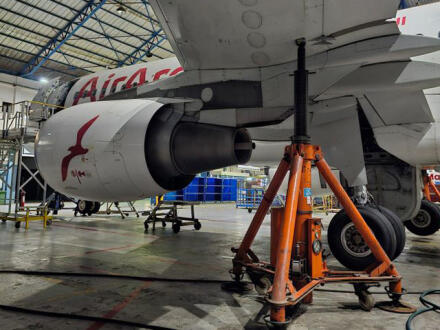
Aircraft structures work is one of those careers that feels very hands-on from day one. Students learn to repair skin panels, inspect corrosion, use rivet guns, read maintenance manuals, and follow exact safety rules. That path can lead to work with airlines, repair stations, aerospace manufacturers, and military contractors across North Carolina.
The hard part is often paying for training. Tuition, tools, books, lab fees, travel, and exam costs add up fast. The good news is that North Carolina Aircraft Structures Technician Scholarships can come from more than one place. Students may find money through community colleges, universities, employers, local foundations, workforce grants, and military education benefits.
For students who want a quick answer, here it is: the best funding strategy is usually to stack several smaller awards with state aid and employer support instead of waiting for one full-ride scholarship. A student who combines a $1,000 local scholarship, a state grant, employer tuition help, and a school-based award can often cover a large share of training costs.
This guide breaks down 11 funding paths worth applying for. It is built for high school students, current college students, and future aviation maintenance learners who want practical options, not vague advice. The focus stays on North Carolina Aircraft Structures Technician Scholarships for High School Students, North Carolina Aircraft Structures Technician Scholarships for College, and North Carolina Aircraft Structures Technician Scholarships for University programs.
1. North Carolina Community College Aviation Scholarships
Community colleges are often the most direct route into aircraft structures and aviation maintenance training. In North Carolina, in-state tuition at public two-year colleges is usually far lower than university tuition, which makes school-based scholarships stretch further.
Many aviation students start by checking colleges with technical and workforce training pipelines. Schools such as Coastal Carolina Community College show how community colleges can connect education with local industry needs. For an aircraft structures student, that matters because scholarships tied to technical programs often favor students with a clear job target.
Common community college funding sources include:
- Foundation scholarships run by the college
- Program-specific aviation or skilled trades awards
- Need-based campus grants
- Tool or lab-fee assistance
- County or regional donor scholarships
Students should apply even when awards look small. A $750 book award plus a $1,250 tuition scholarship and a $500 tool grant can remove $2,500 in out-of-pocket cost.
A smart move is to pair campus applications with broader North Carolina options such as the lottery scholarship page. Many students miss this layer because they only search for "aviation" in the title. For North Carolina Aircraft Structures Technician Scholarships for College, community colleges often offer the fastest application timeline and the best odds.
2. University Aviation Maintenance Scholarships In North Carolina
University funding is worth checking even for students focused on technical work. Some North Carolina schools support aviation, engineering, manufacturing, or applied technology students through broader scholarship pools rather than aircraft-specific awards.
That means a future structures technician should not ignore university aid just because the scholarship title says "engineering," "transportation," or "STEM." Large campuses tend to have donor funds, departmental awards, and merit-based packages that can apply to related study. Schools such as NC State University and Carolina University show the range of institutional support students may find across the state.
Students should ask three specific questions:
- Does the school fund applied technical majors, not just academic research tracks?
- Are transfer students eligible after one strong semester?
- Can outside scholarships stack with university aid?
That last point matters. If a student gets a $2,000 departmental award and keeps a 3.2 GPA, they may still be able to add private or regional funding.
North Carolina Aircraft Structures Technician Scholarships for University students are often hidden inside larger scholarship systems. A good example is broader state-linked aid like the Aubrey Lee Brooks option, which can support North Carolina residents at eligible institutions. University aid takes more digging, but the award sizes can be bigger than local one-off scholarships.
3. Scholarships For High School Students Planning An Aircraft Structures Career
High school students have more scholarship options than they often realize. The biggest mistake is waiting until senior spring to search. By then, some deadlines are gone, recommendation letters are rushed, and career-tech awards have already closed.
North Carolina Aircraft Structures Technician Scholarships for High School Students often come from local foundations, statewide programs, and career-focused donor funds. A student with a solid attendance record, a 3.0 GPA, and shop, welding, or STEM experience can stand out even without perfect test scores.
Useful places to look include:
- County education foundations
- Local chambers of commerce
- Rotary and civic clubs
- Technical education awards
- General North Carolina resident scholarships
Even non-aviation awards can help cover first-semester costs. A student who wins one $500 local scholarship and two $1,000 regional awards already has $2,500 toward tuition, books, or housing.
Broad search platforms can help students organize these smaller wins. On a site that simplifies matching and short applications, students can sort opportunities by state, major, and background instead of hunting one by one.
3.1 Dual Enrollment, CTE, And Early Commitment Opportunities
Career and Technical Education can make a real difference before college starts. Students in aviation, manufacturing, welding, engineering, or industrial systems tracks may qualify for awards tied to workforce readiness.
North Carolina's Career and College Promise model has helped many students earn college credit while still in high school. That can cut a semester or more from total training time. If a student saves 12 credit hours at roughly $76 per in-state community college credit hour, that is about $912 in tuition avoided before fees.
Students should ask counselors about:
- Dual-enrollment tuition support
- CTE completion awards
- High school-to-college pipeline scholarships
- Early application incentives from technical programs
State planning tools like CFNC are useful here because they pull college, aid, and career planning into one place. Students can also layer in smaller awards such as the North State scholarship option, which may help with first-year costs.
For students set on structures work, early commitment matters. A senior who already has technical coursework, OSHA safety training, and a teacher recommendation from a shop instructor often looks more prepared than a student who waits to explain their goals in April.
4. First-Year Student Scholarships For New Aviation Maintenance Majors
First-year students have a narrow but important window. Schools and donors like to support new majors before financial stress pushes them to drop or switch programs.
North Carolina Aircraft Structures Technician Scholarships for first-year students often reward three things: clear career intent, readiness for technical coursework, and basic academic follow-through. A student does not always need a 4.0 GPA. In many cases, a 2.8 to 3.3 GPA, solid attendance, and a strong personal statement are enough.
A strong first-year application should include:
- A short explanation of why aircraft structures work fits the student
- One concrete example of hands-on experience, like sheet metal, automotive repair, or robotics
- A simple budget showing tuition, tools, fees, and transportation costs
That budget matters more than students think. If first-semester expenses total $4,380, saying that exact number sounds credible. Saying "college is expensive" does not.
Students who need broad first-year funding can also look at region-based awards such as the Triangle-area scholarship pool. For North Carolina Aircraft Structures Technician Scholarships for first-year students, the best applications usually feel practical. They show that the student knows what training costs and what the job looks like in real life.
5. College Scholarships For Current Aircraft Structures Technician Students
Current students often have an edge because they can prove commitment. Once a student finishes one or two terms, they have grades, attendance records, instructor feedback, and maybe lab performance to show.
That changes the application story. Instead of saying they hope to do well, they can point to exact results. For example, a student might report a 3.4 GPA, 96% attendance, 38 completed lab hours on sheet metal repair, and zero safety write-ups.
Best-fit scholarship sources for current students include:
- Continuing student campus awards
- Departmental scholarships
- Foundation renewals
- Trade and safety scholarships
- Donor awards for students with financial need
Students in technical programs should not ignore broad awards. A general option like the Safety in North Carolina scholarship can align well with aviation maintenance because safety culture is central to the field.
This is also the point where recommendation letters improve. An instructor can write, "She completed a damaged panel patch within tolerance in lab," which is far stronger than "She is a hard worker." North Carolina Aircraft Structures Technician Scholarships for College applicants are often decided by these small proof points.
6. University Scholarships For Students In Aviation, Engineering, And Related Programs
Some students in aircraft structures start in broader majors or add related coursework in engineering technology, materials, manufacturing, or aviation systems. That opens extra scholarship lanes.
Universities often group aid by department, college, or donor intent. So a student interested in structures repair might qualify under aerospace, industrial technology, mechanical systems, or engineering support categories. At larger institutions such as The University of North Carolina at Chapel Hill or Appalachian State University, aid systems can include hundreds of named awards with different criteria.
Three search terms work especially well:
- Aviation and maintenance scholarships
- Engineering technology scholarships
- STEM scholarships for transfer or continuing students
Students from underrepresented backgrounds should also look at identity-based funds. For example, the North Carolina Hispanic College Fund may help eligible students cover part of college costs.
North Carolina Aircraft Structures Technician Scholarships for University students often reward persistence. One student may get denied for a competitive $5,000 donor award, then win two separate $1,500 department awards and a $1,000 diversity scholarship. Same total outcome, different path.
7. North Carolina Aircraft Structures Technician Association Scholarships And Industry Awards
Industry associations can be a strong funding source, even when the exact award title changes from year to year. That is why students should search beyond the phrase "aircraft structures technician."
North Carolina Aircraft Structures Technician Association Scholarships may appear under aviation maintenance groups, manufacturing associations, safety organizations, or technician foundations. These awards often favor students who already show industry interest through memberships, event attendance, volunteer hours, or faculty recommendations.
What these awards often ask for:
- A resume with technical classes and certifications
- A short essay on career goals
- Proof of enrollment in a qualifying program
- One or two references from instructors or employers
Industry awards are attractive because the applicant pool can be smaller than for broad state scholarships. A local technical association may receive 40 applications, not 4,000. That improves the odds.
Students should also watch for transferable association-style funding, including options like the State Employees scholarship pool when family eligibility fits. The key is not to get stuck on one exact label. North Carolina Aircraft Structures Technician Association Scholarships may hide inside maintenance, safety, workforce, or skilled-trades categories.
8. Workforce Grants, State Aid, And FAA-Adjacent Training Support
Some of the best funding is not called a scholarship at all. Workforce grants, state aid, and short-term training support can cover major costs with fewer essays and faster decisions.
This matters in aircraft structures training because students often need money for more than tuition. Tool kits, protective gear, testing fees, and transportation can add $1,200 to $3,800 depending on the program.
Useful funding buckets include:
- Federal Pell Grant for eligible students
- State need-based aid
- Workforce Innovation and Opportunity Act support in some cases
- School emergency grants
- Employer-referred training assistance
FAA-adjacent support can also matter when a program prepares students for regulated maintenance environments. Even when aid is not directly from the FAA, schools may align training with maintenance standards that make graduates more employable.
For students comparing aid systems, outside financial aid offices can show how layered funding works. A general example appears in financial aid guidance, where grants, scholarships, and other aid types are separated clearly. That same stacking approach works well in North Carolina.
8.1 North Carolina Need-Based Aid And Short-Term Workforce Funding
Need-based aid is often the foundation of a workable plan. Families with limited income should complete aid forms early because many state and campus funds are first-come, first-reviewed, or limited by annual budgets.
A short-term workforce grant can be especially useful for students entering technical pathways fast. Instead of waiting through a long award cycle, they may get help with tuition, fees, or required supplies tied to job training.
Students should prepare these items before applying:
- FAFSA or other required financial documents
- Residency proof for North Carolina programs
- Program acceptance or enrollment confirmation
- Cost sheet from the school
State-connected options such as the education lottery scholarship listing can support eligible residents. Regional need-based options like the Western North Carolina foundation awards are worth adding too.
A student who combines a $2,000 need-based award, a $1,500 workforce grant, and a $750 local scholarship may cut a $5,400 bill nearly in half. That kind of stack is common enough to plan for, not just hope for.
9. Employer-Sponsored Scholarships From Aerospace And MRO Companies
Employer money is one of the most overlooked funding paths in aviation. Aerospace companies, manufacturers, and MRO shops sometimes support future technicians because hiring skilled workers is expensive.
Training a new technician after graduation can cost a company months of supervision and lost productivity. So a $2,500 scholarship is often a smart recruiting tool. In return, students may need to complete an internship, interview for a job, or commit to a work period after training.
Employer-sponsored support can include:
- Scholarships for local technical students
- Paid internships with tuition help
- Tuition reimbursement after hiring
- Tool allowances or certification bonuses
Students should search within a 100-mile radius of their school and ask instructors which employers hire recent graduates. MRO and aerospace firms near military bases, cargo hubs, and regional airports are especially worth watching.
Even general local scholarships can bridge the gap until employer support starts. A small award such as the Tailor Made Lawns scholarship fund will not pay for an entire program, but it can cover books or transport while a student waits for internship income.
10. Military, Veteran, And ROTC Education Funding Paths
Military and veteran funding deserves a full look because aviation maintenance has a direct skills match. Students with service backgrounds may already have experience with tools, maintenance documentation, inspection routines, or safety procedures.
Funding can come from several places:
- GI Bill education benefits for eligible veterans
- Tuition assistance for active-duty members in approved situations
- State veteran education support
- ROTC-related scholarships for some students
- Military spouse or dependent scholarships
This path is not just for students leaving service. Dependents may also qualify for education support, and Guard or Reserve members may have separate benefits. The exact amount depends on eligibility, enrollment status, and approved program costs.
Students should ask schools whether aviation maintenance or structures training fits benefit rules and whether fees, supplies, and tools are covered. A student using military aid may still add private scholarships on top, which can lower out-of-pocket costs for housing or commuting.
For a realistic example, a veteran student might use education benefits for tuition and then apply private awards to cover a $1,100 tool set, $420 in books, and monthly fuel costs for a 34-mile commute.
11. Local Foundation And Regional Scholarship Opportunities Across North Carolina
Local foundations are where many students piece together the last part of their funding plan. These awards may be smaller, but they are often less competitive because eligibility is tied to a county, city, school district, or community background.
That local focus matters. A statewide scholarship might draw 2,000 applicants. A county-based award may draw 60. Even a $1,000 award becomes valuable when the odds are better.
Students should search by:
- County name
- Home town or metro area
- High school alumni association
- Community foundation
- Identity or family background
Regional examples include the Triangle-area scholarship options and support connected to the Central Carolina Community Foundation. Students with specific backgrounds may also qualify for targeted awards, such as the North Carolina Hispanic fund.
The best approach is simple: apply broadly, track deadlines in one spreadsheet, and reuse a strong core essay. A student who files 18 quality applications and wins 3 awards at $1,000 each brings in $3,000. For many technical students, that covers a big share of the first term.
North Carolina Aircraft Structures Technician Scholarships FAQs
What types of scholarships are available for aircraft structures technician students in North Carolina?
Students can access scholarships from community colleges, universities, employers, local foundations, workforce grants, and military education benefits, often stacking several awards to cover tuition, tools, and fees.
How can high school students in North Carolina find scholarships for aircraft structures training?
High school students should explore local foundations, county education funds, civic clubs, and statewide programs early, applying broadly before deadlines for career-technical awards close.
Are there specific scholarships for aircraft structures technician students at North Carolina community colleges?
Yes, community colleges like Coastal Carolina often offer foundation scholarships, program-specific awards, need-based grants, and tool assistance that favor students pursuing aviation maintenance careers.
Can university scholarships support aircraft structures technician students in North Carolina?
Yes, university scholarships may come from engineering, STEM, or applied technology funds. Students at schools like NC State and UNC can access donor and departmental awards if their majors align with aviation maintenance.
What role do employer-sponsored scholarships play in funding aircraft structures training?
Aerospace and maintenance companies may offer scholarships, internships, or tuition reimbursement to recruit skilled technicians, sometimes requiring work commitments after training.
How does military service affect eligibility for aircraft structures technician scholarships in North Carolina?
Veterans, active-duty members, ROTC students, and military dependents can use GI Bill benefits, tuition assistance, and state veteran education support, often combining these with private or regional scholarships.






