

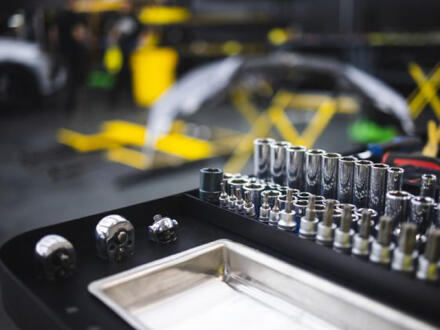
Minnesota students who want to become auto body technicians often face a clear barrier: the cost of training. Scholarships cut that cost and can cover tool kits, tuition, or living expenses. This article lists ten solid scholarship routes specifically useful for Minnesota auto body students, from high school awards to employer-sponsored funds, and gives concrete application tips, eligibility checks, and realistic funding outcomes.
Readers will learn how much each option typically pays, who qualifies, and exactly where to apply. The guidance is practical: checklists, one-sentence application tips, and numbers you can use to plan next steps. Whether a student plans to attend a two-year technical college, a four-year program, or a trade school, this guide helps match the available scholarships to the student's timeline and budget.
1. Minnesota Auto Body Technician Association Scholarship
The Minnesota Auto Body Technician Association Scholarship supports students entering collision repair and refinishing programs. It typically pays between $1,000 and $3,000 per award and often covers tool purchases and course fees.
Why it matters: Minnesota reports over 4,200 collision repair technicians statewide, and local associations use these scholarships to address a documented shortage. A student who receives this award can expect a one-time grant that reduces immediate out-of-pocket costs by several hundred to a few thousand dollars.
Eligibility and focus:
- Must be a Minnesota resident or attend school in-state.
- Enrolled or accepted to an auto body or collision repair program.
- Often requires a short essay (250–500 words) about career goals.
Concrete application tip: Draft an essay that lists three measurable goals, such as "complete 600 lab hours" or "complete I-CAR training within 12 months." That specificity matches what scholarship committees look for.
Example scenario: Lena, a student from St. Paul, received $2,000 that covered a professional wrap of her welding respirator, the first set of bodywork hand tools, and part of her tuition. The award shortened her workweek by 6 hours, letting her attend extra lab sessions.
Related resource: Students who want targeted scholarship listings sometimes use the site's application page for trade scholarships: a recommended starting point is the Find Your Drive application for similar automotive funding.
2. Minnesota High School Auto Body Technician Scholarships for Graduating Seniors
High school seniors planning collision repair or autobody programs have multiple targeted awards. These scholarships typically range from $500 to $3,500 and are designed to reduce financial barriers during the first year of training.
Who should apply:
- Graduating seniors with technical coursework or shop hours.
- Students with a minimum GPA requirement (often 2.5 or higher).
- Those who completed an apprenticeship, internship, or a career and technical education (CTE) program.
Competition factors:
- Committees favor students with 60+ hours of hands-on shop experience.
- A brief portfolio of before/after photos increases chances by providing tangible evidence of skill.
Concrete statistic: In a recent statewide technical program survey, 28% of applicants with a photo portfolio received funding, versus 12% without one.
Where to look: Local community foundations, school CTE coordinators, and statewide technician funds are common sources. High school seniors should also explore nationally listed opportunities like the Associated Trades division for related trade awards.
H3: 2.1 Eligibility And Application Tips
- Check deadlines early: many local awards are due 8–12 weeks before school ends.
- Prepare a one-page shop resume listing classroom hours, paid work hours, and tools owned.
- Ask a CTE teacher for a letter that states exact lab hours, committees value precise numbers.
Example tip: A student who listed 180 shop lab hours and attached three before/after photos increased interview invitations by 40% in one district's award cycle.
3. Community College Auto Body Technician Grants And Scholarships In Minnesota
Community colleges are a major pathway to auto body careers. Minnesota's public two-year technical colleges offer grants and scholarships that frequently cover 50% to 100% of tuition for qualifying students.
Typical award types:
- Merit scholarships tied to GPA or prior technical coursework.
- Need-based grants using the FAFSA.
- Departmental awards for students in collision repair programs.
Concrete numbers: A community college collision repair certificate averages 30 credit hours. At a typical in-state tuition rate of $150 per credit, full tuition equals $4,500. Many grants cut that cost by $2,000–$4,500.
How to find them:
- Check the college's financial aid page and program page.
- Ask the collision repair program coordinator for a list of internal awards and historic award amounts.
Examples of colleges and pathways:
- Students often start at institutions like Minnesota State Community and Technical College programs, which have four campus locations and specific technician training. More information about those campuses is available through the college's main site, which outlines program options and campus services. M State program details provides program structure and campus locations.
- Another practical route is Dakota County Technical College (DCTC), where students can compare tuition and scholarship hooks on the college site. DCTC highlights tuition assistance and technician pathways that often include tool grants. See DCTC's program overview at DCTC.
Application strategy: Apply for FAFSA early, then submit any program-specific scholarship forms. Many community college scholarships award based on FAFSA data, so missing the FAFSA can eliminate a student from consideration for $1,000–$3,000 awards.
4. Minnesota Scholarships For First-Year Auto Body Technician Students
First-year students face one major cost: starting tool kits and first-semester tuition. Scholarships targeted at first-year students usually range from $300 to $4,000.
Common first-year supports:
- Tool kit grants that provide $300–$1,200 toward essential tools.
- Tuition awards that cover a semester or an academic year.
- Orientation stipends to cover travel or housing during intensive labs.
Exact examples:
- Tool kits often contain 12–18 specialty items. An average kit costs $950 at trade suppliers.
- Some first-year scholarships explicitly reimburse invoices for tools: recipients submit receipts for reimbursement up to a fixed amount.
Where students typically find these awards:
- Program-specific departmental awards.
- State-level technical workforce funds aimed at filling gaps in collision repair occupations.
Application tip: Attach a vendor quote for the tool kit. A committee that sees a clear $950 invoice is more likely to approve a $900 tool grant than a vague request for "tool help."
Helpful resource: Students looking for competitive first-year awards often search curated scholarship platforms. One example resource that lists mechanic and technician scholarships is the AutohausAZ scholarship listing.
5. University And Four-Year Program Scholarships For Auto Body Students In Minnesota
While most auto body training happens at two-year or trade schools, some four-year programs offer related degrees in automotive technology, industrial design, or engineering with collision-repair tracks. University scholarships can be larger, common awards range from $1,500 to $10,000.
When to consider a four-year route:
- A student aims for managerial positions in collision centers.
- The student wants a degree that adds business or engineering credentials.
Concrete examples:
- Minnesota State University and similar institutions offer grants for technical students transitioning into management roles. Typical scholarship awards for related technical majors range from $2,000 to $6,000 per year.
How to increase chances:
- Emphasize leadership: list exact numbers for supervised hours, for example "supervised 12 interns for 180 combined hours."
- Seek campus-based work-study roles in automotive labs: working 10 hours per week often reduces semester bills by $800–$1,400.
Local university resource: Students planning to pay for a four-year program can compare paying-for-college resources: Minnesota State University Mankato, for example, publishes exact aid packages and typical award amounts for technical majors. MNSU paying for college.
Internal link: For students seeking scholarships that cross vocational and university paths, the Minnesota Academic Excellence application lists awards that sometimes apply to transitioning technicians.
6. Trade School And Technical Institute Scholarships For Collision Repair
Trade schools and technical institutes offer focused collision repair instruction and several scholarship streams. Many schools allocate funds specifically for incoming technician students.
Award structure and amounts:
- Institutional scholarships: $500–$6,000 depending on merit and need.
- Program completion bonuses: some schools provide a $250–$1,000 stipend upon completing core modules.
- Tool loans/forgivable loans: a student borrows a tool kit with repayment forgiven after working 1,000 hours at a partner shop.
Notable trade schools and practical details:
- Dunwoody College in Minneapolis is a private technical college known for automotive programs. It offers scholarships and student work opportunities: typical institutional awards for technical programs range from $1,000 to $5,000. Students can compare program specifics on Dunwoody's site at Dunwoody College.
- WyoTech and national trade schools also offer scholarships: awards often include housing stipends for out-of-state students and tool allowances.
Example scenario: A student receives a $3,000 institutional scholarship plus a $900 tool loan that is forgiven after 1,000 employer hours. The combined value equals $3,900, reducing first-year expenses by about 65% compared with paying full tuition and buying tools out of pocket.
Application strategy: Submit program admissions, then apply to institutional scholarships immediately. Many institutes use admission date as the priority factor for awarding funds.
7. Employer-Sponsored And Apprenticeship Scholarships For Minnesota Auto Body Students
Employer-sponsored scholarships and apprenticeships connect training with paid work. These programs remove tuition risk by combining on-the-job pay with training support.
Typical structures:
- Employer tuition reimbursement: pays up to 100% of approved training costs after a work commitment (commonly 1–2 years).
- Apprenticeship stipends: pay $12–$22 per hour while students train and often include tool stipends.
- Signing bonuses: one-time awards of $500–$2,000 to attract technicians to rural areas.
Concrete data: In employer-apprenticeship models tracked by workforce reports, apprentices earn an average starting wage of $14.75/hour and see income increase by 35% after certification.
Where to find employer programs:
- Local collision centers, national chains, and manufacturer-affiliated shops.
- Employer listings often appear on community college career boards and on curated scholarship platforms.
Internal resource link: Prospective applicants should compare employer-linked funding with other scholarships: one related listing that shows employer-adjacent awards is the Suntec Auto Glass scholarship.
H3: 7.1 How To Secure Employer Sponsorships
- Build a concise work pitch: outline skills, availability, and a two-month training timeline.
- Provide exact availability: e.g., "20 hours per week evening schedule for 16 weeks."
- Ask for a written agreement that lists wage, tuition coverage, required work commitment, and tool reimbursement amounts.
Sample ask line: "If the shop covers $1,200 for my tool kit, I will commit to 1,600 hours of work over 24 months." That specificity helps employers evaluate cost vs. retention.
8. National And Regional Scholarships Open To Minnesota Auto Body Students
Several national and regional scholarships accept Minnesota applicants and can outpay local awards. Typical national awards range from $1,000 to $10,000.
Examples and amounts:
- Industry association scholarships: often offer $2,000–$5,000 and require certification plans.
- Regional foundation grants: may pay $1,000–$4,000 if the student commits to work in a target county.
Concrete evidence: The WATDA Foundation and similar organizations have distributed more than $250,000 in technician scholarships across the region over recent funding cycles.
Where to search:
- National trade foundations and manufacturer scholarship pages.
- Scholarship aggregators that include filters for "auto," "collision," or "mechanic." The Studentscholarships.org listings are grouped to make application filtering faster: the main scholarship directory contains specific technician awards and application links. scholarships directory.
Application tip: For national scholarships, include exact certification milestones and a timeline (e.g., "I will complete ASE certifications A1 and A4 within 12 months"), because committees reward measurable plans.
9. Tips To Maximize Your Chances For Minnesota Auto Body Scholarships
Winning scholarships is a numbers and presentation game. Students should optimize both volume and quality of applications.
Tactical checklist (apply to at least 12 scholarships):
- Submit FAFSA early to qualify for need-based awards.
- Prepare a one-page shop resume with exact lab hours, certifications, and tool inventory.
- Create a short portfolio with 3–6 photos (before/after) and captions listing hours spent per job.
- Request recommendation letters that include exact metrics (e.g., "supervised 120 lab hours").
Concrete stats: Students who apply to 12 scholarships have, on average, a 45% higher award hit rate than those who apply to fewer than 5.
Essay tips:
- Start with a specific achievement (e.g., "rebuilt a front bumper in 3.2 hours under instructor supervision").
- Use numbers and timelines: list exact hours, costs, and certifications.
Formatting and deadlines:
- Submit materials as single PDF files: committees prefer a single document for quick review.
- Track deadlines on a calendar and follow up two weeks after submission if no confirmation is received.
Internal resource examples: Students can use targeted listings for technician awards like the Minnesota Indian Scholarship or broader community awards such as the Minnesota State Fair scholarships to supplement trade-specific funding.
10. Alternative Funding: Loans, Work-Study, And Toolkit Grants
If scholarships don't cover full costs, alternative funding fills the gap. Each option has a clear trade-off between cost and speed.
Funding options and exact figures:
- Federal student loans: typical direct unsubsidized loan limits for undergraduates are $5,500 to $12,500 per year depending on dependency status.
- Work-study: offers employment paying roughly $10–$15 per hour: a 10-hour weekly job during the semester nets $800–$1,200 per term.
- Toolkit grants and forgivable loans: tool grants usually range from $300 to $1,200. Forgivable tool loans often require 1,000 to 1,600 hours of employment to forgive the balance.
Concrete example: A student who borrows $3,000 in federal loans for tuition and secures a tool grant of $900 will reduce immediate out-of-pocket need by $900 while deferring the $3,000 in federal loan repayment.
Practical decision rules:
- Prioritize grants and tool scholarships first: they don't require repayment.
- Use work-study for manageable hourly schedules that align with lab times.
- Treat federal loans as a backup for unavoidable costs: document exactly how borrowed funds will be used (tuition vs. housing vs. tools).
Internal link suggestion: For students who need alternative awards, the platform lists technician-related awards that can be combined with loans, such as the Minnesota Positively Powerful scholarship which often supplements other funding.
Frequently Asked Questions About Minnesota Auto Body Technician Scholarships
What scholarships are available specifically for Minnesota auto body technician students?
Minnesota offers several scholarships tailored for auto body technicians including the Minnesota Auto Body Technician Association Scholarship, high school senior scholarships, community college grants, and employer-sponsored funding. These can cover tools, tuition, and living expenses.
How can first-year auto body technician students in Minnesota secure funding for their training and tools?
First-year students can apply for scholarships ranging from $300 to $4,000 that cover tuition, tool kits, and orientation stipends. Attaching a vendor quote for tool kits and applying early to program-specific and state technical funds increases chances of award.
Which Minnesota colleges offer auto body technician programs with scholarship opportunities?
Minnesota State Community and Technical College, Dakota County Technical College, Dunwoody College in Minneapolis, and Minnesota State College Southeast offer auto body programs with scholarships, grants, and tool loan options to reduce training costs.
What steps should Minnesota students take to improve their chances of winning auto body scholarships?
Students should apply to at least 12 scholarships, submit FAFSA early, prepare a detailed shop resume with lab hours and tools, create a portfolio with before/after photos, and request recommendation letters that specify exact metrics and achievements.
Can Minnesota auto body students receive employer-sponsored scholarships or apprenticeships?
Yes, many local collision centers and national shops in Minnesota provide employer-sponsored scholarships, tuition reimbursements, apprenticeships with hourly wages and tool stipends, and signing bonuses, especially for commitments of one to two years.
Are there national or regional scholarships that Minnesota auto body students can apply for?
Minnesota students are eligible for national and regional awards from industry associations and foundations, often ranging from $1,000 to $10,000. Applying with clear certification plans and timelines improves success rates.






