

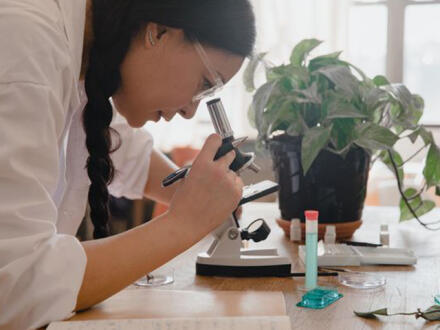
Paying for a microbiology degree in New Mexico can feel expensive fast. Tuition, lab fees, books, housing, and transportation can push the total cost far beyond the number on a college website.
The good news is that New Mexico microbiology scholarships come from more than one place. Students can find money through university biology departments, state-funded programs, community foundations, STEM associations, employers, and national science awards. That matters because microbiology sits at the intersection of health care, lab science, agriculture, and public health, so it fits several scholarship categories at once.
For students planning to study bacteria, viruses, immunology, biotechnology, or lab research, the smartest move is to apply across multiple funding paths instead of waiting for one perfect award. A student who submits 11 solid applications has better odds than one who submits 2.
This guide breaks down 11 funding paths worth applying for. It covers who each option fits, what makes an application stronger, and where students in New Mexico can widen their search. For high school seniors, transfer students, and current college students, the goal is simple: find realistic scholarship options, stack awards when possible, and lower total college costs without wasting time on poor-fit applications.
1. University Department Scholarships For Microbiology And Biological Sciences Majors
Students often start with big public scholarships and miss one of the best options: department-level awards. Biology, microbiology, biomedical science, and molecular science departments frequently offer smaller scholarships that have fewer applicants than large statewide programs.
At schools such as New Mexico State University, New Mexico Tech, and New Mexico's flagship university, science departments may fund students based on GPA, lab promise, faculty recommendations, or commitment to a biology-related major. A $1,000 departmental award might not sound huge, but paired with other aid, it can cover textbooks, lab coats, parking, or a semester of fees.
Students should look for these awards in:
- Department websites
- College of Arts and Sciences scholarship pages
- Financial aid portals
- Faculty email announcements
- Honors and undergraduate research offices
A practical example: a microbiology student with a 3.6 GPA, one lab assistant role, and a strong faculty recommendation may be more competitive for a departmental scholarship than for a broad national STEM contest with 10,000 applicants.
Another plus is timing. Some department awards open after a student is already admitted, which makes them useful for New Mexico Microbiology Scholarships for University students who missed earlier deadlines.
Who Should Prioritize These Awards
Students who already know they want biology, microbiology, biochemistry, or biomedical science should put these near the top of their list. They are especially useful for:
- Current college students
- Incoming freshmen who declared a science major
- Transfer students entering a four-year biology program
- Students with faculty mentors or research experience
According to the National Center for Education Statistics, average annual undergraduate costs can run into the tens of thousands of dollars once housing and supplies are included. That makes even modest department awards worth serious effort.
2. New Mexico Microbiology Scholarships For High School Students Entering STEM Programs
For seniors in high school, the best scholarship window often opens before college even starts. New Mexico Microbiology Scholarships for High School Students usually sit inside larger STEM, academic merit, and state-resident programs.
Students planning to major in microbiology should focus on awards that support:
- STEM majors
- First-time freshmen
- New Mexico residents
- Strong academic records
- Career interest in health, bioscience, or research
A good example is the New Mexico Scholars application, which supports students preparing for college-level study. Another useful option for some applicants is the NMASBO scholarship application, which has historically offered up to six $1,500 scholarships in a year.
High school applicants should build a simple application package early. That usually includes an unofficial transcript, test scores if accepted, one resume, one general essay, and two recommenders. Doing that in October instead of March can cut deadline stress by half.
A strong microbiology angle helps too. A student who writes about water testing in a school lab, volunteering at a hospital, or interest in infectious disease research sounds more focused than someone who simply says they like science.
State-level information from the New Mexico Higher Education Department can also help families track eligibility rules for resident aid programs and public college funding.
3. Community College And Transfer Scholarships For Future Microbiology Students
Community college can be one of the cheapest starting points for a microbiology degree. Students can finish general education, chemistry, and introductory biology courses at a lower cost, then transfer into a university program.
That makes transfer-specific aid a big deal. New Mexico microbiology scholarships in this category often reward persistence, credit completion, and clear transfer plans rather than flashy extracurriculars.
Students should search for:
- Transfer scholarships at four-year universities
- Awards for associate degree graduates
- STEM transfer pathways
- Phi Theta Kappa-related awards
- Local foundation scholarships for community college students
The Davis New Mexico scholarship application can matter for students coming from partner pathways and access-focused programs. In some cases, transfer students can also combine institutional aid with resident tuition support and departmental scholarships.
A concrete example: if a student saves $4,200 in tuition by completing basic science courses at community college, then adds a $2,000 transfer award, the financial difference becomes large enough to reduce borrowing for an entire semester.
Transfer applicants should keep every syllabus, protect their GPA, and confirm that microbiology prerequisites transfer cleanly. Losing 3 credits in chemistry or calculus can delay graduation, which may cost more than any scholarship provides.
For students seeking New Mexico Microbiology Scholarships for College, transfer routes are often the most cost-efficient path, not the backup plan.
4. New Mexico Microbiology Scholarships For First-Year Students Starting College
First-year students have a short but valuable window. Colleges want to lock in strong incoming classes, so they often reserve funds for freshmen before those dollars shift to continuing students later.
That makes New Mexico Microbiology Scholarships for first-year students worth early action. Students entering biology, microbiology, pre-med, biotechnology, or related STEM tracks should apply before admission deadlines whenever possible.
The two state-linked awards families usually hear about first are the New Mexico Legislative Lottery Scholarship application and the New Mexico Lottery Scholarship application. Exact eligibility rules can change, so students should confirm residency, credit-hour, and GPA details through official college and state aid channels.
First-year applicants should also ask each campus these questions:
- Is there a separate scholarship form beyond admission?
- Are science majors reviewed for extra awards?
- Do Honors College applications trigger more funding?
- Can scholarship money stack with lottery-based aid?
A practical scenario: a freshman receives tuition support through a state program, a $1,000 departmental biology award, and a $750 local scholarship. That combination may cover several core costs in the first term.
Students using free match tools on StudentScholarships.org can also sort faster through broad opportunities and avoid missing small awards with narrow deadlines. For freshmen, speed matters because many funds are awarded on a rolling basis.
5. Merit-Based Scholarships For Strong Grades, Test Scores, And Academic Achievement
Merit aid rewards measurable academic performance. For microbiology students, that usually means GPA first, then class rank, rigor, test scores if required, and evidence of follow-through in science coursework.
This category includes institutional scholarships, private awards, and state or regional programs. A student with a 3.8 GPA, AP Biology, dual-credit chemistry, and a strong essay about infectious disease research will usually look stronger than a student with a similar GPA but no science story.
Merit applications improve when students show:
- Advanced science or math courses
- Honors or dual-credit classes
- Science fair, HOSA, or research activity
- Clear microbiology career goals
- Consistent grades over time
Students interested in adjacent STEM funding should also note programs such as the New Mexico Engineering Foundation scholarship application. Even when an award is not microbiology-specific, related science and technical fields can overlap enough to expand the list.
The strongest essays in this group feel concrete. A better line is: "They cultured pond samples during a summer lab and identified colony differences after 48 hours," not "They are passionate about science."
Merit-based funding can be renewable, which is where the real value sits. A $3,000 award renewed across 4 years becomes $12,000 total, and that kind of number changes borrowing decisions fast.
6. Need-Based Grants And Scholarships That Can Lower Total College Costs
Need-based aid matters because strong students still get priced out. A family can earn too much to feel poor and still struggle to cover tuition, books, rent, and food.
For microbiology majors, need-based funding may come from federal aid, state grants, institutional scholarships, and local foundations. Students should start with the FAFSA as early as possible, because some aid is limited and timing can affect access.
The UNM financial aid office is one example of the kind of school resource that explains grant, scholarship, work-study, and deadline details. State information through the New Mexico Higher Education Department can also clarify resident aid options.
Need-based awards can cover real gaps such as:
- $900 in textbooks and online lab codes
- $1,200 in transportation for commuters
- $3,500 in housing shortfalls
- Emergency science course fees
Local philanthropic support can help too. The New Mexico Community Foundation connects communities with education-focused giving and scholarship activity across the state.
For students looking at New Mexico Microbiology Scholarships for College, need-based aid should sit beside merit aid, not below it. Many students qualify for both.
How To Strengthen A Need-Based Application
Students should be specific, organized, and honest. Reviewers respond to numbers, not vague claims.
A stronger application often includes:
- A FAFSA filed early
- Clear household income details
- Brief explanation of special circumstances
- Cost estimates for books, housing, and transport
- Evidence of work, caregiving, or family responsibilities
For example, saying a student works 18 hours per week while carrying 14 credit hours gives a reviewer a real picture. That is more persuasive than saying they work a lot.
7. Research, Lab, And Faculty-Nominated Awards For Science Students
Some of the best funding is invisible until a professor mentions it. Research and lab awards are often smaller pools with stronger odds because they require faculty support, lab placement, or proof that a student can handle scientific work.
These awards fit students who already have:
- A microbiology or biology major declared
- Good grades in lab sciences
- A relationship with at least one professor
- Interest in undergraduate research
- Time to assist with a project
Faculty-nominated funding may support work in bacteriology, environmental microbiology, food safety, immunology, or molecular biology. In many cases, the scholarship also acts like a career boost because it places the student in a lab where they gain practical hours.
A concrete example: a student who spends 8 hours per week in a faculty lab may leave the semester with sterile technique experience, data logs, and a recommendation letter. That outcome can help with graduate school, internships, and the next scholarship cycle.
Students should ask direct questions during office hours. One simple line works: "Are there research awards or faculty-nominated scholarships for students who want more microbiology lab experience?"
This path is especially useful for New Mexico Microbiology Scholarships for University students already enrolled, because many of these awards only open after the first semester or first year.
8. New Mexico Microbiology Association Scholarships And Related Professional STEM Awards
There is not always a giant statewide scholarship labeled exactly for microbiology. But professional associations often support adjacent fields, and that is where students can widen the search without drifting off-topic.
New Mexico Microbiology Association Scholarships may include local or regional science awards tied to biology, lab science, public health, agriculture, or biomedical careers. Students should also look at larger professional groups connected to microbiology. The American Society for Microbiology is a strong example because it supports one of the largest life science communities in the field.
Professional awards often value:
- Membership or participation
- Research posters or presentations
- Career interest in microbiology
- Faculty or mentor recommendations
- Service tied to science outreach
A student who presents a poster on antibiotic resistance, even at a small campus event, often stands out more than a student with only classroom grades. Presentation experience signals initiative.
Students should also think broadly across STEM associations in New Mexico. Bioscience careers overlap with health systems, environmental science, food production, and public health labs. That overlap creates extra scholarship lanes.
For students who want a practical system, keeping a spreadsheet with application date, amount, essay prompt, and recommendation status can cut missed deadlines. Even a list of 15 awards can become manageable when tracked in one place.
9. New Mexico Microbiology Scholarships For College And University Students Already Enrolled
Once students are already on campus, a second layer of scholarships opens up. These are often ignored by freshmen who assume the biggest aid decisions happened at admission. They didn't.
New Mexico Microbiology Scholarships for College and New Mexico Microbiology Scholarships for University students often depend on what the student has done after enrolling. That means GPA, completed science credits, research effort, campus involvement, and progress toward the degree all start to matter more.
Students already enrolled should look for:
- Continuing student scholarships
- College of science awards
- Major-specific applications
- Undergraduate research stipends
- Scholarships tied to residency or campus service
For some learners, broader state and community awards still apply too. The AAUW Las Vegas scholarship application is one example of a program that may align with certain student profiles. Students with military family ties may also fit awards like the National Guard state scholarship application.
A useful benchmark: if a student applies to 6 continuing-student awards each academic year and wins just 1 worth $2,500, that still reduces loan need over time. Persistence beats one-and-done effort here.
Students should reapply every cycle. Scholarship committees change, applicant pools change, and a stronger transcript can completely change the result.
10. National STEM Scholarships New Mexico Students Can Use For Microbiology Degrees
Not every good scholarship is local. National STEM awards can work well for New Mexico students studying microbiology, especially if the student has strong grades, research plans, leadership, or financial need.
These scholarships may support majors in:
- Microbiology
n- Biology
- Biochemistry
- Biomedical science
- Public health
- Biotechnology
National awards tend to be more competitive, but they often offer larger amounts. A single $5,000 or $10,000 award can do more than several small local awards combined.
Students should pay close attention to eligibility language. Some national scholarships say "life sciences," "biological sciences," or "health-related STEM," which can include microbiology even when the major is not named in the title.
A strong national application usually needs numbers and proof. For instance, a student who maintained a 3.9 GPA, completed 120 volunteer hours in a clinic, and helped with a campus research project has a measurable story.
This is also where a scholarship platform can save time. StudentScholarships.org helps students sort through broad opportunities without spending hours opening dead-end listings one by one. For students juggling classes and work, cutting the search from 6 hours to 2 matters.
National awards should be part of the stack, not the whole plan. Local and campus-based scholarships often have better odds, while national awards add upside.
11. Employer, Healthcare, And Public Service Scholarships Connected To Bioscience Careers
Microbiology connects to real jobs fast. Hospitals, diagnostic labs, public health agencies, food safety employers, and some state or community organizations support students preparing for bioscience careers.
That means scholarship searches should include employers and service-linked programs, not just schools. Students interested in clinical microbiology, infection control, epidemiology support, laboratory operations, or public health can sometimes find aid through career-connected sources.
Useful categories include:
- Hospital foundation scholarships
- Healthcare worker family scholarships
- Public service awards
- Rural workforce programs
- Employer tuition assistance
Some students may also qualify through community or identity-based state awards outside strict science categories. For example, the 505 Southwestern scholarship application can fit certain New Mexico students depending on program rules and background.
A practical case: a student working part-time in a hospital lab support role may qualify for employer tuition help plus a school scholarship. If the employer adds $2,000 per year and the campus adds another $1,500, the student cuts out a large share of annual book and fee costs.
Students interested in public service should also track state agency and health-system postings regularly. Career-linked aid tends to appear later, close faster, and attract fewer applicants than big statewide scholarships.
The best strategy is simple: treat microbiology as both an academic major and a workforce path. That opens more doors.
New Mexico Microbiology Scholarships - Frequently Asked Questions
What sources offer microbiology scholarships in New Mexico?
Microbiology scholarships in New Mexico come from university biology departments, state-funded programs, community foundations, STEM associations, employers, and national science awards, covering various aspects like lab science, public health, and agriculture.
How can high school students in New Mexico apply for microbiology scholarships?
High school students planning to major in microbiology should apply early to STEM and state-resident scholarships such as the Scholarship Application - New and Scholarship Application - NMASBO Scholarships, emphasizing their science interests and academic record.
Why should microbiology students consider university department scholarships?
University department scholarships often have fewer applicants and reward GPA, lab experience, and faculty recommendations. For example, schools like New Mexico State University and New Mexico's flagship university offer awards that can cover costs like textbooks or lab fees, making them valuable for current and incoming biology and microbiology majors.
What are effective strategies for transfer students seeking microbiology scholarships?
Transfer students should pursue scholarships at four-year universities, such as the Scholarship Application - Davis, and ensure microbiology prerequisites transfer fully to avoid delays, combining institutional aid with residency tuition support to lower costs.
Are there professional associations offering scholarships related to microbiology in New Mexico?
Yes, organizations like the American Society for Microbiology and the New Mexico Microbiology Association provide scholarships that value research presentations and faculty recommendations, expanding funding options beyond campus-based awards for microbiology students.
How does need-based financial aid complement merit scholarships for microbiology students?
Need-based aid, accessed via FAFSA and state grants, helps students cover essential expenses like housing and transportation. It should be pursued alongside merit scholarships to reduce total college costs effectively. Resources like the UNM Financial Aid Office and the New Mexico Community Foundation support students in accessing such aid.






