

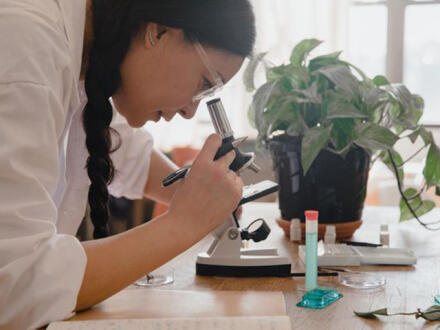
Biochemistry is a smart major for students who like biology, chemistry, lab work, and problem-solving. It can also get expensive fast. Tuition, lab fees, books, housing, and research costs can push a student's yearly bill into the tens of thousands.
That is why Kentucky biochemistry scholarships matter so much. The good news: students do not need to wait until senior year of college to start looking. There are funding paths for high school students, first-year students, current biochemistry majors, and university students who stand out in research or academics.
This guide breaks the topic into 10 practical scholarship and funding paths Kentucky students should know. Some options are direct scholarships. Others are grant programs, departmental awards, faculty nominations, or organization-based funding that can reduce costs in a real way. For example, a student who combines a state merit award, a campus STEM scholarship, and a departmental research stipend could cut several thousand dollars from one academic year.
The article is written for students and families who want clear answers, not vague advice. Each section explains who the funding fits, where students usually find it, what makes an applicant stronger, and how to act early. For students using a free search platform such as StudentScholarships.org, this kind of organized approach can shrink application time and make the process feel much less stressful.
1. Kentucky Biochemistry Scholarships For High School Students Planning Ahead
Students do not need to be in college before applying for science funding. Kentucky Biochemistry Scholarships for High School Students often start as broader STEM awards, dual-credit support, youth scholarships, or early college commitments that later help a student afford a biochemistry path.
A strong example is state merit funding tied to high school performance. Kentucky families often start with the Kentucky Educational Excellence Scholarship application, because GPA and academic benchmarks built in high school can carry straight into college costs. Even a few thousand dollars can cover lab materials, chemistry textbooks, or one semester of housing.
Students should also look beyond the word "biochemistry." Many awards support STEM readiness, leadership, or service, which still fits a future biochemistry major. Community scholarships can be useful here too, especially for students from smaller counties. Local pools such as the Central Kentucky community foundation scholarships often include awards that do not require a final college major at the time of application.
High school students usually have an edge when they can show:
- AP or dual-credit science classes
- Science fair, HOSA, Beta Club, or STEM camp experience
- Volunteer work in healthcare or community science programs
- A clear plan for studying biochemistry, pre-med, biotechnology, or lab science
A practical target is to apply to 8 to 12 scholarships before graduation. That number gives a student enough range without turning the process into a second full-time job.
Dual-Credit, STEM Camp, And Early-Commitment Opportunities To Watch
Dual-credit and summer STEM programs can turn into scholarship advantages because they prove college readiness. A student who completes 6 credit hours before freshman fall may save the cost of one course block later, which can mean $1,500 to $3,000 depending on the college.
Programs tied to technology or leadership can help too. The student technology leadership program is not biochemistry-specific, but it can strengthen an application for students who want to work with data analysis, lab software, or bioinformatics.
Students planning ahead should watch for three early opportunities:
- Dual-credit tuition support through local high schools and partner colleges
- STEM camps or summer lab institutes that provide recommendation letters
- Early university interest forms that place students into scholarship review pools
According to the American Society for Biochemistry and Molecular Biology, biochemistry training often blends chemistry, biology, math, and research methods. That means early exposure to lab work and scientific writing matters more than many students realize.
2. Kentucky Biochemistry Scholarships For First-Year Students Entering College
Kentucky Biochemistry Scholarships for first-year students usually focus on transition strength. Colleges want proof that a student can handle entry-level chemistry, biology, and math while staying organized during a very busy first year.
For many families, freshman aid comes from a stack of sources rather than one giant award. A student might combine state merit funding, a university scholarship, a local civic award, and a women's leadership scholarship. For example, the Women Leading Kentucky scholarships can fit students whose academic story includes service, leadership, and strong classroom results.
Another path is university-based freshman scholarships at schools with science programs. Institutions such as Eastern Kentucky University offer incoming students merit opportunities and academic support resources that can matter a lot once labs begin. Students aiming at biochemistry should compare not just scholarship dollars, but also research access, advising quality, and undergraduate lab openings.
The numbers add up fast. A first-year student taking general chemistry with lab, intro biology with lab, calculus, and a general education course may need 14 to 16 credit hours in the first term. That schedule leaves little room for poor planning.
What Freshman Applicants Need Before Their First Semester
Before classes start, applicants should build a file with every document likely to be requested. Students who prepare this in one folder often finish applications 2 to 3 hours faster per week during the summer.
A smart freshman scholarship file includes:
- Final high school transcript
- FAFSA confirmation and aid records
- One resume with science courses, clubs, and volunteer hours
- Two recommendation letters, ideally one from a science teacher
- One reusable essay about academic goals
- A list of deadlines sorted by date and award amount
Students should also pay attention to fit. Kentucky Biochemistry Scholarships for College applicants are stronger when they explain why biochemistry makes sense for them. "I like science" is too broad. "They spent 42 hours shadowing in a hospital lab and want to study enzyme function tied to disease testing" is far better.
A useful rule: apply before the first tuition bill lands. Once the semester starts, deadlines pile up and reaction time drops.
3. Kentucky Biochemistry Scholarships For College Students Already In A Biochemistry Track
Once students declare or clearly enter a biochemistry track, new funding doors open. Kentucky Biochemistry Scholarships for College students often reward progress in core science courses, steady GPA performance, and evidence that a student can handle serious lab work.
This stage matters because biochemistry gets harder after the intro sequence. Organic chemistry, analytical chemistry, genetics, physical chemistry, and upper-level labs can push students into 15 to 18 hours of study time outside class each week for one course cluster alone. Scholarships aimed at current majors can reduce work hours and protect study time.
Students already in the major should look at four buckets:
- Department scholarships for chemistry or biochemistry majors
- Foundation awards tied to their college or region
- Identity- or service-based scholarships that still allow STEM majors
- Research stipends connected to faculty labs
This is also a good time to search more broadly through platforms with organized filters. On StudentScholarships.org, students can sort through wider scholarship matches and catch awards they might miss on a single campus site.
Community and cultural organizations can be especially helpful for current students. The BIACS scholarship is one example of an award that may fit students whose academic path overlaps with community involvement and strong educational goals.
For students already in biochemistry, the best application details are specific:
- "A" in organic chemistry is stronger than "good science grades"
- 120 volunteer hours in a clinic is stronger than "helped in healthcare"
- A poster presentation or lab assistant role stands out more than a generic club line
The key move is simple: students should update their scholarship materials every semester. A resume from senior year of high school is usually too weak by sophomore fall.
4. Kentucky Biochemistry Scholarships For University Students At Four-Year Programs
Students enrolled at four-year schools have access to a wider mix of money. Kentucky Biochemistry Scholarships for University students often include campus-wide merit aid, college of arts and sciences awards, department scholarships, alumni funds, and research support.
At this level, school choice matters. A university with active undergraduate research can create more chances for faculty nominations and paid lab work. Campuses such as Northern Kentucky University and the University of Kentucky give students access to larger academic ecosystems, which can mean more labs, more faculty, and more scholarship categories.
University students should search in layers:
- General university scholarships
- College-specific awards such as arts and sciences funds
- Department-level chemistry or biochemistry scholarships
- Research and honors stipends
- Community foundation and outside scholarships
A student who only applies for the first layer misses real money. On many campuses, smaller departmental awards of $500 to $2,500 are less crowded than university-wide competitions.
How Departmental Awards Differ From General Academic Scholarships
General academic scholarships usually reward broad performance. They look at GPA, test scores if submitted, leadership, and overall school record.
Departmental awards are narrower. They often ask for proof that a student belongs in the major and is making progress in it.
Here is the practical difference:
| Type | What it usually rewards | Typical evidence |
|---|---|---|
| General academic scholarship | Overall academic strength | GPA, transcript, activities, essay |
| Departmental biochemistry award | Major-specific promise or achievement | Science GPA, lab work, faculty input, research goals |
| Research stipend | Project participation | Faculty mentor, proposal, lab hours |
That difference matters. A student with a 3.42 overall GPA but a 3.81 science GPA may be far more competitive for a chemistry department award than for a general scholarship. Students should say that directly in their application materials.
5. Kentucky Biochemistry Association Scholarships And Related STEM Organizations
Students often search only by college name and miss one of the best funding paths: professional groups and STEM organizations. Kentucky Biochemistry Association Scholarships may be limited in number, but association-style funding can carry real value because it often comes with networking, conference access, or faculty connections.
There may not always be a large state association that awards a long list of biochemistry-specific scholarships every cycle. Still, students should track chemistry, biology, medical laboratory science, and STEM groups because their mission overlaps with biochemistry. National organizations matter too. The American Society for Biochemistry and Molecular Biology supports the discipline broadly, and its resources can help students identify academic pathways, research communities, and field expectations.
Related organizations can also open scholarship routes through allied careers. For example, students with interests in healthcare labs, diagnostics, or community science may fit awards from nursing, health, or regional foundations if the rules allow science majors.
Students should search organizations in four categories:
- Biochemistry and molecular biology groups
- Chemistry and biology societies
- Regional STEM nonprofits and foundations
- Leadership or service organizations that welcome science majors
This is also where local relevance helps. The Kentucky Youth Scholarship and KCF Youth Scholarship show how regional programs can support students whose goals include college-level science, even if the scholarship title does not say "biochemistry."
A concrete strategy works best: students should set aside 45 minutes twice per month to search new organization-based awards. That small routine can surface opportunities before deadlines get crowded.
6. Merit-Based Kentucky Biochemistry Scholarships That Reward Strong Academics
Merit-based aid is one of the clearest funding paths for students with strong grades. In Kentucky, this can include state awards, campus merit packages, honors scholarships, and science-specific recognition for students who consistently perform well.
For biochemistry majors, merit usually means more than a high overall GPA. Reviewers often care about math and science performance, class rigor, and proof that the student can succeed in courses like general chemistry, organic chemistry, calculus, and cell biology.
A strong merit profile often includes:
- 3.50 or higher cumulative GPA
- 3.60 or higher STEM GPA
- Advanced coursework such as AP Chemistry or dual-credit biology
- Leadership in science clubs, tutoring, or lab support
- A clean record of persistence in difficult classes
Students should also remember that some merit awards can stack. A student might receive a state scholarship, an honors award, and a smaller donor-funded chemistry scholarship at the same time. That can produce a combined package of $4,000 to $9,000 at some schools.
Special population awards matter too. The Kentucky WIRE scholarships and King's Daughters scholarships are examples of awards that may support students with strong academics and community fit, even when the scholarship is not named for biochemistry.
Merit students should write essays with numbers and outcomes. Instead of saying they "worked hard," they should say they earned an A in organic chemistry after 11 hours of weekly review sessions or completed 96 hours of peer tutoring in chemistry and math. That kind of detail feels real, and reviewers notice it.
7. Need-Based Grants And Scholarships That Can Support Biochemistry Majors In Kentucky
Need-based aid is essential for many students because biochemistry programs can carry added costs beyond tuition. Lab goggles, access codes, transportation to research sites, and unpaid study time can stretch a budget fast.
This category includes federal and state grants, institutional need-based scholarships, emergency funds, and private awards that ask applicants to show financial hardship. A student with a strong FAFSA record and clear financial need may qualify for grants that do not require repayment, which is often better than taking on extra loans.
State and community funding can make a real difference. Some students pair larger aid packages with smaller local scholarships to cover leftover gaps such as $800 in books and lab fees or $1,200 in housing deposits.
Students with family or community ties should not ignore mission-based awards. The Kentucky FB scholarships and Young Farmer scholarship can matter for rural students whose background connects to agriculture, food systems, or local communities. That can fit biochemistry surprisingly well, especially for students interested in plant science, nutrition, or agricultural biotechnology.
Need-based applicants should keep these documents ready:
- FAFSA submission records
- Financial aid offer letters
- Household income documents if requested
- A short explanation of financial hardship
- Itemized school cost estimates
One useful tactic is gap math. If total annual cost is $23,400 and confirmed aid covers $18,150, the student has a $5,250 gap. That number should shape the scholarship search. It turns a vague problem into a clear target.
8. Research, Lab, And Faculty-Nominated Awards For Biochemistry Students
For many biochemistry students, the best money is attached to the work they already want to do. Research grants, paid lab positions, travel awards, and faculty-nominated scholarships often reward students who show reliability in scientific settings.
These awards are powerful because they do two jobs at once. They help pay for school, and they build a stronger resume for graduate school, medical school, biotech jobs, or lab careers.
Faculty usually nominate students who stand out in concrete ways:
- Consistent lab attendance
- Careful notebook habits
- Strong safety practices
- Curiosity during office hours
- Good results in upper-level science courses
- Dependability over time
Even small stipends matter. A summer research award of $2,500 can replace part-time work hours and free a student to focus on experiments, data analysis, and poster preparation. Travel funding of $300 to $900 can also cover conference costs that would otherwise be impossible.
At four-year institutions, students should ask about:
- Department research fellowships
- Undergraduate poster competition prizes
- Honors thesis support
- Faculty recommendation-based scholarships
- Summer lab assistant funding
This is where timing matters most. A student who visits office hours three times during a semester and asks informed questions about protein assays or enzyme kinetics is far more likely to be remembered than a student who sends one rushed email in April.
Research-focused schools such as Murray State University and Western Kentucky University can offer practical routes into undergraduate science work. Once a student gets into a lab, future scholarship applications become easier because they can point to actual techniques, hours, and outcomes rather than just interest.
Kentucky Biochemistry Scholarships - Frequently Asked Questions
What types of scholarships are available for high school students planning to study biochemistry in Kentucky?
Kentucky offers STEM awards, dual-credit support, community scholarships, and merit-based funding such as the Kentucky Educational Excellence Scholarship for high school students preparing for biochemistry. These help cover costs like lab materials and textbooks early on.
How can first-year college students in Kentucky qualify for biochemistry scholarships?
Freshman scholarships often focus on academic readiness in chemistry, biology, and math. Students can combine state merit funding, university scholarships, and leadership awards like Women Leading Kentucky by showcasing strong science courses and volunteer work.
What advice is there for current college students pursuing biochemistry in Kentucky to obtain scholarships?
Students should highlight progress in core science courses, maintain a strong science GPA, and seek departmental awards, foundation scholarships, and research stipends. Updating scholarship materials each semester improves competitiveness.
How do departmental scholarships differ from general academic scholarships for biochemistry majors?
While general scholarships reward overall academic excellence, departmental awards focus on biochemistry-specific achievements, such as science GPA, lab work, and faculty recommendations, making them ideal for students with strong performance in science courses.
What opportunities do Kentucky biochemistry students have for research and faculty-nominated scholarships?
Research grants, lab assistant stipends, and faculty-nominated awards support students excelling in lab attendance, safety, and scientific results. These awards help reduce work hours and strengthen resumes for graduate and professional career paths.
Are there specific scholarships from professional or STEM organizations for Kentucky biochemistry students?
Yes, students can find scholarships through organizations like the Kentucky Biochemistry Association, American Society for Biochemistry and Molecular Biology, and regional STEM nonprofits, offering funding plus networking and conference access opportunities.




