Teachers play an important role in fostering the intellectual and social development of children during their formative years. The education that students acquire is key to determining the future of those students. Whether in elementary or high schools or in private or public schools, teachers provide the tools and the environment for their students to develop into responsible adults.
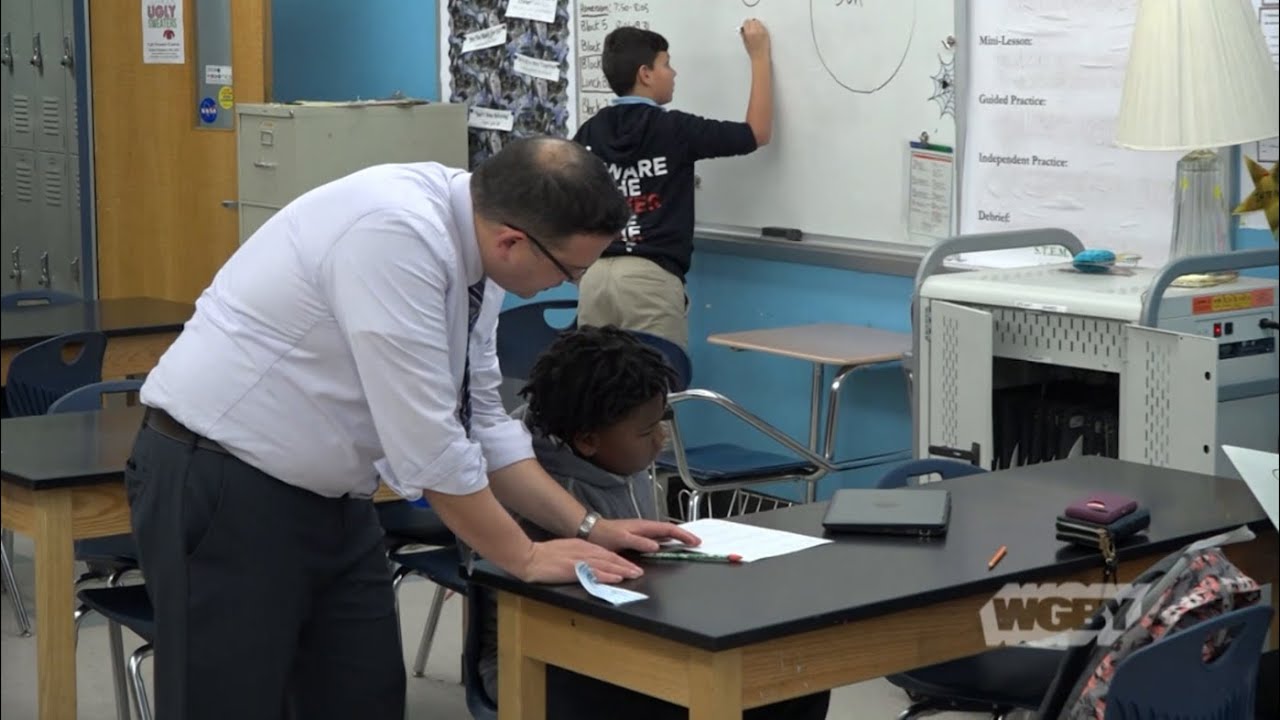
Teachers act as facilitators or coaches, using classroom presentations or individual instruction to help students learn and apply concepts in subjects such as science, mathematics, and English. They plan, evaluate, and assign lessons; prepare, administer, and grade tests; listen to oral presentations; and maintain classroom discipline. Teachers observe and evaluate a student's performance and potential. They are increasingly asked to use new assessment methods. For example, teachers may examine a portfolio of a student's artwork or writing in order to judge the student's overall progress. They then can provide additional assistance in areas in which the student needs help. Teachers also grade papers, prepare report cards, and meet with parents and school staff to discuss a student's academic progress or personal problems.
Many teachers use a hands-on approach that utilizes props to help children understand abstract concepts, solve problems, and develop critical thinking skills. For example, they may teach the concepts of numbers or of addition and subtraction by playing board games. As the children get older, teachers use more sophisticated approaches, such as demonstrating science experiments or working with computers. They also encourage collaboration in solving problems by having students work in groups to discuss and solve the problems together. To be prepared for success later in life, students must be able to interact with others, adapt to new technology, and think through problems logically.
Kindergarten and elementary school teachers play a vital role in the development of children. What children learn and experience during their early years can shape their views of themselves and the world and can affect their later success or failure in school, work, and their personal lives. Kindergarten and elementary school teachers introduce children to mathematics, language, science, and social studies. They use games, music, artwork, films, books, computers, and other tools to teach basic skills.
Kindergarten teachers use play and hands-on teaching, but academics begin to take priority in kindergarten classrooms. Letter recognition, phonics, numbers, and awareness of nature and science, introduced at the preschool level, are taught primarily in kindergarten.
Most elementary school teachers instruct one class of children in several subjects. In some schools, two or more teachers work as a team and are jointly responsible for a group of students in at least one subject. In other schools, a teacher may teach one special subject—usually music, art, reading, science, arithmetic, or physical education—to a number of classes. A small but growing number of teachers instruct multilevel classrooms, with students at several different learning levels.
Middle school teachers and secondary school teachers help students delve more deeply into subjects introduced in elementary school and expose them to more information about the world. Middle and secondary school teachers specialize in a specific subject, such as English, Spanish, mathematics, history, or biology. They also may teach subjects that are career oriented. Additional responsibilities of middle and secondary school teachers may include career guidance and job placement, as well as following up with students after graduation.
In addition to conducting classroom activities, teachers oversee study halls and homerooms, supervise extracurricular activities, and accompany students on field trips. They may identify students who have physical or mental problems and refer the students to the proper authorities. Secondary school teachers occasionally assist students in choosing courses, colleges, and careers. Teachers also participate in education conferences and workshops.
Computers play an integral role in the education teachers provide. Resources such as educational software and the Internet expose students to a vast range of experiences and promote interactive learning. Through the Internet, students can communicate with other students anywhere in the world, allowing them to share experiences and viewpoints. Students also use the Internet for individual research projects and to gather information. Computers play a role in other classroom activities as well, from solving math problems to learning English as a second language. Teachers also may use computers to record grades and perform other administrative and clerical duties. They must continually update their skills so that they can instruct and use the latest technology in the classroom.
Teachers often work with students from varied ethnic, racial, and religious backgrounds. With growing minority populations in most parts of the country, it is important for teachers to work effectively with a diverse student population. Accordingly, some schools offer training to help teachers enhance their awareness and understanding of different cultures. Teachers may include multicultural programming in their lesson plans, to address the needs of all students, regardless of their cultural background.
In recent years, site-based management, which allows teachers and parents to participate actively in management decisions regarding school operations, has gained popularity. In many schools, teachers are increasingly becoming involved in making decisions regarding the budget, personnel, textbooks, curriculum design, and teaching methods.
Work Environment
Elementary school teachers, except special education held about 1.4 million jobs in 2020. The largest employers of elementary school teachers, except special education were as follows:
- Elementary and secondary schools; local - 85%
- Elementary and secondary schools; private - 12%
Kindergarten teachers, except special education held about 121,300 jobs in 2020. The largest employers of kindergarten teachers, except special education were as follows:
- Elementary and secondary schools; local - 81%
- Elementary and secondary schools; private - 14%
- Child day care services - 2%
Most states have tenure laws, which provide job security after a certain number of years of satisfactory teaching.
Kindergarten and elementary school teachers may find it rewarding to watch students develop new skills and learn information. However, teaching may be stressful. Some schools have large classes and lack important teaching tools, such as computers and up-to-date textbooks. Some states are developing teacher mentoring programs and teacher development courses to help with the challenges of being a teacher.
Work Schedules
Kindergarten and elementary school teachers generally work during school hours when students are present. They may meet with parents, students, and other teachers before and after school. They often spend time in the evenings and on weekends grading papers and preparing lessons.
Many kindergarten and elementary school teachers work the traditional 10-month school year and have a 2-month break during the summer. They also have a short midwinter break. Some teachers work during the summer.
Teachers in districts with a year-round schedule typically work 9 weeks in a row, and then have a break for 3 weeks before starting a new schooling session.
Education & Training Required
Traditional education programs for kindergarten and elementary school teachers include courses designed specifically for those preparing to teach. Among these courses are mathematics, physical science, social science, music, art, and literature, as well as prescribed professional education courses, such as philosophy of education, psychology of learning, and teaching methods. Aspiring secondary school teachers most often major in the subject they plan to teach, while also taking a program of study in teacher preparation. Many 4-year colleges require students to wait until their sophomore year before applying for admission to teacher education programs. To maintain their accreditation, teacher education programs are now required to include classes in the use of computers and other technologies. Most programs require students to perform a student-teaching internship. Teacher education programs are accredited by the National Council for Accreditation of Teacher Education and the Teacher Education Accreditation Council. Graduation from an accredited program is not necessary to become a teacher, but it may make fulfilling licensure requirements easier.
Many States now offer professional development schools, which are partnerships between universities and elementary or secondary schools. Professional development schools merge theory with practice and allow the student to experience a year of teaching firsthand, under professional guidance. Students enter these 1-year programs after the completion of their bachelor's degree.
Certifications Needed
All 50 States and the District of Columbia require public school teachers to be licensed. Licensure is not required for teachers in most private schools. Usually licensure is granted by the State Board of Education or a licensure advisory committee. Teachers may be licensed to teach the early childhood grades (usually preschool through grade 3); the elementary grades (grades 1 through 6 or 8); the middle grades (grades 5 through 8); a secondary-education subject area (usually grades 7 through 12); or a special subject, such as reading or music (usually grades kindergarten through 12).
Requirements for regular licenses to teach kindergarten through grade 12 vary by State. However, all States require general education teachers to have a bachelor's degree and to have completed an approved teacher training program with a prescribed number of subject and education credits, as well as supervised practice teaching. Some States also require technology training and the attainment of a minimum grade point average. A number of States require that teachers obtain a master's degree in education within a specified period after they begin teaching.
Almost all States require applicants for a teacher's license to be tested for competency in basic skills, such as reading and writing, and in teaching and require teachers to exhibit proficiency in their subject. Many school systems are moving toward implementing performance-based systems for licensure, which usually require teachers to demonstrate satisfactory teaching performance over an extended period in order to obtain a provisional license, in addition to passing an examination in their subject. Most States require teachers to complete a minimum number of hours of continuing education to renew their license. Many States have reciprocity agreements that make it easier for teachers licensed in one State to become licensed in another.
All States now also offer alternative licensure programs for teachers who have a bachelor's degree in the subject they will teach, but who lack the necessary education courses required for a regular license. Many of these alternative licensure programs are designed to ease shortages of teachers of certain subjects, such as mathematics and science. Other programs provide teachers for urban and rural schools that have difficulty filling positions with teachers from traditional licensure programs. Alternative licensure programs are intended to attract people into teaching who do not fulfill traditional licensing standards, including recent college graduates who did not complete education programs and those changing from another career to teaching. In some programs, individuals begin teaching quickly under provisional licensure under the close supervision of experienced educators while taking education courses outside school hours. If they progress satisfactorily, they receive regular licensure after working for 1 or 2 years. In other programs, college graduates who do not meet licensure requirements take only those courses that they lack and then become licensed. This approach may take 1 or 2 semesters of full-time study. The coursework for alternative certification programs may leads to a master's degree. In extreme circumstances, when schools cannot attract enough qualified teachers to fill positions, States may issue emergency licenses that let individuals who do not meet the requirements for a regular license begin teaching immediately.
Private schools are generally exempt from meeting State licensing standards. For secondary school teacher jobs, they prefer candidates who have a bachelor's degree in the subject they intend to teach, or in childhood education for elementary school teachers. They seek candidates from among recent college graduates, as well as from those who have established careers in other fields.
Other Skills Required
In addition to being knowledgeable about the subjects they teach, teachers must have the ability to communicate, inspire trust and confidence, and motivate students, as well as understand the students' educational and emotional needs. Teachers must be able to recognize and respond to individual and cultural differences in students and employ different teaching methods that will result in higher student achievement. They should be organized, dependable, patient, and creative. Teachers also must be able to work cooperatively and communicate effectively with other teachers, support staff, parents, and members of the community. Private schools associated with religious institutions desire candidates who share the values that are important to the institution.
How to Advance
In some cases, teachers of kindergarten through high school may attain professional certification in order to demonstrate competency beyond that required for a license. The National Board for Professional Teaching Standards offers a voluntary national certification. All States recognize national certification, and many States and school districts provide special benefits to teachers who earn certification. Benefits typically include higher salaries and reimbursement for continuing education and certification fees. In addition, many States allow nationally certified teachers to carry a license from one State to another.
With further preparation, teachers may move into such positions as school librarians, reading specialists, instructional coordinators, and guidance counselors. Teachers may become administrators or supervisors. In some systems, highly qualified experienced teachers can become senior or mentor teachers, with higher pay and additional responsibilities. They guide and assist less experienced teachers while keeping most of their own teaching responsibilities.
Job Outlook
Overall employment of kindergarten and elementary school teachers is projected to grow 7 percent from 2020 to 2030, about as fast as the average for all occupations.
About 124,300 openings for kindergarten and elementary school teachers are projected each year, on average, over the decade. Many of those openings are expected to result from the need to replace workers who transfer to different occupations or exit the labor force, such as to retire.
Employment
Rising student enrollment should increase demand for kindergarten and elementary teachers, but employment growth will vary by region.
The number of students enrolling in public kindergarten and elementary schools is expected to increase over the coming decade, and the number of classes needed to accommodate these students should rise. As a result, more teachers will be needed to teach public kindergarten and elementary school students.
Despite expected increases in enrollment in public schools, employment growth for kindergarten and elementary school teachers will depend on state and local government budgets. If state and local governments experience budget deficits, they may lay off employees, including teachers. As a result, employment growth of public kindergarten and elementary school teachers may be somewhat reduced.
Earnings
The median annual wage for elementary school teachers, except special education was $61,400 in May 2021. The median wage is the wage at which half the workers in an occupation earned more than that amount and half earned less. The lowest 10 percent earned less than $43,950, and the highest 10 percent earned more than $99,420.
The median annual wage for kindergarten teachers, except special education was $60,900 in May 2021. The lowest 10 percent earned less than $38,390, and the highest 10 percent earned more than $98,440.
In May 2021, the median annual wages for elementary school teachers, except special education in the top industries in which they worked were as follows:
- Elementary and secondary schools; local - $61,760
- Elementary and secondary schools; private - $47,480
In May 2021, the median annual wages for kindergarten teachers, except special education in the top industries in which they worked were as follows:
- Elementary and secondary schools; local - $61,640
- Elementary and secondary schools; private - $46,520
- Child day care services - $32,780
Kindergarten and elementary school teachers generally work during school hours when students are present. They may meet with parents, students, and other teachers before and after school. They often spend time in the evenings and on weekends grading papers and preparing lessons.
Many kindergarten and elementary school teachers work the traditional 10-month school year and have a 2-month break during the summer. They also have a short midwinter break. Some teachers work during the summer.
Teachers in districts with a year-round schedule typically work 9 weeks in a row and then have a break for 3 weeks before starting a new school session.