Postsecondary teachers instruct students in a wide variety of academic and vocational subjects beyond the high school level. Most of these students are working toward a degree, but many others are studying for a certificate or certification to improve their knowledge or career skills. Postsecondary teachers include college and university faculty, postsecondary career and technical education teachers, and graduate teaching assistants. Teaching in any venue involves forming a lesson plan, presenting material to students, responding to students learning needs, and evaluating students’ progress. In addition to teaching, postsecondary teachers, particularly those at 4-year colleges and universities, perform a significant amount of research in the subject they teach. They also must keep up with new developments in their field and may consult with government, business, nonprofit, and community organizations.
College and university faculty make up the majority of postsecondary teachers. Faculty usually are organized into departments or divisions based on academic subject or field. They typically teach several related courses in their subject—algebra, calculus, and statistics, for example. They may instruct undergraduate or graduate students or both. College and university faculty may give lectures to several hundred students in large halls, lead small seminars, or supervise students in laboratories. They prepare lectures, exercises, and laboratory experiments; grade exams and papers; and advise and work with students individually. In universities, they also supervise graduate students' teaching and research. College faculty work with an increasingly varied student population made up of growing shares of part-time, older, and culturally and racially diverse students.
Faculty keep up with developments in their field by reading current literature, talking with colleagues, and participating in professional conferences. They also are encouraged to do their own research to expand knowledge in their field by performing experiments, collecting and analyzing data, or examining original documents, literature, and other source material. They publish their findings in scholarly journals, books, and electronic media.
Most postsecondary teachers use computer technology extensively, including the Internet, e-mail, and software programs. They may use computers in the classroom as teaching aids and may post course content, class notes, class schedules, and other information on the Internet. The use of e-mail, instant messages, and other computer utilities has improved communications greatly between students and teachers.
Some instructors use the Internet to teach courses to students at remote sites. These distance-learning courses are becoming an increasingly popular option for students who work while attending school. Faculty who teach these courses must be able to adapt existing courses to make them successful online or design a new course that takes advantage of the online format.
Most full-time faculty members serve on academic or administrative committees that deal with the policies of their institution, departmental matters, academic issues, curricula, budgets, purchases of equipment, and hiring. Some work with student and community organizations. Department chairpersons are faculty members who usually teach some courses but have heavier administrative responsibilities.
The proportion of time spent on research, teaching, administrative, and other duties varies by individual circumstance and type of institution. The teaching load often is heavier in 2-year colleges and somewhat lighter at 4-year institutions. At all types of institutions, full professors—those who have reached the highest level in their field—usually spend a larger portion of their time conducting research than do assistant professors, instructors, and lecturers.
An increasing number of postsecondary educators are working in alternative schools or in programs aimed at providing career-related education for working adults. Courses usually are offered online or on nights and weekends. Instructors at these programs generally work part time and are responsible only for teaching, with little to no administrative and research responsibilities.
Graduate teaching assistants, often referred to as graduate TAs, assist faculty, department chairs, or other professional staff at colleges and universities by teaching or performing teaching-related duties. In addition, assistants have their own school commitments as students working toward earning a graduate degree, such as a Ph.D. Some teaching assistants have full responsibility for teaching a course, usually one that is introductory. Such teaching can include preparing lectures and exams, as well as assigning final grades to students. Others help faculty members by doing a variety of tasks such as grading papers, monitoring exams, holding office hours or help sessions for students, conducting laboratory sessions, and administering quizzes to the class. Because each faculty member has his or her own needs, teaching assistants generally meet initially with the faculty member whom they are going to assist in order to determine exactly what is expected of them. For example, some faculty members prefer assistants to sit in on classes, whereas others assign them other tasks to do during class time. Graduate teaching assistants may work one-on-one with a faculty member, or, in large classes, they may be one of several assistants.
Work Environment
Postsecondary teachers held about 1.3 million jobs in 2020. Employment in the detailed occupations that make up postsecondary teachers was distributed as follows:
- Health specialties teachers, postsecondary - 242,700
- Art, drama, and music teachers, postsecondary - 109,300
- Business teachers, postsecondary - 96,500
- English language and literature teachers, postsecondary - 75,000
- Nursing instructors and teachers, postsecondary - 72,600
- Education teachers, postsecondary - 70,000
- Biological science teachers, postsecondary - 60,500
- Mathematical science teachers, postsecondary - 56,100
- Engineering teachers, postsecondary - 46,300
- Psychology teachers, postsecondary - 44,100
- Computer science teachers, postsecondary - 37,800
- Communications teachers, postsecondary - 33,600
- Philosophy and religion teachers, postsecondary - 29,000
- Foreign language and literature teachers, postsecondary - 27,100
- Chemistry teachers, postsecondary - 25,600
- History teachers, postsecondary - 24,400
- Social sciences teachers, postsecondary, all other - 19,500
- Law teachers, postsecondary - 18,900
- Political science teachers, postsecondary - 18,400
- Recreation and fitness studies teachers, postsecondary - 17,000
- Social work teachers, postsecondary - 16,600
- Physics teachers, postsecondary - 16,500
- Criminal justice and law enforcement teachers, postsecondary - 16,100
- Economics teachers, postsecondary - 16,000
- Sociology teachers, postsecondary - 15,900
- Atmospheric, earth, marine, and space sciences teachers, postsecondary - 13,600
- Area, ethnic, and cultural studies teachers, postsecondary - 12,100
- Agricultural sciences teachers, postsecondary - 9,900
- Architecture teachers, postsecondary - 8,500
- Environmental science teachers, postsecondary - 7,100
- Anthropology and archeology teachers, postsecondary - 6,700
- Library science teachers, postsecondary - 5,000
- Geography teachers, postsecondary - 4,400
- Family and consumer sciences teachers, postsecondary - 2,600
- Forestry and conservation science teachers, postsecondary - 1,700
The largest employers of postsecondary teachers were as follows:
- Colleges, universities, and professional schools; private - 39%
- Colleges, universities, and professional schools; state - 38%
- Junior colleges; local - 11%
- Junior colleges; state - 6%
Postsecondary teachers often find it rewarding to share their expertise with students and colleagues. However, it may be stressful, especially for beginning teachers seeking advancement, to balance teaching duties with an emphasis on research and publication. At the community college level, professors are more likely to focus on teaching students.
Work Schedules
Most postsecondary teachers work full time, although part-time work is common. Postsecondary teachers who work part time may offer instruction at several colleges or universities. Some have a full-time job in their field of expertise in addition to a part-time teaching position. For example, an active lawyer or judge might teach an evening course at a law school.
College and university courses are generally during the day, although some are offered in the evenings or on weekends to accommodate students who have jobs or other obligations.
Academic calendars typically include breaks, such as between terms. The availability and type of course offerings during the summer vary by institution. Although some postsecondary teachers provide instruction in summer courses, others use the time to conduct research or engage in professional development.
Postsecondary teachers’ schedules generally are flexible. Full-time teachers typically need to be on campus to teach classes and have office hours but otherwise are free to set their own schedules.
Education & Training Required
Four-year colleges and universities usually require candidates for full-time, tenure-track positions to hold a doctoral degree. However, they may hire master's degree holders or doctoral candidates for certain disciplines, such as the arts, or for part-time and temporary jobs.
Doctoral programs take an average of 6 years of full-time study beyond the bachelor's degree, including time spent completing a master's degree and a dissertation. Some programs, such as those in the humanities, may take longer to complete; others, such as those in engineering, usually are shorter. Candidates specialize in a subfield of a discipline—for example, organic chemistry, counseling psychology, or European history—and also take courses covering the entire discipline. Programs typically include 20 or more increasingly specialized courses and seminars, plus comprehensive examinations in all major areas of the field. Candidates also must complete a dissertation—a paper on original research in the candidate's major field of study. The dissertation sets forth an original hypothesis or proposes a model and tests it. Students in the natural sciences and engineering often do theoretical or laboratory work; in the humanities, they study original documents and other published material. The dissertation is done under the guidance of one or more faculty advisors and usually takes 1 or 2 years of full-time work.
In 2-year colleges, master's degree holders fill most full-time teaching positions. However, in certain fields where there may be more applicants than available jobs, institutions can be more selective in their hiring practices. In these fields, master's degree holders may be passed over in favor of candidates holding Ph.D.s. Many 2-year institutions increasingly prefer job applicants to have some teaching experience or experience with distance learning. Preference also may be given to those holding dual master's degrees, especially at smaller institutions, because those with dual degrees can teach more subjects.
Other Skills Required
Postsecondary teachers should communicate and relate well with students, enjoy working with them, and be able to motivate them. They should have inquiring and analytical minds and a strong desire to pursue and disseminate knowledge. In addition, they must be self-motivated and able to work in an environment in which they receive little direct supervision.
Obtaining a position as a graduate teaching assistant is a good way to gain college teaching experience. To qualify, candidates must be enrolled in a graduate school program. In addition, some colleges and universities require teaching assistants to attend classes or take some training prior to being given responsibility for a course.
Although graduate teaching assistants usually work at the institution and in the department where they are earning their degree, teaching or internship positions for graduate students at institutions that do not grant a graduate degree have become more common in recent years. For example, a program called Preparing Future Faculty, administered by the Association of American Colleges and Universities and the Council of Graduate Schools, has led to the creation of many programs that are now independent. These programs offer graduate students at research universities the opportunity to work as teaching assistants at other types of institutions, such as liberal arts or community colleges. Working with a mentor, graduate students teach classes and learn how to improve their teaching techniques. They may attend faculty and committee meetings, develop a curriculum, and learn how to balance the teaching, research, and administrative roles of faculty. These programs provide valuable learning opportunities for graduate students interested in teaching at the postsecondary level and also help to make these students aware of the differences among the various types of institutions at which they may someday work.
Some degree holders, particularly those with degrees in the natural sciences, do postdoctoral research before taking a faculty position. Some Ph.D.s are able to extend postdoctoral appointments or take new ones if they are unable to find a faculty job. Most of these appointments offer a nominal salary.
How to Advance
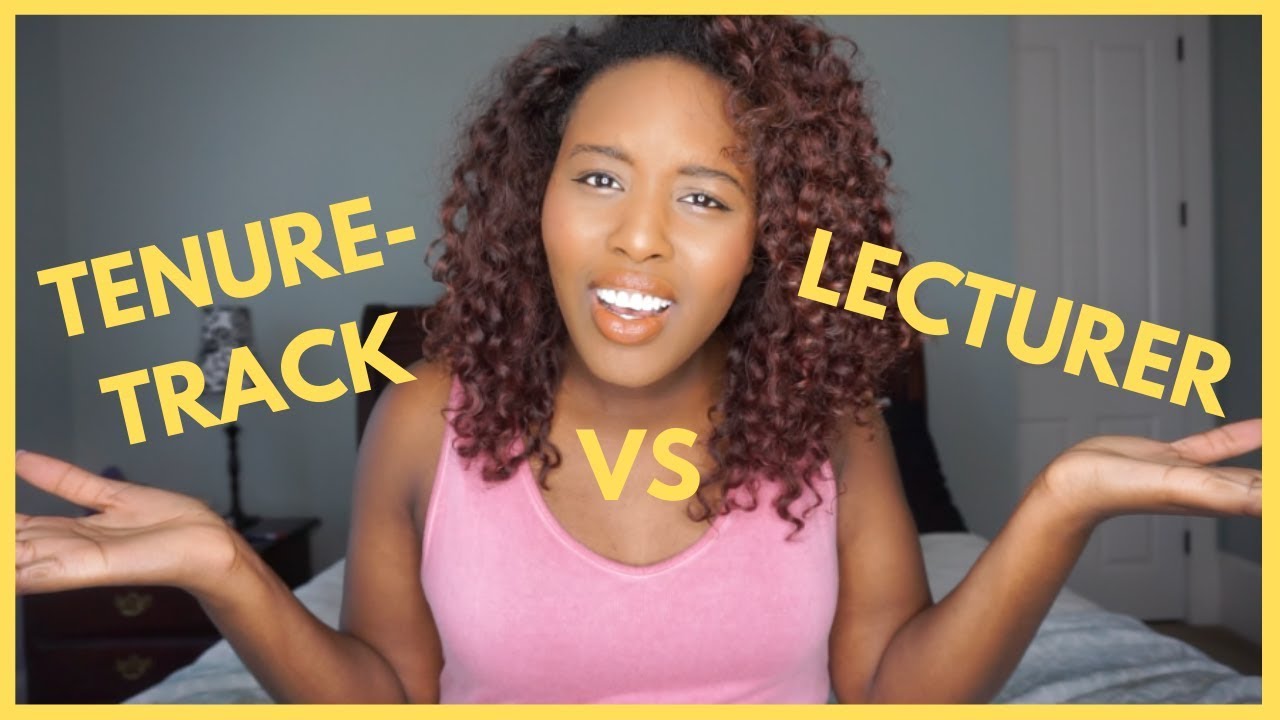
For faculty a major goal in the traditional academic career is attaining tenure, which can take approximately 7 years, with faculty moving up the ranks in tenure-track positions as they meet specific criteria. The ranks are instructor, assistant professor, associate professor, and professor. Colleges and universities usually hire new tenure-track faculty as instructors or assistant professors under term contracts. At the end of the period, their record of teaching, research, and overall contribution to the institution is reviewed, and tenure may be granted if the review is favorable. Those denied tenure usually must leave the institution. Tenured professors cannot be fired without just cause and due process. Tenure protects the faculty member's academic freedom - the ability to advocate controversial or unpopular ideas through teaching and conducting research without fear of being fired. Tenure also gives both faculty and institutions the stability needed for effective research and teaching, and it provides financial security for faculty. Some institutions have adopted post-tenure review policies to encourage ongoing evaluation of tenured faculty.
The number of tenure-track positions is declining as institutions seek flexibility in dealing with financial matters and changing student interests. Institutions are relying more heavily on limited-term contracts and part-time, or adjunct, faculty, thus shrinking the total pool of tenured faculty. Limited-term contracts, typically for 2 to 5 years, may be terminated or extended when they expire and generally do not lead to the granting of tenure. In addition, some institutions have limited the percentage of the faculty that can be tenured.
For tenured postsecondary teachers, further advancement involves a move into an administrative or managerial position, such as departmental chairperson, dean, or president. At 4-year institutions, such advancement requires a doctoral degree. At 2-year colleges, a doctorate is helpful but not usually required for advancement, except for advancement to some top administrative positions, which generally required a doctorate.
Job Outlook
Overall employment of postsecondary teachers is projected to grow 12 percent from 2020 to 2030, faster than the average for all occupations.
About 139,600 openings for postsecondary teachers are projected each year, on average, over the decade. Many of those openings are expected to result from the need to replace workers who transfer to different occupations or exit the labor force, such as to retire.
Employment
Projected employment of postsecondary teachers varies by occupation. Both part-time and full-time postsecondary teachers are included in these projections.
The number of people attending postsecondary institutions is expected to grow over the projections decade. Students will continue to seek higher education to gain the knowledge and skills necessary to meet their career goals. As more people enter colleges and universities, more postsecondary teachers will be needed to serve these additional students. Colleges and universities are likely to hire more part-time teachers to meet this demand. In all disciplines, there is expected to be a limited number of full-time nontenure and full-time tenure positions.
As an aging population increasingly demands healthcare services, additional postsecondary teachers are expected to be needed to help educate the workers who provide these services.
However, despite expected increases in enrollment, employment growth in public colleges and universities will depend on state and local government budgets. If budgets for higher education are reduced, employment growth may be limited.
Earnings
The median annual wage for postsecondary teachers was $79,640 in May 2021. The median wage is the wage at which half the workers in an occupation earned more than that amount and half earned less. The lowest 10 percent earned less than $46,690, and the highest 10 percent earned more than $172,130.
Median annual wages for postsecondary teachers in May 2021 were as follows:
- Law teachers, postsecondary - $123,470
- Engineering teachers, postsecondary - $104,940
- Economics teachers, postsecondary - $104,940
- Health specialties teachers, postsecondary - $102,720
- Atmospheric, earth, marine, and space sciences teachers, postsecondary - $98,070
- Anthropology and archeology teachers, postsecondary - $97,340
- Agricultural sciences teachers, postsecondary - $95,910
- Architecture teachers, postsecondary - $95,160
- Business teachers, postsecondary - $94,360
- Physics teachers, postsecondary - $93,070
- Forestry and conservation science teachers, postsecondary - $82,330
- Political science teachers, postsecondary - $81,980
- Environmental science teachers, postsecondary - $81,980
- Geography teachers, postsecondary - $81,440
- Biological science teachers, postsecondary - $81,440
- Family and consumer sciences teachers, postsecondary - $79,630
- Chemistry teachers, postsecondary - $79,410
- Area, ethnic, and cultural studies teachers, postsecondary - $78,910
- History teachers, postsecondary - $78,130
- Sociology teachers, postsecondary - $77,980
- Computer science teachers, postsecondary - $77,910
- Psychology teachers, postsecondary - $77,860
- Philosophy and religion teachers, postsecondary - $77,610
- Mathematical science teachers, postsecondary - $77,580
- Communications teachers, postsecondary - $77,560
- Social sciences teachers, postsecondary, all other - $77,500
- Nursing instructors and teachers, postsecondary - $77,440
- Library science teachers, postsecondary - $77,100
- Foreign language and literature teachers, postsecondary - $77,030
- Art, drama, and music teachers, postsecondary - $75,940
- English language and literature teachers, postsecondary - $75,930
- Recreation and fitness studies teachers, postsecondary - $72,440
- Social work teachers, postsecondary - $71,010
- Criminal justice and law enforcement teachers, postsecondary - $64,600
- Education teachers, postsecondary - $63,910
In May 2021, the median annual wages for postsecondary teachers in the top industries in which they worked were as follows:
- Colleges, universities, and professional schools; state - $81,250
- Colleges, universities, and professional schools; private - $79,820
- Junior colleges; local - $79,810
- Junior colleges; state - $63,590
Wages vary by institution type. Postsecondary teachers typically have higher wages in colleges, universities, and professional schools than they do in community colleges or other types of schools.
Most postsecondary teachers work full time, although part-time work is common. Postsecondary teachers who work part time may offer instruction at several colleges or universities. Some have a full-time job in their field of expertise in addition to a part-time teaching position. For example, an active lawyer or judge might teach an evening course at a law school.
College and university courses are generally during the day, although some are offered in the evenings or on weekends to accommodate students who have jobs or other obligations.
Academic calendars typically include breaks, such as between terms. The availability and type of course offerings during the summer vary by institution. Although some postsecondary teachers provide instruction in summer courses, others use the time to conduct research or engage in professional development.
Postsecondary teachers’ schedules generally are flexible. Full-time teachers typically need to be on campus to teach classes and have office hours but otherwise are free to set their own schedules.
Academic Programs of Interest
African Studies
Choosing a college major is a little like choosing a lens: it determines which parts of the world you'll examine closely and which skills you'll build along the way. An African Studies major gives you a multidisciplinary lens for understanding Africa and the African diaspora through history, politics, economics, literature, languages, anthropology, geography, and culture.
But is it practical? Can it lead to a reliable...
more
African-American Studies
Choosing a college major is easier when you understand both the classroom experience and the path it can create after graduation. An African-American Studies college major gives you a focused way to study Black history, culture, politics, literature, economics, and social movements in the United States and across the African diaspora. It also helps you examine how race intersects with gender, class, religion, geography, law,...
more
American History
Choosing an American history college major means choosing more than a list of famous presidents, wars, and dates. You'll learn how institutions develop, how power operates, why communities change, and how evidence can challenge the stories you thought you knew. Those skills can lead to careers in education, museums, government, law, communications, research, and many other fields, but the degree usually doesn't point to one...
more
American Literature
Choosing a college major is partly about what you enjoy and partly about what you can build with it. If you love novels, poetry, history, cultural debates, and the power of language, an American literature major may feel like an obvious fit. But you may also wonder whether studying literature leads to practical work, whether the cost makes financial sense, and how employers value the...
more
American Studies
Choosing a college major is easier when you look beyond the title on the diploma. An American Studies major can lead you through history, politics, literature, media, race and ethnicity, economics, and everyday culture, often in the same semester. That range is its greatest strength, but it also means your career path may be less automatic than it would be with a highly specialized degree....
more
Ancient Studies
Choosing a college major is a little like choosing a lens: it determines which questions you notice, which skills you practice, and how employers eventually understand your abilities. An Ancient Studies major gives you a broad, interdisciplinary lens for examining the civilizations, languages, religions, art, politics, and everyday lives of the ancient Mediterranean and surrounding regions.
This major is not simply a tour through famous...
more
Arabic
Choosing a college major is easier when you look beyond a subject's reputation and ask what your education will actually prepare you to do. An Arabic college major can lead to advanced language ability, intercultural knowledge, research experience, and access to careers connected to government, business, education, journalism, international development, and national security. It can also demand more time and persistence than many students expect....
more
Architectural History
Choosing a college major is easier when you understand both the subject and the life it can lead to. An architectural history major sits at an interesting crossroads: you study buildings, cities, art, politics, technology, and culture, but you may graduate without one obvious job title waiting for you. That combination can be intellectually rewarding, and financially uncertain, depending on how strategically you build your...
more
Asian History
Choosing a college major is partly an academic decision and partly a career-planning decision. An Asian history major can give you deep knowledge of one of the world's most influential and diverse regions, while helping you build research, writing, language, and analytical skills that transfer well beyond the classroom. But it is not usually a direct-to-one-job degree, and your results will depend heavily on internships,...
more
Asian-American Studies
Choosing a college major is partly about employment prospects, but it's also about the questions you want to spend years exploring. An Asian-American Studies college major examines how Asian, Pacific Islander, and Asian American communities have shaped, and been shaped by, U.S. history, politics, culture, immigration, economics, and social movements.
This review explains what you'll study, which skills you'll build, what careers may be available,...
more
Biblical Studies
Choosing a college major is easier when you understand both the classroom experience and the life after graduation. A Biblical Studies college major can give you a deep understanding of the Bible, Christian history, theology, language, and interpretation. It can also strengthen skills that employers value, including research, writing, public speaking, cultural analysis, and ethical reasoning.
But, this major isn't a direct professional pipeline in...
more
Buddhist Studies
Choosing a college major is easier when you understand both the subject and the life it can lead to. Buddhist Studies offers an unusual path: instead of preparing you for one narrowly defined profession, it combines history, religion, philosophy, languages, anthropology, literature, and cultural analysis. You may study ancient texts one semester and contemporary meditation communities, Asian politics, or Buddhist art the next.
That breadth...
more
Business Education
Choosing a college major can feel like choosing several years of your life in advance. If you enjoy business, technology, communication, and helping other people learn, a business education major may offer a practical middle ground between a business degree and a traditional education degree. You can study accounting, marketing, management, and entrepreneurship while also learning how to teach those subjects in a high school,...
more
Canadian Studies
Choosing a college major can feel like choosing a road before you can see where it leads. A Canadian Studies major is especially different from a professional degree such as nursing, engineering, or accounting: it doesn't train you for one specific job. Instead, it gives you an interdisciplinary understanding of Canada, its history, politics, Indigenous peoples, economy, culture, environment, and relationship with the United States....
more
Caribbean Studies
Choosing a college major is about more than liking a subject. You also need to understand what you'll study, which skills you'll develop, how those skills translate into work, and whether the cost makes sense for your goals. A Caribbean Studies major gives you a focused way to examine the history, cultures, politics, economies, languages, and communities of the Caribbean and its diaspora.
This interdisciplinary...
more
Celtic Studies
A Celtic Studies college major can take you from medieval manuscripts and Irish-language poetry to archaeology, public history, publishing, education, and cultural organizations. It is an interdisciplinary degree built around the languages, literature, history, archaeology, religion, music, and societies of Celtic-speaking peoples and their global communities.
That breadth is its greatest strength, and the reason you should investigate programs carefully. Celtic Studies is rarely a...
more
Chinese
Choosing a Chinese college major is about more than learning how to order dumplings or write your name in characters. You'll study one of the world's most widely spoken languages while exploring history, politics, economics, literature, and contemporary society. That combination can prepare you for careers in business, government, education, technology, international relations, and beyond.
But is a Chinese degree worth the time and tuition...
more
Classics
A classics college major asks you to spend years with ancient languages, literature, history, philosophy, art, and political thought. At first glance, that may sound disconnected from a modern career. In practice, classics can be one of the most intellectually demanding and flexible humanities degrees, provided you understand what it can and cannot do for you.
You won't usually graduate with a single job title...
more
Comparative Literature
Choosing a college major can feel like choosing a first draft of your entire life. If you love novels, languages, film, history, philosophy, or the way stories change across cultures, a Comparative Literature major may seem like an obvious fit. But enjoying books isn't the same as knowing what you'll study, or how the degree will translate into work after graduation.
This review explains what...
more
East Asian Studies
Choosing a college major is partly an academic decision and partly a career-planning decision. East Asian Studies can give you both: an interdisciplinary education in China, Japan, Korea, and the wider region, plus language and cultural skills that employers often value. But it isn't a direct-to-one-job major like nursing or accounting. Your results will depend heavily on the language level, internships, technical abilities, and professional...
more
Education
Choosing an education college major is a decision about more than taking classes and earning a diploma. You're preparing for work that can shape how children, teenagers, or adult learners understand the world. At the same time, teaching requires patience, planning, emotional energy, and, depending on your state and career path, professional licensure.
This review explains what an education degree includes, how programs are evaluated,...
more
Educational Psychology
Choosing a college major can feel like choosing a direction before you can see the entire map. If you're fascinated by how people learn, why students struggle, and what helps classrooms work better, an educational psychology major may look like a practical middle ground between psychology and education. But is it a clear path to a career, or a broad degree that requires additional training?...
more
English
Choosing an English college major is less about deciding whether you want to become a novelist and more about deciding how you want to use language, research, and ideas in the working world. As an English major, you may study literature, writing, rhetoric, digital media, or some combination of these fields. You'll also practice skills employers consistently value: communicating clearly, analyzing complex information, researching responsibly,...
more
English Composition
Choosing a college major is easier when you understand what you'll study, what skills you'll build, and where the degree can lead. An English composition major focuses on writing, rhetoric, editing, research, and communication, not just reading classic literature. You'll learn how to explain complex ideas clearly, adapt your message for different audiences, and revise your work until it produces the intended effect.
That versatility...
more
English Literature
Choosing an English literature college major can feel like choosing between passion and practicality. You may love novels, poetry, language, history, and discussion, but still wonder whether those interests can lead to a stable career after graduation. The short answer is yes, although the degree rarely functions as a direct path to one profession. Instead, it develops adaptable skills in reading, writing, research, analysis, communication,...
more
Ethnic Studies
Choosing a college major is partly about what you want to study, and partly about what you want your education to help you do next. An ethnic studies major lets you examine race, ethnicity, culture, migration, identity, power, and social change through history, literature, politics, sociology, and related fields. It can be an intellectually demanding and personally meaningful path, especially if you want to understand...
more
European History
Choosing a college major is a little like choosing a route on a long trip: you need to enjoy the scenery, but you also need to know where the road can take you. A European history major can give you a deep understanding of political change, cultural exchange, war, religion, economics, and the ideas that shaped the modern world. It can also develop valuable skills...
more
French
Choosing a French college major is about more than learning to order coffee in Paris. You'll study language, literature, history, culture, translation, and global communication, then decide how to turn those skills into a career. That combination can be highly valuable, but a French degree rarely functions as a direct job credential in the same way nursing, accounting, or engineering does.
This review examines what...
more
German
Choosing a college major is a little like choosing a travel companion for the next four years: you want something interesting, useful, and capable of taking you somewhere new. A German major can offer all three, but its value depends on how you build the degree around your goals.
German is spoken by more than 100 million people worldwide and remains important in business, science,...
more
Hebrew
Choosing a college major is rarely just about liking a subject. You also need to think about the classes you'll take, the skills you'll build, the jobs available after graduation, and whether the degree fits your financial and personal goals. A Hebrew major can be an unusually meaningful choice: it connects language study with history, religion, politics, literature, culture, and communities around the world. It...
more
Hindi
Choosing a college major is rarely just about liking a subject. You also need to consider the skills you'll build, the cost of your education, your career options, and whether the degree supports the life you want after graduation. A Hindi college major can be an excellent choice if you're interested in languages, South Asian cultures, international relations, education, public service, or careers that require...
more
Hispanic-American Studies
Choosing a college major can feel like choosing a first version of your future. You want meaningful coursework, useful skills, and a realistic path to employment, not just a subject you enjoy in theory. A Hispanic-American Studies major can offer all three, especially if you're interested in history, culture, language, public service, education, law, healthcare, or community advocacy.
This interdisciplinary degree examines the experiences, contributions,...
more
History
Choosing a college major is a little like choosing the lens through which you'll study the world. A history major gives you a wide-angle view: governments rise and fall, communities adapt, ordinary people shape events, and today's biggest debates often have surprisingly old roots. But curiosity alone doesn't pay tuition, so it's reasonable to ask whether a history degree leads to a practical career.
This...
more
Islamic Studies
Choosing a college major is about more than liking a subject. You're also investing time, money, and several years of your life in a field that should support your intellectual goals and future plans. An Islamic Studies major can be an excellent choice if you want to understand Islam through history, theology, languages, politics, literature, and culture, but it isn't a direct job-training degree in...
more
Japanese
Choosing a college major is a long-term decision, but it doesn't have to mean choosing between a practical career and a subject you genuinely enjoy. A Japanese major can give you language proficiency, cultural knowledge, analytical skills, and access to careers connected to international business, education, government, technology, tourism, and communications. The challenge is that Japanese rarely functions as a complete career plan by itself....
more
Jewish Studies
Choosing a college major is partly an academic decision and partly a question about the life you want after graduation. A Jewish Studies major can lead you through history, religion, languages, literature, politics, culture, and contemporary social issues, but it doesn't point to one single job in the way nursing or accounting does. That flexibility is both its greatest strength and its biggest challenge.
This...
more
Korean
Choosing a college major is less like picking a permanent job title and more like choosing the toolkit you'll build for your first decade of work. A Korean major gives you that toolkit through language proficiency, cultural knowledge, research skills, and experience communicating across borders. But it isn't automatically a direct pipeline to one career. Your results will depend heavily on how you combine Korean...
more
Latin American Studies
Choosing a college major is less like picking a job title and more like choosing a toolkit. A Latin American Studies major gives you tools for understanding a vast, diverse region through history, politics, economics, culture, language, and social research. It can prepare you for careers in government, education, nonprofit work, journalism, international business, law, and graduate study, but it usually does not point to...
more
Middle Eastern Studies
Choosing a college major can feel like choosing a direction before you can see the entire map. A Middle Eastern Studies major asks you to do exactly that, but it also gives you a remarkably broad view of history, politics, religion, languages, economics, and culture across one of the world's most influential regions.
You may be considering this major because you're fascinated by the Middle...
more
Music History
A music history college major can turn your love of songs, composers, recordings, and performance traditions into serious academic expertise. But it isn't simply a degree for people who enjoy listening to music. You'll read intensively, analyze primary sources, write research papers, learn historical methods, and often develop practical skills in archives, digital media, education, or arts administration.
That makes this major both rewarding and...
more
Native American Studies
A Native American Studies college major can lead you far beyond a single career path. You might study tribal sovereignty and federal policy in the morning, analyze Indigenous literature in the afternoon, and spend the semester working with a tribal nation, museum, nonprofit, or community organization. That range is the major's biggest strength, and the reason you should investigate each program carefully before enrolling.
This...
more
Philosophy
Choosing a philosophy college major can feel risky when everyone around you is talking about computer science, nursing, business, or engineering. Philosophy doesn't point to one obvious job title. Instead, it trains you to analyze arguments, question assumptions, communicate clearly, and make sound decisions when the answer isn't obvious.
That flexibility is both the major's biggest advantage and its main challenge. Your degree can support...
more
Physical Education
A physical education college major is about far more than playing sports. You'll study human movement, health, teaching methods, child development, coaching, and sometimes exercise science. The degree can lead to a rewarding career helping students become healthier and more confident, but it also comes with practical limitations, including modest starting pay in many school districts and the need for state certification if you want...
more
Portuguese
Choosing a college major is a practical decision as much as an academic one. You want a subject that interests you, builds useful skills, and gives you a realistic path toward employment after graduation. A Portuguese college major can meet all three goals, but usually not because speaking the language alone guarantees a job.
Portuguese connects you to more than 260 million speakers across Brazil,...
more
Romance Languages
Choosing a college major can feel like choosing a single lane for the rest of your life. A Romance languages major may seem less direct than nursing, engineering, or business, but it can lead to a surprisingly wide range of careers when you combine language study with practical experience or a second field.
Romance languages are languages descended primarily from Latin, including Spanish, French, Italian,...
more
Scandinavian Studies
A Scandinavian studies college major can look highly specialized at first glance. You may imagine spending four years reading Nordic literature, learning a difficult language, and then wondering what job comes next. In reality, the major is usually interdisciplinary: you may study Swedish, Danish, or Norwegian alongside history, politics, religion, migration, environmental issues, film, and economics. That combination can prepare you for several career directions,...
more
Southeast Asian Studies
Choosing a college major can feel like choosing a map before you know exactly where you want to go. A Southeast Asian Studies major gives you that map: you explore countries such as Indonesia, Vietnam, Thailand, the Philippines, Malaysia, Singapore, Cambodia, Laos, Brunei, Myanmar, and Timor-Leste through language, history, politics, economics, religion, and culture.
This interdisciplinary major is especially valuable if you're curious about global...
more
Spanish
Choosing a college major is part academic decision, part career strategy. A Spanish major can help you build advanced language ability, cultural fluency, communication skills, and a broader understanding of the Spanish-speaking world. It can also lead to careers in education, healthcare, business, government, law, social services, tourism, and international work. But Spanish is not always a direct pipeline into one job, so your results...
more
Teacher Education
Choosing a college major is easier when you understand what your future work will actually look like, not just what the course catalog promises. A teacher education major prepares you to guide students, design lessons, assess learning, communicate with families, and manage a classroom. It can lead to meaningful work and strong long-term demand, but it also requires patience, resilience, and a willingness to take...
more
Women's Studies
Choosing a college major is partly about interest, but it's also about what you'll learn, which skills you'll build, and how clearly the degree connects to your future work. A women's studies college major can be intellectually challenging and highly relevant to careers in education, law, public policy, nonprofit leadership, communications, health care, and social services. It can also be misunderstood as a degree with...
more