

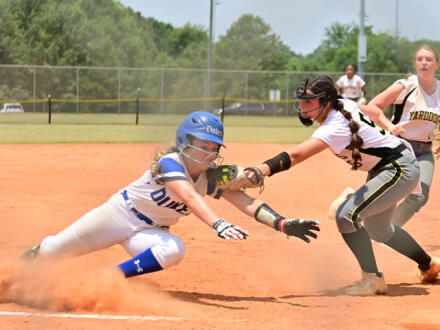
A roster spot at Methodist University can put you on a college softball field, but it does not automatically produce an athletic scholarship. Methodist competes in NCAA Division III, where coaches cannot award athletic aid based only on athletic ability. You may still build a strong financial aid package through academic awards, need-based grants, campus employment, outside scholarships, and family resources.
That distinction matters when you compare offers. Your softball skills can help you gain admission and attract coach support, while your grades, financial need, application timing, and scholarship search may determine how much you actually pay. This guide explains Methodist University softball scholarships, recruiting expectations, eligibility rules, and the costs you should estimate before committing to Playing for Methodist University Softball Team.
How Softball Scholarships Work At Methodist University
Methodist University softball scholarships require a different strategy from athletic scholarship packages at NCAA Division I or Division II schools. You should treat softball as one part of your college funding plan, not the entire plan.
A coach may support your admission, identify possible campus resources, or explain team opportunities. But, the financial aid office, not the coach alone, determines most grants and scholarships. Ask for a written estimate that separates tuition discounts, grants, loans, work-study, and any amount your family must pay.
Why NCAA Division III Does Not Offer Athletic Scholarships
NCAA Division III schools do not award athletic scholarships. That rule applies to Methodist University, so a coach cannot offer you money labeled strictly as a softball award for throwing a certain number of innings or hitting a certain batting average.
This does not mean softball has no financial value. A strong player may receive admission support and then qualify for academic or need-based aid. The result can resemble an athletic scholarship, but the award must be based on permitted factors such as academic performance, family finances, leadership, or other institutional criteria.
Division III includes more than 400 member institutions and approximately 190,000 student-athletes. The model emphasizes academic and athletic participation together. You should hence compare the total net price, rather than assuming that the school offering the largest roster opportunity will cost the least.
Ask each college these direct questions:
- Can the coaching staff support my admission review?
- Which institutional scholarships can I apply for?
- Does my aid renew automatically each year?
- What GPA or credit load must I maintain?
- Could my aid change if I stop playing softball?
Academic, Need-Based, And Outside Scholarship Options
Your academic record may create the largest funding opportunity. Methodist University may consider your GPA, course rigor, test scores if submitted, leadership, service, and application strength when awarding institutional aid. Ask about priority deadlines because some funds may be limited even when you meet the published criteria.
Need-based aid can include federal grants, state assistance, institutional grants, loans, and work-study. Complete the required financial aid application as soon as it becomes available, then compare the official aid offer with your family's budget. Grants and scholarships usually do not require repayment: loans usually do.
Outside awards can fill smaller gaps. A $1,500 community scholarship could cover books, athletic gear, or several weeks of housing. Search through local foundations, employers, credit unions, civic clubs, and scholarship platforms such as Studentscholarships.org, which can match you with opportunities and often keeps applications short.
Keep a simple spreadsheet with the award name, deadline, eligibility rules, required documents, renewal terms, and submission status. Applying to eight awards worth $750 each is more practical than spending all your time chasing one $10,000 prize with thousands of applicants.
What It Takes To Play For The Methodist University Softball Team
A coach evaluates more than a single showcase performance. Your position, athletic development, academic record, communication, and fit with the team all influence recruiting decisions. Methodist plays at a competitive college level, so you should prepare for faster pitches, stronger defensive execution, and a demanding practice schedule.
Roster Expectations, Positions, And Recruiting Standards
Roster needs change each recruiting cycle. A team may need a catcher one year, several pitchers the next, or a versatile infielder who can cover multiple positions. You cannot assume that a strong batting average alone will secure a roster spot.
Prepare a clear player profile that includes your primary and secondary positions, throwing hand, batting side, height, graduation class, contact information, coach's details, and academic statistics. Include verified measurements when possible. For example, report home-to-first time using a consistent test method, not a best estimate from memory.
Your video should show game situations before polished drills. A useful recruiting reel might include:
- Defensive plays from multiple angles
- At-bats against live pitching
- Baserunning decisions and home-to-first speed
- Pitching location, movement, and recovery between pitches
- Communication with teammates between plays
A three-minute video with clear labels is easier for a coach to evaluate than a twelve-minute montage filled with music and no player identification. Send full-game footage when a coach requests it.
You also need a realistic view of college workload. NCAA rules generally limit countable athletically related activities during the playing season to 20 hours per week, but travel, classes, studying, meals, and preparation still occupy your schedule. Plan for early practices, weekend games, and recovery work alongside a full academic load.
How Coaches Evaluate Prospective Softball Players
Coaches usually begin with basic fit: position need, academic readiness, athletic level, roster timing, and interest in the institution. They may review your video, statistics, references, tournament schedule, and communication before inviting you to campus or a prospect event.
Statistics need context. A .400 batting average against weak pitching does not tell the same story as a .320 average against high-level competition with reliable on-base skills. A pitcher's earned run average also needs innings, defense, opponent quality, walks, strikeouts, and velocity beside it.
Expect coaches to evaluate your response after an error. Do you reset before the next pitch? Do you back up a teammate? Do you accept instruction without arguing? Those details often separate a talented recruit from a dependable college teammate.
Send concise messages. Introduce yourself, state why Methodist interests you, identify your position, provide your schedule, and attach the right links. Follow up once after a reasonable interval, then continue developing your game instead of sending daily messages. A coach can learn a great deal from how you handle communication.
Eligibility Requirements For Methodist University Student-Athletes
You must satisfy both NCAA requirements and Methodist University admission standards. Meeting one does not guarantee that you meet the other. Start early because missing a transcript, amateurism detail, or required course can delay your participation.
Building A Competitive Recruiting Profile
Begin with your transcript, not your highlight reel. Create a record of every high school course, grade, credit, and completion date. If you attended more than one school, request official records from each institution and confirm that names and dates match.
Your recruiting profile should show steady progress. Coaches may respond well to an upward academic trend, but a senior-year improvement cannot always repair missing core courses or a weak cumulative record. Take challenging classes that you can handle successfully, and ask your counselor whether your schedule supports college admission and NCAA eligibility.
Athletically, track measurable development every six to eight weeks. Record pitching velocity, strike percentage, exit velocity, home-to-first time, throwing accuracy, and defensive repetitions when those measures apply to your position. One number does not define you, but consistent testing helps you explain progress with evidence.
A practical profile might show a shortstop who reduced home-to-first time from 3.35 seconds to 3.18 seconds, raised her on-base percentage from .360 to .425, and improved her classroom average from 2.9 to 3.4 on a four-point scale. Those details give a coach a clearer picture than the phrase "hard-working athlete."
Protect your eligibility and reputation online. Do not accept improper benefits, sign agreements without advice, or post material that conflicts with your stated character. When you are unsure, ask your high school athletic director or the Methodist compliance office before acting.
Meeting NCAA And Methodist University Academic Standards
NCAA eligibility may involve approved core courses, minimum grades, an academic certification process, and amateurism requirements. The exact review depends on your educational history, including whether you attended a traditional high school, online program, preparatory school, or community college.
Methodist University also reviews your application for admission. Admission and athletic eligibility are separate decisions, so your coach cannot waive every academic requirement. Submit transcripts, test scores if requested, recommendations, essays, and financial aid forms by their stated deadlines.
Keep copies of everything. Save confirmation emails, upload receipts, counselor messages, and scholarship applications in one digital folder. A missing document can create a delay that is easy to prevent.
You should ask the compliance office specific questions about transfer credits, dual-enrollment courses, repeated classes, eligibility after graduation, and participation during the summer. Do not rely on advice from a teammate's situation: two students can have different requirements because their transcripts differ.
Build a planning calendar with at least five checkpoints: academic review, admission application, financial aid application, NCAA documentation, and final enrollment deposit. If you complete each checkpoint one month before its deadline, you create time to correct errors instead of solving them during move-in week.
Estimating The Cost Of Attending Methodist University
Your real cost is not the published tuition number. It is the cost of attendance minus grants and scholarships, plus any expenses that the estimate does not fully capture. Request Methodist's current cost-of-attendance budget and separate direct charges from personal spending.
Direct charges may include tuition, mandatory fees, campus housing, and a meal plan. Indirect costs may include books, transportation, supplies, personal expenses, medical costs, and travel between campus and home. If you plan to live in Fayetteville North Carolina, compare local transportation, off-campus rent, groceries, and summer storage before choosing a housing arrangement.
Use this formula:
Estimated family cost = tuition and fees + housing and meals + books and supplies + transportation and personal costs − grants and scholarships.
For example, suppose your annual direct and indirect budget totals $48,000. You receive a $14,000 institutional grant, a $3,000 need-based grant, and $2,500 in outside scholarships. Your remaining cost is $28,500 before loans or work income. A $5,000 federal loan would reduce the immediate bill, but it would not reduce the price: it would shift part of the cost into future repayment.
Request an aid comparison in writing. Your worksheet should list:
- Tuition and mandatory fees
- Housing and meal charges
- Institutional scholarships and renewal rules
- Grants and outside awards
- Federal or private loans
- Expected work-study earnings
- Remaining family contribution
Check whether each award renews for four years or requires a minimum GPA, full-time enrollment, satisfactory academic progress, or team participation. Ask what happens if you study abroad, take fewer credits, transfer, or stop playing softball because of injury.
You can reduce the gap with careful planning. Applying to ten outside scholarships worth $1,000 each does not guarantee $10,000, but winning three would provide $3,000. Buying used textbooks, limiting unnecessary car trips, and working a manageable campus job may also reduce expenses, although your class and practice schedule should remain the priority.
Financial aid terms can be confusing, so compare offers line by line rather than focusing on the largest headline award. General financial aid guidance from university aid offices commonly separates grants, scholarships, loans, and work options: that same separation helps you judge whether a Methodist package is affordable.
Studentscholarships.org can support the search by helping you find awards that match your education plans and personal details. Start with scholarships whose requirements you clearly meet, reuse strong essay material without copying it, and submit complete applications before the deadline. A disciplined search can turn small awards into money for books, travel, equipment, or the deposit required to begin college.
Frequently Asked Questions About Methodist University Softball Scholarships
Does Methodist University offer athletic scholarships for softball players?
No, Methodist University competes in NCAA Division III, which prohibits offering athletic scholarships based solely on athletic ability. Financial aid is awarded through academic awards, need-based grants, and other non-athletic criteria.
How can my softball skills help me get financial aid at Methodist University?
Your softball skills can support your admission and coach endorsement, which may improve your chances for academic or need-based financial aid, but scholarships will be based on academic performance, financial need, or institutional criteria rather than athletic merit alone.
What types of scholarships are available to Methodist University softball players?
Softball players can apply for academic scholarships, need-based grants, institutional awards, and outside scholarships from community organizations or scholarship platforms to help fund their education.
What should I include in my softball recruiting profile for Methodist University?
Include your primary and secondary positions, physical stats, academic achievements, verified performance metrics, a concise video showing game situations, and contact information to help coaches evaluate your fit and skills accurately.
What are the academic eligibility requirements to play softball at Methodist University?
You must meet NCAA Division III core course requirements, maintain satisfactory academic progress, and be admitted to the university. Coaches cannot waive academic standards, so preparing transcripts and coursework early is essential.
How can I estimate the real cost of attending Methodist University as a softball player?
Calculate tuition, fees, housing, meals, books, and personal expenses, then subtract grants, scholarships, and financial aid. Also consider loans and work-study income to understand your net cost before enrolling.