

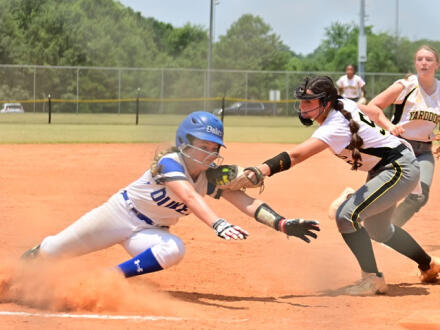
Playing college softball can make your education more rewarding, but the financial plan starts with one crucial fact: Worcester State University is an NCAA Division III school. That means you will not receive a traditional athletic scholarship for softball. You can still combine academic awards, need-based aid, outside scholarships, and careful financial planning to reduce what your family pays.
If you are comparing Worcester State University NCAA D3 Softball Scholarships with opportunities at other colleges, focus on the full aid package, not just the label attached to one award. Your grades, FAFSA information, community involvement, softball experience, and application timing can all affect your final cost. The sections below explain where funding may come from and how you can strengthen your position as a student-athlete.
How Softball Financial Aid Works At Worcester State University
Worcester State University softball players can receive financial assistance, but the money usually comes from academic, need-based, institutional, state, or private sources rather than from an athletic scholarship. You should begin by separating recruiting interest from financial aid eligibility. A coach may want you on the roster, while the financial aid office decides which grants, loans, and scholarships you qualify for.
The most useful first step is to estimate your net price. Add tuition, fees, housing, meals, books, transportation, and personal expenses, then subtract grants and scholarships. For example, if your yearly cost is $28,000 and your grants total $9,500, your remaining cost is $18,500 before loans or family contributions.
Why NCAA Division III Schools Do Not Offer Athletic Scholarships
NCAA Division III schools do not award athletic scholarships based on participation in a sport. This rule applies to softball, basketball, soccer, and every other Division III sport. It does not mean that Division III athletes receive no financial support. It means the aid must be awarded under the same institutional or government rules used for other students.
Your softball ability can still influence the admissions conversation. A coach may support your application, explain roster needs, and help you understand campus expectations. But, you should not assume that a coach can promise a specific dollar amount.
A practical question to ask is: "Which scholarships or grants may I qualify for as an admitted student, and which forms must I submit?" Request the answer in writing from the appropriate office. That creates a clearer budget than relying on phrases such as "we will take care of you."
Types Of Aid Available To Worcester State Softball Players
Your possible aid package may include:
- Institutional scholarships: Awards funded by Worcester State University, often based on academic performance or other criteria.
- Federal grants: Need-based assistance that generally does not require repayment.
- Massachusetts assistance: State programs may help eligible residents who meet income, enrollment, and application requirements.
- Federal work-study: Part-time campus employment that can help cover personal expenses.
- Student loans: Borrowed funds that must be repaid, usually after you leave school or drop below required enrollment.
- Outside scholarships: Awards from foundations, employers, civic groups, and private organizations.
Keep a spreadsheet with the award name, amount, renewal rules, deadline, and required enrollment status. A $2,000 scholarship renewable for four years may be worth $8,000, but only if you meet every condition.
Academic Scholarships And Merit-Based Awards
Your academic record may provide one of the clearest ways to reduce college costs. Worcester State may consider your grades, course difficulty, test information when applicable, leadership, service, and application strength when reviewing you for merit-based assistance. Athletic participation can strengthen your overall profile, but it usually works alongside academic qualifications rather than replacing them.
Start with a realistic academic inventory. Record your GPA, class rank if available, advanced or honors courses, completed college-credit classes, and notable achievements. A student with a 3.6 GPA, four years of mathematics, two advanced science courses, and leadership as a team captain presents a stronger academic case than a transcript viewed only through its final GPA.
Scholarship criteria can differ sharply. One award may require a 3.0 GPA, while another may require a specific major, Massachusetts residency, community service, or demonstrated leadership. Read renewal rules closely. If a scholarship requires a 3.25 college GPA and you finish your first term with a 3.12, you could lose future funding even if the original award was renewable.
Your application should connect softball to measurable habits. Explain how you manage a 90-minute practice, a weekend tournament, and a demanding class schedule. Use evidence: perhaps you completed 25 hours of volunteer service, organized a fundraiser that raised $1,800, or improved your batting average from .240 to .315 over one season.
Apply early and submit complete materials. A missing recommendation, transcript, essay, or financial form can remove you from consideration. Scholarship search tools can also reduce the time spent sorting opportunities: a free platform such as Studentscholarships.org can help you identify awards based on your education goals, background, and activities.
Need-Based Grants, Federal Aid, And State Assistance
Need-based aid depends primarily on your family's financial information, household size, income, assets, and enrollment plans. Complete the required federal aid application as soon as it becomes available, and provide accurate information. Your aid eligibility can change if your family income, household size, housing plan, or enrollment status changes.
Federal grants are generally more valuable than loans because grants do not require repayment under normal conditions. Your package may also include subsidized or unsubsidized loans. Treat loan eligibility as a financing option, not as a scholarship. If you borrow $5,500 for one academic year, that amount can affect your budget for years after graduation.
Massachusetts residents should investigate state aid rules separately. State programs may use deadlines, residency requirements, credit requirements, or income thresholds that differ from federal rules. A student living at home might qualify for a different package than a student paying for campus housing, so calculate both scenarios before choosing where to enroll.
Compare offers using net cost rather than total awards. Consider this example:
- College A offers $14,000 in total aid, including $9,000 in loans.
- College B offers $11,000 in aid, including $2,500 in loans.
- College A costs $23,000 after grants: College B costs $19,500 after grants.
College B may be the less expensive choice even though the smaller headline award. Ask whether aid renews automatically, whether it covers summer enrollment, and what happens if you reduce your course load.
If your family's financial situation changes after submitting the application, contact the financial aid office. A parent's job loss, major medical expense, or change in household circumstances may justify a professional review. Keep copies of tax documents and communication so you can explain the change clearly.
Outside Scholarships For Worcester State University Softball Students
Outside scholarships can fill gaps that institutional and federal aid do not cover. Possible sponsors include local banks, veterans' groups, women's organizations, Rotary clubs, labor unions, hospitals, athletic associations, and employers. Local awards often attract fewer applicants than large national contests, which can improve your odds.
Search with specific combinations instead of using only "softball scholarship." Try phrases such as "Massachusetts student-athlete scholarship," "Worcester County community service award," "first-generation college scholarship," or "women in STEM athletic scholarship." Your identity, intended major, family background, employment, and volunteer record may open more opportunities than softball alone.
Create a simple application calendar. If you apply for six awards requiring two hours each, you need roughly 12 hours before considering revisions and recommendation requests. Start with applications that match your qualifications closely and require essays you can adapt honestly.
A strong essay should show a scene, not just list traits. Describe the smell of wet dirt before a doubleheader, the pressure of batting with two outs, or the moment you stayed after practice to help a younger teammate learn a changeup. Then connect that experience to a specific academic or career goal.
Watch for warning signs. Legitimate scholarships do not require you to pay a large processing fee, surrender banking passwords, or guarantee an award. Never send your Social Security number through an unsecured form. Confirm whether an outside award must be reported to Worcester State because it could change another part of your aid package.
Ask your high school counselor, employer, town library, and softball league about local opportunities. A $750 award may seem modest, but four awards of $750 equal $3,000, enough to cover books, supplies, or several months of transportation.
Building A Competitive Softball Recruiting Profile
A coach needs enough information to judge both your athletic fit and your readiness for college life. Build a recruiting profile with your position, graduation class, height, bats and throws, contact information, academic statistics, team history, coach contacts, and upcoming competition schedule.
Your video should make evaluation easy. Begin with your name, position, jersey number, and contact information. Include 3–5 minutes of relevant game footage, then add short clips of defensive movement, throwing, hitting, pitching, or catching. Avoid dramatic music and excessive editing: coaches need to see timing, technique, decision-making, and effort.
Use measurable details where possible. Report an exit velocity only if it was measured with a reliable device, and identify the setting. Include pitching velocity, pop time, stolen-base times, or verified testing results when available. A claim such as "1.95-second pop time at a showcase" is more useful than "quick behind the plate."
Your grades matter during recruiting. Coaches want confidence that you can remain eligible, attend class, and handle travel. Keep your transcript current and prepare a short explanation for any weak term. One difficult semester does not define you, but ignoring it can raise questions.
Contacting Coaches And Understanding The Recruiting Process
Send a concise, personal email. Mention the position you play, your academic interest, a recent result, and why Worcester State appeals to you. For example: "I am a catcher with a 1.98-second pop time and a 3.7 GPA. I am interested in biology and would like to learn how your softball program supports that major." Attach a link to your video and your upcoming schedule.
Follow up once after 7–10 days if you receive no response. Do not send identical messages to every school. A coach can usually tell when an email was copied without reading the program's roster or academic information.
Ask direct questions during calls or visits:
- How many players compete for each position?
- What does a typical week look like during the season?
- Which costs are not included in the published estimate?
- What academic support is available?
- How does the roster decision work for first-year students?
Keep a record of contacts and promises. Recruiting is a two-way evaluation: the coach assesses your fit, and you assess whether the program supports your academic, financial, and personal goals.
What Playing For The Worcester State University Softball Team Involves
Playing for Worcester State University Softball Team means more than attending practices and wearing a uniform. You should expect scheduled training, strength work, games, travel, team meetings, academic commitments, and responsibilities that continue outside the spring competition period.
Ask for a sample weekly schedule before enrolling. A week could include four practices, one or two competition days, travel time, lifting sessions, treatment, study hours, and weekend games. If an away game takes six hours including transportation, that time can affect work shifts, labs, tutoring, and family responsibilities.
The college program may also require equipment costs, physical examinations, medical forms, meals during travel, and transportation to campus. Confirm which expenses the team or school covers and which expenses you pay. Living in Worcester Massachusetts may offer access to local services and transportation options, but your actual cost depends on housing, distance, and whether you bring a car.
Balancing Practice, Competition, And Academic Responsibilities
Build your schedule around fixed commitments first. Enter practice, games, labs, exams, work hours, and study blocks into one calendar. Then protect at least two focused study periods before each exam rather than hoping you will find time after practice.
A student taking five courses with three hours of class each week per course already has 15 scheduled classroom hours. Add four practices of two hours, a game day lasting six hours, and a 10-hour work schedule, and your week contains 39 fixed hours before assignments, meals, sleep, and travel.
Use campus support early, not after your first failing grade. Meet professors during office hours, contact academic advisers, and ask coaches about conflicts before they occur. If softball travel overlaps with a lab or exam, provide notice and follow the professor's policy: last-minute explanations rarely solve scheduling problems.
Protect recovery as part of performance. Seven to nine hours of sleep, regular meals, hydration, and injury reporting can help you remain available for both school and competition. Ignoring a shoulder problem for three weeks can create a longer absence than requesting medical attention after the first painful practice.
Your financial plan should include these time costs. If team obligations prevent you from working 12 hours each week, calculate the lost income before accepting a job-based budget. A realistic plan lets you pursue Worcester State softball without sacrificing your grades or taking on debt that your future career cannot comfortably support.
Worcester State University Softball Scholarships FAQ
Does Worcester State University offer athletic scholarships for softball?
No, Worcester State University is an NCAA Division III school, so it does not offer traditional athletic scholarships for softball. Financial aid is typically based on academic performance, need, and other criteria rather than athletic participation.
What types of financial aid can Worcester State softball players receive?
Softball players at Worcester State may qualify for institutional scholarships, federal and state grants, federal work-study, student loans, and outside scholarships. Aid depends on academics, financial need, and other eligibility factors.
How can academic performance affect softball financial aid at Worcester State?
Strong grades, course rigor, leadership, and softball participation can improve merit-based aid opportunities. Coaches may support applications, but academic achievements largely determine scholarship eligibility.
What should I consider when comparing softball scholarships at NCAA Division III schools like Worcester State?
Focus on the full financial aid package including grants, loans, and scholarships rather than just athletic scholarship labels. Net cost after aid is more important than total award amounts or loan inclusions.
How can I strengthen my softball recruiting profile for Worcester State University?
Include detailed athletic stats, academic records, and a highlight video with clear footage. Communicate your academic interests and softball achievements clearly to coaches in personalized messages.
Are there outside scholarships available for Worcester State softball players?
Yes, players can apply for scholarships from local organizations, employers, and civic groups. Searching for awards based on residency, academic goals, or community service can uncover additional funding sources.