

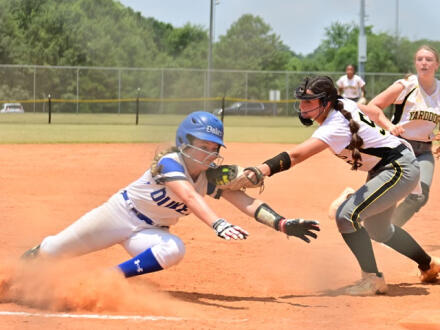
Earning a softball scholarship at St. John's University can help you compete at the NCAA Division I level while pursuing a degree in Queens, New York. It can also reduce one of the largest costs your family will face during college: tuition and related educational expenses.
The process requires more than a strong batting average. You must meet academic and NCAA eligibility rules, build a recruiting profile that coaches can evaluate, and compare your financial aid package carefully. Athletic aid may cover only part of your expenses, so academic scholarships, grants, loans, and outside awards can matter just as much.
This guide explains how St. John's softball scholarships work, what coaches look for, and how to assess an offer before you commit. You can also use free scholarship search tools, such as Studentscholarships.org, to find additional funding that does not depend on making the team.
Understanding St. John’s University NCAA Division I Softball Scholarships
St. John's University competes in NCAA Division I athletics as a member of the BIG EAST Conference. Its softball program recruits athletes who can contribute against highly competitive college teams while managing demanding academic work.
A Division I softball scholarship is not automatically a full scholarship. Coaches and the athletic department decide how to distribute available aid among rostered athletes. Your offer may cover a portion of tuition, room and board, books, or other approved costs.
The NCAA allows Division I softball programs to distribute athletic aid across their teams rather than give every player the same amount. That means one athlete might receive a larger award while another receives a smaller package or earns a roster spot without athletic aid.
How Athletic Scholarships Work At St. John's
Your scholarship agreement should state the amount of athletic aid, the period it covers, and the conditions for renewal. Ask whether the award is guaranteed for one academic year or renewable based on eligibility, team status, academic performance, or conduct.
Most athletic scholarships are awarded one year at a time. A coach may tell you that the program expects to renew your aid, but the written financial aid agreement is the document you should review before signing.
Ask specific questions before accepting an offer:
- Is the scholarship a fixed dollar amount or a percentage of approved costs?
- Does it cover fall and spring terms?
- What happens if you suffer an injury?
- Can your aid change if you leave the team?
- Which costs remain your responsibility?
For example, if your annual cost of attendance is $70,000 and your athletic award equals $25,000, you still need a plan for the remaining $45,000. That plan might include family funds, federal aid, academic scholarships, work-study, and private scholarships.
What A Softball Scholarship May Cover
A St. John's softball scholarship may help pay for tuition, fees, campus housing, a meal plan, books, or other eligible educational expenses. The exact coverage depends on your financial aid package and the university's rules.
Do not assume that a scholarship covers every softball-related expense. Travel gear, personal equipment, summer housing, transportation, health insurance, and spending money may fall outside the award.
Create a written cost comparison with these categories:
- Tuition and mandatory fees
- Room and board
- Books and course materials
- Transportation to and from Queens
- Health insurance and medical costs
- Personal expenses and softball equipment
A $15,000 scholarship can have different value depending on where it applies. If it reduces tuition, you may still need to pay for housing. If it covers room and board, it may reduce your largest living expense instead. Ask the financial aid office to explain each line in plain language.
Academic, Athletic, And NCAA Eligibility Requirements
You must satisfy three separate standards before you can receive and compete with NCAA athletic aid: university admission requirements, NCAA academic requirements, and team-level athletic expectations.
Start with your academic record. Division I eligibility typically depends on approved core courses, grades, and standardized academic information when applicable. The NCAA Eligibility Center reviews your academic history, so you should register early and submit transcripts from every high school you attended.
Your course schedule matters. A student who takes advanced classes but misses required core subjects can create an eligibility problem, even with excellent overall grades. Meet with your counselor and compare your planned courses with the NCAA-approved list.
You should also protect your amateur status. Accepting certain forms of payment, signing with an agent, or competing under rules that violate NCAA standards can affect eligibility. If you are unsure about a tournament, endorsement, or payment, ask your school compliance office or the NCAA Eligibility Center before participating.
Coaches will evaluate your softball ability through measurable details such as:
- Batting average, on-base percentage, and extra-base hits
- Pitch velocity, movement, strike percentage, and walk rate
- Home-to-first time and defensive range
- Throwing velocity and position-specific skills
- Performance against strong travel or high school competition
A coach may also examine your attendance, effort, response to feedback, and behavior with teammates. A 0.400 batting average is useful information, but it does not tell a coach whether you arrive early, handle failure, or maintain your grades during the season.
Keep copies of transcripts, test results, game schedules, medical records, and recruiting communications. Accurate records can prevent delays when a college requests information. You should also understand that admission to St. John's and athletic eligibility are related but separate decisions: meeting one does not guarantee the other.
Building A Competitive Softball Recruiting Profile
Your recruiting profile should give a St. John's coach a quick, accurate picture of your ability and potential. Begin with a one-page athletic résumé that lists your position, graduation class, height, bats and throws, school, travel team, contact information, academic details, and measurable statistics.
Your video should support the résumé rather than replace it. Create a short skills video with clear footage from several angles, then add selected game clips that show decisions under pressure. A 5-minute video with three defensive plays, four quality at-bats, and pitching sequences is usually more useful than a 20-minute collection of every play from a weekend tournament.
Label each clip with your jersey number and position. Use stable footage, good lighting, and enough game context for a coach to see the count, runners, defensive alignment, and result. Avoid loud music or elaborate editing that makes the video difficult to evaluate.
Attend events where college coaches can watch you, but choose them carefully. If a tournament costs $500 in travel and fees, confirm that St. John's coaches are expected to attend or that the event fits your recruiting level. You can save money and improve your results by tracking event dates, coach attendance, and follow-up deadlines.
Contacting Coaches And Navigating The Recruiting Process
Write concise, personalized emails. Mention your position, graduation class, academic interests, upcoming schedule, and one reason St. John's fits your goals. Include your video link and a simple request for evaluation.
For example: "I am a middle infielder from New Jersey with a 3.72 GPA and a 2.78-second home-to-first time. I will play at the Northeast Select Showcase on July 14 at 10 a.m. My team will use field 6. Could you evaluate my profile?"
Follow up after the event with a short message and one relevant update. Do not send the same generic email to every coach. A coach can usually identify a mass message within seconds.
Keep a recruiting spreadsheet with these columns:
- Date you contacted the coach
- Coach's response
- Upcoming evaluation events
- Academic requirements
- Scholarship or roster information
- Your next follow-up date
The NCAA recruiting calendar limits when coaches can contact prospective athletes in certain sports and situations. Rules can change, so check current NCAA guidance and ask the St. John's compliance staff about your specific circumstances. Never interpret silence as a final decision: coaches may be watching your progress over several months.
Evaluating A St. John’s Softball Scholarship Offer
Compare a scholarship offer by looking at net cost, not the award's headline amount. Your net cost equals the full cost of attendance minus grants, scholarships, and other aid that you do not repay.
Request a complete financial aid estimate from the university. Then place it beside offers from other schools in the same format. Include tuition, fees, housing, meals, books, transportation, and personal expenses. If one school lists only tuition and another lists the full cost of attendance, the comparison will mislead you.
Review team and academic details at the same time. Ask where the coach sees you on the depth chart, whether you can play your preferred position, and what happens if roster needs change. You should also ask how often players receive academic support and whether practices conflict with your intended major.
A useful question is, "What would my estimated bill be for each semester after all confirmed aid?" Request the answer in writing. If your family expects to borrow $18,000 each year, calculate the four-year borrowing risk before you sign.
Combining Athletic Aid With Academic And Need-Based Assistance
Athletic aid is only one part of your funding plan. You may qualify for university merit awards, federal grants, state assistance, work-study, outside scholarships, or institutional need-based aid.
Complete the required financial aid application as early as possible. The information on that application helps colleges assess need-based assistance, although the exact process and deadlines vary. Ask whether outside scholarships reduce your athletic aid, need-based aid, loans, or unmet balance.
Search beyond large national awards. A $750 local scholarship can pay for books, lab fees, or several train trips between campus and home. If you earn five awards of $750, you have added $3,750 without changing your athletic role.
Studentscholarships.org can help you search for awards by education level, field of study, location, and other criteria. Keep a folder with your résumé, transcript, recommendation letters, activity list, and reusable personal statement. That preparation can reduce each application from an hour to 10 or 15 minutes.
Never pay a company simply to access a scholarship list. Legitimate scholarship programs explain eligibility, deadlines, selection criteria, and application requirements clearly.
Playing For The St. John’s University Softball Team
Playing for St. John's University softball means managing Division I competition, college coursework, travel, training, and recovery. Your daily routine may include an early lift, classes, practice, treatment, study time, and team meetings before you return to your residence hall.
Ask current players how the schedule works in practice. A coach can describe expectations, but players can explain how often the team travels, how missed classes are handled, and how much time remains for studying and campus activities.
Your position affects your opportunity. A talented shortstop may face a crowded depth chart, while an athlete who can play several positions may offer the roster more flexibility. Ask whether the staff is recruiting you as a starter, developmental player, pitcher, catcher, or utility athlete.
You should also discuss medical care. Ask who pays for evaluation and treatment, how injuries affect participation, and whether the team provides strength training and sports nutrition support. Keep copies of insurance information and understand your family's responsibility for medical bills.
Academic performance remains part of your athletic future. A weekly schedule can help you protect study time:
- Reserve two fixed study blocks on practice days.
- Complete reading before travel whenever possible.
- Meet instructors early when a competition will cause an absence.
- Use tutoring before a course becomes a crisis.
The best offer is not always the one with the largest athletic award. It is the offer that gives you a realistic chance to graduate, compete, stay healthy, and build useful relationships after softball.
Living In Queens, New York, As A Student-Athlete
Living in Queens New York gives you access to a dense urban community, public transportation, restaurants, parks, internships, and cultural attractions. It also requires careful budgeting and time management.
Before enrolling, estimate your weekly transportation costs. A student who spends $8 per weekday on subway and bus travel spends about $40 each week before weekend trips. Your actual cost depends on your schedule, campus transportation, and whether you use a student transit benefit.
Ask about residence halls, meal plans, laundry, and grocery access. A meal plan may be convenient during the season, but you should know whether unused meals expire and whether athletes have access to nutrition resources. A shared apartment may cost less than a residence hall in some cases, but it can add deposits, utilities, furniture, and a longer commute.
Queens can also support your career goals. New York City offers access to hospitals, media companies, nonprofit organizations, financial firms, schools, and small businesses. Ask the career center whether it helps student-athletes arrange internships around practice and travel.
Plan for practical details before move-in:
- Confirm the distance between housing, classrooms, athletic facilities, and grocery stores.
- Budget for winter clothing, toiletries, transportation, and emergency expenses.
- Learn where you can receive medical care near campus.
- Save at least $300 for unexpected costs if your family can manage it.
Your college decision should include the full Queens experience, not just the softball field. Visit campus if possible, walk the route between your residence and academic buildings, and speak with students who share your intended major. A clear picture of daily life will help you judge whether a St. John's softball scholarship supports both your athletic plans and your education.
St. John's University Softball Scholarships - Frequently Asked Questions
What are the eligibility requirements for a softball scholarship at St. John's University?
To qualify, you must meet St. John's admission standards, NCAA Division I academic requirements including approved core courses and grades, and demonstrate strong softball skills, while maintaining amateur status and academic eligibility.
How much of my college expenses can a St. John's softball scholarship cover?
Scholarships vary; they may cover tuition, fees, room and board, or books. Athletic aid might cover part of costs, so plan for remaining expenses through academic scholarships, grants, or loans.
What should I include in my softball recruiting profile for St. John's coaches?
Create a one-page résumé with position, stats, academics, and contact info, plus a 5-minute video showing defensive plays, at-bats, and pitching, clearly labeled and well-lit to highlight your skills effectively.
Can I combine a St. John's athletic scholarship with academic or need-based aid?
Yes, athletic aid can be combined with academic scholarships, federal grants, and other need-based assistance. Early financial aid applications help maximize total funding available.
How do I evaluate a softball scholarship offer from St. John's University?
Compare net costs by accounting for total attendance expenses minus all confirmed aid. Consider scholarship terms, academic support, team role, and potential borrowing before accepting.
What is the typical scholarship renewal process for softball players at St. John's?
Most scholarships are awarded annually and may be renewed based on eligibility, academic performance, team status, and conduct. Always review the written agreement for renewal terms.