

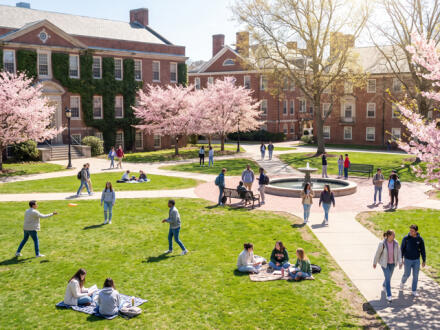
Paying for college in South Texas can feel expensive fast. Tuition, books, lab fees, gas, housing, and meal plans can push a student's budget past the breaking point before the first midterm even lands.
The good news is that Nueces County, Texas scholarships come from more places than most students expect. Local foundations, school counseling offices, colleges, employers, women's groups, and service clubs all offer money that can reduce loans or cover gaps that grants miss. A single $1,500 award can cover a semester of textbooks and supplies. Stack three or four awards, and the math changes quickly.
This guide breaks down 10 practical scholarship paths for high school seniors, current college students, transfer students, graduate students, STEM majors, and women in college or career training. It also shows how students in Corpus Christi and the wider county can organize deadlines, match their background to the right awards, and build a smarter application plan.
The focus stays local and useful. Instead of broad advice, readers will find specific places to look, what each scholarship path usually rewards, and how to improve the odds of winning. For students who want one more search tool in the mix, free platforms such as StudentScholarships can help surface quick-apply options in under 2 minutes alongside career guidance and local-fit opportunities.
1. Local Community Foundation Scholarships In Nueces County
Community foundations are often the first place students should look for Nueces County scholarships for high school students and current college applicants. These organizations collect donor-funded awards, then match students by major, GPA, school, income, community service, or family background.
In practical terms, one foundation may manage 12 separate scholarship funds with awards from $500 to $5,000 each. That means one application can sometimes open several doors at once. For a student juggling AP classes, work shifts, and college forms, that's efficient.
Students should scan scholarship descriptions for details like:
- Minimum GPA such as 2.5, 3.0, or 3.5
- Residency requirements in Nueces County or Corpus Christi
- Planned majors like nursing, engineering, or education
- Service hours, often 25 to 100 hours
- Need-based documentation
A useful trick is to review similar Texas-based foundation listings to understand how local donor funds are structured. For example, awards grouped through the West Texas foundation portal show how one community-based application can connect students to multiple funds.
Students who write one strong base essay and customize the opening 75 to 100 words for each donor theme usually submit faster and sound more focused.
Where To Find Community-Based Awards
Students can find community-based awards through a few reliable channels.
- Local nonprofit foundation websites
- High school scholarship bulletins
- College financial aid newsletters
- Public library community boards
- Chamber of commerce and civic newsletters
A solid weekly system works better than random searching. One student might spend 30 minutes every Tuesday logging deadlines into a spreadsheet with 5 columns: name, amount, deadline, requirements, and status.
That small habit can uncover overlooked awards that get fewer applications than national scholarships. And fewer applicants often means better odds.
2. High School Counseling Office Scholarships For Nueces County Students
High school counseling offices remain one of the most underrated scholarship sources in the county. Counselors often receive local award notices that never make it onto giant search engines, especially scholarships from memorial funds, booster clubs, local businesses, and alumni groups.
That matters because small local awards can still be meaningful. A $750 scholarship may cover parking, a laptop repair, or a full semester of required course materials. Three awards at that size equal $2,250, which is real money for a first-year student.
Students should ask counselors these exact questions:
- Which scholarships are only open to this high school?
- Which awards had few applicants last cycle?
- Which local groups care more about service than test scores?
- Are there paper applications that are not posted online?
Counselors also know nomination-based programs. Those can be powerful because the school may only nominate 1 to 5 students.
For students involved in agriculture, leadership, or county extension activities, options similar to the Texas 4-H awards can fit well, especially when the application already includes project records and service work.
The best move is simple: students should meet with the counseling office twice per semester. The first meeting builds a scholarship list. The second checks deadlines, transcripts, recommendation letters, and any missing forms.
That routine turns the counseling office from a one-time stop into a real funding partner.
3. Scholarships Through Del Mar College And Transfer Pathways
Del Mar College is a practical starting point for many Nueces County students because it can lower the total cost of a degree while keeping students close to home. Scholarships through the college can make that path even cheaper, especially for first-time students and transfers planning a bachelor's degree later.
A clear example helps. If a student completes 24 to 30 credit hours at a lower tuition rate, then transfers, the savings can reach several thousand dollars before scholarship dollars are even added.
Students should look at three buckets of aid:
- Institutional scholarships through Del Mar College
- Department awards tied to majors like health sciences or technical programs
- Transfer scholarships for students moving to a four-year school
Transfer planning matters early. A student who keeps a 3.25 GPA and meets advising checkpoints often becomes more competitive for transfer awards than someone who waits until the last semester.
Students should also search for Texas-specific outside scholarships during community college enrollment. Programs such as the Texas urban fund can complement campus aid when a student's academic and financial profile matches the criteria.
A strong Del Mar strategy looks like this:
- Apply for college admission and aid early.
- Meet with an advisor before the first registration window.
- Confirm which courses transfer into the target bachelor's program.
- Apply for both first-year and continuing-student scholarships.
That mix helps students avoid paying for credits that do not count while increasing total aid.
4. Texas A&M University-Corpus Christi Scholarships For Local Students
Texas A&M University-Corpus Christi is a major scholarship destination for local students who want to stay in the area. The university offers institutional scholarships, departmental awards, merit funding, and aid connected to transfer, leadership, and academic performance.
For many families, the key question is not whether one scholarship will pay everything. It is whether several funding pieces can reduce the bill enough to make enrollment workable. A student might combine a $2,000 merit award, a $1,200 departmental scholarship, and federal aid to close most of the gap.
Local applicants should focus on:
- Automatic or semi-automatic merit scholarships
- College-specific awards for business, education, nursing, or science
- Transfer scholarships for students coming from Del Mar College
- Honors or leadership funding
Application timing matters more than students think. Missing a priority date by 7 days can mean losing access to a full round of institutional review.
Students comparing options should also understand how larger universities organize aid information. The structure used by Texas One Stop shows how schools separate scholarships, grants, loans, and process steps, which helps families ask better questions during financial aid meetings.
For local students, the smartest move is to treat TAMU-CC scholarships like a layered process. One general application rarely covers everything. Department forms, essays, resumes, and professor recommendations often add the extra money.
5. Nueces County Scholarships For High School Students Planning Their First Year
First-year planning is where many students either save money or leave it on the table. Nueces County scholarships for high school students often reward preparation as much as grades. Students who start in the fall of senior year usually find more options than students who wait until April.
A workable first-year scholarship plan includes 4 categories:
- Local community awards
- College-based freshman scholarships
- State or regional scholarships
- Career or identity-based awards
Students should aim to submit 10 to 15 applications with strong fit instead of 40 weak ones. Fit matters. A student with 120 service hours, a 3.4 GPA, and clear plans for nursing may beat a higher-GPA applicant who sends a generic essay.
This is also the stage to use scholarship search platforms that simplify discovery. A free matching tool can save a student 2 hours per week by sorting opportunities by grade level, state, and major rather than forcing manual searches across dozens of sites.
One useful example for academically strong Texas students is the academic excellence award, which shows how state-connected recognition can support a freshman funding plan.
For first-year students, the biggest mistake is assuming scholarships end after acceptance letters arrive. Many campus and local awards stay open into the summer, especially for orientation, housing, and department-based funding.
6. Nueces County Scholarships For Undergraduate Students Needing Ongoing Aid
Scholarship hunting should not stop after freshman year. Nueces County scholarships for undergraduate students often include sophomore, junior, and senior awards tied to major progress, GPA recovery, internships, campus leadership, or financial need.
That matters because costs often rise after the first year. A student may face an extra $900 for upper-division lab fees, clinical uniforms, software, or commuting costs. Ongoing aid helps cover those second- and third-year bumps.
Undergraduates should search in cycles:
- January to March for institutional renewal and departmental awards
- April to June for local civic and memorial scholarships
- July to August for last-minute private awards
Many continuing students miss money because they assume scholarships are only for incoming freshmen. Not true. Departments often reward students who completed 30, 60, or 90 credit hours and stayed active in the program.
Students with agriculture, fair, or rural service backgrounds can sometimes broaden their options through Texas-specific programs such as the fair association award, especially if they have livestock, FFA, or event service experience.
How To Stack Local, Institutional, And State Funding
Stacking means combining several smaller sources into one workable package. It is one of the best ways to make college affordable.
A sample stack might look like this:
- $1,500 local community scholarship
- $2,000 university departmental award
- $3,698 state grant or tuition support
- $800 employer reimbursement
That adds up to $7,998.
Students should ask each college whether outside scholarships reduce loans first or reduce grants first. That one policy detail can change the value of a private award by thousands of dollars over time. They should also track renewal rules, such as maintaining a 2.75 GPA or staying enrolled in 12 credit hours per term.
7. Nueces County Scholarships For Graduate Students Advancing Their Careers
Graduate students often assume scholarships are scarce, but that is only partly true. Nueces County scholarships for graduate students may be fewer in number, yet they are often more targeted. That can improve the odds for applicants with a clear career plan.
A graduate student in counseling, education, business, nursing, or public administration might find support through university departments, employer partnerships, professional associations, or local donor funds. Even one $3,000 award can offset a big chunk of a part-time semester.
Strong graduate applications usually include:
- A short statement of purpose with a specific career goal
- A resume showing field experience
- One or two recommendations from faculty or supervisors
- A budget explanation if the award is need-based
Specificity helps. "They want to help people" is weak. "They plan to earn an LPC track credential and serve bilingual families in Corpus Christi within 18 months" is stronger and sounds real.
Graduate students should also ask employers about tuition help. Some healthcare systems, school districts, and local agencies reimburse $1,000 to $5,250 per year for approved programs.
Because many graduate awards are smaller pools with specialized criteria, students should apply even if the amount looks modest. Two awards of $1,250 each can cover books, licensing prep materials, and one required clinical fee.
8. Nueces County Scholarships For STEM Students Pursuing High-Demand Fields
STEM students have an advantage in scholarship searches because donors, colleges, and employers often want to support fields tied to workforce demand. Nueces County scholarships for STEM students can show up in engineering, computer science, biology, chemistry, math, environmental science, and healthcare technology.
These awards often look for more than grades. A student with a 3.2 GPA, robotics experience, and 80 volunteer hours tutoring algebra may stand out over someone with a stronger GPA but no hands-on involvement.
STEM applicants should highlight:
- Lab or research experience
- Coding, robotics, or engineering projects
- Science fair results
- Math tutoring or mentoring
- Career goals tied to local industry needs
Agriculture and applied science students should widen the search beyond the county. Options like the corn producers scholarship show how STEM-adjacent fields such as agronomy, agribusiness, and agricultural engineering can connect to scholarship dollars.
A concrete example: a student pursuing mechanical engineering could frame a scholarship essay around building a low-cost water-filtration prototype, logging 42 testing hours, and presenting results at a regional competition. That kind of detail beats a generic statement about loving science.
For STEM students, numbers tell the story. Projects, hours, scores, and outcomes make applications stronger.
9. Nueces County Scholarships For Women In College And Career Training
Women in Nueces County can find scholarships through colleges, nonprofits, women's organizations, professional groups, and career-focused training programs. Nueces County scholarships for women often support both traditional degree paths and shorter workforce training tracks such as healthcare certificates, teaching preparation, and technical programs.
That flexibility matters. Not every student is pursuing a four-year degree on day one. A woman entering a 9-month medical assistant program may need help just as much as a student entering a bachelor's program.
Common eligibility themes include:
- Academic promise or persistence
- Financial need
- Leadership or community service
- Single-parent responsibilities
- Career plans in underrepresented fields
Students should look closely at women-focused awards in business, healthcare, and STEM. An award of $1,800 may cover scrubs, certification fees, exam costs, and transportation for clinical placement.
Essays should be concrete. A stronger version might explain how the student works 24 hours per week, cares for a younger sibling 3 nights each week, and still completed 15 credit hours with a 3.6 GPA. That picture is memorable.
Women returning to school after a gap should not self-reject. Many scholarships value persistence, work history, and family responsibility as much as traditional campus involvement.
10. Employer, Civic, And Service Organization Scholarships In Nueces County
Employer, civic, and service organization awards are some of the most local scholarships students can find. Rotary clubs, Kiwanis groups, chambers of commerce, unions, hospital systems, local law offices, credit unions, and family-owned companies often sponsor awards for county students.
These scholarships may be smaller, but they can be easier to win because the pool is narrower. A local employer-funded award of $1,000 with 27 applicants gives better odds than a national scholarship with 8,000 applicants.
Students should search through:
- Parent employers
n- Their own part-time employers
- Faith-based organizations
- Volunteer groups
- Professional associations
- County fair, farm, and civic groups
Students with ties to farming or agricultural organizations can still learn from programs outside the area. The farm bureau example reflects how local service groups often reward leadership, agricultural involvement, and community roots.
When applying, students should match the tone of the sponsor. A Rotary-style committee may value service hours and local impact. A business-sponsored award may care more about punctuality, work ethic, and career focus. One student who documents 18 months of part-time work, 63 volunteer hours, and a clean attendance record will often look strong to these committees.
Local money usually goes to students who sound connected to the community, not copied from a generic internet essay.
Nueces County, Texas Scholarships - Frequently Asked Questions
What types of scholarships are available for Nueces County students?
Nueces County students can access scholarships from local community foundations, high school counseling offices, colleges like Del Mar College and Texas A&M University-Corpus Christi, employer and civic organizations, and awards targeting STEM students, women, graduate students, and first-year or continuing undergraduates.
How can high school seniors in Nueces County maximize their scholarship opportunities?
Seniors should start early by meeting their counseling office twice a semester to build and review scholarship lists. They should apply to 10–15 well-fitting scholarships, including community awards, college freshman scholarships, state programs, and identity-based awards, focusing on strong, tailored essays.
Are there scholarships specifically for STEM students in Nueces County?
Yes, STEM students have scholarships emphasizing hands-on experience, projects, tutoring, and career goals tied to local industry needs. Students pursuing fields like engineering or healthcare technology are encouraged to highlight practical accomplishments to improve their chances.
How do graduate students in Nueces County find scholarships relevant to their career advancement?
Graduate scholarships are targeted and often require a clear career plan, a focused statement of purpose, relevant resume, and recommendations. Opportunities may come from university departments, employers, and professional associations, with some awards covering expenses like licensing preparation or clinical fees.
What strategies help students stack multiple scholarships effectively in Nueces County?
Stacking combines local, institutional, state, and employer awards to cover more costs. Students should inquire how each scholarship affects grants and loans to maximize value, track renewal requirements like GPA, and combine awards strategically for the best financial aid package.
How can students find community foundation scholarships in Nueces County?
Students can find these scholarships via local nonprofit foundation websites, high school scholarships bulletins, college financial aid newsletters, public library boards, and chamber of commerce publications. Developing a weekly tracking system helps discover less competitive awards with better odds.




