

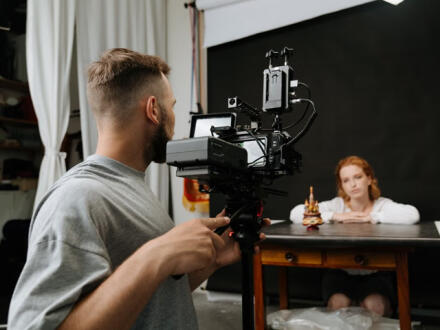
Film school costs add up fast. A single semester can bring tuition, camera fees, editing software, travel, festival submissions, and hard-drive costs into one ugly bill. For an Ohio student who wants to shoot films instead of stressing over money, the right scholarship stack can make a real difference.
This guide breaks down 11 of the best Ohio cinematography scholarships and scholarship paths students should look at first. Some are built for high school seniors. Some fit first-year film students. Others work better for advanced university students with strong reels, crew credits, and polished portfolios.
The goal is simple: help students find money they can actually use at Ohio film and media programs. That includes school-based awards, merit scholarships, need-based aid, industry-connected opportunities, and national film scholarships that can often be used at in-state colleges.
Readers will also see what makes an application stronger. In most cases, a student with a 60-second reel, a clear personal statement, and 3 to 5 focused applications will be in a better spot than someone sending the same generic essay to 20 places. Ohio has more options than many families expect, especially when students combine local awards with campus aid.
For students searching for Ohio Cinematography Scholarships for High School Students, Ohio Cinematography Scholarships for College, or advanced funding for university film tracks, this list gives a practical starting point.
1. Ohio Film Office Education Opportunities for Aspiring Cinematographers
Students interested in camera work should start with Ohio Film Office education opportunities because they connect school goals to the actual film industry in the state. While the office is not a giant scholarship bank by itself, it points students toward workforce programs, training resources, and industry pathways that can support scholarship applications.
That matters because Ohio's film sector is active enough to give students a reason to build local experience. A student who works on 2 short films, 1 community production, and 1 student set can show real commitment before college even starts.
A strong strategy here is to use Ohio Film Office resources to support an application story:
- interest in cinematography as a career, not just a hobby
- awareness of Ohio production activity
- hands-on experience with lighting, framing, and crew roles
- a plan to study film at an in-state school
Concrete example: a student from Columbus might volunteer at a local short-film shoot, operate a boom for 8 hours, then assist with slate and continuity. That one weekend gives specific material for a scholarship essay.
Applicants can make this section of their search stronger by pairing film-focused goals with broader Ohio awards. For example, community-minded students sometimes stack media ambitions with service-based awards like the Ohio Community Involvement scholarship, especially if they've documented neighborhood events or nonprofit stories on video.
This option ranks well because it helps students build credible film identity, which often matters just as much as the scholarship name itself.
2. Ohio Cinematography Scholarships for High School Students Planning Ahead
The best Ohio Cinematography Scholarships for High School Students usually reward planning. Students who begin in grade 10 or 11 often have better material by senior year: stronger grades, more activities, and a portfolio that doesn't look rushed.
A high school student does not need a feature film reel. Reviewers often respond well to 3 polished clips totaling 90 seconds more than 7 shaky projects stuffed together. A phone-shot documentary about a marching band or a local bakery can still work if the lighting and composition show control.
Students planning ahead should focus on four pieces:
- GPA and class rigor, especially English, art, media, and digital courses
- Extracurricular proof, such as AV club, yearbook, theater tech, or community media
- Portfolio basics, with steady shots, clean edits, and intentional framing
- Recommendation letters, ideally from a teacher who watched the student solve real production problems
Ohio students should also look beyond pure film labels. Arts and regional scholarships often fit future cinematographers, including awards such as the Zinggia Ohio Art scholarship, which can support broader creative study.
A practical target is to submit 6 applications between September and February of senior year. That number is manageable for most students and still broad enough to improve odds. Planning ahead wins because scholarship committees can tell when a student has been building toward film school for more than 3 frantic weeks.
3. Ohio Cinematography Scholarships for First-Year Students Entering Film Programs
Ohio Cinematography Scholarships for first-year students are often the easiest film-specific awards to miss. Families get busy with admissions, housing deposits, orientation forms, and FAFSA deadlines, so scholarship deadlines slide by.
First-year students should look for awards tied to freshman status, intended major, and enrollment at an Ohio college. These scholarships matter because the first year often includes startup costs that surprise families. A basic gear list can easily include:
- external hard drives costing $80 to $150 each
- editing software subscriptions around $20 to $60 per month
- camera accessories, batteries, and cards totaling $200 or more
That is before tuition.
Students entering Ohio programs should search for freshman awards inside the institution first. A good example is the Greater Cleveland freshman scholarship, which shows how school-connected freshman funding can reduce first-semester pressure.
A strong first-year application usually includes a short explanation of why cinematography fits the student's path. Instead of writing "they love movies," a better statement sounds like this: they shot 12 school sports highlights, learned manual exposure, and now want formal training in lighting and camera movement.
For first-year applicants, the biggest advantage is momentum. A student who applies in the spring before classes start can sometimes secure aid before course fees and equipment purchases hit all at once.
4. Ohio Cinematography Scholarships for College Students Building Production Skills
Once students are already enrolled, Ohio Cinematography Scholarships for College become more skill-driven. Reviewers expect more than interest at this stage. They want proof that a student can contribute on set, solve problems, and improve from project to project.
That does not mean every applicant needs expensive gear. It means they need results. A sophomore who lit a dorm-room interview with 2 clamp lights and 1 shower curtain diffuser may impress a committee more than someone who rented a cinema camera but showed weak composition.
College students should highlight production growth in specific terms:
- number of projects completed, such as 5 narrative shorts
- crew roles held, like AC, gaffer, or camera operator
- software used, such as Premiere Pro or DaVinci Resolve
- measurable outcomes, such as a campus screening audience of 140 attendees
Students with journalism or documentary crossover should also consider adjacent media funding. The Ohio News Media Foundation scholarships can fit students producing visual stories, news packages, or documentary work.
This category ranks high because it rewards visible progress. A student who shows better framing, steadier exposure, and stronger collaboration from semester 1 to semester 3 gives a committee an easy reason to invest. They are no longer betting on potential alone. They are funding a craft that is already taking shape.
5. Ohio Cinematography Scholarships for University Students in Advanced Film Tracks
Advanced students in bachelor's programs face a different funding problem. Their projects get bigger, their roles get more specialized, and the costs rise fast. Ohio Cinematography Scholarships for University students matter most when capstone films, thesis shoots, and festival-ready projects begin.
At this level, a cinematography student may need:
- 3-day location shoots
- rental lighting kits costing $150 to $400 per day
- larger storage workflows with 4TB to 8TB drives
- color-correction and sound finishing support
So the application should sound advanced too. Committees want to hear about visual language, not just enthusiasm. A stronger applicant might explain how they used a 35mm equivalent focal length for close emotional coverage, or why they chose practical lighting to match a naturalistic drama.
University students should also look for chapter-based and regional awards tied to deeper involvement. The Ohio Valley Member Chapter scholarship is a good reminder that region-specific funding can support specialized students when general campus aid is already stretched.
The best advanced applications often include one polished scene breakdown. If a student can explain how they lit a kitchen scene in 3 setups over 4 hours while staying on schedule, they sound ready for professional-level training. That is the kind of detail committees remember.
6. School-Specific Film And Media Scholarships at Ohio Colleges And Universities
School-specific awards deserve a top spot because they often have better odds than broad national competitions. A campus scholarship may draw 40 applicants instead of 400. That difference matters.
Ohio colleges and universities often house film, media arts, digital cinema, communication, or integrated media programs with their own awards. Some are automatic with admission. Others require a separate application, portfolio, or interview.
Students should contact three places on campus, not just one:
- the film or media department
- the financial aid office
- the college foundation or alumni office
That simple three-step check can uncover small awards worth $500, $1,500, or $3,000 that never appear in a general web search.
Students using scholarship platforms can widen that search faster. On Studentscholarships.org's scholarship listings, they can sort through campus-linked and state-related funding without bouncing between dozens of school pages.
Concrete example: a student attending a Cleveland-area program might combine a department award, a donor-funded media scholarship, and a local community award to cover a semester's equipment and lab fees. Three smaller awards can beat one big long-shot application.
This path ranks high because it is practical. School-specific money is designed for enrolled students, and the reviewers often understand exactly what a cinematography student needs: lenses, lighting, editing time, and production hours.
7. Merit-Based Scholarships for Students With Strong Portfolios And Academic Records
Merit-based scholarships are some of the best Ohio cinematography scholarships because they reward students who can prove both creative ability and academic discipline. A student with a 3.7 GPA, 26 ACT, and a focused 75-second reel often looks much stronger than someone with only one of those pieces.
Committees usually want evidence that the student will keep producing work after the award is given. Strong grades help signal follow-through. A clean portfolio shows artistic promise.
Applicants should make merit materials easy to review:
- one main reel under 2 minutes
- clear file names and labels for each clip
- a résumé with crew roles and software skills
- transcripts that show stable or improving grades
- a short essay with a specific film-school goal
Nationally recognized film awards can also fit this category. The KODAK Student Scholarship Program is especially relevant for cinematography-minded students because it directly connects to image-making and film production.
The reason this category ranks so high is simple: merit money can sometimes be renewed. A renewable award worth $2,000 per year over 4 years becomes $8,000 total, which can cover far more than a one-time prize.
What Review Committees Look for in Cinematography Portfolios
A cinematography portfolio does not need to be huge. It needs to be intentional. Many committees would rather watch 6 excellent shots than suffer through 25 random ones.
They usually look for these signs of control:
- Lighting choices: Can the student shape a face, separate a subject from the background, or create mood?
- Composition: Are frames balanced, purposeful, and readable?
- Camera movement: Does movement add meaning, or is it there just to look busy?
- Exposure and color: Are highlights blown out? Do skin tones look believable?
- Story judgment: Did the student pick clips that build trust in under 90 seconds?
A concrete example helps. If a reel includes one exterior at golden hour, one dialogue scene with motivated practical light, one handheld documentary shot, and one controlled dolly move, the committee quickly sees range.
Weak portfolios often fail for simple reasons:
- music that overwhelms dialogue
- titles that cover the frame too long
- 3 similar clips in a row
- missing context on what the student actually did
A smart note at the end of the reel can fix that. One line like "Director of Photography on clips 1, 3, and 4" removes confusion fast.
8. Need-Based Aid Options That Can Be Combined With Cinematography Scholarships
Need-based aid is not as flashy as a film award, but it is often the money that makes enrollment possible. The smartest students do not chase only one type of funding. They stack grants, campus aid, work-study, and cinematography scholarships.
This matters because film students usually carry extra academic costs. A biology major may buy lab supplies. A cinematography student may need storage drives, headphones, festival fees, black clothing for set work, and ride-share trips to late shoots. One semester can easily bring $400 to $1,200 in production extras.
Students should build a layered plan:
- file financial aid forms as early as possible
- ask the department about emergency media funds
- apply for local scholarships tied to income or geography
- combine need-based aid with small creative awards
Regional scholarship pools can help here. For example, the Community Foundation for the Ohio Valley scholarship may fit students whose family and school circumstances align with local criteria.
This is also where a free matching platform can save time. Instead of searching for 3 hours every Saturday, a student can use a scholarship database to sort by state, major, and eligibility. That kind of system reduces missed deadlines, which is often the real problem.
Need-based aid ranks high because it multiplies the value of every cinematography scholarship won.
9. Ohio Cinematography Association Scholarships And Industry-Connected Awards
When students search for Ohio Cinematography Association Scholarships, they are usually looking for one thing: money tied to real industry relationships. That is valuable because industry-connected awards can do more than reduce tuition. They can lead to mentors, internships, set visits, and references.
Ohio does not always package these awards under one obvious title, so students should search across professional groups, chapter organizations, media associations, and arts nonprofits. A scholarship linked to working professionals can carry extra weight because the reviewers understand camera craft.
A solid industry-connected award often includes at least one of these benefits:
- direct feedback from media professionals
- eligibility based on production work, not just GPA
- networking access at events or screenings
- résumé value that helps with internships
A practical example: a student who wins a chapter or association award and then meets 3 local producers at one event may gain more than the dollar amount alone.
Students with journalism, documentary, or visual storytelling interests should stay open-minded about adjacent organizations. Not every useful industry scholarship says "cinematography" in the title. Sometimes the strongest fit comes through media, communication, or regional production groups.
This option ranks well because it blends money with access. In film, one introduction on a set can matter almost as much as one check in the mail.
10. Regional Arts, Media, And Creative Grants Available to Ohio Students
Regional grants are often overlooked because students assume grants are only for nonprofits or established artists. That is not always true. Some local arts councils, foundations, and community groups support student creators, especially when a project has a public angle.
For cinematography students, grants can fund one specific project instead of general tuition. That makes them useful for documentary shoots, local history films, community portraits, or experimental pieces.
A competitive regional grant pitch usually includes:
- a short project summary in 150 to 300 words
- a simple budget with exact costs
- a sample still or brief reel
- a local connection, such as filming in the applicant's county
Concrete example: a student asking for $1,250 to film oral histories in southeast Ohio may have a stronger case than a student simply asking for "help with a movie." Specific budgets work.
Students can also broaden the search to local civic and youth organizations. Awards linked to county programs, service clubs, and educational foundations may not mention film at all, yet they can still cover gear or travel.
This category earns a place on the list because regional money is often less crowded. A well-written local proposal can stand out quickly, especially when the project tells a story rooted in Ohio people and places.
11. National Film Scholarships Ohio Students Can Use at In-State Programs
Some of the best funding options for Ohio students are actually national scholarships that can still be used at in-state schools. That gives students a larger pool of opportunities without giving up the lower costs or family proximity of staying in Ohio.
National film scholarships often focus on artistic merit, leadership, underrepresented voices, documentary work, or technical production skills. A student attending an Ohio university can still benefit if the award terms allow use at an accredited college or film program.
These scholarships often work best for students who already have:
- a reel under 2 minutes
- a statement with a clear film focus
- 1 to 3 recommendation letters
- proof of acceptance or enrollment
One useful reality check: national pools are tougher. A program with 500 applicants and 10 winners gives a 2% selection rate. But that does not mean students should skip them. It means they should apply strategically, using their strongest materials.
The biggest upside is flexibility. A student can combine one national award with Ohio campus aid, local grants, and department support to build a full package. That layered approach is often how film students stay in school through expensive production years.
For ambitious applicants, national scholarships are worth the effort because they expand both funding and credibility.
Ohio Cinematography Scholarships: Frequently Asked Questions
What types of cinematography scholarships are available to Ohio high school students?
Ohio high school students can apply for scholarships that reward planning and portfolio development, such as the Zinggia Ohio Art scholarship. These scholarships often consider GPA, relevant extracurriculars, recommendation letters, and focused reels with controlled lighting and composition.
How can first-year film students in Ohio secure cinematography scholarships?
First-year students should seek scholarships tied to freshman status and Ohio colleges, like the Greater Cleveland freshman scholarship. Applications that detail practical experience, such as shooting sports highlights or mastering manual exposure, improve the chances of funding early film costs.
What should an Ohio film student highlight in their cinematography portfolio for scholarship applications?
Applicants need an intentional portfolio showing control over lighting, composition, camera movement, exposure, and story judgment. Effective reels might include varied clips like golden hour exteriors or carefully lit dialogue scenes, ideally under 90 seconds total, clearly indicating the applicant's role.
Are there industry-connected cinematography scholarships available in Ohio?
Yes, Ohio offers industry-linked scholarships through associations and media groups that provide financial help plus mentorship, internships, networking, and résumé value. These opportunities often require demonstrated production work rather than just GPA.
Can national film scholarships be used by Ohio students attending in-state programs?
Many national film scholarships allow Ohio students to use their awards at accredited in-state colleges. These scholarships focus on merit, leadership, and diverse voices, requiring a strong reel, film statement, recommendations, and enrollment proof, and they can be combined with local aid.
How does need-based aid complement Ohio cinematography scholarships?
Need-based aid boosts overall funding by covering additional costs like gear, software, and festival fees. Combining grants, work-study, and scholarships like the Community Foundation for the Ohio Valley scholarship helps students manage both tuition and production expenses effectively.




