

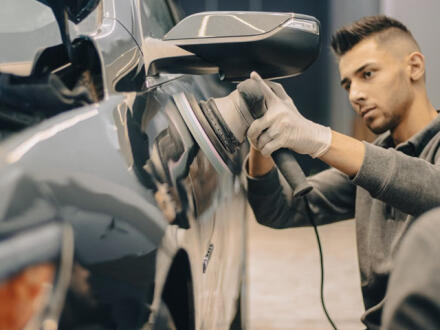
Collision repair training is practical, hands-on, and often faster than a four-year route. But paint supplies, welding gear, lab fees, and tuition can still add up fast. A student in a one-year auto body program can face a bill of $6,000 to $18,000 once tools, safety gear, books, and transportation are included.
That's why Montana Collision Repair Scholarships matter. They can reduce out-of-pocket costs, shrink the need for loans, and help students stay focused on class instead of extra shifts at work. Some awards are built for high school seniors. Others fit first-year students, current college students, or university students who want to move into shop management, engineering, or automotive business roles.
This guide breaks the options into 11 clear funding paths. It covers association awards, school-based scholarships, local shop sponsorships, grants, and tool assistance. It also points out where students can stack aid. For example, a student might combine a $1,000 local scholarship, a $2,500 state grant, and a $750 tools award to cut a $7,800 training bill by more than half.
The goal is simple: help students and families find realistic ways to pay for collision repair education in Montana without wasting time on poor-fit applications.
1. Montana Collision Repair Association Scholarships For Industry-Focused Students
Students who already know they want to work in refinishing, structural repair, estimating, or shop operations should start with Montana Collision Repair Association Scholarships and similar trade-group awards. These programs often favor applicants who can show a direct link to the industry.
That means committees usually want proof of intent, such as:
- enrollment in auto body or collision repair training
- a teacher or shop supervisor recommendation
- work experience in a garage, dealership, or body shop
- a short essay explaining career goals
A strong example is a student who spent 180 hours in a high school auto shop, completed 2 job shadows, and plans to earn I-CAR training after school. That kind of application feels specific. It shows commitment, not just interest.
Association scholarships may not always be huge, but even $500 to $2,000 can cover paint materials, welding gloves, or one semester of fees. Students should also look at regional vocational awards with a similar trade focus, such as the state Elks vocational program, because committees there often value skilled-trades plans.
For industry-focused applicants, the best move is to match every sentence of the application to a real collision repair goal. Committees notice that fast.
2. Montana Collision Repair Scholarships For High School Students Planning A Skilled Trades Path
Montana Collision Repair Scholarships for High School Students are often easier to win than students think. Why? Because many seniors chase broad academic awards while skipping trade-specific funding.
A high school applicant can stand out with a simple record of effort. For example, a senior who earned a 3.1 GPA, logged 96 hours in a school welding or auto lab, and volunteered at 1 community car show may look more relevant than a student with better grades but no shop experience.
Good places to search include:
- local community foundations
- civic clubs and fraternal groups
- county scholarship pools
- career and technical education offices
- school counselors who track trade awards
Local funding is often overlooked. A county foundation might offer $750 for a student entering a technical field, while a community donor fund might award $1,500 for hands-on career training. The community foundation listings can be useful for students trying to find smaller pools with fewer applicants.
Students planning a skilled-trades path should also ask instructors for exact wording on recommendation letters. "Shows up early and completes panel prep without reminders" is much stronger than "hard worker." In trade scholarships, details win.
3. Montana Collision Repair Scholarships For First-Year Students Entering Auto Body Or Related Programs
Montana Collision Repair Scholarships for first-year students often reward momentum. Committees like students who have just enrolled and can show a clear start date, a course schedule, and a budget.
A first-year applicant usually has a strong case if they can list exact first-term costs. For instance, one student might face:
- $3,400 in tuition
- $1,250 for tools
- $410 for PPE and lab supplies
- $620 for books and materials
That totals $5,680 before fuel or housing. A short budget like that tells reviewers the student understands the real cost of training.
First-year students should search beyond collision-only awards. Broader vocational, academic, and merit scholarships can still help cover auto body education. A high-performing student entering a Montana campus may also qualify for options like the MUS honor scholarship, depending on the school path.
This is also the stage where students should use free search tools that speed up matching. A platform such as StudentScholarships.org can reduce hunt time because students can sort by state, field, and class level instead of scanning hundreds of weak-fit listings.
For first-year applicants, speed matters. Some of the best awards close months before classes begin.
4. Montana Collision Repair Scholarships For College Students Already Enrolled In Technical Training
Students already in a certificate or associate program have one big advantage: they can prove performance with real school results. That makes Montana Collision Repair Scholarships for College especially valuable after the first term.
A committee can review facts like:
- a 3.4 GPA in technical courses
- 0 missed lab sessions across one term
- completion of 12 credit hours in body repair and refinishing
- instructor notes on frame measurement or spray technique
That evidence is powerful. It shows the student can finish what they started.
Enrolled students should ask their program chair about department awards first. Many schools have small funds that never appear in large scholarship databases. A $600 retention scholarship and a $900 program award can combine with outside money and make the next term manageable.
Students should also look at school-adjacent funds that support persistence. For example, the Montana Advocates award may fit students who can connect academic goals with community impact and personal drive.
A good application at this stage should mention specific classroom growth. "They improved color matching error from 3 panels to 1 panel in lab practice" tells a stronger story than vague claims about passion.
5. Montana Collision Repair Scholarships For University Students Pursuing Management, Engineering, Or Automotive Degrees
Not every collision repair career starts and ends on the shop floor. Some students move toward estimating, operations, mechanical engineering, industrial tech, or business management. That's where Montana Collision Repair Scholarships for University become relevant, even if the degree title does not say "collision repair."
A university student might plan to work in:
- shop management
- insurance estimating
- vehicle systems engineering
- parts and operations leadership
- dealership fixed operations
Imagine a student pursuing engineering who wants to improve repair planning for advanced driver-assistance systems. If their senior project studies sensor placement after a front-end impact, that has a clear collision-industry link.
Broader science and technical awards can help here. The STEM and healthcare scholarship program may fit students whose coursework connects to automotive materials, electronics, or safety systems. Women entering leadership or operations roles should also review options like the women's leadership scholarships when the eligibility lines up.
A concrete budget helps. A university student paying $4,800 for one term in tuition and fees may use a $1,500 merit award plus a $1,000 field-related scholarship to cut almost one-third of that bill. The link to collision repair just needs to be explained clearly.
6. Collision Repair Foundation And National Scholarships Montana Students Should Not Ignore
Montana students should not limit their search to state-only awards. National funding can be a strong add-on, especially when local scholarships top out at $500 or $1,000.
The Collision Repair Education Foundation and similar national groups often support students in auto body, refinishing, and related technical programs. Some awards come as cash. Others come as tool sets, equipment support, or school-linked assistance.
This matters because national programs can fill gaps local money misses. A student who receives $1,200 from a local donor but still needs $2,300 for tools and fees may close the gap with a national award.
Students should pay attention to these details:
- whether the award is cash or in-kind support
- whether the school must nominate the student
- whether proof of enrollment is required
- whether the scholarship covers tools, tuition, or both
National programs also tend to ask for cleaner applications. A student essay with 350 direct words, one real shop example, and one precise career goal will usually do better than a generic statement about loving cars.
For Montana applicants, the smart move is stacking. State, local, school, and national scholarships together often beat waiting for one big check that may never come.
7. Auto Body Shop–Sponsored Awards Across Montana Communities
Local body shops are one of the most underused funding paths in this space. Shop owners often want to build a hiring pipeline, and a small scholarship is a practical way to do it.
These awards may be informal. A shop might offer $500, pay for 1 starter tool cart, or reimburse 2 ASE test fees after a student completes the first term. Some owners never post the opportunity online. They mention it to instructors, employees, or families they already know.
Students can find these opportunities by asking:
- collision repair instructors
- dealership service managers
- local chamber staff
- workforce offices
- family friends in the trades
A strong local ask should be short and specific. For example: a student from Billings could email 8 nearby shops, attach a resume, explain a plan to attend an auto body program, and ask whether the shop sponsors students or offers paid summer experience. Even if only 2 shops reply, that can lead to funding or a part-time job.
Shop-sponsored awards often come with extra value. Students may gain a mentor, a shadow day, or an interview after graduation. In a skilled trade, that connection can be worth more than the check itself.
8. Community College And Trade School Scholarships Linked To Collision Repair Programs
If a student plans to train at a community college or trade school, the school's own aid office should be one of the first stops. Many campuses reserve funds for technical students, but the forms are separate from general admission.
A typical school-based package might include:
- a $1,000 program scholarship
- a $750 need-based grant
- a $500 retention award after the first term
That adds up to $2,250 before outside scholarships are counted.
Students should ask whether the program has donor-backed awards tied to attendance, GPA, or lab progress. Some schools also keep emergency funds for students who need $200 to $600 for books, steel-toe boots, or a missed tool purchase.
Official campus aid pages can help students confirm how school-based aid works. The Montana State financial aid office outlines aid processes and cost planning, while the UM student financial services page explains billing and payment support.
This is also where students should search broader school-hosted scholarship lists on StudentScholarships.org. A student whose trade school path overlaps with agriculture, leadership, or rural service may still qualify for unrelated-state awards that free up cash for collision program costs.
9. Workforce Development Grants And State Aid That Can Supplement Scholarship Money
Scholarships are great, but many students need more than scholarships alone. Workforce grants, state aid, and federal aid can cover the rest of the bill.
A realistic package might look like this:
- $1,000 local scholarship
- $1,500 school award
- $2,000 workforce grant
- $1,200 Pell-eligible support
That total is $5,700. For a student with a $7,100 annual program cost, the remaining gap drops to $1,400.
Workforce development offices may support short-term training that leads to in-demand jobs. Collision repair can fit that profile because shops regularly need refinish techs, body techs, and estimators. Students should ask local job service offices whether they fund tools, tuition, or certification testing.
They should also file aid forms early. Filing late can cost real money. Missing a priority date by even 14 days can reduce access to campus-based funds.
Broader Montana awards may help fill leftover gaps too. Depending on the student's background, options like the 4-H scholarship pool or the farmers union awards can support education costs, even when the major is collision repair.
10. Tools, Equipment, And Supply Scholarships For Collision Repair Students
Tool costs are one of the biggest reasons students struggle in this field. Tuition may get the attention, but a required starter kit can hit just as hard.
In collision repair, first-term equipment can easily include:
- spray guns
- body hammers and dollies
- sanding blocks and abrasives
- respirator gear
- welding gloves and jacket
- measuring tools
A modest setup can cost $800 to $2,500, depending on the program. That's why tools scholarships matter so much.
Students should ask whether an award is paid as cash, a voucher, or a direct purchase through the school. A $1,000 voucher for tools can be more useful than a cash award if it guarantees students get the exact approved kit on time.
They should also check memorial or trade-linked scholarships that support hands-on careers. For example, awards such as the Barry Stang memorial listing may align for students with a technical path and a strong personal story.
One concrete strategy works well here: ask instructors for the tool list before applying. Then quote the exact numbers in the essay. "My first-semester kit costs $1,184" is much stronger than "I need help buying tools."
11. Need-To-Know Application Strategies To Improve Your Odds
Students often lose scholarships for avoidable reasons. The most common ones are simple: weak essays, vague goals, missing documents, and applying too late.
A better process looks like this:
- build one master resume with jobs, clubs, shop hours, and awards
- save transcripts and recommendation requests in one folder
- track deadlines on one spreadsheet
- reuse strong essay parts, but customize each final draft
- submit at least 7 days before the deadline
That last point matters. A student applying to 12 scholarships who starts one month early has a much better shot than a student rushing through 4 applications the night they close.
Students should also treat smaller awards seriously. Three scholarships worth $750 each equal $2,250. That can cover a big chunk of a term.
And if they use a scholarship search platform, they should keep filters tight. State, field of study, and class level matter. That saves hours and reduces wasted applications.
What Scholarship Committees Often Want To See
Committees usually respond to proof, not hype. They want evidence that the student will use the money well and finish training.
The strongest applications often include:
- 1 clear career goal such as "become a collision refinish technician"
- 2 or 3 specific examples from class, work, or volunteer projects
- a short budget with exact costs
- a recommendation letter with precise details
- clean grammar and no missing fields
A useful essay formula is simple: background, goal, cost, and next step. In 300 to 500 words, a student can explain how they repaired a dented fender in class, why that work clicked, what school costs $6,240, and how the scholarship closes a real gap.
That level of detail is what moves an application from "fine" to memorable.
Montana Collision Repair Scholarships - Frequently Asked Questions
What are Montana Collision Repair Scholarships and who can apply?
Montana Collision Repair Scholarships help reduce education costs for students pursuing auto body or collision repair training. They are available for high school seniors, first-year students, current college enrollees, and university students linked to collision repair careers.
How can high school students increase their chances of winning a collision repair scholarship in Montana?
High school students should highlight relevant shop experience like welding lab hours, maintain a GPA around 3.0+, volunteer in related activities, and obtain detailed recommendation letters that emphasize specific skills and commitment to collision repair.
Are there scholarships specifically for first-year collision repair students in Montana?
Yes, many scholarships target first-year students who can provide a course schedule, start date, and detailed budgets including tuition, tools, and materials. Using scholarship search platforms can help discover these timely opportunities.
Can college students already enrolled in collision repair programs get scholarships?
Absolutely. College students can qualify by demonstrating performance, such as maintaining a good GPA in technical courses and consistent lab attendance. They should seek program-specific awards and school-adjacent scholarships that support persistence.
Do Montana collision repair scholarships support tool and equipment costs?
Yes, tool and supply scholarships are essential due to the high costs of starter kits like spray guns and welding gloves. Some scholarships provide cash, vouchers, or direct purchases of needed tools to reduce financial burdens.
How can local auto body shops assist students with collision repair scholarships in Montana?
Local body shops often sponsor informal scholarships or tool reimbursements to build hiring pipelines. Students can inquire directly with shops, instructors, or workforce offices to discover such opportunities and potentially gain mentorship or job leads.






