

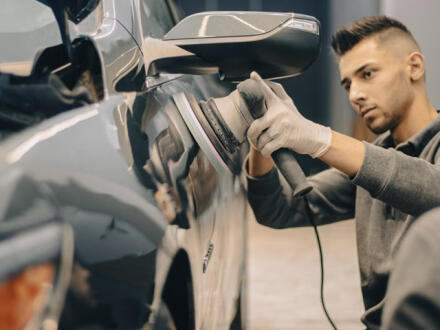
Collision repair training can lead to steady work, solid pay, and a skill set that stays useful. The U.S. Bureau of Labor Statistics lists $51,680 as the median annual pay for automotive body and related repairers. But tuition, tools, books, and certification fees can still hit hard. A basic starter tool set alone can run $800 to $2,500, depending on the program.
That is why Missouri collision repair scholarships matter. Students do not need to rely on one big award. In many cases, they can stack smaller scholarships, grants, employer help, and federal aid into a package that covers a large share of school costs.
This guide breaks down 10 practical Missouri collision repair scholarships and funding paths for high school seniors, first-year students, college students, and university students. It also covers Missouri Collision Repair Association Scholarships, national auto body awards, community college aid, FAFSA-based funding, and local community scholarships that can pair with trade-focused awards.
The goal is simple: help students find real money for school and avoid leaving dollars on the table. A student who wins three $1,000 awards and qualifies for a $3,000 grant is suddenly looking at $6,000 in support. For many technical programs, that can cover a big chunk of tuition, fees, or shop supplies.
1. Missouri Collision Repair Association Scholarships For Industry-Focused Students
Students who want the most direct route into the trade should start with Missouri Collision Repair Association Scholarships and other industry-backed awards. These scholarships usually favor applicants who can show a real commitment to auto body repair, refinishing, estimating, or collision technology.
That focus matters. A general local scholarship might award $500 to $1,500, while an industry group may also value shop experience, I-CAR interest, or a plan to work in Missouri after graduation. That makes a collision-focused application stronger than a generic one.
Students should look for these details in industry scholarship listings:
- Program match: collision repair, auto body, refinishing, welding, or damage analysis
- Proof of interest: shop class, part-time work, SkillsUSA, or teacher recommendations
- Career plan: technician, painter, estimator, production manager, or shop owner
- Deadlines: many trade awards close 2 to 4 months before classes begin
A strong example is a student who spent 180 hours in a high school auto body lab, completed two dent-repair projects, and wrote a short essay about wanting to reduce repair cycle time and improve vehicle safety. That application usually reads better than a vague "I like cars" statement.
Students who use scholarship databases often find niche Missouri awards faster because filters cut the noise. On Studentscholarships.org, students can sort opportunities by field and location instead of digging through hundreds of unrelated awards.
2. Missouri Collision Repair Scholarships For High School Students Starting Early
Missouri Collision Repair Scholarships for High School Students are often the easiest to miss. Seniors wait until spring, then run into deadlines that passed in January or February. Starting even 6 months earlier can make a huge difference.
High school students have more material than they think. A solid application can pull from attendance, shop projects, dual-credit classes, FFA or 4-H participation, volunteer work, and part-time jobs. A student with a 3.1 GPA, 95% attendance, and 120 community-service hours may look very competitive for local and technical awards.
Useful places to search early include:
- School counseling offices
- Career and technical education centers
- Area collision repair shops
- County community foundations
- Agricultural and youth leadership scholarship programs
Students in rural Missouri should not ignore broad local awards just because they are not auto-specific. A family active in agriculture or county youth programs may qualify for options like Missouri 4-H scholarships or Missouri Farm Bureau scholarships, then use that money toward collision repair training.
One practical strategy works well: apply for 10 scholarships worth $500 to $2,000 each instead of waiting on one large award. If a student wins only 3 out of 10, that can still produce $1,500 to $6,000. For many certificate programs, that is enough to cover the first term plus tools.
3. Missouri Collision Repair Scholarships For First-Year Students Entering Technical Programs
Missouri Collision Repair Scholarships for first-year students often target the moment when costs jump fast. Tuition starts, tool lists arrive, safety gear gets added, and transportation costs show up right away. First-year students can face $3,000 to $8,000 in total education costs before they earn their first shop paycheck.
That makes first-term funding especially valuable. Schools and donors like to support students who are just entering the trade because the money can prevent early dropouts.
First-year applicants should highlight three things:
- Why collision repair fits them
- How they will complete the program
- What job they want after training
Specific details help. A better essay says the student repaired a quarter panel on a family car, shadowed a technician for 24 hours, and wants to earn structural repair certifications. A weaker essay just says they enjoy working with their hands.
Students entering technical programs should also ask whether their school has foundation awards reserved for new enrollees. Some campus awards are small, often $750 or $1,000, but can cover books, boots, gloves, and goggles.
A smart backup plan is to pair trade funding with broader Missouri scholarships. For example, a first-year student who meets family or hardship criteria might also qualify for the Kids' Chance of Missouri scholarship, which can be important for students balancing education after a serious family workplace injury.
4. Missouri Collision Repair Scholarships For College Students Continuing Their Training
Missouri Collision Repair Scholarships for College students are often aimed at persistence. Donors want to know that a student started the program, showed up, and kept moving toward completion. That means continuing students can have an edge if they already logged good grades and strong shop performance.
A student who finished 28 credit hours, kept a 3.3 GPA, and had only 2 absences in lab has a powerful story. Shops and scholarship committees like proof that the student can handle pace, safety rules, and deadlines.
Continuing students should update applications with hard evidence such as:
- Credit hours completed
- GPA in technical courses
- Certifications earned or attempted
- Instructor feedback
- Before-and-after photos of repair projects
- Hours worked in a body shop
This is also a strong point to ask for references from instructors who have seen actual work quality. A paint instructor who writes that the student improved blend accuracy over 3 lab projects says much more than a generic character note.
Some students forget that non-automotive Missouri scholarships can still stack with trade aid. A student returning to school part time while working may fit awards like the Masonic Scholarship Fund of Missouri, depending on eligibility and school status.
The basic rule is simple: once a student has completed one term, the application should shift from promise to proof. Proof wins money.
5. Missouri Collision Repair Scholarships For University Students Pursuing Management Or Related Degrees
Not every collision repair career stays on the shop floor. Some students move into business management, operations, supply-chain work, insurance claims, engineering support, or vocational education. That is where Missouri Collision Repair Scholarships for University students can still make sense, especially if their degree connects to the repair industry.
A university student studying operations management, for example, may plan to run a multi-shop business with 12 technicians and improve parts flow, scheduling, and repair cycle times. That is still part of collision repair. It is just a different lane.
Good degree paths for this category include:
- Business administration
- Automotive management
- Industrial technology
- Supply chain management
- Finance or accounting for dealership groups
- Education for future technical instructors
Students should explain the link clearly. A strong application might say the goal is to manage DRP relationships, track gross profit, and reduce supplement delays by 15% through better estimating and parts planning. That kind of detail makes the degree feel relevant.
This section is also where broader technology scholarships may help. A student combining collision experience with infrastructure or technical study could review options like the Missouri Chapter APWA Technology Scholarship. It is not collision-specific, but it can fit students whose studies touch transportation systems, public works, or technical leadership.
The key is showing that the degree supports the collision repair field, not drifting away from it.
6. Automotive Technology Scholarships At Missouri Community Colleges And Technical Schools
Community colleges and technical schools are a major source of collision-repair funding. In Missouri, these schools often keep tuition lower than four-year programs, and many offer campus scholarships, payment plans, or tool assistance. A difference of even $90 per credit hour adds up fast across 30 credit hours.
For students comparing programs, the sticker price is only part of the picture. They should ask each school for a full cost sheet that includes:
- Tuition and fees
- Tool kit requirements
- PPE and uniforms
- Books and digital access codes
- Certification test fees
- Parking or transportation costs
A program that looks cheaper at first can end up costing $1,200 more once tools and lab fees are added.
Students should also ask whether the college has emergency completion grants. Some schools will step in with $250 to $1,000 if a student is close to dropping out over a balance, a tool purchase, or a certification fee.
For students who need continuing-education support, public-service or technical-adjacent aid can sometimes help. One example is the APWA continuing education scholarship, which may fit certain working students building their technical credentials.
And a practical note: students should compare completion rates, not just tuition. A program with better lab access and stronger placement can save a student one extra semester. Avoiding even 12 additional credit hours may save more money than winning a small scholarship.
7. National Collision Repair And Auto Body Scholarships Missouri Students Can Apply For
Missouri students should not stop at state-specific awards. National collision repair and auto body scholarships can expand the pool fast, especially for students in accredited technical programs. Applying outside Missouri may add 20 to 40 more opportunities to a student's list.
National programs often come from:
- Collision repair foundations
- Tool companies
- Parts suppliers
- Industry training groups
- Automotive aftermarket organizations
These scholarships may reward strong attendance, instructor recommendations, and clear career goals. Some also focus on underrepresented groups, veterans, or students already working in shops.
The big advantage is volume. A student who applies to 6 Missouri-based awards and 8 national awards gives himself or herself 14 shots instead of 6. Even with a modest 20% win rate, that could mean 2 or 3 awards.
Students should keep one master file with a resume, unofficial transcript, FAFSA confirmation, a 250-word essay, a 500-word essay, and 2 reference letters. That setup cuts application time from 90 minutes to about 20 minutes per scholarship after the first few are done.
Broad search platforms can help students find those national options in one place. That is useful for collision repair students whose best-fit scholarship may be listed under automotive technology, skilled trades, or technical education rather than "auto body" alone.
8. Workforce Development Grants, State Aid, And FAFSA-Based Funding Options
Scholarships are only one piece of the money puzzle. Workforce grants, state aid, and FAFSA-based funding often provide the largest dollars for technical students. In some cases, a grant package is worth more than 3 small scholarships combined.
Students should submit the FAFSA as early as possible because some aid is limited and first-come, first-served. Federal aid can include Pell Grants, work-study, and student loans. For lower-income students, Pell Grants can exceed $7,000, which can cover a large share of tuition at many technical programs.
Missouri schools may also offer campus-based aid, emergency grants, and need-based scholarships through financial aid offices. A school such as Missouri State financial aid outlines common aid categories students should review before they commit.
Workforce offices and local training initiatives can sometimes help with:
- Tuition support
- Transportation vouchers
- Tools and safety gear
- Certification exam fees
- Child-care assistance
That last point matters. A student-parent who receives $1,800 in child-care help may stay enrolled when they otherwise would have to quit.
Eligibility Requirements Students Should Check Before Applying
Before applying, students should confirm every rule. Missing one box can waste hours.
They should check:
- Residency: Missouri resident, county resident, or school-district resident
- Enrollment status: full time, half time, certificate, or degree-seeking
- GPA minimum: often 2.0, 2.5, or 3.0
- Program type: collision repair, automotive technology, welding, or business
- Income rules: FAFSA-based need thresholds
- Deadlines: some close 30 to 120 days before term start
A student who misses a FAFSA priority date by even 7 days can lose access to limited campus aid. That is painful, and it happens a lot.
9. Employer-Sponsored Tuition Help From Collision Repair Shops, Dealerships, And Apprenticeships
Some of the best funding never appears on scholarship lists. It comes from employers. Collision repair shops, MSOs, dealerships, and apprenticeship-style programs may pay part of tuition in exchange for work commitments, training progress, or post-graduation employment.
A simple arrangement might cover $2,000 per semester if the student works 15 to 20 hours per week and stays employed for 12 months after graduation. Other shops reimburse costs only after the student passes classes. Both models can work.
Students should ask local employers these direct questions:
- Do they pay tuition upfront or reimburse later?
- Do they help buy tools?
- Is there a minimum GPA, such as 2.5?
- Is there a work commitment after graduation?
- Will they pay for I-CAR or OEM training?
This path is especially useful for students who already have part-time shop access. A front-office helper, detailer, or parts runner can turn a $14-an-hour entry role into a funded career track.
Some students can also stack employer help with local scholarships. For example, students from trade, rural, or contractor-family backgrounds may find extra support through options like the Missouri LICA Scholarship.
The caution here is commitment. If the agreement requires 18 months of work after graduation, students should read every line. Free money tied to a bad fit can get expensive later.
10. Local Foundation And Community Scholarships That Can Stack With Collision Repair Awards
Local foundation and community scholarships are the quiet money. They may not mention collision repair at all, but they often stack nicely with trade awards. A student can combine $750 from a town foundation, $1,000 from a trade award, and $2,500 in grant aid without any conflict.
These scholarships often come from:
- Community foundations
- Service clubs
- Local chambers of commerce
- Women's groups
- County fair boards
- Employer family foundations
Students should search by county, town, high school, employer, faith group, and family background. Someone may qualify through agriculture, conservation, public service, or civic leadership. That is why broad Missouri listings matter. Examples include the Women Legislators of Missouri scholarship and the Missouri Conservation Agents Association scholarship, depending on fit.
A good local strategy is to apply for 8 to 12 smaller awards in the $500 to $2,000 range. Those often have fewer applicants than large national programs. In a town where only 35 students apply, the odds may be much better than a national scholarship with 2,000 applicants.
How To Build A Strong Application For Missouri Collision Repair Scholarships
A strong application is clear, specific, and easy to verify. Committees read a lot of weak essays. Specific details stand out.
Students should include:
- A sharp opening: state the program, school, and career goal in 2 sentences
- Proof of fit: hours in shop class, projects completed, GPA, attendance, or work experience
- One concrete story: fixing hail damage, assisting with prep work, or rebuilding a damaged panel
- A money plan: explain tuition, tools, and what gap remains, such as $3,480
- Clean formatting: no typos, no giant text blocks, no missed file names
The best essays sound real. A student describing the smell of fresh primer, the frustration of sanding a wave out of a fender, and the pride of matching paint on the second try feels believable. That kind of detail is hard to ignore.
Frequently Asked Questions about Missouri Collision Repair Scholarships
What types of scholarships are available for collision repair students in Missouri?
Missouri offers various scholarships including those from the Missouri Collision Repair Association, local foundations, community scholarships, employer-sponsored tuition help, and national collision repair awards. These scholarships may cover tuition, tools, safety gear, and certification fees.
How can high school students in Missouri find collision repair scholarships early?
High school students should start searching six months in advance via school counseling offices, career centers, local collision shops, and community foundations. Applying to multiple smaller scholarships increases chances of covering costs. Participating in FFA, 4-H, or shop classes strengthens applications, such as the Scholarship Application - Missouri 4-H Foundation Scholarships.
What should first-year students highlight in their collision repair scholarship applications?
First-year students should explain why collision repair suits them, their commitment to completing the program, and their career goals after graduation. Specific details like repair experience, job shadowing, and certification plans enhance applications. Also, they may qualify for scholarships like the Scholarship Application - Kids' Chance of Missouri Scholarship for hardship cases.
Can college students continuing collision repair training get scholarship support in Missouri?
Yes, continuing students with proven academic records, shop performance, certifications earned, and instructor recommendations can access scholarships aimed at persistence. They can also combine trade scholarships with broader options such as the Scholarship Application - Masonic Scholarship Fund of Missouri.
Are there scholarships in Missouri for collision repair students pursuing management or related university degrees?
Students moving into business management or supply chain roles in collision repair can apply for scholarships connecting their degree to the industry. Examples include programs like the Scholarship Application - Missouri Chapter APWA Technology Scholarship which supports technical leadership studies relevant to collision repair.
How can students combine collision repair scholarships with other funding sources effectively?
Students can stack multiple smaller scholarships, grants, employer tuition help, and FAFSA-based aid to cover large portions of their education costs. Applying broadly to state, local, national, and employer awards increases overall support, helping to offset expenses like tuition, tools, and certification fees.




