

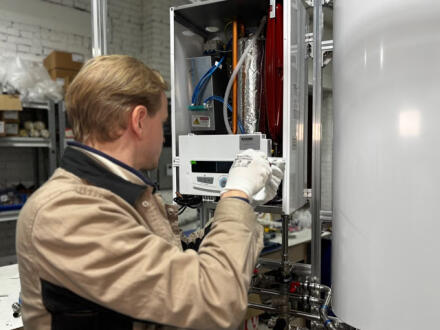
Paying for HVACR school in Nebraska can feel like trying to cool a shop with the bay door wide open. Tuition, tools, exam fees, gas, and books add up fast. A basic starter tool kit alone can cost $600 to $1,500, and the EPA Section 608 certification includes 4 credential types that students often prepare for while in school.
That's why Nebraska Refrigeration and Air Conditioning Mechanic Scholarships matter so much. They can shrink out-of-pocket costs, reduce work hours during school, and help students finish training faster. For a student in a one-year certificate program, stacking just three $1,000 awards can wipe out a big chunk of tuition or cover tools plus fees.
This guide focuses on the best scholarship and funding paths for high school seniors, first-year students, current college students, and university students in related technical programs. It also covers apprenticeships, employer tuition help, workforce grants, and local community awards that students often miss.
The goal is simple: show where Nebraska HVACR students should look first, what each option usually pays for, and how to apply without wasting weekends on dead-end searches. For students using a free match platform like StudentScholarships.org, that can mean finding opportunities in under 2 minutes per application instead of digging through dozens of school pages one by one.
1. Nebraska HVACR Association And Trade Group Scholarships To Check First
Trade groups should be the first stop for students hunting Nebraska Refrigeration and Air Conditioning Mechanic Association Scholarships. These awards are often less crowded than giant national programs, and they usually favor applicants who are already serious about the trade.
A strong trade-group search usually includes 3 targets:
- Nebraska HVACR associations
- Local contractor groups
- Supplier or distributor education funds
What makes these scholarships worth chasing
Trade organizations like to support the future labor pool. That means applicants who mention hands-on goals, safety training, or licensure plans often stand out more than students who write a vague "I like fixing things" essay.
A student can improve odds by showing:
- EPA 608 prep or completion
- OSHA-10 training
- Job-shadow hours, even just 16 to 24 hours
- Membership in SkillsUSA, FFA, or a school trades club
For Nebraska students, it also helps to track broader skilled-trades listings. The Nebraska Career Scholarships page is a smart place to compare state-connected funding with trade-specific awards.
One practical move: call 5 local HVACR contractors and ask whether they fund a scholarship, donate tools, or reimburse tuition after 90 days on the job. Small employers often skip flashy promotion, so students who ask directly sometimes find money that never shows up in big search engines.
2. Community College Scholarships For Nebraska Refrigeration And Air Conditioning Mechanic Students
Community colleges are often the strongest value play for Nebraska Refrigeration and Air Conditioning Mechanic Scholarships for College. Tuition is usually lower than a four-year route, and many schools bundle department awards, foundation money, and emergency grants.
A typical HVACR certificate runs about 30 to 45 credit hours. If tuition and fees land near $120 to $160 per credit hour, even a $1,500 scholarship can cover a noticeable piece of the bill.
Where students should look on campus
Students should check these buckets before classes start:
- Program-specific scholarships from industrial technology departments
- Foundation scholarships with one shared application
- Need-based campus grants
- Book or tool vouchers worth $250 to $800
UNO is not a community college, but its financial support and scholarships page shows how Nebraska institutions often centralize aid details in one place. Community colleges often do the same, just with smaller pages and tighter deadlines.
The best tactic is to ask one exact question: "Which scholarships can an HVACR student apply for with one application?" That single question can uncover 4 or more awards that never appear under the words "HVAC" or "refrigeration."
Students who already know they want a technical path should also compare state-linked listings with campus aid. That helps them avoid the common mistake of applying only for general freshman awards and missing trade money sitting in a department account.
3. University-Based Skilled Trades And Technical Program Scholarships In Nebraska
Some students enter HVACR through related university programs like construction management, industrial technology, facilities management, or engineering technology. That makes Nebraska Refrigeration and Air Conditioning Mechanic Scholarships for University relevant even when the degree title does not say HVACR.
University aid can be larger, but the pool is broader. A student may compete against 200 applicants for one college-level award instead of 25 applicants for a trade-specific scholarship.
Best fit for university-track students
These scholarships work best for students who want to move toward:
- Building automation
- Energy systems
- Mechanical systems support
- Project management in HVAC construction
Students from lower-income households should look at early-access options before enrollment. The Access College Early Scholarship can support dual-credit coursework, which may cut future tuition by 3 to 6 credit hours.
A smart application angle is to connect refrigeration and air conditioning work to big-campus needs. Every lab, dining hall, residence hall, and server room depends on climate control. That is not abstract. It is daily infrastructure.
A strong essay might say a student wants to move from service work into energy efficiency planning for hospitals or school districts. That shows a path with scope, not just a short-term job goal.
4. Nebraska Refrigeration And Air Conditioning Mechanic Scholarships For High School Students
This is where many future technicians can get an early edge. Nebraska Refrigeration and Air Conditioning Mechanic Scholarships for High School Students often reward attendance, work ethic, and career direction before a student even enrolls in college.
High school seniors should aim to submit 8 to 12 applications. That number is big enough to create real odds, but still manageable over 4 to 6 weeks.
Good scholarship categories for seniors
- Local civic clubs
- Career and technical education awards
- State foundation scholarships
- Community-based need awards
Several Nebraska options can pair well with HVACR plans. A senior from an active club or service background may fit the Sowers Club scholarship. Students involved in agriculture, mechanics, or extension projects may also line up with Nebraska 4-H scholarships.
The best applications use concrete proof. For example, a student who spent 72 hours helping a family friend replace ductwork, clean condenser coils, and label breakers has a stronger story than someone who just says they enjoy working with tools.
Counselors can help, but students should not wait for them. Many local awards close earlier than expected, and missing one $750 award hurts just as much as missing a $2,500 award when tool costs are due in the first month.
5. Nebraska Refrigeration And Air Conditioning Mechanic Scholarships For First-Year Students
First-year students sit in a sweet spot. They have already shown intent by enrolling, but they are still early enough to qualify for "new student" money. That makes Nebraska Refrigeration and Air Conditioning Mechanic Scholarships for first-year students especially useful.
A first-year HVACR student can face 5 common startup costs at once:
- Tuition
- Fees
- Tools
- Boots and workwear
- Certification materials
How first-year applicants can stand out
The first semester gives students fresh proof to use in applications. Even 12 completed credit hours, one instructor recommendation, and a 3.2 GPA can turn a weak high school-only application into a stronger college application.
Students should also search outside HVAC labels. The Buffett Scholarships page is a good reminder that broad Nebraska awards can still support trade students if they meet the program rules.
A practical approach is to build one "scholarship packet" with:
- A 350-word personal statement
- A resume with work and volunteer hours
- Unofficial transcript
- One photo of hands-on class work if allowed
That packet cuts repeat effort. Instead of spending 90 minutes on each application, students can trim the time to 15 to 20 minutes by reusing core material and tweaking only the final paragraph.
6. Nebraska Refrigeration And Air Conditioning Mechanic Scholarships For College Students Already Enrolled
Students already in school often miss the easiest money. Once classes start, they get busy with labs, work shifts, and commuting. Then renewal and mid-program scholarships slide by.
For Nebraska Refrigeration and Air Conditioning Mechanic Scholarships for College, enrolled students should focus on awards tied to persistence. Schools and donors like applicants who already proved they can show up, pass classes, and stick with a hands-on program.
Best mid-program funding angles
- Departmental renewals after first term grades post
- Foundation emergency grants for tool loss, rent gaps, or transportation
- Merit awards for GPA, attendance, or instructor nomination
- Transfer-path scholarships for students moving into related bachelor's programs
Students supporting family after a workplace injury in the household may qualify for Kids' Chance of Nebraska. That kind of funding can keep a student in class when a $400 repair bill or a reduced paycheck threatens the semester.
A strong move is to ask the department chair for 3 names: the financial aid contact, the foundation contact, and the faculty member who knows small industry awards. Those conversations often uncover money that is not listed on the main student portal.
And if a student's GPA dipped once, that is not the end. Many scholarships accept a short explanation plus evidence of rebound, such as raising a GPA from 2.4 to 3.1 in one term.
7. Nebraska Refrigeration And Air Conditioning Mechanic Scholarships For University Students In Related Programs
Not every future HVACR professional trains in a pure refrigeration program. Some start in drafting, engineering technology, facilities management, or agricultural systems. That is why Nebraska Refrigeration and Air Conditioning Mechanic Scholarships for University can still fit students in related majors.
The key is to connect coursework to HVACR outcomes. A student studying controls, thermodynamics, power systems, or building operations can make a strong case for work in refrigeration and air conditioning.
Strong related-program examples
- Building controls technician
- Energy analyst
- Facilities engineer support role
- Mechanical systems estimator
Students from underrepresented backgrounds may find extra support through the Urban League of Nebraska scholarships, depending on eligibility. That can be a real help when upper-level courses add lab fees, software costs, or extra commuting.
One useful essay frame is simple: "This program teaches the controls and systems knowledge behind the HVACR equipment technicians install and maintain." That sentence links the degree to the trade in plain language.
Concrete examples matter here. A student who completed a building automation project with 6 sensors, 2 thermostatic control loops, and one fault-detection report will sound far more credible than a student who only says they like mechanical systems.
8. Apprenticeship-Linked Scholarships And Employer-Sponsored Tuition Support
For many students, the fastest route into paid HVACR work is the apprenticeship lane. This path mixes school with paid job hours, which can cut borrowing hard.
A registered skilled-trades apprenticeship often includes about 8,000 on-the-job hours plus classroom instruction. That is a big reason employer support matters. Even $1,200 per term in reimbursement can add up quickly over a multi-year program.
What employer support can look like
| Support type | Typical amount | Why it helps |
|---|---|---|
| Tuition reimbursement | $500 to $2,500 | Lowers cash needed each term |
| Tool allowance | $300 to $1,000 | Covers gauges, meters, and hand tools |
| Paid exam fees | 1 to 3 exams | Removes out-of-pocket certification costs |
| Wage increase after milestones | $1 to $3 per hour | Rewards progress and retention |
Students should ask employers 4 exact questions:
- Is tuition reimbursed before or after grades post?
- Is there a minimum grade, such as C or B?
- Is there a stay-on requirement, like 6 to 12 months?
- Are books, boots, or tools included?
A good comparison point is the Taylor Refrigeration scholarship, which shows how employer- or industry-connected refrigeration funding can target this trade directly.
The best time to ask is before accepting the job offer, not after the first busy cooling season when everyone forgets the conversation.
9. Workforce Development Grants And State Funding Options For HVACR Training
State and workforce money can do what private scholarships cannot: cover large chunks of training cost fast. For Nebraska HVACR students, this path matters most for short certificates, retraining, and adult learners switching careers.
These programs often focus on labor demand. HVACR fits well because service calls do not disappear. Homes, schools, supermarkets, and hospitals all need climate control and refrigeration support.
Funding paths worth checking
- Workforce Innovation and Opportunity Act support
- State career scholarship programs
- Community college workforce grants
- Employer partnership funds
A student should treat this like a numbers game. If tuition is $5,400, a state grant covers $2,500, and a local scholarship adds $1,000, the remaining balance drops to $1,900 before books and tools.
These programs may ask for specific paperwork, such as income verification, residency proof, or a training plan. Missing one document can delay aid by 2 to 4 weeks.
Students using a broad search hub can sort options faster through the site's scholarship database, then compare those listings with school financial aid offices and local workforce centers. That saves time and catches grants that are not labeled "HVAC."
This is also the section where deadlines matter most. Some workforce funds run until allocations are gone, which means applying in the first wave can matter more than writing a perfect essay.
10. National Skilled Trades Scholarships Nebraska Students Can Use For HVACR Education
Students should not stop at Nebraska-only awards. National skilled-trades scholarships can be used by Nebraska residents enrolled in approved programs, and some of them have smaller applicant pools than giant general scholarships.
The sweet spot is usually awards between $1,000 and $5,000. Those amounts are large enough to matter, but not so huge that the competition turns into a lottery.
What national programs often require
- Enrollment in an accredited or recognized trade program
- A short essay of 250 to 600 words
- One or two references
- Proof of career direction in the trades
Students in HVACR should especially look for scholarships connected to:
- Skilled trades foundations
- Contractor associations
- Refrigeration manufacturers
- Tool companies
A strong application includes trade-specific language. Saying a student wants to troubleshoot low-pressure faults, recover refrigerant correctly, and work toward commercial service is better than saying they enjoy technical work.
One practical example: a student applying to 6 national awards at an average of 20 minutes each spends about 2 hours total if the core essay packet is ready. That is a strong trade-off for a possible $6,000 to $12,000 return.
These scholarships are also useful backups when a local award closes early or a campus fund runs dry.
11. Local Foundation And Community Scholarships That Can Help Cover HVACR Costs
Local money is often the most overlooked money. Community foundations, unions, service clubs, county funds, and donor families may offer smaller awards, but they stack well.
Four local awards at $750 each equal $3,000. That can cover a term of tuition, tools, and a chunk of transportation costs.
Where local awards usually hide
| Source | Typical award | Common requirement |
|---|---|---|
| Community foundations | $500 to $2,000 | Local residency |
| Civic clubs | $500 to $1,500 | Service or leadership |
| Employer memorial funds | $1,000 to $2,500 | Trade or career interest |
| County education funds | $250 to $1,000 | High school in district |
Students should ask 3 local places directly: their high school counseling office, a community foundation, and the college foundation office. That short list alone can surface several awards that never appear in national results.
Applicants with unusual backgrounds should look for fit-based awards, not just grade-based awards. For example, a student active in an auto or fabrication scene may connect with options like the Nebraska Rod and Custom scholarship, even if the award is not HVAC-specific.
The local advantage is simple. A donor choosing among 18 hometown applicants is a much more favorable contest than a national scholarship pulling 1,800 entries.
12. Fast-Track Scholarship Search Strategies For Finding Nebraska HVACR Awards
Students do not need a perfect system. They need a fast one they will actually use. The best scholarship search plan for HVACR students is short, repeatable, and built around deadlines.
A weekly search block of 45 minutes is enough if the student works from a list instead of starting from zero every time.
A fast search system that works
- Build a base packet. Include transcript, resume, one essay, and one reference list.
- Use exact search phrases. Try "Nebraska Refrigeration and Air Conditioning Mechanic Scholarships," "HVAC scholarship Nebraska," and "trade scholarships Nebraska."
- Track every application. A simple sheet with 6 columns works: award, amount, deadline, status, essay, and reference.
- Apply in batches. Finish 3 applications in one sitting instead of one today and one next week.
- Follow up once. If a requirement is unclear, one email can prevent a rejected application.
Students should also use broad but relevant categories. Searches for skilled trades, industrial technology, workforce education, and mechanical programs often reveal awards missed by strict HVAC wording.
The real goal is consistency. A student who sends 2 applications per week for 8 weeks completes 16 applications. Even with a modest 12% win rate, that can mean 2 awards, which may be enough to cover books, tools, or certification fees.
This is where StudentScholarships.org can save time. Personalized matching and short applications help students move faster without turning scholarship hunting into a second job.
Frequently Asked Questions about Nebraska Refrigeration and Air Conditioning Mechanic Scholarships
What types of scholarships are available specifically for Nebraska HVACR students?
Nebraska HVACR students can apply for trade group scholarships, community college awards, university programs related to HVACR, apprenticeship-linked scholarships, workforce grants, and local foundation or community scholarships.
How can high school students in Nebraska access scholarships for Refrigeration and Air Conditioning Mechanic programs?
High school seniors should apply broadly to local civic clubs, career and technical education awards, state foundation scholarships, and community-based need awards. For example, the Sowers Club and Nebraska 4-H Foundation offer relevant scholarships.
What strategies improve chances of winning Nebraska Refrigeration and Air Conditioning Mechanic scholarships?
Students should highlight hands-on goals, EPA Section 608 certification prep, OSHA-10 training, memberships in clubs like SkillsUSA, and include detailed experiences in their applications. Building a reusable application packet also saves time while applying to multiple awards.
Are there scholarships for first-year students entering HVACR training in Nebraska?
Yes, many scholarships target first-year HVACR students, helping cover tuition, tools, certifications, and workwear costs. Students can leverage high school achievements, current GPA, and instructor recommendations to strengthen applications.
Can Nebraska university students in related technical programs qualify for Refrigeration and Air Conditioning scholarships?
Absolutely. Students in construction management, industrial technology, or engineering technology can connect their coursework to HVACR outcomes and apply for university-affiliated scholarships like the Urban League of Nebraska Scholarships.
How do apprenticeships and employer tuition support work for Nebraska HVACR students?
Registered apprenticeships combine on-the-job training with classroom learning. Employers may offer tuition reimbursement, tool allowances, paid exam fees, and wage increases after milestones, which reduce out-of-pocket expenses for students.




