

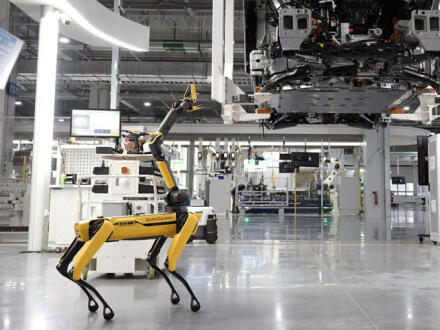
Students who love robots often spend money on motors, sensors, travel, and competition fees long before tuition bills show up. That makes Idaho robotics scholarships especially valuable. They can reduce college costs, reward technical skill, and turn a hobby into real education funding.
The good news is that robotics money does not come from one place. It can come from state scholarships, engineering departments, local employers, utility companies, community foundations, and robotics competitions. A student who only searches one big scholarship database can miss hundreds or even thousands of dollars.
This guide breaks the search into 10 practical moves. It covers Idaho Robotics Scholarships for High School Students, options for first-year applicants, department awards, university funding, and competition-based opportunities like FIRST and VEX. It also shows how students can build stronger applications by proving results with numbers, leadership, and project impact.
A student does not need a national title or a perfect GPA to start. One applicant might win a $500 local award from a hometown employer. Another might combine a state scholarship, a university STEM grant, and a departmental award to cut costs by several thousand dollars. That stacking strategy is often what makes college feel possible.
For students and families trying to pay less, the smartest move is simple: search wider, apply earlier, and document everything.
1. Start With Idaho Robotics Scholarships For High School Students
Students should begin the search while they are still in high school. That is when the widest pool of Idaho Robotics Scholarships for High School Students is usually open, and it gives them time to build a stronger record before deadlines hit.
A smart starting point is to list every robotics-related activity from grades 9 through 12. That includes:
- FIRST or VEX teams
- coding clubs
- STEM camps
- science fairs
- maker projects
- volunteer mentoring
Specific proof matters. A student who writes, "built a line-following robot that cut lap time from 18.4 seconds to 12.9 seconds," sounds far stronger than someone who writes, "helped with robotics."
Statewide scholarships can also support robotics students even when the award is not labeled "robotics." Programs such as the Idaho Opportunity aid can help students planning to study engineering, computer science, or related fields. Students in college-access programs may also fit the GEAR UP support path.
The U.S. Bureau of Labor Statistics projects much faster than average growth for several computing and engineering roles, which helps explain why STEM-focused scholarship committees pay attention to early technical work. High school is where that story starts.
Students who wait until senior spring often rush. Students who start in junior fall can build a clean resume, ask teachers early, and submit better applications.
2. Target Idaho Robotics Scholarships For First-Year Students Early
Many students look for scholarships after they enroll. That is a mistake. Idaho Robotics Scholarships for first-year students often require action months before move-in day.
First-year applicants should build a short calendar with three buckets:
- admission deadlines
- general scholarship deadlines
- departmental scholarship deadlines
That simple split prevents missed money. A student can win admission to a school and still miss its best aid by turning in forms late.
State and leadership-focused programs can sit beside robotics applications. The Governor's Cup award is one example Idaho students may review if their goals and eligibility line up. Broader identity-based awards, such as the Community Council scholarship, can also pair well with STEM applications.
A strong first-year strategy includes one number-based brag sheet. For example:
- raised team sponsorship from $600 to $2,400
- mentored 14 middle school students
- improved autonomous accuracy from 61% to 84%
Those details help reviewers picture impact fast.
The National Center for Education Statistics reports that grants and scholarships make up a major share of student aid for undergraduates. That matters because a first-year student who applies early can sometimes combine merit aid, state support, and STEM-specific awards instead of relying more heavily on loans.
3. Look For Idaho Robotics Scholarships For College Through STEM Departments
Some of the best Idaho Robotics Scholarships for College are hidden in plain sight: inside academic departments. Engineering, computer science, electrical engineering, and mechatronics programs often control their own scholarship funds.
Students should not assume the central financial aid office manages everything. A mechanical engineering department may offer project-based aid. A computer science program may fund students who show coding strength, research interest, or team leadership.
A useful tactic is to email one short message to each relevant department. It should ask:
- whether there are department-only scholarships
- whether current students must submit a separate form
- whether robotics projects can count as research or design experience
At larger universities, those smaller pools can mean less competition. If 900 students apply to a campus-wide scholarship and 37 apply to a department award, the math looks very different.
Students applying to Boise State can review the school's financial aid options when planning how scholarships, grants, loans, and work-study may fit together. That helps robotics students build a full funding picture instead of chasing one award at a time.
A student who spent 220 hours building an autonomous warehouse arm should mention the department fit directly. Robotics is not just a club activity. For the right department, it is proof that the student already does college-level technical work.
4. Explore Idaho Robotics Scholarships For University Students At Four-Year Schools
University students should keep searching after freshman year. Idaho Robotics Scholarships for University applicants often open up once a student has a college GPA, faculty references, and project work from actual courses.
This is where four-year schools can become more generous. A student who earns a 3.4 GPA, joins a lab, and helps a capstone team may suddenly qualify for awards that were not available as a high school senior.
Good places to look include:
- college of engineering scholarship pages
- honors program awards
- undergraduate research offices
- student project funds
- dean's office emergency or retention grants
Idaho State University students can compare scholarships with grants, loans, and work-study through its aid office resources. That matters because one $1,500 scholarship can reduce borrowing dollar for dollar.
Students should also ask professors about lab-connected funding. A faculty member may know about a $750 design scholarship, a paid undergraduate assistant role, or a donor fund for students building hardware systems.
Concrete experience wins attention. For example, "designed a PID controller that reduced overshoot by 28% in a small robotic arm" is stronger than "worked on controls." Four-year schools want evidence that the student can turn theory into results.
5. Check Idaho Robotics Association Scholarships And Regional Robotics Programs
Students searching for Idaho Robotics Association Scholarships should widen the map beyond colleges. Regional robotics groups, nonprofit STEM networks, and event organizers sometimes offer travel grants, participation support, or scholarship awards tied to student involvement.
Even when an organization does not advertise a formal scholarship, it may know which partners do. That is why students should contact regional robotics leaders directly and ask clear questions.
A short message can ask:
- Are there student scholarships linked to robotics events?
- Do local sponsors fund seniors from Idaho teams?
- Are mentors aware of donor-backed STEM awards?
That direct outreach works because robotics communities are small. People remember students who volunteered at events, helped younger teams, or fixed broken drivetrains at 7:15 a.m. in a loud gym.
One strong example is a student who spent 3 Saturdays teaching block coding to 26 middle school students at a local workshop. That kind of service turns a technical hobby into community impact, and scholarship reviewers notice it.
Students should also ask coaches about sponsor contacts. Regional companies that support tournaments sometimes fund one-off awards that never appear in large scholarship searches. Those opportunities may be worth $500, $1,000, or a set amount for tools, books, or tuition. Small amounts still matter. Four awards of $750 cut $3,000 from a bill.
6. Use FIRST, VEX, And Competition-Based Robotics Awards To Expand Your Options
Competition programs are one of the smartest ways to expand a scholarship search. FIRST, VEX, and similar groups connect students to awards from colleges, companies, and partner organizations.
This matters because a robotics student in Idaho is not limited to Idaho-only funding. Competition participation can open national scholarship paths tied to team membership, leadership, and technical skill.
Students should search for awards linked to:
- FIRST team participation
- Dean's List or leadership recognition
- VEX design and excellence awards
- STEM partner colleges
- mentor recommendations
For students involved in FIRST, pages such as the Georgia Tech FIRST award show how one competition ecosystem can connect to college funding beyond state lines.
A strong competition-based application does not need a championship banner. A student might write about rebuilding a gearbox in 43 minutes during an event, training 9 new members on CAD, or raising autonomous scoring from 14 points to 22 points. Those numbers show growth and problem-solving.
FIRST has served millions of young people worldwide through its programs, and that scale gives its awards real reach. Students who only search "Idaho robotics scholarships" may miss linked scholarships at engineering schools across the country. Competition history can be the bridge.
7. Apply For Engineering, Computer Science, And Mechatronics Scholarships That Fit Robotics Students
A robotics student should not search only for scholarships with the word "robotics" in the title. Many excellent awards sit under engineering, computer science, manufacturing, electronics, automation, or mechatronics.
That broader search usually multiplies options fast. Robotics is already cross-disciplinary, so a student may qualify through several academic lanes at once.
Good keyword combinations include:
- electrical engineering scholarships in Idaho
- computer science scholarships for Idaho students
- mechatronics scholarships
- automation scholarships
- manufacturing technology scholarships
Employer-backed awards can be especially useful. A utility, contractor, or technical company may support students entering fields that overlap with robotics hardware and control systems. For example, the Idaho Power scholarship may fit students whose interests line up with engineering and applied technical work.
Students should also look at broader academic fit. A student who built sensor arrays, wrote Python control code, and designed a gripper in CAD may be competitive in at least 3 departments.
A practical example: one application can often be adapted into several versions by changing the lead paragraph and course goals. That can turn 1 polished essay into 5 targeted submissions in one weekend, which is a much better return than writing 5 weak essays from scratch.
8. Focus On Local Idaho Scholarships From Community Foundations, Employers, And Utilities
Local money is often easier to win than national money. Fewer applicants know about it, and reviewers may care more about a student's local service record than a flashy national resume.
That is why students should search their county, city, high school, electric cooperative, chamber of commerce, hospital foundation, and family-employer networks. A robotics student who mentored younger kids in a small town can stand out quickly in a local pool.
Useful local sources include:
- community foundations
- utility companies
- credit unions and banks
- local manufacturers
- rotary clubs and civic groups
- farm and industry organizations
Students should also think beyond obvious STEM sponsors. A donor may support rural leadership, work ethic, first-generation college plans, or service. Those themes can still fit a robotics student well.
Another local angle is activity overlap. A student active in both STEM and agriculture youth programs might fit the Idaho 4-H scholarship. Students with community service records may also align with awards like the Pointe Pest Control scholarship.
A local scholarship worth $800 may not sound huge at first. But if it covers books, lab fees, and 2 months of groceries, it changes the semester in a very real way.
9. Build A Strong Robotics Scholarship Application With Projects, Leadership, And Measurable Impact
A strong scholarship application tells a simple story: what the student built, why it mattered, and what changed because of it. Reviewers read fast, so numbers and clear examples help them remember an applicant.
The best robotics applications usually include 3 parts.
Show the project
Describe the machine, code, or system in plain words. For example: "They designed a pill-sorting prototype using color sensors and a servo gate that sorted 47 objects per minute with 92% accuracy."
Show leadership
Leadership is not just a title. It can mean:
- training 11 new members
- organizing tool inventory
- writing safety checklists
- planning outreach events
Show impact
Impact turns activity into value. Good measures include money raised, students mentored, error rates improved, time saved, or performance gains.
A weak line says, "participated in robotics club." A strong line says, "captained a 15-student team, secured $3,200 in sponsorships, and led outreach sessions for 64 elementary students."
Students using Studentscholarships.org can benefit from a simpler search process and quick applications, which is helpful when they are juggling coursework, lab time, and essay deadlines. The easier the tracking system, the more likely they are to actually submit solid applications instead of leaving drafts half-finished.
10. Avoid Missing Money By Tracking Deadlines, Stacking Awards, And Reapplying Each Year
Students miss real money for boring reasons. They forget a deadline. They assume an award is one-time only. Or they win one scholarship and stop searching.
The better approach is to treat scholarships like a pipeline, not a lottery ticket. Students should keep one spreadsheet with these columns:
- scholarship name
- amount
- deadline
- essay needed
- recommendation needed
- status
- renewal rules
That file can save hours and stop last-minute panic.
Stacking matters too. A student might combine a $2,000 state scholarship, a $1,000 department award, a $750 local foundation scholarship, and a $500 employer scholarship. That is $4,250 total, which can cover a large share of direct costs at some public schools.
Reapplying each year is another big one. Some students assume scholarships are only for seniors or incoming freshmen. Not true. Sophomores, juniors, and seniors often have new advantages: GPA, faculty support, research experience, and internships.
How To Highlight Your Robotics Experience If You Lack Formal Competition Awards
A student does not need trophies to sound impressive. They can highlight:
- self-built projects at home
- Arduino or Raspberry Pi systems
- CAD work and 3D printing
- repair work on team hardware
- tutoring younger students in coding
Specifics win. "Built an automated plant-watering rig with 3 moisture sensors and reduced water waste by 31%" is memorable. So is "spent 86 hours teaching Python basics to 12 middle schoolers."
What To Ask Financial Aid Offices About Departmental And University Robotics Funding
Students should ask direct questions instead of waiting for generic answers. Good ones include:
- Are there engineering or CS awards that need separate applications?
- Do robotics clubs connect students to donor scholarships?
- Can paid research count as aid planning?
- Are there renewable awards after first year?
- Which deadlines are easiest to miss?
Those questions often uncover money that is not obvious on a public webpage. One ten-minute email can be worth $1,500.
Idaho Robotics Scholarships: Frequently Asked Questions
What are Idaho robotics scholarships and who can apply for them?
Idaho robotics scholarships are financial awards designed to support students involved in robotics-related activities, from high school through university. Both high school students and college attendees studying engineering, computer science, or related fields can apply by demonstrating technical skill, leadership, and project impact.
How can high school students start applying for Idaho robotics scholarships?
High school students should begin early by documenting their robotics activities such as FIRST or VEX teams, coding clubs, or STEM camps. Applying before senior year and including measurable results and leadership in applications increases chances of receiving scholarships.
Can robotics students combine multiple scholarships to cover college costs in Idaho?
Yes, stacking scholarships is a common strategy. For example, combining state aid like the Idaho Opportunity Scholarships, departmental awards, and local employer scholarships can significantly reduce tuition and related expenses.
Are there specific scholarships for first-year college students interested in robotics in Idaho?
Yes, scholarships for first-year students often have early deadlines separate from admission. Applicants should track admission, general, and departmental scholarship deadlines to maximize funding opportunities.
Do Idaho universities offer robotics scholarships through their engineering or computer science departments?
Many Idaho universities have departmental scholarships for students in engineering, computer science, and mechatronics programs. Applicants can contact departments directly to inquire about available scholarships and application procedures.
How can involvement in robotics competitions like FIRST or VEX expand scholarship opportunities?
Participation in competitions such as FIRST and VEX links students to awards from colleges and companies nationwide, beyond Idaho-only funding. Leadership, technical skill, and team contributions in these competitions enhance scholarship applications.




