

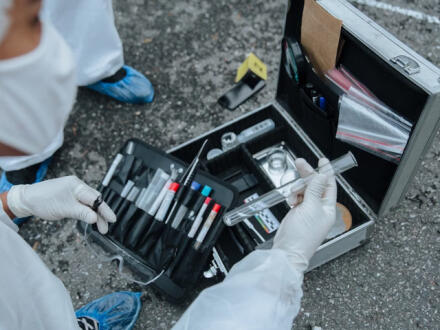
Students looking for Michigan forensic science scholarships usually hit the same wall fast: the awards are scattered across association pages, college aid offices, STEM funds, and local foundation databases. The money exists, but it rarely sits in one neat list.
That matters because college costs are still steep. The College Board reports average tuition and fees of $11,610 at public four-year in-state schools and $30,780 at public four-year out-of-state schools. Add lab fees, commuting, housing, and textbooks, and a forensic science path can cost far more than students first expect.
The good news is that students in Michigan can search smarter. They can look beyond scholarships labeled "forensic science" and target related awards in criminal justice, biology, chemistry, STEM, public service, and lab research. That opens more doors for high school seniors, first-year students, transfer students, and current university majors.
This guide breaks down 10 practical places to look. It covers Michigan Forensic Science Scholarships for High School Students, options for community college and university learners, state aid programs, and national awards that still fit students studying evidence analysis, toxicology, DNA, or crime lab work. Each section includes specific examples, where to search, and what students can do next so they waste less time and find more funding.
1. Michigan Forensic Science Association Scholarships And Related Professional Awards
Professional associations are one of the best starting points for Michigan Forensic Science Association Scholarships because they already serve the people working in crime labs, medical examiner offices, and evidence units. That means their awards often line up with real forensic careers rather than broad college categories.
Students should not stop at one association search. A forensic science student may qualify through organizations tied to:
- Crime laboratory leadership
- Trace evidence or toxicology
- Death investigation
- Law enforcement science support
- Regional forensic networks
One practical example is the ASCLD scholarship program, which fits students pursuing laboratory and forensic fields. Awards like this can be especially helpful for juniors, seniors, and graduate-track students who already have coursework in chemistry, biology, or criminalistics.
Students should also watch association requirements closely. A scholarship may ask for a 3.0 GPA, proof of forensic interest, one faculty recommendation, and a short essay about lab goals. That sounds simple, but missing one transcript upload can knock out an otherwise strong applicant.
A smart tactic is to build a spreadsheet with deadline, award amount, GPA minimum, major requirement, and essay prompt. Students who track even 12 scholarship opportunities this way usually write fewer duplicate essays and submit cleaner applications.
2. Michigan Forensic Science Scholarships For University Students Through Campus Aid Offices
For students already enrolled at a four-year school, campus aid offices are often the fastest route to Michigan Forensic Science Scholarships for University learners. Many colleges do not advertise every award on one public page. Some keep college-specific, donor-funded, or department-managed funds inside internal portals.
That matters because a university may hold scholarships aimed at students in biology, chemistry, criminal justice, public health, or pre-law enforcement science. A forensic science student can fit more than one of those buckets.
A good campus search usually includes:
- The main financial aid office
- The department chair
- The chemistry or biology advising office
- Career services
- Undergraduate research offices
Students at research-heavy campuses should also scan awards tied to STEM partnerships. For example, engineering-adjacent funds can still help students working in instrumentation or materials analysis, such as the University of Michigan General Motors scholarship.
At some universities, one donor fund may cover $1,000 to $5,000 for a single semester. And because applicant pools are smaller than national contests, the odds can improve.
How To Find Departmental And Lab-Specific Awards
The best hidden money often sits inside departments, not on the front page. A forensic science student should email the program coordinator and ask one plain question: "Are there departmental, lab, or research awards for students in evidence, biology, or chemistry tracks?"
That question works because lab-specific awards can be narrowly written. One may support students doing microscopy. Another may favor DNA work. A third may fund unpaid lab hours or conference travel.
Students should ask for these exact items:
- A list of internal scholarships
- Funding for undergraduate research
- Paid lab assistant openings
- Travel support for poster presentations
- Awards that reopen each term
Even a small award matters. A $1,250 lab stipend can cover gloves, software, parking permits, and two used textbooks.
3. Michigan Forensic Science Scholarships For College Students At Community Colleges And Transfer Pathways
Community college students often assume scholarships will get bigger only after transfer. That is not always true. Michigan Forensic Science Scholarships for College students can begin at the two-year level, especially for students planning to move into biology, chemistry, criminal justice, or forensic tracks later.
Michigan community colleges and transfer offices often manage awards for:
- First-generation students
- STEM majors
- Students with financial need
- Local county residents
- Transfer-bound students with strong grades
This route matters because community college students can cut costs sharply before moving to a university. The National Center for Education Statistics reports average tuition and required fees at public two-year schools at about $3,990, which is far below the average at many four-year campuses.
Students should ask advisors whether transfer agreements include merit awards after they complete 24 to 60 credits. Some universities give automatic or semi-automatic transfer money based on GPA bands such as 3.25, 3.5, or 3.75.
A good transfer student should keep a clean record in core classes. Forensic programs care about grades in:
- General chemistry
- Organic chemistry
- Biology
- Statistics
- Criminal justice foundations
A student who earns a 3.6 GPA in 30 credits at a community college may look stronger than a student with mixed grades after a rocky first year at a university. That makes transfer pathways a real scholarship strategy, not a backup plan.
4. Michigan Forensic Science Scholarships For High School Students Planning Ahead
The search for Michigan Forensic Science Scholarships for High School Students should start before senior spring. Waiting until admission letters arrive shrinks the options. Many scholarships open months earlier, and some require test scores, recommendation letters, or proof of STEM activities.
High school students interested in forensic science usually qualify through broader categories first. Those include:
- Science scholarships
- Medical career scholarships
- STEM awards for women
- Academic merit programs
- Community service scholarships
For example, a student interested in pathology or forensic biology might fit the Michigan American Legion Auxiliary medical career scholarship. A student focused on STEM access may also find value in the Michigan Council of Women in Technology scholarships.
High school applicants should also build a simple activity list with exact numbers. "Science Club member" is weak. "Treasurer of Science Club for 2 semesters, organized 3 lab demos, and volunteered 18 hours at a county STEM night" is better.
That kind of detail helps judges picture the student as a real future forensic professional, not just another applicant saying they like crime shows.
What High School Applicants Usually Need To Compete
Most strong applicants bring the same core pieces, even when the scholarship title changes. They usually need:
- A transcript with a solid GPA, often 3.0 or higher
- One or two recommendation letters
- An essay with a clear career plan
- Activity records with dates and hours
- Proof of college admission or intended enrollment
The best essays mention an actual path, such as DNA analysis, forensic toxicology, digital forensics, or crime scene processing. Specific plans beat vague interest every time.
5. Michigan Forensic Science Scholarships For First-Year Students With Strong Academics
First-year students can miss out on money because they think scholarship season ends once they enroll. It does not. Michigan Forensic Science Scholarships for first-year students often appear after the first semester, when colleges can judge real grades instead of only high school records.
This creates an opening for students who adjust well to college science classes. A freshman who earns a 3.7 GPA across 15 credits with A-range work in chemistry and biology may suddenly become competitive for merit aid, honors funds, and research awards.
The best first-year search plan includes three tracks:
- Renewing admission-based scholarships
- Applying for sophomore-entry departmental awards
- Targeting outside scholarships that accept current college students
Students should not ignore broad merit scholarships with Michigan roots. The Joseph B. Olivieri Michigan scholarship is one example of a state-linked opportunity that may fit students with strong academic standing.
Freshmen should also tighten their academic profile fast. That means using office hours, tutoring, and study groups before the first exam goes badly. In lab-heavy majors, one rough semester can drag down GPA and reduce scholarship chances for the next cycle.
A good rule is simple: by midterm, students should know whether they are on pace for at least B-plus level work in their core science courses. If not, they need help right away.
6. Michigan Need-Based Aid And State Programs That Can Lower Forensic Science Costs
Some of the best help is not labeled forensic science at all. It is state aid, need-based grants, and Michigan scholarship programs that reduce the total bill before students even stack private awards on top.
The biggest win here is to complete the FAFSA early and watch state deadlines. A student can lose thousands simply by filing late or skipping a verification request.
Michigan students should review options such as the Michigan Achievement Scholarship and the Michigan Competitive Scholarship. These are not forensic-only awards, but they can lower tuition enough to make a forensic science path realistic.
The Michigan Department of Education also serves as an official state source tied to education programs and guidance, which helps students confirm current state processes before making plans.
Need-based aid can include:
- State grants
- Institutional grants
- Federal Pell Grant funds
- Work-study
- Emergency completion grants
For students with a Student Aid Index showing clear need, the Pell Grant can be substantial. The maximum annual Federal Pell Grant is $7,395 for the current award cycle, which can cover a large share of community college tuition or part of a public university bill.
That is why need-based aid belongs near the top of every scholarship search, not the bottom.
7. STEM And Criminal Justice Scholarships That Also Fit Forensic Science Majors
Forensic science sits in a useful overlap. It borrows from chemistry, biology, statistics, criminal justice, and sometimes computer science. That means students should search several scholarship categories at once instead of waiting for a perfect forensic label.
This wider search can multiply options fast. A student focusing on blood pattern analysis may qualify through criminal justice. Another aiming for toxicology may fit chemistry or health science. A future digital forensics specialist may fall into cybersecurity or information systems.
Useful search terms include:
- Forensic biology scholarship
- Criminal justice scholarship Michigan
- Chemistry major scholarship
- STEM scholarship for women Michigan
- Public safety scholarship
Students can often widen the net with state-specific STEM awards. The Michigan Society of Professional Engineers scholarship may help technically strong students, especially those interested in instrumentation, materials, or analytical systems that overlap with lab work.
This category works best when students match the essay to the scholarship theme. If the fund is STEM-heavy, the essay should talk about lab methods, data accuracy, and scientific training. If the fund is criminal justice-heavy, the essay should stress evidence integrity, public safety, and court reliability.
That small shift can turn one basic essay into two stronger versions with very little extra work.
8. Departmental Research, Lab Assistant, And Experiential Learning Awards
Some funding does not look like a scholarship at first glance. It may appear as a research award, lab assistant wage, internship stipend, or experiential learning grant. For forensic science students, that money can be just as valuable.
Research funding matters because forensic careers rely on hands-on skill. Students who spend 8 to 12 hours per week in a lab often build stronger resumes than students with only lecture credits. They also gain stories they can use in scholarship essays and grad school statements.
Common sources include:
- Undergraduate research offices
- Department chairs
- Faculty grants
- Summer programs
- Honors colleges
A local science-focused option such as the Kalamazoo Science Foundation scholarship may fit students with strong research potential or a clear science direction.
Students should also ask whether unpaid internships come with hidden support. Some schools offer $500 to $3,000 for transportation, housing, conference posters, or required supplies. That can make a crime lab placement possible for a student who otherwise could not afford it.
The best applicants usually show one concrete project. For example: "They processed 42 simulated evidence samples in a campus trace analysis lab and documented chain-of-custody steps for each one." That level of detail sticks.
9. National Scholarships Open To Michigan Forensic Science Students
Michigan students should not stay inside Michigan-only databases. National scholarships often have bigger award amounts, and many accept students in related majors such as biology, chemistry, criminology, or forensic science.
This is where organized searching matters. On a free platform like StudentScholarships.org, students can sort by major, state, and academic profile, which can cut search time to a few focused sessions instead of random scrolling.
National options may include awards tied to:
- Science leadership
- Minority student support
- Women in STEM
- Public service careers
- Mortuary or death-care sciences
A specialized example is the mortuary science scholarship. It is not a classic forensic award, but it may fit students interested in forensic pathology support, medicolegal death investigation, or related postmortem fields.
Students should also remember the math. If a national scholarship offers $10,000 but attracts 2,000 applicants, it may still be worth applying if the essay can be reused from another application in 30 minutes. The return on effort can be excellent.
The mistake is assuming "national" means impossible. A sharp application with a clear forensic goal, measured service hours, and strong grades can absolutely compete.
10. Local Michigan Community Foundations, Employers, And Regional Scholarships
Local scholarships are often the most overlooked and the most realistic. Community foundations, hospitals, funeral service groups, county employers, and regional donor funds may have smaller applicant pools than statewide or national awards.
That smaller pool matters a lot. A $1,500 local award with 28 applicants can be easier to win than a $10,000 national award with 2,400 applicants.
Michigan students should search by county, city, employer, and region. Good targets include:
- Community foundations
- Rotary and Kiwanis clubs
- Regional health care groups
- Funeral and cemetery associations
- County public safety organizations
A broad local gateway is the Michigan Gateway Community Foundation scholarships, which shows how regional funds can serve students close to home. Employer-linked awards can also matter. For instance, hospitality and service groups sometimes support education through programs like the MIHA scholarship, even when a student's long-term field is different.
Students should ask counselors and aid offices one very direct question: "Which scholarships did last year's local seniors actually win?" That answer is more useful than a generic list.
The local route works best when students show community ties with exact details, such as 74 volunteer hours, 3 years in one district, or a part-time job of 16 hours per week.
Michigan Forensic Science Scholarships FAQ
What types of scholarships are available specifically for forensic science students in Michigan?
Michigan forensic science scholarships include awards from professional associations like the ASCLD Scholarship Program, departmental scholarships at universities, state need-based aid, STEM scholarships, and local community foundation awards tailored to students in forensic-related majors.
How can high school students in Michigan increase their chances of winning forensic science scholarships?
High school students should apply early, targeting broader scholarships in STEM, medical careers, and community service. Providing detailed activity records, strong essays focusing on forensic career goals, and meeting GPA and recommendation requirements improves scholarship competitiveness.
Where should current Michigan university forensic science students look for scholarship opportunities?
University students should explore campus financial aid offices, department chairs, chemistry or biology advisement offices, and undergraduate research programs. Many schools offer internal awards, lab assistant positions, and research stipends that support forensic science studies.
Can students at Michigan community colleges find scholarships for forensic science-related studies?
Yes. Community college students can access scholarships for STEM majors, first-generation students, financial need, and transfer-bound students. Maintaining strong grades in core science and criminal justice courses enhances eligibility for transfer scholarships and merit awards.
What role does Michigan state need-based aid play in funding forensic science education?
State need-based aid, including programs like the Michigan Achievement Scholarship and Michigan Competitive Scholarship, plus federal Pell Grants, can significantly reduce tuition costs for forensic science students, making education more affordable before applying for private scholarships.
Are there national scholarships that Michigan forensic science students can apply for?
Michigan students can access national awards in science leadership, minority support, women in STEM, and public service careers. Forensic students should search broader related fields like biology, chemistry, and criminology for more scholarship opportunities.






