

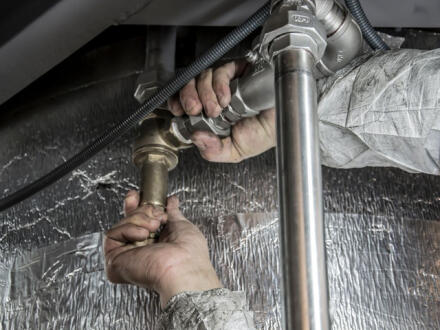
Gasfitter training is practical, hands-on, and often faster than a four-year route. But tools, tuition, books, lab fees, and transportation still add up fast. For a student in New Hampshire, even a one-year certificate can cost several thousand dollars before the first paycheck arrives.
That is why New Hampshire Gasfitter Scholarships matter. They can reduce upfront costs, lower borrowing, and make it easier for a student to start HVAC, plumbing, or mechanical training without stalling out over money. Some awards are built for high school seniors. Others fit first-year trade students, current college students, apprentices, or university students in related construction and engineering tracks.
This list focuses on 10 real funding paths students should search first, plus the documents and search tactics that raise the odds of winning support. It also explains where gasfitter-focused aid overlaps with plumbing, HVAC, mechanical contractor, and workforce grants. That overlap matters, because many students miss money simply by searching too narrowly.
A student does not need a perfect GPA to qualify for every option. In many cases, employers, trade groups, and state programs care just as much about attendance, clear career goals, and a plan to work in New Hampshire after training.
1. New Hampshire Gasfitter Association Scholarships To Put At The Top Of Your List
New Hampshire Gasfitter Association Scholarships should be one of the first searches a student runs. Industry associations often give money to build the future workforce, and that makes gasfitting students a direct fit.
A student should look for awards from state or regional groups tied to:
- gasfitters
- plumbing and heating contractors
- fuel dealers
- HVAC associations
- mechanical trades organizations
These groups may offer smaller awards, often in the $500 to $2,500 range, but smaller pools can mean less competition than a broad national scholarship with thousands of applicants. A trade student who wins two local awards worth $1,000 each can cut a big chunk out of first-semester costs.
Applications usually ask for three things: proof of enrollment, a short essay, and one recommendation from a teacher or employer. That makes them faster to finish than large merit programs.
Students should also widen the net to related New Hampshire industry funds. For example, the New Hampshire Charitable Foundation listings can help uncover local awards by region, career path, or community connection.
A strong essay here should sound specific. "They want to become a gasfitter because licensed fuel gas work keeps homes safe during January heating season" lands harder than "they like working with their hands."
2. New Hampshire Gasfitter Scholarships For High School Students Entering Trade Programs
New Hampshire Gasfitter Scholarships for High School Students are often hidden under broader labels like "skilled trades," "career and technical education," or "postsecondary workforce training." That matters. A senior who searches only "gasfitter scholarship" may miss half the field.
High school students should start with local sources:
- school counseling offices
- CTE centers
- town scholarship committees
- rotary clubs and local foundations
- utility or infrastructure-related scholarships
Students in STEM-heavy trade tracks should also review options like the Unitil STEM scholarship page, since utility companies often support students entering energy and technical careers.
Concrete example: a senior taking shop, algebra, and a heating systems elective may be more competitive than a student with a higher GPA but no clear trade direction. Trade-focused awards often reward fit over polish.
The essay should include exact next steps. Good details include the school name, the certificate or degree target, and the expected training timeline, such as 9 months, 12 months, or 2 years. That level of detail signals commitment.
If a student has worked part-time, they should mention numbers. "They worked 18 hours a week at a hardware store and saved $1,140 for tools" is memorable and credible.
3. Community College Scholarships For Students Pursuing HVAC, Plumbing, And Gasfitting Training
Community colleges are one of the most direct routes into gasfitting-related work. Tuition is usually lower than at four-year schools, and programs often align with local employer demand. For many students, this is where New Hampshire Gasfitter Scholarships for College become practical, not theoretical.
New Hampshire's postsecondary system includes public options and career pathways described by the state's postsecondary education overview. That gives students a starting map for approved training environments.
At the campus level, students should ask financial aid offices about:
- program-specific scholarships
- emergency completion grants
- foundation awards
- part-time enrollment aid
- textbook and tool stipends
Students in water, piping, and utility-adjacent training can also scan broader technical awards like the New England Water Works scholarships. They are not gasfitter-only, but they overlap with mechanical systems and infrastructure interests.
A concrete budgeting point helps here. If tuition is $6,800, books are $740, and tools cost $1,250, a student faces $8,790 before transportation. Two scholarships worth $1,500 each plus a $1,000 campus grant cuts that bill to $4,790. That is a big shift.
Community college awards often favor students who submit early. Filing 30 to 45 days before a posted deadline can matter.
4. New Hampshire Gasfitter Scholarships For First-Year Students Starting Technical Education
New Hampshire Gasfitter Scholarships for first-year students are especially important because the first term is when costs pile up all at once. Tuition arrives at the same time as boots, gauges, hand tools, and course materials.
Many scholarships built for first-year students are not labeled by trade. They may be listed as "career starter," "new student," or "first-generation" awards. That means a new gasfitting student should search by life stage as well as program name.
One useful example is the New Hampshire Hope Starts Here scholarship page, which shows how some aid targets student circumstances rather than a major alone.
First-year applicants should emphasize transition strength:
- strong attendance in senior year or recent coursework
- a clear training start date
- proof of enrollment or acceptance
- a short budget showing real need
A student can make this vivid with exact costs. For example, a first-semester supply list may include $165 work boots, $92 safety glasses and gloves, $410 core tools, and $118 licensing prep materials. A first-year scholarship worth $750 does not sound small once that list is on paper.
Readers should remember one thing: first-year funds are often use-it-now money. Missing the deadline by even 7 days can mean waiting another full cycle.
5. Employer-Sponsored Awards From Plumbing, Heating, And Mechanical Contractors
Employer-sponsored awards are one of the smartest funding paths because they can lead to both money and a job lead. A local plumbing, heating, or mechanical contractor may offer a scholarship, reimburse tuition, or pay for books after a student completes a set number of work hours.
These programs are often less public than school-based aid. Students usually find them by asking directly, not by waiting for a giant public listing.
Common employer support includes:
- $500 to $3,000 scholarships
- paid internships during school
- reimbursement after passing classes
- tool allowances
- work commitments after graduation
This model works well because contractors feel the labor shortage. The U.S. Bureau of Labor Statistics has projected thousands of annual openings in plumbing, pipefitting, and steamfitting occupations, much of it tied to retirements and workforce turnover. Employers know they need new people entering the pipe trades.
A student who interviews well can stand out fast. Imagine two applicants with the same grades. One says they want "a good trade." The other explains that they want gas piping work, understand lockout steps, and have already shadowed a tech for 24 hours. The second student feels hireable.
When contacting firms, students should send a short email with a resume, expected school start date, and one paragraph on career goals. That simple move can surface funding no public database shows.
6. Union And Apprenticeship Scholarships That Support Earn-While-You-Learn Training
Union and apprenticeship routes can be a strong answer for students who want less debt and faster paid experience. In this path, the funding is not always called a scholarship, but the value can be larger because wages reduce the need to borrow.
An apprentice may earn while training, receive classroom instruction, and gain supervised field hours at the same time. That structure matters for gasfitting because skill builds best through repeated real-site work.
Students should ask apprenticeship sponsors about:
- tuition coverage for classroom hours
- boot or tool vouchers
- testing fee support
- travel reimbursement
- completion bonuses
Some regional construction scholarship listings can also point students toward apprenticeship-friendly networks, including pages like the AGC scholarship program. Even when a specific award is outside New Hampshire, the structure shows how contractor groups support trade pipelines.
A useful number comparison makes this clearer. A student paying $9,200 for school with no income support carries the full cost. An apprentice earning $19 an hour for 20 hours a week during training brings in about $380 weekly before taxes. Over 30 weeks, that is $11,400 in gross wages.
That does not make every apprenticeship easy. Schedules are demanding. But for many students, earn-while-they-learn beats borrowing for every wrench and workbook.
7. New Hampshire Gasfitter Scholarships For College Students Already Enrolled In Skilled Trades Programs
Once a student is already in school, new options open up. New Hampshire Gasfitter Scholarships for College often favor students who can show performance in real trade classes, not just promise on paper.
That gives enrolled students an edge. They can point to attendance, lab grades, instructor feedback, and completed projects. A second-semester student who passed pipe layout or combustion-related coursework with an 88 average has proof that they can finish.
Students already enrolled should look in four places:
- department bulletin boards and email lists
- financial aid offices
- community foundations
- trade and employer associations
Broader housing and technical support funds can sometimes help lower total education strain too. For some students, pages such as the NAHMA scholarship listings may fit family or housing circumstances that affect college persistence.
A strong application should show momentum. Exact details help: "They completed 146 lab hours, missed 0 classes in the last term, and plan to take gas code coursework next semester." That sounds much stronger than "they are doing well."
Key Documents That Strengthen College Scholarship Applications
College students usually win more when they keep a ready-to-send packet. The best packet is simple and complete.
Include:
- unofficial transcript
- current class schedule
- one-page resume
- one instructor recommendation
- short budget with tuition, tools, and commuting costs
- a photo or list of completed projects, if allowed
A commuting budget can be especially persuasive. Driving 22 miles each way to class and lab 4 days a week adds up fast in fuel and wear on an older car.
8. New Hampshire Gasfitter Scholarships For University Students In Related Engineering And Construction Fields
Not every future gasfitter starts in a pure trade program. Some students pursue construction management, mechanical engineering technology, facilities management, or building systems degrees first. That is where New Hampshire Gasfitter Scholarships for University can overlap with the trade path.
University students may later move into gas utility work, mechanical system design, inspection, project supervision, energy systems, or code-focused roles. That makes related scholarships worth serious attention.
Students should search awards tied to:
- engineering technology
n- construction management
- energy systems
- facilities operations
- architecture and building sciences
Design and built-environment students may find overlap in pages such as the Plan New Hampshire scholarship program. Even if the award is not gasfitter-specific, the career ecosystem clearly connects.
At universities, aid packages can combine departmental awards, need-based aid, and federal support. For example, UNH's financial aid office outlines multiple aid channels that can reduce net cost when students stack sources.
When A University Path Makes Sense For Future Gasfitters
A university route makes sense when a student wants field knowledge plus leadership or technical design options later.
One example: a student may spend 2 years learning building systems and then move into estimating, energy compliance, or mechanical project coordination. Another may pair university coursework with summer field work for a wider skill set.
This path is usually more expensive, so students need a tighter plan. If annual direct costs run $12,400 more than a local trade route, the long-term role should justify that extra spend.
9. State, Regional, And Workforce Development Grants That Can Reduce Out-Of-Pocket Costs
Grants are different from scholarships in one key way: they are often based on financial need, workforce priorities, or approved training status rather than competition alone. For gasfitting students, that can be a huge advantage.
Workforce grants may cover short-term credentials, technical certificates, or specific in-demand fields. Because heating, fuel systems, and mechanical trades support housing and infrastructure, these programs can line up well with gasfitter training.
Students should ask about:
- state grant eligibility
- workforce board training funds
- WIOA-related support through local agencies
- emergency completion grants
- transportation or childcare assistance tied to training
Regional scholarships outside the exact gasfitter label may still help related students. For example, the New England Chapter ISA scholarships show how field-specific organizations fund technical education across New England.
The math here can be striking. If a student gets a $2,000 scholarship, a $3,500 need-based grant, and $600 in transportation support, that is $6,100 removed from out-of-pocket cost. On a $9,000 training bill, that leaves $2,900.
Students should not assume grants are automatic. Many require FAFSA completion, income documents, or proof that the program leads to employment in a recognized occupation. Missing one form can block the whole package.
10. Fast-Apply Scholarship Platforms And Local Search Strategies For Finding More Opportunities
Some of the best scholarship wins come from volume and consistency. A student who applies to 12 well-matched local and trade awards usually has better odds than someone who spends all month chasing one giant national prize.
That is where fast-apply scholarship platforms help. A free matching site can cut repeated form filling and surface awards a student would never find through random searches. On Studentscholarships.org, that matters because the platform combines scholarship listings with career guidance in one place.
Students should mix platform searches with local tactics:
- search county and town foundation awards
- ask trade instructors for employer leads
- check utility, fuel, and contractor groups
- use school financial aid newsletters
- apply to nearby regional awards, not just state-only programs
The search terms should also vary. Use phrases like New Hampshire Gasfitter Scholarships for High School Students, New Hampshire Gasfitter Scholarships for College, and New Hampshire Gasfitter Scholarships for University. Different wording pulls up different results.
One practical example: a student who spends 25 minutes every Tuesday applying through saved profiles can submit 8 to 10 smaller applications in a month. If even one award is $1,000, that hourly return is excellent.
Students interested in construction-adjacent study can also cast a wider net with options like the New Hampshire FB scholarships, especially when rural community ties strengthen the application.
New Hampshire Gasfitter Scholarships FAQs
What types of students are eligible for New Hampshire Gasfitter Scholarships?
Students eligible include high school seniors entering trade programs, first-year technical education students, current community college or university students in gasfitting or related fields, apprentices, and those pursuing HVAC, plumbing, or mechanical training in New Hampshire.
How can high school students find Gasfitter Scholarships in New Hampshire?
High school students should search beyond just gasfitting keywords and explore skilled trades, career technical education, and workforce training scholarships. Local resources such as school counselors, CTE centers, rotary clubs, and utility companies like Unitil offer relevant opportunities.
What documents improve chances of winning New Hampshire Gasfitter Scholarships?
Strong applications typically include proof of enrollment, a clear career plan, essays describing commitment, one recommendation, unofficial transcripts, class schedules, a resume, budget details for tuition and tools, and proof of attendance or work experience.
Why should students consider employer-sponsored awards for gasfitting training?
Employer-sponsored awards offer scholarships, tuition reimbursement, internships, or tool allowances, and may provide job leads after training. Local contractors support apprenticeships due to labor shortages in plumbing and mechanical trades, making employer connections valuable.
Can university students in related fields access New Hampshire Gasfitter Scholarships?
Yes. Students studying construction management, mechanical engineering technology, facilities management, or building systems can apply for scholarships overlapping with gasfitting careers, such as through the Plan New Hampshire Scholarship Program.
What strategies help students find more New Hampshire Gasfitter Scholarships?
Applying to multiple awards, using fast-apply scholarship platforms, varying search terms, exploring local and regional foundations, and inquiring with trade instructors or employers boosts chances. Consistent weekly applications increase the odds of winning awards.






