

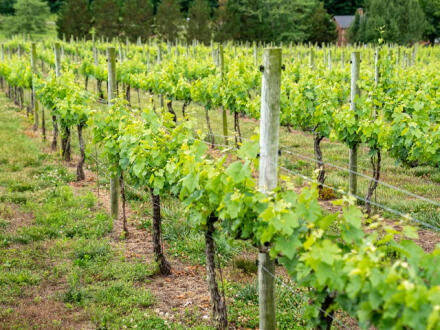
Michigan wine is not a tiny niche anymore. Students who want careers in viticulture, enology, fermentation science, agribusiness, and tasting-room management can find real training options in the state, but tuition, lab fees, and housing can hit hard.
That is where Michigan Oenology Scholarships and related funding paths matter. A student does not need to wait for one perfect grape-and-wine award. In practice, the strongest funding plan often mixes industry scholarships, state aid, community foundation awards, agriculture grants, and paid internships.
This list breaks that process into 10 practical paths. It covers Michigan Oenology Scholarships for High School Students, options for first-year applicants, awards for current undergrads, and funding routes for university students in connected majors like horticulture and food science.
The goal is simple: help future wine professionals build a short, realistic scholarship list they can actually use. For many students, that means applying to 6 to 10 awards, reusing one core essay, and adjusting it for each prompt in about 20 minutes per application.
Students who use scholarship platforms to organize deadlines can save real time too. On Studentscholarships.org, many applications can be matched and sorted quickly, which is useful when someone is balancing classes, work shifts, and FAFSA tasks.
Below are 10 funding paths worth serious attention for anyone planning a Michigan wine career.
1. Michigan Oenology Association Scholarships For Students Entering Wine And Grape Studies
Students searching for Michigan Oenology Association Scholarships should start with awards tied directly to grape growing and wine production. These scholarships often carry the strongest career fit because the selection committee already understands harvest work, cellar tasks, and vineyard science.
A focused award can matter more than a larger general scholarship. If a student can show 40 volunteer hours, a strong interest in cool-climate grapes, and a clear career goal, that application usually reads sharper than a generic essay sent everywhere.
One good example is the Panko oenology award, which is directly aligned with oenology and viticulture study. That kind of fit helps a student show obvious purpose.
Students should highlight:
- Hands-on vineyard work, even if it was only 2 weekends of pruning or harvest help
- Science classes such as chemistry, biology, or microbiology
- Career goals like winemaking, lab analysis, vineyard management, or fermentation quality control
- A practical story, such as tracking sugar levels during crush or helping sanitize tanks
A strong application usually includes 3 parts: a transcript, 1 personal statement of 400 to 600 words, and 2 recommendation letters from teachers, growers, or employers. For students serious about wine studies, this is often the first bucket to fill before branching into general aid.
2. Michigan Oenology Scholarships For High School Students Exploring Viticulture And Enology
Michigan Oenology Scholarships for High School Students are often less direct than students expect. Some awards say "agriculture," "4-H," "food systems," or "rural leadership" instead of "wine." That does not make them a weak fit.
In fact, high school applicants usually have the best odds when they connect early interests to a future wine career. A student who worked 18 hours at a farm stand, joined FFA, or completed a school greenhouse project can build a solid oenology story from that base.
The MSU 4-H scholarship page is a strong example for students with youth agriculture experience. A 4-H record book with project hours, leadership roles, and public presentations gives admissions and scholarship reviewers concrete proof.
Another useful route is state-level aid. Michigan families comparing college costs often pair specialized scholarships with programs listed through the Michigan Department of Education, especially when they are building a full financial plan.
Eligibility Tips For High School Seniors
High school seniors should keep the process simple and specific. Reviewers do not need a dramatic life story. They need evidence.
Helpful moves include:
- Keep a spreadsheet with deadline, award amount, essay prompt, and status
- Ask for recommendation letters at least 21 days before they are due
- Build one core essay around a clear goal, such as becoming a cellar worker, lab technician, or vineyard manager
- Include measurable details like GPA, 60 service hours, 2 seasons of FFA, or 1 science fair project
Students who start applications in early fall usually submit stronger work than students who rush in the last 48 hours. That is especially true for wine-related scholarships, where a thoughtful career link can make the difference.
3. Michigan Oenology Scholarships For First-Year Students Starting College In Agriculture Or Fermentation Programs
Michigan Oenology Scholarships for first-year students often come from a mix of state programs, institutional aid, and agriculture-related awards. First-year applicants should not wait for a scholarship with "oenology" in the title. They should build a layered list.
For many Michigan residents, the Michigan Achievement award is one of the first places to look. It is broad, but broad can be useful when a student is covering tuition gaps before adding major-specific funding.
A practical first-year strategy looks like this:
- Apply to 2 state aid programs
- Apply to 2 agriculture or food-system scholarships
- Apply to 2 local or community awards
- Add 1 to 3 niche wine or fermentation scholarships
That creates a stack of 7 to 9 applications without spreading effort too thin.
Students entering agriculture, food science, chemistry, microbiology, or fermentation tracks should make the connection obvious. For example, a first-year student planning to study yeast metabolism, grape chemistry, or post-harvest handling can explain how those courses support future work in a winery lab.
A simple budget example helps too. If tuition and fees are $12,400, housing is $8,600, and books are $1,100, even three awards of $1,500 cut the gap by $4,500. That is not small. It can cover a semester of housing or a large chunk of tuition.
4. Michigan Oenology Scholarships For College Students Already Enrolled In Related Majors
Once a student is in college, the pool often gets better. Michigan Oenology Scholarships for College applicants can show grades, lab work, internships, and faculty references instead of just potential.
That matters because reviewers like evidence from real coursework. A sophomore with 15 credits in chemistry, plant science, and food processing has a stronger file than a senior-year applicant who waited too long to start.
Current students should look for support tied to academic performance and continued enrollment. The Michigan Competitive award can fit into that broader plan for undergraduates managing ongoing costs.
Strong college applications usually mention:
- A current GPA, such as 3.42 or 3.76
- A lab or field skill, like titration, pH testing, pruning, or pest scouting
- A campus role, such as treasurer of an ag club or manager of a student greenhouse
- A short result, like improving sample tracking for 120 fermentation records
This is also the stage where students should ask faculty for targeted letters. A professor who can say a student completed 3 fermentation trials or handled 40 lab samples writes a much stronger recommendation than someone offering vague praise.
For enrolled students, the best time to build next year's scholarship list is usually 6 to 8 months before bills arrive. That buffer gives them time to gather transcripts, update resumes, and refine essays without panic.
5. Michigan Oenology Scholarships For University Students In Food Science, Horticulture, And Agribusiness
Not every future wine professional majors in enology. Michigan Oenology Scholarships for University students often go to applicants in nearby fields because modern wineries need more than one skill set.
A vineyard operation may need a horticulture student who understands canopy management, a food science student who knows microbial control, and an agribusiness student who can price direct-to-consumer sales. A small winery can run on a team of 5 to 12 people, so mixed skills matter.
Students in these majors should frame their essays with one clear bridge to wine. For example:
- Food science connects to fermentation, sanitation, sensory testing, and shelf stability
- Horticulture connects to grapevine health, soils, irrigation, and disease pressure
- Agribusiness connects to tasting-room revenue, distribution, and farm financial planning
The GM university scholarship is not wine-specific, but it shows how university students often need to combine broad academic funding with niche career goals.
A smart essay uses concrete scenes. A student might describe measuring Brix in a teaching vineyard at 7:15 a.m., noticing bird pressure on one row, and comparing the harvest decision against weather risk. That kind of detail feels real.
For this group, the strongest scholarship message is simple: their major solves an actual winery problem. Reviewers remember applicants who can explain function, not just passion.
6. Land-Grant University Awards That Can Support Michigan Oenology Scholarship Goals
Land-grant universities are worth special attention because they often connect teaching, extension, and applied agriculture. That setup fits wine education well.
Students looking at Michigan Oenology Scholarships for College should search land-grant campuses for departmental awards, extension-connected funds, crop science support, and undergraduate research money. These awards may not mention wine in the title, but they often support the exact classes and lab work wine careers require.
A good example of broad agricultural support is the Marge Karker scholarship. While not oenology-only, it can fit students with a strong agriculture background and a clear academic plan.
Why this route works:
- Land-grant schools often have experiment stations, teaching farms, and extension staff
- Students may access faculty mentors who supervise applied projects
- Research awards can cover supplies, travel, or presentation costs of $500 to $2,500
A student studying grape disease management, cold-hardiness, or fermentation variables can often pitch that work as agriculture research first and wine training second. That wider framing opens more doors.
Even small awards matter. A $900 grant can cover lab fees and field gear. A $1,800 travel award can pay for conference attendance, hotel nights, and poster printing. For students building wine careers, land-grant funding often fills the expensive gaps that basic tuition awards do not cover.
7. Community Foundation Scholarships In Michigan Wine Regions
Community foundations are easy to overlook, but they are one of the best funding paths for local students. Many serve specific counties, school districts, or regional employers, which means the applicant pool can be much smaller than a statewide competition.
That is useful in Michigan wine regions, where a student may already have ties through family farming, seasonal work, or local volunteer service. A scholarship committee may recognize the value of someone who wants to stay and contribute to the area economy.
The Gateway foundation listings show how local scholarship hubs can package multiple awards in one place. One application can sometimes open the door to 3 to 12 separate funds.
Students should search by:
- County name
- High school name
- Parent employer or union affiliation
- Agriculture, hospitality, or local business themes
A strong local application includes specifics like 85 volunteer hours, a part-time tasting-room job, or work at 2 weekend harvest events. Those details show local commitment.
This route works especially well for students whose wine goals are practical: vineyard operations, winery hospitality, lab support, or regional agritourism. Community committees often respond well to applicants who plan to bring skills back home rather than simply leave.
8. Agriculture And FFA Scholarships That Pair Well With Oenology Career Plans
FFA and general agriculture awards are a strong match for future wine students, even when grapes are not named. Vineyards are still agriculture. Wineries still depend on crop quality, weather decisions, pest control, and business planning.
Students with livestock, crop, greenhouse, or ag mechanics backgrounds should not count themselves out. A student who logged 120 hours on soil prep or irrigation work already has a useful story for viticulture-focused applications.
The Michigan Youth Livestock scholarship illustrates this idea well. The subject area is different, but the work habits, recordkeeping, animal or crop care, long weekends, public communication, translate cleanly into wine education.
Students can also look at broader agriculture industry funding. For example, the Michigan Pork scholarships note $3,000 awarded annually, which shows how sector-based ag support can reduce college costs even outside a student's final specialty.
How To Connect General Agriculture Awards To Oenology Goals
The essay bridge should be direct. A student does not need fancy wording. They need a clean connection.
Useful connections include:
- FFA record books prove budgeting, recordkeeping, and project management
- Greenhouse work links to plant health and disease observation
- Soil judging connects to vineyard site selection
- Ag sales or showing experience links to winery hospitality and customer education
A good essay might say that managing a 10-plot school project taught timing, labor planning, and crop observation, skills that transfer to vineyard blocks and harvest decisions. That is believable, and it works.
9. Industry-Sponsored Scholarships From Wineries, Vineyards, And Beverage Organizations
Industry-sponsored awards can be some of the best fits because they come from employers and trade groups that want a stronger talent pipeline. They are often looking for students who can step into the field quickly.
That means applicants should sound employable, not just enthusiastic. A student who can explain sanitation routines, harvest scheduling, customer service, or cellar safety will usually stand out more than someone who only says they love wine.
Hospitality matters here too. The MIHA scholarship page notes 8 scholarship opportunities totaling $11,500 annually. While it is hospitality-focused rather than wine-only, that overlap is valuable for students interested in tasting rooms, wine clubs, events, and tourism.
Good industry-focused application details include:
- 1 internship at a vineyard, winery, brewery, cidery, or restaurant beverage program
- A customer-facing example, such as helping 60 guests during a weekend event
- Safety and sanitation training hours
- A realistic job goal for the first 2 years after graduation
Students should also watch for awards from regional wineries, grape grower groups, and beverage associations. These programs may have short windows and lighter competition. Sometimes the prize is modest, $750 or $1,250, but that amount can still cover books, tasting kits, or mileage to an internship site.
10. Departmental Grants, Research Funding, And Internship Awards For Hands-On Oenology Training
Some of the best money for wine students does not look like a scholarship at first. Departmental grants, undergraduate research funds, and internship stipends can lower costs while adding direct experience.
This matters because oenology training often includes lab fees, travel, protective gear, and unpaid or low-paid harvest work. A student may spend $280 on boots and rain gear, $140 on lab supplies, and $420 on fuel during a semester of field travel. Small grants can wipe out those costs.
Students should ask departments about:
- Undergraduate research mini-grants
- Travel funds for conferences or field days
- Summer internship stipends
- Paid assistant roles in labs, greenhouses, or extension programs
A strong funding pitch gives one sharp project example. That could be comparing yeast performance in 3 small-batch fermentations, tracking acidity shifts across 12 samples, or studying frost impact on a teaching vineyard block.
These awards also make later scholarship applications better. A student who can say they completed 1 paid harvest internship, presented 1 poster, and analyzed 30 juice samples looks serious.
This is also where organization helps. Platforms such as Studentscholarships.org let students keep a cleaner list of deadlines and opportunities across majors, which is useful when they are juggling aid offers, class registration, and internship searches.
Michigan Oenology Scholarships FAQs
What types of scholarships are available for students pursuing oenology in Michigan?
Students can access Michigan Oenology Association scholarships, agriculture and FFA awards, industry-sponsored grants, community foundation scholarships, and land-grant university funds that support viticulture, enology, and related majors like horticulture and food science.
How can high school students interested in oenology qualify for scholarships?
High schoolers should highlight agriculture-related experiences like 4-H participation, FFA involvement, farm work hours, or greenhouse projects. Applying early with clear goals and measurable achievements improves their odds for scholarships such as the Michigan State University 4-H Scholarship.
What strategy should first-year college students use to maximize oenology scholarship opportunities in Michigan?
First-year applicants should combine state aid like the Michigan Achievement Scholarship with agriculture and local community awards, plus niche wine-focused scholarships. Applying to multiple sources builds a practical funding base to cover tuition and living costs effectively.
Are there scholarship options for university students studying majors related to oenology?
Yes, scholarships exist for students in food science, horticulture, and agribusiness, as these fields contribute to winery operations. For example, the University of Michigan General Motors Scholarship supports students whose studies solve winery challenges such as fermentation or vineyard management.
What role do industry-sponsored scholarships play for Michigan wine career students?
Industry awards from wineries, vineyards, and beverage organizations prefer applicants with practical experience like internships, sanitation training, or customer service in hospitality. These scholarships help students become employable quickly after graduation.
How do departmental grants and internship awards assist oenology students financially?
Students can reduce costs through research mini-grants, travel funds, and paid internships covering lab fees, protective gear, and travel expenses. These opportunities also provide hands-on training and strengthen future scholarship applications.






