

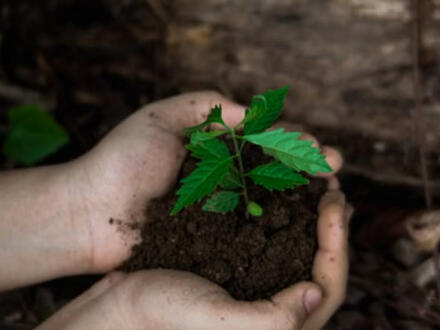
Paying for an environmental science, ecology, conservation, or natural resources degree can feel brutal fast. Tuition, lab fees, field courses, gas for site visits, and housing can stack up before a student even buys boots and notebooks. For Idaho students, though, the good news is simple: Idaho Ecology Scholarships are not limited to one big award or one kind of student.
There are options for high school seniors, first-year students, community college students, and university juniors who already know they want to study rivers, wildlife, soils, forests, or climate. Some scholarships focus on grades. Others care more about financial need, community service, FFA or 4-H involvement, or a clear plan to work in Idaho after graduation. And even when a scholarship is not labeled strictly as an ecology award, it can still help an Idaho student cover the cost of an environmental degree.
This guide breaks the search into 10 practical categories so students can find strong-fit awards faster. Each section explains who should apply, what committees usually want, and how to build a smarter list. The goal is not just to collect random names. The goal is to help students build a scholarship plan that matches where they are now and where they want to go next.
1. Idaho Ecology Association Scholarships: What They Cover And Who Should Apply
Students looking for Idaho Ecology Association Scholarships should start with one key idea: these awards often support the full path around environmental study, not just classroom tuition. That can include tuition, textbooks, lab supplies, field gear, research travel, conference registration, and sometimes unpaid internship costs.
For ecology students, that matters a lot. A single field course can require $200 to $600 in gear and travel. A regional conference can cost another $300 to $800 once registration, mileage, and lodging are added.
The strongest applicants usually fit one or more of these profiles:
- Students planning an ecology or environmental degree
- Applicants with hands-on conservation work, such as stream cleanups or habitat restoration
- Students with Idaho ties, especially those who want to work in the state after graduation
- Applicants who can explain a specific interest, like rangeland ecology, water quality, wildlife biology, or soil science
A good application does more than say, "I love nature." It gives evidence. For example, a student who spent 84 hours removing invasive plants along a local riverbank will stand out more than a student who writes only in broad terms.
When students search this category, they should also look at related awards tied to agriculture and land stewardship. A student active in FFA and natural resource projects may find a useful fit through Idaho FFA support, especially if their ecology interests connect to soil health, irrigation, or crop systems.
2. Idaho Ecology Scholarships For High School Students Planning Ahead
Idaho Ecology Scholarships for High School Students often reward something simple: early effort. Students do not need a college transcript yet, but they do need proof that their interest is real.
That proof can come from:
- science fair projects on water, plants, or wildlife
- FFA, 4-H, or conservation club work
- volunteer hours with parks, fish hatcheries, or community gardens
- dual-credit biology, chemistry, or environmental science classes
A strong high school applicant usually has one clear story. Maybe she tracked pollinator activity in a school garden for 12 weeks. Maybe he tested stream turbidity at three access points near home. Specific details help committees trust the student's long-term interest.
Money planning should start early too. The National Center for Education Statistics has shown that students who complete financial aid steps and scholarship applications early are more likely to enroll right after high school. That makes timing part of strategy, not just paperwork.
For Idaho students with college-readiness support, the GEAR Up Idaho path can matter. Students from eligible schools may find help that pairs well with ecology-focused awards.
High school students should build a list with three buckets:
- local scholarships from counties, districts, and civic groups
- statewide Idaho awards
- field-related scholarships tied to environment, agriculture, energy, or public lands
That mix gives them more shots on goal than waiting for one perfect ecology label.
3. Idaho Ecology Scholarships For First-Year Students Starting Strong
Idaho Ecology Scholarships for first-year students often go to applicants who show momentum. Committees know first-year students may not have much college experience yet, so they look hard at high school work, early campus involvement, and the student's plan.
A first-year ecology applicant can stand out with:
- a declared or intended major in environmental science, biology, ecology, geology, forestry, or a related field
- a first-semester GPA at or above 3.0
- one faculty reference who can speak to work ethic
- a short essay with a concrete career goal
The essay is where many students lose points. Vague lines about "helping the planet" blur together. A sharper statement sounds like this: "They want to study watershed ecology and work on irrigation efficiency in southern Idaho, where agriculture depends on careful water use." That gives reviewers a place, a problem, and a purpose.
Students should also look at broad Idaho awards that are not ecology-specific but still reduce tuition pressure. The Idaho Opportunity route can be important for students who need a state-based funding source during that first college year.
Another smart move is stacking. If a first-year student wins a $1,500 general state scholarship and a $1,000 department award, that combined $2,500 can cover a semester of books, fees, and a chunk of housing at many public colleges. Small awards add up faster than students expect.
4. Idaho Ecology Scholarships For College Students In Two-Year And Four-Year Programs
Idaho Ecology Scholarships for College students are not only for students at big universities. Community college students and transfer students have real options, especially if they can show academic progress and a clear next step.
This matters because transfer is common. Many Idaho students start at a two-year school to save money, complete general education credits, and then move into a four-year environmental program. That path can cut total borrowing by thousands of dollars.
Scholarship committees often like these signs of progress:
- 24 to 60 completed credits
- a GPA around 3.0 to 3.5 or better
- completed lab sciences, such as biology or chemistry
- volunteer or paid work connected to land, water, animals, or agriculture
Students in two-year programs should not assume they are "too early" for ecology funding. A student finishing an associate degree in biology with plans to transfer into fisheries science is exactly the kind of applicant many committees want.
Students with deep youth program involvement may also have an advantage. The Idaho 4-H scholarship option can fit applicants whose environmental interest grew through livestock, soils, crop, or natural resource projects.
A practical example: a student who logged 146 volunteer hours in a county extension garden, earned an A in ecology lab, and mapped out a transfer plan to a four-year university has a strong story. That student shows action, grades, and direction. Committees notice all three.
5. Idaho Ecology Scholarships For University Students Pursuing Environmental Degrees
Idaho Ecology Scholarships for University students tend to get more specialized. By this stage, committees often expect a student to know their lane.
That lane might be:
- wildlife ecology
- restoration ecology
- environmental engineering
- forestry
- hydrology
- rangeland management
- conservation policy
University students should use that specialization as an edge. A junior studying sagebrush habitat, for example, should say exactly what species or systems matter and why. Idaho has roughly 53 million acres of land, with large working landscapes and public lands that make field-based environmental careers especially relevant. Specific state context helps an application feel grounded.
This stage is also where broader Idaho awards can still help. The Governor's Cup award is not ecology-only, but it can support students pursuing demanding majors who need help staying enrolled.
Students at universities should also ask these questions:
- Does the department have undergraduate research money?
- Are there faculty-led grants that pay for summer fieldwork?
- Is there a student travel fund for presenting posters or research?
At some campuses, a student can combine one outside scholarship, one departmental award, and one paid research position. That package might total $4,000 to $9,000 across an academic year. For a student facing rent, tuition, and gas for field sites 40 miles away, that amount can decide whether they stay in the program.
6. State And Regional Environmental Scholarships Idaho Students Should Not Miss
Some of the best funding for Idaho ecology students does not use the exact phrase "ecology scholarship." That is why students should widen the search to state and regional environmental scholarships tied to agriculture, water, energy, forestry, public service, and land management.
Good places to look include:
- state agencies connected to fish, wildlife, forests, or water
- utility-linked scholarships for energy and environmental fields
- regional nonprofit groups focused on watersheds or conservation
- scholarships tied to rural leadership and resource stewardship
For students interested in ecology plus energy or environmental systems, the Idaho Power scholarship can be worth a look. It may fit applicants whose studies connect to natural resource management, engineering, or environmental planning.
Regional awards matter because they often draw from a smaller pool than national scholarships. A scholarship open to students in Idaho and nearby states may get 80 to 300 applicants. A national environmental scholarship can draw 2,000 or more.
Here is the practical rule: search by problem, not just by major. A student studying ecology might qualify under water conservation, rangeland science, renewable energy, forestry, sustainability, or agriculture.
That wider search catches awards other students miss. And missed awards are common. Many students stop after typing one phrase into a search box and never branch into linked fields.
7. Merit-Based Vs Need-Based Idaho Ecology Scholarships: How To Prioritize Your Applications
Students often ask which type of Idaho Ecology Scholarships to chase first: merit-based or need-based. The best answer is not one or the other. It is both, in the right order.
Merit-based awards usually focus on grades, leadership, projects, research, or service. Need-based awards look at financial circumstances, FAFSA data, family income, and barriers to college access.
A smart priority list looks like this:
- Apply first to awards with the strongest fit, whether merit or need-based
- Apply next to scholarships with fewer eligibility hurdles
- Apply after that to larger awards that need longer essays or more documents
That order works because fit beats size in many cases. A $1,000 award with a 1-in-12 chance is often a better use of time than a $10,000 award with a 1-in-800 chance.
Students from underserved backgrounds should also review the Community Council of Idaho option when it matches their eligibility. Broad identity-based scholarships can pair well with field-specific ecology aid.
What Scholarship Committees Usually Look For
Committees usually score applications on a few repeated factors. Students who understand these factors can sort their time better.
They often look for:
- Clear academic readiness, often shown by GPA, course rigor, or class rank
- Evidence of follow-through, such as 60 service hours or a completed research project
- A believable goal, not a generic statement
- Need with context, especially when a student explains work hours, family duties, or transport limits
- Strong recommendation letters with details, not bland praise
A useful example: "She worked 18 hours a week, kept a 3.6 GPA, and still led a native plant garden project" is far more persuasive than "She is hardworking." Numbers carry weight.
8. The Best Places To Find Verified Idaho Ecology Scholarships
Students waste a lot of time on dead links, expired forms, and scholarship lists copied from old pages. The best places to find verified Idaho Ecology Scholarships are the ones that connect students to active listings, current requirements, and clear deadlines.
Useful places include:
- official college financial aid offices
- academic department pages
- state scholarship databases
- trusted scholarship platforms with Idaho filters
- local foundations and community organizations
Students who want an easy way to sort options can use a free platform like StudentsScholarships.org, which combines scholarship discovery with career guidance and often lists applications that take under 2 minutes to start. That speed matters when a student is juggling classes, work, and family duties.
For students already comparing campus aid pages, Idaho State University lays out scholarships, grants, loans, and work-study on its financial aid page. That kind of official source helps students confirm what a school itself offers alongside outside awards.
Students should also search beyond ecology by using related terms such as environmental science, conservation, biology, watershed, forestry, sustainability, and natural resources. One search term rarely finds everything.
How To Use Scholarship Platforms Efficiently
Students get better results when they treat scholarship search like a system, not a random scroll.
A simple weekly routine works well:
- spend 25 minutes updating profile details
- save 10 to 15 best-fit scholarships
- submit 2 to 4 applications each week
- track deadlines in one spreadsheet or notes app
Students who do this for 10 weeks can finish 20 to 40 applications without panic. That is a much better position than trying to write 12 essays in one weekend.
9. Application Tips That Can Make Your Idaho Ecology Scholarship Essay Stand Out
A strong essay for Idaho Ecology Scholarships sounds like a real student talking about a real problem. It does not sound like a brochure.
The best essays usually include four things:
- a specific moment that sparked interest
- evidence of action already taken
- a clear education goal
- a practical reason the funding matters
A weak opening says, "Nature has always been important to me." A stronger opening says, "After a late-summer algae bloom closed the irrigation pond near their family's property, they started tracking runoff sources for a class project." That sentence gives place, conflict, and urgency.
Students should also quantify impact whenever possible. Good numbers include:
- 92 volunteer hours
- 14 water samples collected
- 3 semesters on dean's list
- 17 acres mapped in a habitat survey
Essay structure can stay simple:
- Start with one vivid event or problem.
- Explain what the student did next.
- Connect that action to a degree path.
- Show how the scholarship would cover a real cost.
Students applying to multiple Idaho awards can reuse a core essay, but each version needs a fresh paragraph that matches the sponsor's mission. A scholarship tied to service should hear about service. A scholarship tied to rural Idaho should hear about that community.
If a student has had setbacks, those can help when framed clearly. A semester dip, a job schedule of 20 hours a week, or a long commute can show grit when explained with facts instead of excuses.
10. Key Deadlines, Planning Steps, And A Smart Scholarship Timeline For Idaho Students
The biggest scholarship mistake is not bad writing. It is bad timing. Students miss awards because they wait until deadlines are close, then realize they still need transcripts, recommendation letters, FAFSA records, or proof of enrollment.
A smarter scholarship timeline starts months earlier.
Phase 1: Build the list
- gather 20 to 30 possible scholarships
- mark eligibility rules
- note which ones need essays, references, or financial documents
Phase 2: Prep the packet
- request transcripts
- ask 2 or 3 recommenders early
- draft one base essay of 500 to 650 words
- create a resume with GPA, hours, awards, and activities
Phase 3: Apply in waves
- submit easy applications first
- finish medium-effort applications next
- use stronger completed essays to tackle larger awards last
This wave system lowers stress and builds momentum. Students can also pair ecology searches with broader Idaho aid sources such as the Turn Around Scholarship Fund or the Idaho Advocates award when they fit.
For school-based planning, Boise State explains FAFSA steps and aid types on its aid and scholarships page, which helps students line up institutional aid with outside scholarships.
A practical calendar rule works well: if a deadline is in 30 days, the essay should be drafted in 7 days, documents gathered in 14, and the full application submitted at least 3 days early.
Frequently Asked Questions about Idaho Ecology Scholarships
What types of expenses do Idaho Ecology Association Scholarships typically cover?
Idaho Ecology Association Scholarships often cover tuition, textbooks, lab supplies, field gear, research travel, conference registration, and unpaid internships, helping students with comprehensive costs related to their environmental studies.
Who is eligible for Idaho Ecology Scholarships for high school students?
High school students with proof of genuine interest in ecology, such as science fair projects, FFA, 4-H involvement, volunteer work, or dual-credit environmental classes, are eligible to apply for Idaho Ecology Scholarships designed for future environmental science students.
How can first-year college students increase their chances of winning an Idaho Ecology Scholarship?
First-year students should declare an environmental-related major, maintain a GPA of 3.0 or higher, provide a faculty reference, and write a clear essay outlining concrete career goals, such as working on watershed ecology or irrigation efficiency in Idaho.
Are there Idaho Ecology Scholarships available for community college and transfer students?
Yes, scholarships are available for two-year and four-year college students, particularly those who have completed significant credits, maintain a solid GPA, completed lab sciences, and have relevant volunteer or paid work connected to ecology or natural resources.
How should students prioritize applying for merit-based versus need-based Idaho Ecology Scholarships?
Students should apply first to scholarships with the strongest fit, whether merit or need-based, followed by those with fewer eligibility requirements, and then larger awards needing more extensive materials, to maximize chances efficiently.
Where can Idaho students find verified and up-to-date ecology scholarship opportunities?
Students should check official college financial aid offices, academic department pages, state scholarship databases, and trusted platforms like StudentsScholarships.org, which offer current listings and filters tailored for Idaho ecology scholarships.




