

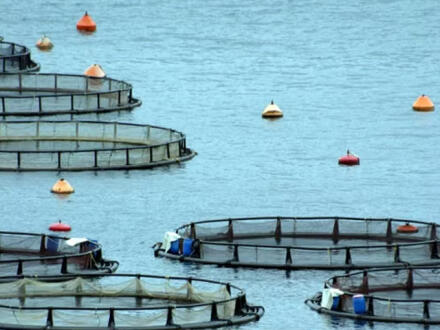
Students who want a fisheries career in Arkansas often picture electrofishing boats, hatchery tanks, water sampling kits, and long field days. Then the tuition bill lands. That part feels a lot less exciting.
The good news is that Arkansas Fisheries Scholarships are not limited to one big, obvious award. Students can piece together money from fisheries associations, university departments, research grants, conservation groups, and statewide academic aid. A student who stacks a $1,000 local award, a $2,000 campus scholarship, and a federal grant can cut a big hole in a semester bill.
That matters because fisheries work usually starts with hands-on training. Students may need lab fees, travel money for field courses, waders, fuel, and housing near lakes, rivers, or hatcheries. In Arkansas, that can mean work tied to the White River, Delta wetlands, or aquaculture programs in the southeast part of the state.
This guide breaks the search into 10 practical funding paths. It covers options for high school students, first-year students, current college majors, and students who want research experience. It also explains which eligibility details matter most and how to build an application that stands out without sounding forced.
1. Arkansas Fisheries Association Scholarships Worth Checking First
Students should start with association-based awards because these groups already care about fisheries, aquatic science, and conservation. That makes the match stronger than a random general scholarship.
In Arkansas, students should look for scholarships connected to fisheries groups, aquaculture associations, angler organizations, and regional conservation nonprofits. Even when the award title does not say "fisheries," the selection committee may prefer applicants who show a direct link to fish culture, habitat work, water quality, or aquatic biology.
A strong first-pass list usually includes:
- State fisheries or aquaculture associations
- Conservation chapters with youth education funds
- Farm and pond management groups
- Community foundations that fund agriculture or natural resources
A concrete example: a student who spent 86 hours helping with pond sampling, bass population logs, or hatchery volunteer work can sound far more credible than a student who only writes, "I love fishing." Specific field activity matters.
Local and regional foundation money can also fill gaps. Some Arkansas students widen the search by pairing fisheries-specific applications with broader state funds such as the Arkansas Community Foundation options, which may support students from particular counties or career tracks.
The big advantage here is volume. A student may find 3 to 7 smaller awards in this category instead of chasing one large scholarship with intense competition. Smaller checks still matter when they cover books, chest waders, or a meal plan.
2. University Fisheries And Aquaculture Scholarships In Arkansas
Students looking for Arkansas Fisheries Scholarships for University programs should search department pages first, not just the main financial aid portal. Fisheries money often sits inside agriculture, biology, aquaculture, wildlife, or natural resources departments.
Arkansas has a strong tie between fisheries and aquaculture. That means students may find funding through:
- Aquaculture and fisheries departments
- Biology programs with aquatic research labs
- Agriculture colleges
- Honors programs with science funding
- Campus leadership or merit scholarships that can stack with major-specific aid
A student at a public university might combine a department award with a broader merit package like the Arkansas State University scholar award or other campus-based aid. That stack can turn a $9,000 tuition bill into something much more manageable.
Here is the practical move: email the department coordinator and ask three direct questions:
- Are there scholarships only for fisheries, aquaculture, or wildlife students?
- Are incoming students considered automatically, or is there a separate form?
- Are paid field or lab assistant jobs available after the first semester?
That last question matters. A paid lab role at 10 hours per week can function like scholarship support, especially when the work builds a résumé at the same time. For students serious about fisheries, campus departments are often the most relevant money source.
3. Arkansas Fisheries Scholarships For High School Students Planning Ahead
Arkansas Fisheries Scholarships for High School Students often come down to timing. Students who begin the search in junior year usually submit stronger applications than seniors who start in the final month.
Planning ahead gives students time to build the exact proof scholarship committees want:
- A science-heavy course list
- FFA, 4-H, Envirothon, or outdoors club activity
- Volunteer hours at a hatchery, fish fry, stream cleanup, or nature center
- Teacher and mentor relationships for letters
A realistic example helps. A high school student with a 3.4 GPA, 112 service hours, and 2 summers helping with pond management has a much clearer fisheries story than a student with good grades but no field link.
Students should also apply for statewide academic aid, because general Arkansas money can free up room for fisheries costs later. For some families, the Arkansas Academic Challenge path becomes the base layer, while smaller conservation awards cover books and gear.
High school students should keep a simple spreadsheet with:
- Scholarship name
- Amount
- Deadline
- Essay topic
- Required GPA
- Recommendation needs
That one sheet can save 4 to 6 hours during application season. It also stops missed deadlines, which is one of the easiest ways to lose money. Early planning is not flashy. But it works.
4. Arkansas Fisheries Scholarships For First-Year Students Entering College
Arkansas Fisheries Scholarships for first-year students often blend merit aid, need-based aid, and major-related awards. The mistake many students make is treating "first-year" money as separate from fisheries money. In practice, the best package usually combines both.
First-year applicants should target:
- University merit scholarships
- State grants and promise programs
- College of agriculture or biology awards
- Living-learning community scholarships
- Diversity and leadership scholarships tied to STEM
For students who meet income or state criteria, aid such as the Arkansas Promise route can lower the bill before a fisheries department award is even added.
A sample package shows why stacking matters:
- State aid: $2,000
- Campus merit award: $3,500
- Department scholarship: $1,250
- Summer earnings saved for books: $900
That total cuts $7,650 from the first-year cost.
Students entering college should also mention readiness for field-heavy coursework. Fisheries programs are not only classroom majors. They may involve water chemistry labs, weekend sampling trips, and early-morning hatchery work. A committee wants to know the student understands that reality.
When possible, first-year students should apply before the priority deadline. On some campuses, the earliest pool has the widest range of funds. Waiting even 30 days can shrink the list of open awards.
5. Arkansas Fisheries Scholarships For College Students Already In A Program
Arkansas Fisheries Scholarships for College students often improve after the first year. Once a student has grades in major courses, a faculty reference, and maybe a field methods class on the transcript, the application gets stronger fast.
This is where continuing students should look hard at department emails, advisor notices, and college-level scholarship portals. Many awards favor students who have already proved they can handle biology, chemistry, statistics, or aquaculture labs.
A current student can become more competitive by showing numbers like these:
- 3.6 GPA in science coursework
- 48 completed credit hours
- 1 poster presentation at a campus research event
- 75 volunteer hours in habitat or water monitoring work
Students should also search university-wide funds that are not fisheries-specific but still fit their profile. For example, a student involved in leadership and service may qualify for programs such as the A-State leadership award while continuing in a fisheries-related major.
And students should not ignore transfer or retention scholarships. A sophomore who struggled in the first semester but then posted a 3.8 GPA across the next two terms can tell a convincing improvement story.
Committees like evidence of momentum. They want to see that the student is not only interested in fish and water, but already doing the work. For college students already in a program, proof beats passion every time.
6. Arkansas Fisheries Scholarships For University Research And Field Experience
Research money can function like scholarship money, especially for fisheries students. It may come as a stipend, a summer assistantship, travel support, or paid field experience.
This funding path matters because fisheries careers often depend on applied work. A student who has used dissolved oxygen meters, seine nets, or GIS habitat maps has a clear edge over a student with only classroom knowledge.
Good places to look include:
- Undergraduate research offices
- Faculty-led aquatic labs
- Honors colleges
- Extension programs
- Summer field crews tied to reservoirs, streams, or hatcheries
A very practical target is a summer research stipend of $3,000 to $5,500. That can cover living costs while building experience that later wins larger scholarships.
Students should ask faculty whether projects involve:
- Fish population surveys
- Water quality testing
- Invasive species monitoring
- Aquaculture nutrition trials
- Habitat restoration work
A useful comparison comes from labor data: the U.S. Bureau of Labor Statistics lists $70,600 as the median annual pay for zoologists and wildlife biologists, a category that overlaps with many fisheries career paths. That makes early field experience more than a résumé line: it is career prep with real wage potential.
Students who want help locating wider scholarship options while they build research experience often use free scholarship search tools to keep applications moving at the same time.
7. State Wildlife, Conservation, And Natural Resources Awards That Fit Fisheries Majors
Not every useful award will say "fisheries." Some of the best options sit under wildlife, conservation, environmental science, agriculture, or natural resources.
That matters in Arkansas because fisheries work overlaps with a lot of neighboring fields. A student studying pond production, stream ecology, or habitat restoration may fit scholarships tied to land stewardship, agricultural science, or rural conservation work.
Students should search for awards linked to:
- State conservation groups
- County farm bureaus
- Soil and water districts
- Cooperative extension networks
- Outdoor heritage foundations
A student raised in a rural county may also qualify for broader Arkansas aid based on geography, service, or first-generation status. For example, community and regional awards sometimes line up well with fisheries students from smaller towns, while broader public university awards such as the UA Little Rock CLC option can help students who add communication, leadership, or outreach strengths.
Here is a concrete case: a student applying for fisheries money might also qualify for 4 additional conservation-adjacent scholarships worth $750 each. That is another $3,000 without changing majors.
The smart move is to read the mission statement, not just the title. If the award supports water, wildlife, habitat, food systems, or rural resource management, a fisheries student may belong in the pool.
8. National Scholarships That Arkansas Fisheries Students Should Not Overlook
National scholarships are easy to skip because they feel too competitive. But Arkansas students should still apply, especially when their fisheries story is specific and field-based.
National funding can come from:
- Scientific societies
- Conservation nonprofits
- Agriscience and aquaculture groups
- Corporate environmental programs
- Federal internship pipelines with education stipends
A student from Arkansas may stand out by writing about catfish production, Delta water systems, or reservoir fisheries management. That background is not generic. It gives the application texture.
Students with strong STEM records should also look at broader science support programs. For underrepresented students in science and math fields, options like the Louis Stokes alliance award can pair well with fisheries study when eligibility matches.
Numbers matter here. If a student applies to 12 national scholarships and wins only 1 award worth $2,500, the effort may still beat the return from a part-time job that pays the same amount over months of weekend shifts.
The key is selectivity. Students should not blast the same essay everywhere. They should choose national scholarships where at least 3 parts of their profile line up: STEM coursework, conservation service, and a clear fisheries career goal.
9. What Eligibility Requirements Matter Most For Fisheries Scholarship Applications
Eligibility rules decide whether an application gets read closely or tossed in the "not qualified" pile. Students should check these requirements before they spend 2 hours polishing an essay.
The most common filters are:
- GPA minimum, often 3.0 or higher
- Arkansas residency
- Enrollment status, such as full-time or at least 12 credit hours
- Major or intended major
- Financial need documentation
- Class standing, such as high school senior, first-year student, or continuing student
- Career interest in fisheries, wildlife, aquaculture, or conservation
Some awards also prefer students with leadership, research, or rural backgrounds. Others give an edge to first-generation students, students from certain counties, or students involved in FFA, 4-H, or service organizations.
This is why broad state and campus awards still matter. A student who misses one fisheries scholarship on major-specific criteria might still qualify for a campus fund like the Chancellor's community scholarship if the service and academic profile fits.
Students should build a "must match" checklist before applying:
- GPA
- Residency
- Major fit
- Deadline
- Required essay
- Recommendation count
If 5 of 6 boxes match, that award is usually worth the effort. If only 2 of 6 match, the odds are weaker. Eligibility is not the glamorous part, but it saves time and raises win rates.
10. How To Build A Strong Application For Arkansas Fisheries Scholarships
The best applications make the student easy to picture in the field, in the lab, and in the classroom. Committees want proof, not just enthusiasm.
A strong application usually does 4 things well:
- Shows a clear fisheries or aquaculture goal
- Uses specific evidence instead of vague claims
- Matches the essay to the scholarship mission
- Arrives complete and on time
Students do not need dramatic stories. They need clear ones. A short paragraph about measuring bluegill lengths at a farm pond, logging turbidity data, or cleaning nets after a hatchery event often lands better than big statements about "loving nature."
Academic Records, Field Experience, And Volunteer Work To Highlight
Academic records should point to readiness for science-heavy work. Good evidence includes biology, chemistry, algebra, statistics, environmental science, or agriculture classes.
The strongest applications often include exact details like:
- 3.7 GPA overall
- 27 ACT or similar test score, if the scholarship asks for it
- 2 semesters of biology lab
- 96 volunteer hours with cleanups, stocking events, or nature programs
- 1 faculty-led project or science fair tied to water or fish
Field experience does not need to be fancy. Helping a local hatchery for 18 Saturdays, assisting with creek trash removal, or keeping catch logs on a family pond can all work if the student explains what was learned.
Volunteer work should connect to outcomes. Instead of "helped with conservation," a stronger line is: "They joined 7 stream cleanup days and removed 143 pounds of trash with a local team." That image sticks.
Deadlines, Recommendation Letters, And Search Tools To Use
Missed deadlines sink great applications. Students should set personal due dates 10 days early so they have time to fix missing transcripts or signature problems.
Recommendation letters work best when the writer knows real examples. A biology teacher, aquaculture supervisor, extension agent, or club advisor can describe attendance, work ethic, and field skill in a way a generic letter cannot.
Students should give recommenders:
- A résumé
- A draft essay
- The deadline date
- 3 bullet points they hope the letter covers
That simple packet often leads to a much better letter.
Search tools also matter. A platform built for fast filtering can save serious time, especially for students sorting through Arkansas and national options. On StudentScholarships.org, students can sort through fisheries-related and general aid without turning the process into a full second job: some applications take under 2 minutes, which helps students apply to more realistic matches instead of quitting after the first few forms.
Arkansas Fisheries Scholarships - Frequently Asked Questions
What types of scholarships are available for fisheries students in Arkansas?
Arkansas fisheries students can access scholarships from fisheries associations, university departments, conservation groups, research grants, and statewide academic aid programs, allowing them to combine multiple awards to reduce tuition costs.
How can high school students in Arkansas prepare early for fisheries scholarships?
High school students should start early by taking science courses, joining clubs like FFA or 4-H, volunteering in fisheries-related activities, and building strong teacher relationships to strengthen scholarship applications.
Are there specific scholarships for first-year fisheries students in Arkansas colleges?
Yes, first-year fisheries students can combine university merit scholarships, state grants such as the Arkansas Promise Scholarship, agriculture or biology awards, and leadership scholarships to create a substantial financial aid package.
What eligibility requirements are common for Arkansas fisheries scholarship applications?
Typical requirements include Arkansas residency, a minimum GPA often around 3.0, declared major or intended major in fisheries or related fields, full-time enrollment, and sometimes proof of financial need or community involvement.
How important is field experience when applying for fisheries scholarships in Arkansas?
Field experience like volunteering at hatcheries, pond sampling, or stream cleanups is highly valued as it demonstrates hands-on skills and a clear commitment to aquatic science, making applications more competitive.
Can fisheries students in Arkansas benefit from national scholarships?
Yes, Arkansas fisheries students should apply for national scholarships from scientific societies and conservation groups, especially if their applications highlight local fisheries topics like catfish production or Delta water systems to stand out.




