

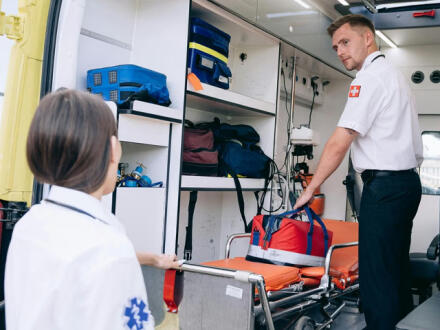
Paying for EMT or paramedic school in New Mexico can feel harder than passing a trauma assessment on zero sleep. Tuition, books, uniforms, testing fees, gas for clinicals, and lost work hours add up fast. At Central New Mexico Community College, for example, in-district tuition and fees are charged per credit hour, so even a shorter certificate can still create a real bill once lab costs and supplies land on top.
The good news is that New Mexico Emergency Medical Services scholarships are not limited to one big statewide award. Students can piece together money from EMS associations, colleges, workforce grants, rural service programs, employers, and general financial aid. That mix matters. A student who stacks a $1,000 local scholarship, a state tuition award, and employer reimbursement can shrink out-of-pocket costs by several thousand dollars.
This guide breaks the search into clear paths for high school students, first-year students, community college learners, and university students. It also covers funding sources that don't always show up in a simple scholarship search, like hospital sponsorships and workforce grants.
For students using Studentscholarships.org, the advantage is speed. They can sort through broad education funding and narrower health-care awards in one place instead of bouncing between dozens of school pages and local foundation sites.
1. New Mexico Emergency Medical Services Association Scholarships To Put On Your Shortlist First
If a student is searching for New Mexico Emergency Medical Services Association Scholarships, this is the first bucket to check. State EMS associations often know exactly where shortages exist, which means their awards can line up with real hiring demand in rural, tribal, and metro systems.
Students should look for scholarships tied to:
- EMS membership groups
- annual state EMS conferences
- memorial funds for fallen responders
- regional training partnerships
These awards are often smaller than national scholarships, but that can work in a student's favor. A $500 to $2,500 award may attract fewer applicants than a national health-care scholarship with 8,000 submissions.
A smart method is to build a shortlist with three columns:
| Scholarship type | Typical amount | Best applicant fit |
|---|---|---|
| State EMS association award | $500-$2,500 | Students committed to EMS service in New Mexico |
| Memorial or donor-funded EMS award | $500-$1,500 | Applicants with service stories or local ties |
| Conference-linked award | $250-$1,000 | Students engaged with EMS events or volunteer work |
Application essays usually reward specifics. A stronger answer says a student logged 96 volunteer hours with a local rescue squad than saying they are "passionate about helping people." That detail sticks.
2. New Mexico Emergency Medical Services Scholarships For High School Students Exploring EMS Early
New Mexico Emergency Medical Services Scholarships for High School Students can start before formal EMT classes begin. That surprises a lot of families. Some awards support health-care exploration, dual-credit study, or students planning to enter public safety after graduation.
High school applicants should focus on four assets:
- GPA and attendance
- volunteer or service hours
- career intent in EMS, fire, or rural medicine
- teacher or counselor recommendations
New Mexico students can widen the search by mixing EMS-specific awards with broader state scholarships. For example, a student comparing local options may also screen programs such as New Mexico Scholars when building a first funding list.
Another useful local example is the 505 Southwestern New Mexico True Scholarship, which shows how regional awards can support students with place-based ties.
A student with a 3.4 GPA, 42 service hours, and a short essay about riding along with a county EMS crew can be more competitive than a student with higher grades but no clear career story. Early applicants should also ask whether a scholarship can be deferred until they start an EMS or pre-health program.
3. New Mexico Emergency Medical Services Scholarships For First-Year Students Starting An EMS Program
New Mexico Emergency Medical Services Scholarships for first-year students matter because the first term is when costs hit hardest. Students often pay for tuition, background checks, immunizations, CPR certification, uniforms, stethoscopes, and exam prep within the same 8 to 16 weeks.
That startup bill can easily reach $1,200 to $3,500 depending on the program and equipment list. For a student working 20 hours a week at $15 per hour, that equals roughly 80 to 233 work hours before taxes.
First-year students should target funding that moves quickly:
- institutional scholarships with rolling review
- emergency aid funds
- short applications through scholarship platforms
- donor-funded first-semester awards
Students facing a sudden gap after enrolling may also review options like the Macy's Emergency Scholarship. It is not EMS-specific, but it shows the kind of emergency support that can keep a student in class when a car repair or housing bill wrecks the budget.
The best first-year applications explain immediate need with exact numbers. "My immunization series cost $287, scrubs cost $64, and fuel for clinical travel runs $38 per week" is far stronger than "school is expensive."
4. Community College EMS Scholarships That Fit New Mexico Career Pathways
Community colleges are a major entry point for EMS training in New Mexico. That makes this category especially important for students searching New Mexico Emergency Medical Services Scholarships for College while keeping costs lower.
Community college funding often comes from three places at once:
- the college foundation
- workforce or technical education grants
- state tuition programs
This path works because tuition at a community college is usually lower than a university pathway. But students still need money for lab fees, books, liability coverage, and travel to clinical sites. A commute of 28 miles each way, twice a week, can mean more than 200 miles a month before a single shift begins.
Students should ask financial aid offices very direct questions:
- Is there a scholarship only for allied health or EMS?
- Are part-time EMS students eligible?
- Can state aid be combined with donor awards?
- Is there extra funding for students from rural counties?
Local and regional awards can help here too. Students with ties to agriculture or small communities may find useful overlap through programs like New Mexico FB Scholarships, especially when their background reflects the communities EMS systems serve.
5. New Mexico Emergency Medical Services Scholarships For College Students Needing Ongoing Aid
A lot of funding advice stops at freshman year. Real life doesn't. New Mexico Emergency Medical Services Scholarships for College are also important for students who are already enrolled and now need help staying enrolled.
Ongoing aid is often tied to renewal rules such as:
- maintaining a minimum GPA, often 2.5 to 3.0
- completing a set number of credits
- staying in an approved health or public safety major
- filing annual forms by a fixed campus deadline
This matters because a student can lose a renewable award over one missed form, not poor performance. That happens more often than people think.
Students in health-related pipelines should also watch broader medical scholarship pools. Some may not fit EMT certificate students, but they can fit later transitions into advanced study. A student planning to move beyond EMS into health leadership may review programs such as National Medical Fellowships for long-term planning.
The practical move is simple: create a renewal calendar. One page. Three dates. FAFSA filing, scholarship renewal, and registration. A student who files everything 30 days early has a much better shot than one who waits until the portal closes at 11:59 p.m.
6. New Mexico Emergency Medical Services Scholarships For University Students In Advanced Health Programs
New Mexico Emergency Medical Services Scholarships for University students usually come into play when EMS is part of a bigger plan. That may include emergency management, respiratory care, nursing, public health, or pre-medical study.
University students often have a wider scholarship menu, but competition can be sharper. Larger institutions may house dozens of donor funds, and each one can have its own rules for major, county, class level, or service focus.
Students moving from EMS toward advanced medical fields can screen scholarships with related health equity or physician pipeline goals. Two examples are Herbert W. Nickens Medical Student Scholarships and the American Indian Medical Scholarship Program. They are not entry-level EMT awards, but they matter for students building a longer path in emergency care.
A university student who began as an EMT and later entered a bachelor's program can present a strong story: 240 patient contact hours, field exposure to stroke and trauma, and a clear reason for advancing training.
That kind of application stands out because it connects classroom goals to real patient care, not just a list of courses.
7. Workforce Development Grants And Tuition Assistance For EMT And Paramedic Training
Not every funding path is labeled "scholarship." Workforce grants and tuition assistance can be just as valuable, and sometimes faster. In New Mexico, these programs may sit with workforce agencies, training partnerships, colleges, tribal entities, or local employers trying to fill hard-to-staff EMS roles.
These programs often support:
- EMT basic training
- paramedic education
- certification exam fees
- books and equipment
- transportation or child care in some cases
That last piece matters. Child care in New Mexico can cost hundreds per month, and losing one evening shift to attend lab can break a household budget.
Students should ask whether funding is based on labor shortages. If a county or region is short on licensed EMTs, a workforce grant may favor applicants willing to train locally and stay. That can turn a general tuition fund into a near-EMS award.
A concrete example: if a program covers $2,800 in tuition and $450 in books and fees, a student working part time may avoid taking on a credit card balance at 18% APR. That's a big win. Fast application timing matters here, because workforce money can close when annual allocations run out.
8. Rural And Underserved Community Scholarships For Future EMS Professionals
Rural New Mexico needs EMS workers badly, and scholarship programs often reflect that. Long transport times, thin staffing, and volunteer-heavy systems make rural-focused aid one of the smartest funding paths to pursue.
The strongest candidates usually show one of these connections:
- they live in a rural county
- they graduated from a small high school
- they served a tribal, frontier, or medically underserved community
- they plan to return home after training
This is where local proof matters. A student from a town with one ambulance crew and a 45-minute transport to the nearest hospital has a very different story from someone writing in general terms about service.
Some broader place-based scholarships can support that story too. Students may screen awards such as the Davis New Mexico Scholarship when they need New Mexico-focused aid beyond EMS-specific programs.
Women returning to school in smaller communities may also find overlap with awards like the AAUW Las Vegas New Mexico Branch Scholarship.
A short essay works best when it sounds local and concrete: dust roads, long radio silences, one clinic, one volunteer station, and a clear promise to serve there.
9. Federal And State Financial Aid You Can Stack With EMS Scholarships In New Mexico
Students should not treat scholarships and financial aid as separate buckets. The best results usually come from stacking them. A Pell Grant, a state tuition award, and one small local scholarship can cover far more than a single bigger award.
The U.S. Department of Education reports that federal aid can include grants, work-study, and loans, and Pell Grants are usually reserved for undergraduates with financial need. For lower-income students, that can be the base layer that makes EMS training possible.
In New Mexico, students should also review state lottery-linked options and campus aid rules. A student comparing local tuition support may start with the New Mexico Lottery Scholarship or the New Mexico Legislative Lottery Scholarship, then add EMS or community awards on top.
FAFSA Deadlines, State Aid Timing, And Why Early Filing Matters
Timing changes outcomes. Students who file the FAFSA early often access more campus-based aid because some funds run first-come, first-served.
A simple schedule helps:
- gather tax and income records early
- file FAFSA as soon as the application cycle opens
- monitor state and campus priority deadlines
- fix verification requests within 7 days if possible
A student who files 6 weeks earlier than peers may have better access to grant pools, work-study, and emergency aid. Waiting until classes start is like showing up after most of the pizza is gone.
10. Employer, Hospital, And Fire Department Sponsorships That Can Cover EMS Education Costs
One of the most overlooked funding paths is employer sponsorship. Ambulance services, hospitals, and fire departments sometimes pay part or all of EMT training because hiring already-licensed staff is hard and expensive.
These deals often take one of three forms:
- upfront tuition payment
- reimbursement after passing the class
- paid training tied to a work commitment
A service agreement may require 6 months to 24 months of employment after licensure. That sounds restrictive, but it can still be a strong trade if tuition is fully covered and the student walks into a job.
Applicants should ask exact questions before signing:
- What costs are covered besides tuition?
- Is the NREMT exam included?
- What happens if the student must repeat one course?
- Is repayment prorated if they leave early?
A hospital-based EMS pathway can be especially useful in areas with transfer services or emergency department tech roles. The point is simple: the employer gets a trained worker, and the student reduces debt. For many students, that beats borrowing $4,000 and hoping a job appears later.
11. Local Foundation Scholarships And Smart Application Strategies To Improve Your Odds
Local foundation money is where many students leave cash on the table. These awards may be only $500 to $1,500, but they often draw a smaller applicant pool than statewide or national programs.
Strong local targets include:
- community foundations
- hospital auxiliaries
- memorial scholarship funds
- county service clubs
- faith-based education funds
The key is application quality, not just quantity. A student who submits 12 sharp applications usually does better than one who rushes through 30 vague ones.
A smarter process looks like this:
- keep one master resume with hours, licenses, and service work
- save two essay versions: financial need and career mission
- ask recommenders at least 14 days in advance
- track award amounts, deadlines, and required documents in one spreadsheet
- reuse verified details so every application stays accurate
Studentscholarships.org helps here because students can sort by location and category instead of hunting manually through scattered pages. That matters when deadlines pile up in the same month.
Students with military family ties may also branch into related state opportunities such as the Enlisted Association of the New Mexico National Guard scholarships, even if EMS is only part of their larger education plan.
New Mexico Emergency Medical Services Scholarships FAQs
What types of scholarships are available through New Mexico Emergency Medical Services associations?
New Mexico EMS associations offer scholarships ranging from $250 to $2,500, often linked to EMS membership, state conferences, memorial funds, and regional training. These awards target students committed to EMS service and may favor those with local ties or volunteer experience.
How can high school students in New Mexico prepare to apply for EMS scholarships?
High school students should focus on GPA, attendance, volunteer hours, and clear career intent in EMS or related fields. Strong recommendations and essays detailing relevant experience, like ride-alongs, increase competitiveness. Early applicants can explore scholarships such as the New Mexico Scholars and the 505 Southwestern New Mexico True Scholarship.
What financial challenges do first-year EMS students in New Mexico face, and how can scholarships help?
First-year EMS students often incur $1,200 to $3,500 in startup costs, including tuition, certifications, uniforms, and clinical travel. Targeted scholarships with rolling reviews, emergency aid funds like the Macy’s Emergency Scholarship, and donor-funded awards can help cover these expenses.
Are there scholarships supporting students attending community colleges for EMS training in New Mexico?
Yes, community college EMS students can access scholarships from college foundations, workforce grants, and state tuition programs. Asking about part-time eligibility, rural student funds, and combining aid types can maximize funding opportunities, including programs like New Mexico FB Scholarships.
How do workforce development grants help EMT and paramedic students in New Mexico?
Workforce grants provide tuition, certification fees, books, and sometimes transportation or childcare support, especially in regions with EMS staff shortages. Such grants favor applicants willing to train and work locally, easing financial burdens and reducing reliance on high-interest debt.
What options exist for university students in New Mexico pursuing advanced EMS-related health programs?
University students advancing from EMS into fields like nursing or public health can apply for scholarships focused on health equity and leadership. Examples include the Herbert W. Nickens Medical Student Scholarships and American Indian Medical Scholarship Program, which reward experience and academic commitment.






