

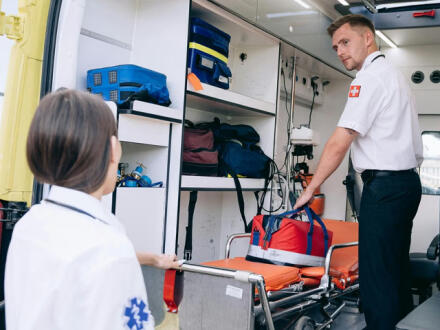
Paramedic training is expensive, and the price can hit hard before a student ever rides in an ambulance. Tuition, lab fees, uniforms, immunizations, background checks, and testing costs can push a short EMS program well past $5,000 to $15,000, depending on the school and credential path. For many Arkansas students, that number decides whether training starts now or gets delayed for another year.
The good news is that Arkansas paramedicine scholarships are not limited to one big statewide award. Money often comes from several smaller places at once: state aid, campus scholarships, rural workforce programs, ambulance employers, hospital partners, and local foundations. A student who stacks even three awards of $1,000 each can cut a major chunk from total costs.
This guide walks through 10 practical ways to find funding for EMS school in Arkansas. It covers options for high school seniors, community college students, university students, and first-year applicants. It also explains how to combine scholarships with grants and employer tuition help so the final bill feels less brutal.
For students who want a simple starting point, the goal is clear: search smarter, apply earlier, and focus on aid that matches healthcare training, rural service, and workforce shortages. Those are the categories most likely to pay for paramedic education in Arkansas.
1. Start With Arkansas Scholarship Databases That List EMS And Allied Health Awards
The fastest way to begin is with scholarship databases that already sort awards by state, major, and career field. That matters because EMS scholarships are often filed under allied health, health sciences, emergency medical services, nursing, or workforce training instead of under "paramedic" alone.
A smart search starts broad, then gets narrower. Students should try combinations like:
- paramedic
- EMS
- emergency medical services
- allied health
- healthcare workforce
- rural health
- Arkansas scholarships
Statewide and foundation-based directories can surface awards that would never appear in a general web search. A student might find local funding through the Arkansas Community Foundation listings, then pair that with campus aid later.
This is also where tracking matters. Students who save 20 scholarships in a spreadsheet usually notice patterns fast: recurring deadlines, county-based awards, GPA cutoffs, and essay themes. That saves time on the next round of applications.
A good tracker should include:
- Award amount
- Deadline
- Required GPA
- County or school limits
- Essay prompt
- Recommendation requirements
- Whether EMS or health majors qualify
The National Center for Education Statistics reports that many students use a mix of grants and scholarships rather than a single source. That's exactly the right mindset here. One $750 county scholarship may not sound huge, but combined with two more small awards, it can cover books, testing fees, or a semester payment plan.
2. Look For Arkansas Paramedicine Scholarships For High School Students Before Graduation
A lot of students wait until they are admitted to college before applying for aid. That's a mistake. Arkansas Paramedicine Scholarships for High School Students can start earlier, especially through community foundations, school counselors, local civic groups, and state programs tied to postsecondary enrollment.
High school seniors should build a short list by the first half of senior year. Why so early? Because many local scholarships close months before college bills arrive, and some ask for a transcript, counselor form, or proof of acceptance.
State-based aid can also matter for EMS students planning to attend eligible Arkansas schools. Programs listed through the state academic challenge option may support broader college costs, even if the award is not labeled specifically for paramedicine.
Strong places to ask while still in high school include:
- Guidance office
- Career and technical education staff
- HOSA or health science instructors
- County community foundations
- Rotary, Kiwanis, and similar clubs
- Local hospital auxiliary groups
A concrete example helps. A senior from a small town might win $500 from a civic club, $1,000 from a county foundation, and $2,000 in state aid. That stack can wipe out enrollment fees and leave only gear and books to pay.
The U.S. Bureau of Labor Statistics shows a median annual wage above $53,000 for EMTs and paramedics. That figure makes a strong scholarship essay point: training leads to a clear workforce path, not just a vague interest in healthcare.
3. Target Community College Funding For Arkansas Paramedicine Scholarships For College
In Arkansas, many paramedic pathways run through community colleges and technical campuses, so this is often the best place to hunt for direct aid. Arkansas Paramedicine Scholarships for College may show up inside a school's financial aid office, health sciences division, workforce office, or foundation page.
Community colleges are usually more affordable than four-year schools to begin with. If tuition lands near $110 to $170 per credit hour, even one scholarship of $1,500 can cover a meaningful share of classes.
Students should search campus aid in four buckets:
- General institutional scholarships
- Allied health or health sciences awards
- Need-based emergency funds
- Workforce development grants
Some Arkansas students may also qualify for broader state programs such as the Arkansas Promise path, which can reduce the leftover bill after other aid is applied.
A practical example: a student enrolled in a 42-credit paramedic certificate or AAS track might face tuition plus lab and clinical costs. If campus foundation aid covers $1,200, a state grant covers $2,000, and a local donor adds $800, that package can cut more than $4,000 from the total.
Students should also ask one direct question that often gets missed: "Are there scholarships only visible inside the student portal after admission?" Many colleges keep smaller awards off the public website. That one email can uncover money with fewer applicants and better odds.
4. Explore University-Based Aid For Arkansas Paramedicine Scholarships For University Students
Not every future paramedic starts at a community college. Some students enter through universities with emergency health, allied health, public safety, or pre-hospital care pathways. That is where Arkansas Paramedicine Scholarships for University students can show up as both general merit aid and department-specific help.
University aid often comes in layers. A student might receive an admissions scholarship first, then a leadership award, then a health-program grant after joining the department.
Examples of university-based Arkansas options include aid connected to campuses such as the UA community scholarship or awards like the A-State scholar option. These are not paramedic-only awards, but they can still lower the net price of EMS-related study.
Students should look at:
- Freshman merit scholarships
- Transfer scholarships
- Health sciences department awards
- Residence-based scholarships
- Leadership or service awards
A concrete scenario makes this easier to picture. If annual university charges total $9,800 after basic fees, a $4,000 merit award plus a $1,500 department scholarship drops the bill to $4,300 before federal aid even enters the picture.
This route helps students who want a wider academic base, maybe with disaster response, healthcare administration, or public health coursework. And for students who may later move into leadership roles, that broader setup can be worth the extra hunt for campus money.
5. Check Arkansas Paramedicine Association Scholarships And Other Professional Group Awards
Professional associations can be a gold mine because fewer students think to search them. Arkansas Paramedicine Association Scholarships and similar healthcare group awards may support EMS students, conference attendance, certification costs, or continuing education.
These groups often care about one thing above all: commitment to the field. A student with volunteer EMS hours, ride-along experience, CPR instructor work, or rural service interest can stand out even without a perfect GPA.
Professional-group searches should include:
- State EMS associations
- Regional ambulance associations
- firefighter groups
- hospital foundations
- trauma system partners
- rural health organizations
For students interested in shortage-area work, the Arkansas Rural Health scholarship listing is worth attention because workforce gaps often drive funding decisions in health careers.
A useful detail: many profession-based awards are smaller, often $500 to $2,500. But smaller awards usually mean smaller applicant pools. A pool of 48 applicants gives better odds than a national scholarship with 4,800 applications.
Students should also read the mission statement of each association before writing the essay. If a group focuses on rural response times, trauma care, or workforce retention, the application should echo that theme with specifics. "They want to serve Arkansas" is weak. "They completed 120 volunteer hours with a county rescue unit and plan to work in a town with one ambulance covering 600 square miles" is much stronger.
6. Prioritize First-Year Funding Opportunities Before Your Program Start Date
The first term is where many students lose momentum. Bills hit all at once: deposit, scrubs, physical exam, immunizations, drug screening, liability insurance, textbooks, and lab supplies. That is why Arkansas Paramedicine Scholarships for first-year students deserve special attention.
A lot of first-year aid closes before classes begin. Some awards disappear once a student has completed a semester, because they are meant to help with entry costs. Missing those deadlines can mean leaving $1,000 to $3,000 on the table.
Students should create a funding calendar that starts at least 6 to 9 months before the program launch. That calendar should include school deadlines, FAFSA filing, state aid dates, transcript requests, and recommendation requests.
Arkansas Paramedicine Scholarships For First-Year Students: What To Search For
Search terms matter here. A student will find more openings by mixing "first-year" with broader education language rather than using "paramedic scholarship" alone.
Useful search phrases include:
- first-year health sciences scholarship Arkansas
- new student allied health scholarship
- incoming freshman healthcare scholarship
- EMS workforce scholarship Arkansas
- rural health first-year award
Students attending larger campuses should also search broader freshman awards such as the A-State leadership award. Even if the money is not EMS-specific, it can cover fixed startup costs.
A realistic example: first-week program expenses can easily hit $850 for uniforms, vaccination records, testing fees, and supplies. A small first-year scholarship can cover that entire pile before tuition billing even starts.
7. Combine State Grants, Federal Aid, And Scholarships To Lower Out-Of-Pocket Costs
Students often ask the wrong question: "What is the one scholarship that will pay for paramedic school?" The better question is, "How can several aid sources work together?" That is how most students bring down the real bill.
The first step is filing the FAFSA as early as possible. Federal Pell Grant funds can be significant for eligible students. The U.S. Department of Education allows Pell awards that can reach several thousand dollars depending on income and enrollment status, and that money does not need to be repaid.
Then students can layer on:
- State grants
- Institutional scholarships
- Private scholarships
- Employer tuition support
- Payment plans
Some Arkansas students may qualify for support linked to income and academic progress, while others can combine general campus aid with specific donor scholarships. Students exploring wider school-based aid may find options such as the UALR CLC scholarship helpful when comparing packages.
Here is what stacking can look like:
- Pell Grant: $3,700
- State aid: $2,000
- Campus scholarship: $1,500
- Local EMS scholarship: $1,000
That totals $8,200. On a program costing $9,600, the remaining amount is just $1,400 before books or minor fees.
That kind of math changes everything. Instead of borrowing the full amount, a student may only need a short payment plan or a few weekend shifts to cover the rest.
8. Focus On Rural, Workforce, And Service-Commitment Programs Linked To EMS Shortages
This is one of the smartest angles in Arkansas because many counties face healthcare and EMS staffing shortages. Scholarship providers know that rural communities struggle to recruit and keep trained responders. So they build awards around service goals, not just grades.
The Health Resources and Services Administration tracks workforce shortage issues across health professions, and rural areas often face longer transport times and fewer providers. For a scholarship committee, that turns a student's rural service plan into a strong return on investment.
Students should target programs tied to:
- Rural counties
n- Underserved communities
- Healthcare workforce gaps
- Service commitments after graduation
- Emergency response capacity
A student from a town of 2,300 residents can turn that background into an advantage. If the nearest trauma center is 45 miles away and the county runs with limited staffing, that story is more powerful than a generic "I want to help people" essay.
This is also where foundation and identity-based awards can pair well with workforce funding. Broader academic support, including programs like the Louis Stokes alliance award, can reduce overall costs while service-based aid supports the healthcare mission.
Students should read every service agreement carefully. Some require work in a shortage area for a set term. That can be a great deal if the student already plans to stay local. It is less attractive if they expect to move right away.
9. Ask Local Ambulance Services, Hospitals, And Fire Departments About Tuition Support
A surprising amount of EMS funding never appears in public scholarship searches. Local ambulance services, hospitals, and fire departments may offer tuition reimbursement, sponsored seats, sign-on education support, or pay-while-you-train arrangements.
This matters because Arkansas employers need licensed medics. When a service spends $6,000 helping one student train, that can be cheaper than running short-staffed shifts, paying overtime, or losing calls to neighboring agencies.
Students should ask employers these exact questions:
- Do they pay for EMT-to-paramedic advancement?
- Is tuition reimbursement available after each term?
- Is there a work commitment?
- Are books, uniforms, or exam fees covered?
- Does the student earn wages during training?
A concrete example: a county service may cover $4,500 in tuition if the student agrees to work 24 months after licensure. That arrangement can beat a traditional scholarship because it adds income and a job path.
Employer-Sponsored Paramedic Training Vs. Traditional Scholarships
Employer support and scholarships solve the same problem in different ways.
- Traditional scholarships usually give money with fewer job strings attached.
- Employer-sponsored training often gives larger dollar support but may require a service term.
- Tuition reimbursement can help working EMTs who can pay up front and get paid back later.
A student should compare the numbers on paper. A $2,000 scholarship with no commitment may be better for one person. Another student may prefer $7,000 in employer-paid training plus a guaranteed job slot.
Hospitals with EMS partnerships, private ambulance companies, and city fire departments are all worth asking. One email or phone call can uncover money that never hits a scholarship website.
10. Build A Strong Application Package That Fits Arkansas EMS Programs
Finding scholarships is only half the battle. Winning them comes down to a clean, specific application package that shows fit. For EMS funding, the best applications make a simple case: this student is prepared, committed, and likely to serve where Arkansas needs medics most.
A strong package usually includes:
- A resume with healthcare, volunteer, or public safety experience
- A short personal statement with a real EMS goal
- One or two recommendation letters from instructors or supervisors
- A transcript that matches the award rules
- Proof of program admission or intent to enroll
Students should use numbers whenever possible. "They volunteered a lot" is weak. "They completed 86 hours with a rescue squad and maintained a 3.4 GPA while working 18 hours per week" is much stronger.
The essay should also match the program's values. If the scholarship supports leadership, the student should describe one clear leadership example. If it supports persistence, the student should show a real barrier overcome, like balancing anatomy labs with a night-shift EMT job.
Recommendation letters matter more than many applicants think. A detailed letter that says the student stayed calm during a simulated pediatric call is more memorable than a generic "hard worker" note.
Finally, students should keep applying after the first no. Scholarship success is often a volume game. A student who submits 12 solid applications has far better odds than one who sends 3 rushed ones and quits.
Arkansas Paramedicine Scholarships - Frequently Asked Questions
What types of Arkansas paramedicine scholarships are available for students?
Arkansas offers a variety of paramedicine scholarships including state aid, campus scholarships, rural workforce programs, employer tuition support, and local foundation awards. These can be combined to significantly reduce training costs for EMS students.
How can high school students in Arkansas find scholarships for paramedicine training?
High school seniors should start early by checking with guidance offices, community foundations, local civic groups, and state scholarship programs like the Arkansas Academic Challenge to find paramedicine funding before graduation.
Which community college scholarships in Arkansas support paramedic students?
Community colleges in Arkansas offer scholarships through their financial aid, health sciences, and workforce offices. Programs like the Arkansas Promise Scholarship also help reduce costs for EMS-related training at community colleges.
Are there scholarships for university students pursuing paramedicine-related degrees in Arkansas?
Yes, university students can apply for merit-based scholarships, health sciences department awards, and leadership grants at universities. Examples include the University of Arkansas Chancellor's Community Scholarship and the Arkansas State University Scholar Scholarship.
How does employer tuition support compare to traditional scholarships for Arkansas paramedic students?
Employer tuition support often offers larger financial help but usually requires a work commitment after training. Traditional scholarships may be smaller but typically have fewer obligations. Students should evaluate both options based on their career plans.
Why should Arkansas EMS students focus on rural and workforce shortage scholarships?
Many Arkansas counties face EMS staffing shortages. Scholarships tied to rural service or workforce needs prioritize applicants who plan to work in underserved areas, making these awards more accessible and impactful for local EMS workforce development.




