

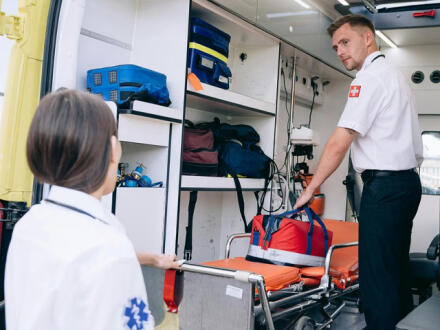
Paying for EMT or paramedic school in Louisiana can feel expensive fast. Tuition, books, uniforms, background checks, CPR certification, drug screening, and testing fees can push the total well past what many students expect.
That's why Louisiana Paramedic Scholarships matter. They can reduce upfront costs, cut borrowing, and make it easier for a student to start training without working extra shifts just to cover class bills. In many cases, the best plan is not one scholarship but a mix of awards, grants, employer help, and school-based aid.
For students who are still in high school, already in college, or planning a first semester in an EMS program, there are several funding paths worth checking. Some awards focus on grades. Others reward service, rural commitment, or financial need. A few are tied directly to healthcare employers that need trained paramedics in the field.
This guide breaks down 10 practical ways to find Louisiana Paramedic Scholarships for High School Students, college students, university students, and first-year EMS majors. Each section explains where the money may come from, who is most likely to qualify, and how a student can improve the odds of getting help.
1. Louisiana Paramedic Scholarships For High School Students Starting Early
Students do not need to wait until graduation to start looking. Louisiana Paramedic Scholarships for High School Students often come from state groups, local foundations, youth organizations, and parish-based programs that reward service and academic effort.
A smart early move is to build a scholarship list during junior year. That gives a student time to collect transcripts, request recommendation letters, and line up volunteer hours with fire departments, community events, or local hospitals.
A few useful starting points include youth and service-based awards such as Louisiana 4-H scholarships. A student who spent 2 years in 4-H, logged 80 volunteer hours, and kept a 3.4 GPA may be more competitive than someone who starts from scratch in spring.
High school students aiming for EMS should focus on these actions:
- Keep grades steady, especially in biology, algebra, and English
- Volunteer locally, even 3 hours each month adds up
- Shadow first responders if a local agency allows it
- Write one core essay that can be adapted for multiple applications
The biggest advantage of starting early is time. A student who applies to 12 scholarships with average awards of $500 to $1,500 has a much better shot than a student who applies to only 2 in the week before graduation.
2. Community College Awards For Louisiana Paramedic Scholarships For College
Many future paramedics train through community and technical colleges. That makes Louisiana Paramedic Scholarships for College especially important, because these schools often combine lower tuition with campus-level grants, program awards, and foundation support.
Community colleges may offer scholarships through their own foundations, allied health divisions, or workforce training offices. Some schools also reserve emergency aid for students facing short-term costs like fuel, books, or exam fees. A $400 book grant can matter just as much as a larger tuition award when a student is already stretching every dollar.
Students should also look beyond EMS-specific labels. General Louisiana awards can still help pay for paramedic coursework. For example, awards listed through Louisiana Problem Solver Scholarship may support students who show initiative, academic effort, and a clear career goal.
Good questions to ask a college financial aid office are:
- Does the school foundation fund allied health students?
- Are there scholarships limited to first-generation or Pell-eligible students?
- Can paramedic students receive both tuition aid and book vouchers?
- Is there a separate deadline for departmental awards?
The average in-district community college tuition is often lower than a university rate, but fees add up quickly. A student taking 12 credit hours plus lab and clinical costs can still face a bill of several thousand dollars for one term.
3. University-Based Aid Options For Louisiana Paramedic Scholarships For University Students
Some students take the university route through emergency health, allied health, or pre-hospital care pathways. In those cases, Louisiana Paramedic Scholarships for University students can include institutional scholarships, departmental awards, need-based packages, and foundation grants.
University aid often works best when a student files forms early and watches smaller campus deadlines. Large public universities may have one main scholarship application plus separate forms for health sciences departments. Missing the second form can mean missing $1,000 or more.
A useful benchmark comes from LSU financial aid, where students can review institutional aid categories, scholarship processes, and broader financial aid options. That matters because one student might combine a merit award, a Pell Grant, and work-study instead of relying on a single large scholarship.
University students should ask about:
- Department scholarships for allied health or public service majors
- Clinical support funds for uniforms, travel, and certification exams
- Retention awards for students who complete strong first-semester grades
- Transfer scholarships if they moved from a community college
A student commuting 32 miles each way to class and clinical sites may spend more on gas and parking than expected. University-based aid can help close those gaps, especially when course schedules make outside work harder to manage.
4. First-Year Funding Opportunities For New EMS Majors
The first semester is when many students feel the financial squeeze. Louisiana Paramedic Scholarships for first-year students are useful because new EMS majors often face startup costs all at once.
Those costs can include:
- Tuition and mandatory fees
- Textbooks and online access codes
- Stethoscope, boots, and uniform sets
- Background check and immunization records
- National Registry prep materials
It is not unusual for a first-term student to spend $1,200 to $2,500 before clinical rotations even begin. That is why first-year scholarships, orientation grants, and freshman success funds can make a real difference.
Students with strong service records may also qualify for broader Louisiana awards not limited to EMS. One example is the Louisiana Sheriffs' scholarship program, which can fit students with parish ties, community involvement, and a clear education plan.
New EMS majors should move fast during the months before classes start. Many scholarship committees prefer applicants who already know their program start date, tuition amount, and training goals. A short essay that explains, "They plan to work in rural emergency response within 18 months," sounds stronger than a vague statement about helping people.
5. Louisiana Paramedic Association Scholarships And Other Professional Group Awards
Professional groups can be a strong source of funding, especially for students who plan to stay active in EMS after graduation. Louisiana Paramedic Association Scholarships and similar awards from healthcare, public safety, or trade associations often favor applicants with commitment to the field.
These awards may be smaller than big institutional scholarships, but they can be easier to win because the applicant pool is narrower. A $750 association award with 40 applicants may be more realistic than a $5,000 statewide award with 1,200 applicants.
Students should search for organizations tied to:
- EMS and paramedic practice
- Ambulance services
- Fire and rescue work
- Public safety leadership
- Community health outreach
Broader Louisiana associations can help too. For example, a student with family ties to agriculture or rural service may find options through Louisiana FB scholarships. The fit will depend on eligibility rules, but it shows why students should not limit searches to the word "paramedic" only.
The best applications to professional groups feel specific. A student who explains 96 volunteer hours with a local rescue unit, plus a goal of earning Advanced EMT first and paramedic next, gives a committee a clear picture of follow-through.
6. Hospital, EMS Agency, And Employer-Sponsored Tuition Assistance
One of the most practical funding paths is employer help. Hospitals, private ambulance services, fire departments, and municipal EMS agencies sometimes pay part or all of tuition in exchange for a work commitment after training.
This model is common when employers need staff badly. A rural ambulance service that loses 3 medics in one year may be willing to fund a student's education to build its own pipeline. In return, the student may agree to work there for 12 to 24 months.
Employer-sponsored aid can come in a few forms:
- Upfront tuition payment to the school
- Reimbursement after passing courses with a required grade, often a C or better
- Sign-on support tied to future employment
- Paid training hours during clinical preparation
Students who already work part-time in healthcare should ask HR direct questions. Does the employer cover EMT first, then paramedic later? Is there a cap such as $3,000 per year? What happens if the student changes jobs early?
This route works especially well for students who want predictable employment after school. The tradeoff is commitment. If a contract requires 18 months of service, breaking it may trigger repayment. So the student needs to read every line, not just the dollar amount.
7. Rural And Workforce-Shortage Scholarships For Future Paramedics
Rural Louisiana communities often struggle to recruit and keep trained emergency workers. That creates a real opening for students willing to serve outside major metro areas.
Workforce-shortage scholarships may come from parish programs, hospital systems, regional foundations, and employer partnerships. These awards usually favor applicants who either live in a rural area already or promise to return after training.
The logic is simple. If a town has one staffed ambulance covering dozens of square miles, one new paramedic can change response capacity in a visible way. In a community with a 27-minute average transport route, staffing gaps are not abstract. They affect real patients on real roads.
Students from smaller communities should look at scholarships tied to local identity and place-based service. Regional awards such as the EBS Pearl River scholarship can be worth reviewing when a student's background aligns with the eligibility area.
A strong rural-service application usually includes:
- A home parish connection
- A short statement about local EMS needs
- Volunteer or community service history
- A plan to work nearby after certification
Committees often respond well to specifics. "They want to return to a 9,500-person community where the nearest trauma center is more than 40 miles away" is much more convincing than "they like small towns."
8. Need-Based Grants And FAFSA-Linked Aid That Pair With Scholarships
Scholarships are only part of the picture. Need-based grants can stack with scholarships and reduce what a student has to borrow or pay out of pocket.
The first step is filing the FAFSA as early as possible. That form can open access to federal Pell Grants, state-linked aid, campus grants, work-study, and some school emergency funds. For a lower-income student, a grant package can be the foundation that makes paramedic school realistic.
This matters because many EMS students are balancing rent, groceries, and transportation while in training. A student who receives a $2,000 scholarship still may not stay enrolled if a surprise car repair wipes out the budget.
Students should also search for scholarships connected to personal or family health circumstances. One example is the Louisiana Hemophilia Foundation scholarship, which may help qualifying students cover higher education costs while they pursue a demanding career track.
A practical aid stack might look like this:
- Pell Grant
- Campus need-based grant
- One local scholarship
- One professional association award
- Small part-time campus job
That kind of mix often works better than chasing a single "full ride." Even a package built from four smaller awards can cover books, fees, and several credit hours with less stress.
9. Merit Scholarships That Reward Academics, Service, And Leadership
Merit scholarships are still worth a serious look, even for students focused on hands-on healthcare training. Many committees want more than perfect grades. They want proof that a student shows discipline, leadership, and service under pressure.
That actually fits EMS well. A student captain, volunteer coordinator, or church youth leader may look strong on paper because those roles suggest calm judgment and reliability. A 3.6 GPA plus 140 service hours can tell a better story than a 4.0 with no real involvement.
Students should cast a wide net. Some awards are not health-specific but still fit future paramedics. For instance, students with leadership or industry-related family backgrounds may review Louisiana Gas Association scholarships or Louisiana Restaurant Association scholarships if they meet the criteria.
How To Strengthen Your Scholarship Profile Before You Apply
A stronger profile usually starts 3 to 6 months before deadlines, not the night before. Students can improve their odds with a few simple moves.
- Raise one core GPA indicator. Moving from 3.1 to 3.4 can change eligibility.
- Add documented service. Forty extra hours with a food bank, athletic trainer, or fire auxiliary looks concrete.
- Ask for better recommendations. A science teacher who supervised a CPR event can write a sharper letter than someone who barely knows the student.
- Build a clearer goal statement. "They plan to complete EMT, then paramedic, then work in emergency transport" sounds focused.
The strongest merit applications show a pattern, not random activity. Committees want evidence that the student finishes what they start.
10. Fast-Track Application Strategies To Find And Win More Louisiana Paramedic Scholarships
Finding more scholarships often comes down to speed and organization, not luck. Students who treat applications like a weekly routine usually submit more strong entries and miss fewer deadlines.
A free search platform can save time here. Students who use organized scholarship databases such as StudentScholarships listings can sort options faster than digging through scattered search results. That matters when a student is trying to match location, field, and eligibility in one sitting.
A simple weekly system works well:
- Spend 45 minutes every Monday adding new scholarships to a tracker
- Spend 30 minutes every Wednesday editing essays for two applications
- Spend 20 minutes every Friday checking portal statuses and missing documents
That is only 95 minutes a week. Over 8 weeks, that adds up to 12 hours and 40 minutes of focused application time. Students who keep that pace can realistically submit 10 to 18 solid applications, depending on essay requirements.
Students should also reuse material smartly. One base essay about service, one resume, and one short career statement can be adapted across many Louisiana Paramedic Scholarships without sounding copied.
Documents And Deadlines You Should Prepare In Advance
Late paperwork ruins good applications. A student should build a digital folder before the first deadline opens.
The folder should include:
- Official or unofficial transcript
- Resume with dates and hours
- FAFSA confirmation if required
- Two recommendation contacts
- Immunization or program acceptance proof if relevant
- One 250-word essay and one 500-word essay
It helps to name files clearly, like Lastname_Transcript or Lastname_EMS_Essay_500. That sounds small, but it can save 15 minutes per application. Across 12 applications, that is 3 hours saved and fewer last-minute mistakes.
Louisiana Paramedic Scholarships - Frequently Asked Questions
What types of scholarships are available for high school students interested in paramedic training in Louisiana?
High school students in Louisiana can access paramedic scholarships from state groups, local foundations, youth organizations like 4-H, and parish-based programs that reward academic effort and community service. Early planning and volunteer work improve eligibility for these awards.
How can community college students in Louisiana find scholarships for paramedic programs?
Community college students should explore scholarships offered by their school’s foundation, allied health departments, and general Louisiana awards such as the Scholarship Application - Louisiana Problem Solver Scholarship. Campus grants and workforce training aid also help cover tuition and fees.
Are there specific scholarships for Louisiana university students studying emergency medical services?
Yes, university students can apply for departmental awards, institutional scholarships, need-based aid, and foundation grants. Filing financial aid forms early and checking for specialized scholarships, like those offered by LSU, can maximize funding opportunities.
What financial assistance is available for first-year EMS majors facing upfront training costs?
First-year EMS students often receive scholarships, orientation grants, and freshman success funds to cover expenses such as tuition, uniforms, background checks, and certification prep. Programs like the Scholarship Application - Louisiana Sheriffs' Educational Scholarship Program can also offer support.
How do employer-sponsored tuition assistance programs work for paramedic students in Louisiana?
Hospitals, ambulance services, and EMS agencies may fund part or all of a student’s tuition in exchange for a work commitment after training. This aid can include upfront payments, reimbursements, sign-on bonuses, or paid training hours, but usually requires a contract to work for the employer post-certification.
What are effective strategies for finding and winning multiple Louisiana paramedic scholarships?
Applying early and consistently, organizing documents, and reusing core essays can improve success. Using scholarship databases, dedicating regular weekly time for applications, and preparing transcripts, recommendation letters, and goal statements help build a strong profile for varied awards.




