

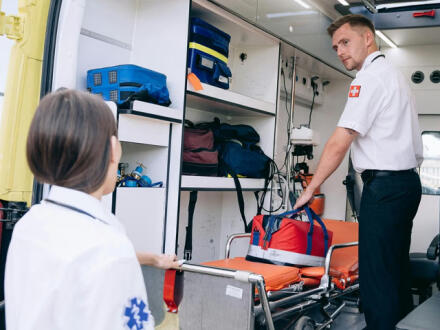
Paying for EMT school in South Dakota can feel like a sprint before the real race even starts. Tuition, books, uniforms, immunizations, exam fees, gas for clinical shifts, and lost work hours add up fast. For a student working part time in Sioux Falls or a senior in Rapid City trying to line up a training plan after graduation, even a program that costs a few thousand dollars can feel steep.
That's why South Dakota Emergency Medical Technician Scholarships matter. They can cover more than tuition alone. In many cases, they can also reduce out-of-pocket costs for certification testing, transportation, and basic equipment. That can mean the difference between starting classes on time and delaying a career plan for another semester.
The good news is that scholarship money for future EMTs does exist, but it usually isn't sitting in one neat pile. It's spread across training programs, state aid options, health care groups, community foundations, and local employers. Students who search in only one place often miss the best fits.
The eight methods below give high school students, first-year students, and current college students a practical way to widen the search. Each section focuses on where to look, what to ask, and how to improve the odds of getting funded. The aim is simple: help students build a realistic, affordable path into emergency medical services in South Dakota.
1. Start With South Dakota EMT Training Programs That Bundle Scholarships And Tuition Support
The fastest place to look is the EMT program itself. Many students jump straight to big scholarship databases and skip the people who control the training budget. That's a mistake.
A South Dakota EMT training program may offer tuition discounts, workforce grants, payment plans, or employer-sponsored seats. Those offers do not always appear in public scholarship searches. Sometimes they are shared only in admissions emails or during a phone call with the program coordinator.
A short EMT course can cost a few thousand dollars once fees and supplies are included. If a program covers even $750 to $1,500, that can wipe out textbook costs, CPR certification, and the first exam bill.
Students should ask these exact questions:
- Does the program have institutional scholarships for EMS students?
- Are there rural service agreements tied to tuition help?
- Does a partner ambulance service pay part of the bill for students who commit to work shifts later?
- Are there need-based emergency funds for uniforms, boots, or background checks?
This works especially well in smaller communities. A rural ambulance service that struggles to recruit staff may prefer paying part of one student's tuition rather than leaving a truck short-staffed on weekends.
Students using Studentscholarships.org can pair program-specific help with broader state awards. A useful example is the Dakota Corps option, which may fit students willing to work in high-need areas after school.
The main point is simple: start local, start with the training office, and ask direct questions. Hidden funding often sits closest to the classroom.
2. Look For South Dakota Emergency Medical Technician Scholarships For High School Students
High school seniors have an advantage that many of them don't realize. They can apply before graduation, before bills hit, and before the first tuition deadline starts the clock.
South Dakota Emergency Medical Technician Scholarships for High School Students often come from a mix of career and technical education funds, local foundations, hospital auxiliaries, and state-based scholarships. A student with EMT plans does not always need a scholarship labeled "EMT" to qualify. A health science, public service, or community service award can still pay for training.
This matters because high school applications usually have less competition than broad college scholarships. A local foundation might receive 35 applications instead of 350. That changes the odds.
Students should search in four lanes at once:
- High school counseling office lists
- Local hospital and clinic foundations
- County community foundations
- State scholarship platforms and school-specific pages
A strong example for students still in high school is the High School Heroes award, which aligns well with service-focused applicants.
Another useful path is to look at state awards not limited to EMS. The South Dakota Opportunity route can support students who meet academic benchmarks and want flexible funding for postsecondary study.
Counselors often know which local scholarships had only a small applicant pool the previous cycle. One school counselor may remember that a county award drew just 18 completed applications. That kind of detail matters.
Students who wait until summer often miss deadlines that close in late winter or early spring. For high school seniors, the best time to start is several months before graduation, not after.
3. Target South Dakota Emergency Medical Technician Scholarships For First-Year Students Before Your First Semester
South Dakota Emergency Medical Technician Scholarships for first-year students are easy to overlook because students assume they must already be deep into a program. In reality, many awards are built for incoming students who can show a clear training plan.
That makes the first-semester window important. A student who applies in the months before classes begin can often stack aid from more than one source. One award might cover tuition. Another might handle books, gloves, and testing fees.
This timing matters because initial start-up costs can arrive all at once. A new EMT student may need:
- Tuition deposit
- Criminal background check
- Immunization records
- CPR certification
- Uniform items and boots
- National Registry exam fees
Those bills can hit in one 30-day stretch. Students who build a scholarship list early can ease that pressure.
For first-year students, general South Dakota scholarships still count if they free up money for EMS training. The SDATAT scholarship program is one example of a South Dakota-based option for senior high school students planning their next step.
Students should also ask admissions offices whether accepted students are automatically reviewed for aid. Some schools do this quietly. Others require a separate form, and missing it can mean losing access to funds that take only 10 to 20 minutes to request.
The best first-year strategy is simple: apply before the first invoice lands, and treat every small award like part of the same funding package.
Key Eligibility Rules To Check Early
A scholarship can look perfect and still be a dead end if the student misses one rule. This is where many applications quietly fail.
Students should check eligibility before writing essays. The most common filters include:
- Residency requirements such as South Dakota home address or county residency
- Enrollment level such as full-time, half-time, or accepted-but-not-yet-enrolled
- Program type such as certificate, technical college, or university pathway
- GPA minimums, often 2.5, 3.0, or 3.5
- Service commitments tied to rural practice or in-state work
- Citizenship or FAFSA-related rules
A first-year EMT applicant can lose a solid chance by assuming "health care major" includes every EMS track. Some scholarships mean nursing, pre-med, or allied health only. Others are much broader.
Students should keep a one-page tracker with deadline, award amount, essay topic, recommendation count, and exact eligibility rules. That one sheet can prevent missing a detail like "must already hold admission" or "must submit proof of volunteer service."
A practical example: if one scholarship offers $1,000 but requires a 3.5 GPA, and another offers $750 with a 2.8 GPA floor plus community service, the second may be the smarter use of time for a busy applicant.
Strong scholarship hunting is not just about finding awards. It is also about cutting weak matches early so energy goes to the best-fit applications.
4. Expand Your Search To South Dakota Emergency Medical Technician Scholarships For College Students
Students already in college should not assume the best scholarship window has passed. In fact, South Dakota Emergency Medical Technician Scholarships for College can open up once a student has a transcript, instructor references, and some hands-on service experience.
That extra proof helps. A first-semester college student who earned a 3.2 GPA, volunteered 40 hours with a rescue squad, and completed anatomy with a solid grade has a stronger file than they did in high school.
College students should search beyond EMS-only language. Good matches often sit under:
- Allied health scholarships
- Rural workforce awards
- First responder funding
- Community service scholarships
- Career and technical student awards
This is also a good stage to use broader scholarship platforms efficiently. Studentscholarships.org works well here because students can spot state-specific and field-adjacent options without spending hours sorting through irrelevant results.
A South Dakota student who fits a service-minded profile may find value in the Ramia Boersma award, while a student with a strong South Dakota residency profile may widen the list with the Restoration of Sight & Health option.
College financial aid offices can help too. Staff often know which departmental funds had low response rates. One office may report that a health-related award went unclaimed because only 7 students finished the paperwork.
The lesson is clear: once college begins, the application gets stronger, not weaker. Students should use that added proof to reopen the scholarship search.
5. Include South Dakota Emergency Medical Technician Scholarships For University Programs With EMS Pathways
Some future EMTs do not start in a stand-alone certificate course. They enter a university program tied to health sciences, emergency services, public health, or prehospital care. That makes South Dakota Emergency Medical Technician Scholarships for University worth adding to the search.
University-based funding can be broader than people expect. A student on an EMS pathway may qualify through a college of health sciences, a rural service initiative, or a general financial aid pool tied to academic progress.
This matters because university aid can stack in layers. One student might receive:
- A university merit award
- A need-based grant
- A department-level health scholarship
- A local EMS-related private award
That stack can close a big gap. Even a combination of $500 + $1,200 + $2,000 changes the math fast.
Some institutions publish financial aid information clearly. South Dakota State lists funding through its financial aid office, which helps students compare institutional options against outside scholarship plans.
Students pursuing university routes should ask whether EMS-related coursework, clinical placements, or allied health tracks count for departmental awards. They should also ask whether transfer students and part-time students are included.
A scholarship does not need the letters "EMT" in the title to support an EMT career path. If it reduces tuition for a university-based health track, it still matters.
The smart move is to search both the university scholarship portal and outside state databases at the same time, then combine offers wherever the rules allow.
How University-Based Awards Differ From Private Scholarships
University-based awards and private scholarships do not work the same way. Knowing the difference helps students avoid weak applications and missed deadlines.
University-based awards often rely on school records the institution already has. That may include GPA, enrollment status, FAFSA data, or admission information. Private scholarships usually ask for more outside material, such as essays, recommendation letters, work history, or community service logs.
Here is the practical difference:
- University awards may renew automatically if the student keeps a set GPA
- Private scholarships often require a fresh application each cycle
- University funds may apply directly to the student bill
- Private funds may arrive later as a check to the school or student
For example, a university may award $1,500 based on admission and need. A private EMS-related foundation might award $1,000 only after reviewing a two-page essay and two references. Both are useful, but they require different planning.
Students should also watch the timing. University deadlines may close months before move-in, while private scholarship deadlines can be spread across the year. Missing one institutional date can cut off a major funding source.
A simple calendar with color-coded deadlines works well here. It turns a messy search into a schedule students can actually manage.
6. Check South Dakota Emergency Medical Technician Association Scholarships And EMS Industry Awards
Professional groups and industry associations are a strong source of targeted funding. Students often skip them because membership organizations can seem built only for working professionals. That is not always true.
South Dakota Emergency Medical Technician Association Scholarships and similar EMS industry awards may support students entering the field, especially those who show a long-term plan to serve local communities. These groups care about workforce growth, retention, and training quality. A motivated student in a small town can be exactly the person they want to support.
This is where trade and certification groups matter. A student pursuing medical or technical certification can sometimes qualify for awards outside classic university channels. For instance, the AMT student scholarship page reflects how field-specific organizations support future professionals.
Students should look for associations tied to:
- EMTs and paramedics
- Ambulance or transport services
- Rural health care staffing
- Allied medical certification
- Public safety training
Applications in this lane tend to reward specificity. An essay that says, "they want to help people," is weak. An essay that says, "they plan to work weekend coverage in a county where transport times can exceed 25 miles per call," feels real.
Industry awards also like evidence of follow-through. A student who completed ride-alongs, attended CPR instruction, or volunteered at school event coverage stands out because the file shows action, not just interest.
The best applicants treat association scholarships like professional opportunities, not just free money.
7. Prioritize Local Funding From Hospitals, Ambulance Services, Foundations, And Rural Communities
Local money is often the most realistic money. It may not be flashy, but it can be easier to win because the applicant pool is smaller and the mission is personal.
Hospitals, ambulance providers, community foundations, and rural service districts often fund students to solve a clear staffing problem. If a town struggles to recruit EMTs, helping one local student with $1,000 to $3,000 can be a practical investment.
This is especially true in rural South Dakota. Long transport times, volunteer shortages, and burnout create real pressure. A local board may care less about polished wording and more about whether the student is likely to come back and serve.
Strong local sources include:
- Critical access hospitals
- County ambulance districts
- Rural health foundations
- Community memorial scholarship funds
- Civic groups such as Rotary or Lions clubs
- Employer tuition-assistance programs
Students can also widen the search through local-interest scholarships on broader platforms. The Dakota Pequeno Memorial award is the kind of example that reminds students to look beyond only EMS-labeled results.
One concrete tactic works well: call 10 local organizations and ask whether they fund health career students. Even if only 3 say yes, that can produce more real leads than two hours of random online searching.
Local funding often moves through relationships. A student who makes one clear phone call and sends one polite follow-up email can get much farther than someone who only searches scholarship titles online.
Best Local Sources To Contact
Students do better when they contact the right office instead of sending vague emails into a general inbox. Specific people usually know whether funds exist and when applications open.
The best local sources to contact are:
- Hospital HR departments for tuition help tied to future employment
- EMS supervisors or ambulance directors for sponsorships and service agreements
- Community foundation staff for county-level scholarship lists
- High school counselors for local donor awards
- College financial aid staff for stacked aid options
- Volunteer fire and rescue leaders for small service-based grants
A good email should be short. It should state the student's town, school status, EMT goal, and expected start term. In 5 to 7 sentences, the student can ask whether the organization supports local EMS trainees and whether any deadlines are coming up.
If the student is considering a university route, the USD aid office shows how institutional aid pages can help compare outside funding with school-based options.
Phone calls still matter here. A local foundation director may mention a scholarship that has not been posted yet or one that reopened because no one completed the application correctly.
Students should keep a simple contact log with name, date, phone, email, and next step. That turns outreach into a system rather than a guessing game.
8. Strengthen Every Application With EMS Experience, Community Service, And A Focused Career Goal
A student does not need years of ambulance experience to look serious. But the application should prove that the interest in EMS is real, tested, and connected to a plan.
Scholarship committees respond well to evidence. Even small actions help if they are concrete. A student who volunteered 24 hours at football game first-aid stations, completed CPR training, and shadowed a local crew for one weekend has more substance than a student with only a broad interest statement.
The strongest applications usually include three things:
- Relevant exposure such as ride-alongs, first-aid events, or health science coursework
- Community service that shows reliability and calm under pressure
- A focused career goal such as serving a rural county, moving into advanced EMS training, or supporting tribal or frontier communities
This is also where broader scholarship experience can help. Students who build a habit of applying through state and local pages on Studentscholarships.org often get better at telling a clear story fast. That matters because many forms give only 250 to 500 words for the main essay.
Committees often read dozens of applications in one sitting. A file with direct examples stands out. "They helped coordinate blood pressure checks for 67 attendees at a community wellness event" is memorable. "They enjoy helping others" is not.
The best scholarship applications feel specific, grounded, and local. They show not only that the student wants to become an EMT, but also where and why they plan to serve.
What Scholarship Committees Want To See In Your Essay
Most EMT scholarship essays succeed or fail on clarity. Committees want a simple answer to one question: Why this student, for this field, right now?
A strong essay usually includes:
- A short personal reason for choosing EMS
- One concrete experience that confirmed the choice
- A clear training plan
- A realistic career goal in South Dakota or a nearby service area
- A direct explanation of how the scholarship will be used
Students should be specific with money. Saying "this scholarship will help with school" is weak. Saying "this award would cover my National Registry exam fee, uniform boots, and half of my textbook cost" feels honest and practical.
The tone should stay plain and direct. A committee member reading 40 essays in one evening will remember the application that sounds real. A student who describes driving 32 miles to volunteer EMT observation shifts or balancing classes with weekend work on a ranch gives the reader a scene they can picture.
Good essays also connect personal motivation to community need. If a county has long wait times or few volunteers, the student should say so. That turns a personal goal into a local solution.
Before submitting, students should read the essay out loud once. If one sentence sounds stiff or fake, it probably is. Clean, simple writing usually wins.
South Dakota Emergency Medical Technician Scholarships - Frequently Asked Questions
What types of costs can South Dakota EMT scholarships help cover besides tuition?
South Dakota EMT scholarships often cover tuition as well as certification testing fees, transportation to clinical shifts, uniforms, books, immunizations, and other training-related expenses, helping reduce overall student out-of-pocket costs.
Where should I start looking for South Dakota Emergency Medical Technician scholarships?
Begin by contacting your EMT training program directly, as many programs offer institutional scholarships, workforce grants, or employer-sponsored spots that may not be listed on public databases. Admissions offices can provide details about available local funding.
Can high school students in South Dakota apply for EMT scholarships before graduating?
Yes, many scholarships exist for high school seniors planning EMT careers. Applying early through high school counseling offices, local hospital foundations, or state platforms improves chances. Awards like the High School Heroes can support aspiring EMT students.
How can college students already enrolled in EMT or related programs find scholarships in South Dakota?
College students should explore scholarships beyond EMT-only options, such as allied health, rural workforce, and community service awards. Using platforms like Studentscholarships.org and consulting financial aid offices can uncover less competitive funding opportunities like the Ramia Boersma Scholarship.
What should I include in my scholarship essay to improve my chances for EMT funding?
Effective essays clearly explain your motivation for EMS, highlight specific experiences like ride-alongs or volunteer service, present a practical training plan, and describe targeted career goals that address local community needs. Be specific about how the scholarship money will be used.
Are there local South Dakota organizations that provide EMT scholarships?
Yes, local hospitals, ambulance services, rural health foundations, and community groups often offer scholarships to support EMS students willing to serve in their area. Reaching out by phone or email to these organizations with a clear request can uncover valuable, less-contested funding.







