

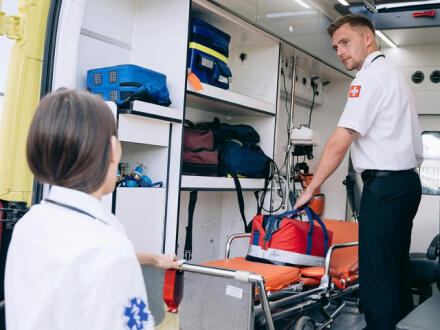
EMT training can be one of the fastest ways into healthcare, but the bill still stings. In Pennsylvania, a basic EMT course often runs $900 to $1,800 for tuition alone, and that can jump past $2,500 once students add books, uniforms, background checks, CPR cards, and exam fees. For a high school senior or first-year student, that's real money.
The good news is that Pennsylvania Emergency Medical Technician Scholarships are not limited to one big statewide award. Students can piece together help from EMS foundations, professional associations, high school scholarships, college aid offices, county foundations, and employers. That mix matters because many awards are small on their own, $500 here, $1,000 there, but two or three can cover most of a short EMT program.
This guide breaks down 7 practical funding paths for students who want to train as EMTs in Pennsylvania. It also points out where high school students, freshmen, and current college students usually have the best odds. The goal is simple: help readers spend less, apply smarter, and avoid missing scholarships that fit their exact stage.
1. Pennsylvania EMS Provider Foundation Scholarships
The Pennsylvania EMS Provider Foundation is one of the first places students should look when searching for Pennsylvania Emergency Medical Technician Scholarships. It sits close to the EMS field itself, which matters. Programs tied to the profession often understand the real cost of training better than general scholarship funds do.
A practical example: a student taking an EMT course priced at $1,250 plus $210 in books and fees may only need one mid-sized scholarship to wipe out most of the bill. That makes foundation awards especially useful for short-term training rather than four-year tuition alone.
Students can also widen the search by pairing EMS-specific options with healthcare listings on AMT student aid if they plan to keep moving into allied health credentials later.
Who Qualifies And What Programs Are Typically Covered
Eligibility usually favors applicants with a clear connection to emergency care in Pennsylvania. That can include:
- EMT students enrolled in an approved training program
- EMS volunteers or junior responders
- Children or dependents of EMS providers
- Students planning to serve rural or understaffed communities
Programs commonly covered include:
- Basic EMT courses
- EMT training attached to community colleges
- Continuing EMS education in some cases
- Related prehospital care pathways
Applicants should expect to show more than financial need. Strong files often include:
- A short personal statement with a real service goal
- Proof of course acceptance or enrollment
- A training budget with exact numbers
- A recommendation from an instructor, chief, or EMS supervisor
Specific numbers help. A statement that says, "My total course cost is $1,486, and I can personally cover $400 from part-time work," is stronger than vague need language. It shows planning.
One more tip: Pennsylvania EMS funding can be cyclical and competitive. If a scholarship receives 80 applications for 10 awards, the student who explains a direct community need, such as a township with only 18 active volunteers, often stands out faster than the student who writes in broad terms.
2. Pennsylvania Emergency Medical Technician Association Scholarships And Related Professional Awards
Professional associations are easy to overlook, but they can be some of the smartest funding routes. Pennsylvania Emergency Medical Technician Association Scholarships and similar awards often look for students who already act like future professionals, not just tuition seekers.
That's good news for applicants who volunteer, attend local EMS meetings, or help with standby events. A student with 42 volunteer hours, one CPR instructor recommendation, and active membership can look more serious than someone with a higher GPA but no field involvement.
Association-based funding also pairs well with broader healthcare and service scholarships. For example, students exploring allied-health support can compare nearby options such as the Blair County medical award when their long-term plan includes paramedic, nursing, or public health study.
How Student Membership And Local Involvement Can Strengthen Your Application
Membership matters because it signals interest before money enters the picture. Even low-cost student membership can help an application in three ways:
- It shows commitment to the field
- It puts the student on the radar for newsletters and deadlines
- It creates chances to meet mentors who write stronger recommendations
Local involvement matters just as much. Helpful examples include:
- Riding along in approved observer roles
- Helping at community blood pressure checks
- Volunteering at fire company fundraisers
- Assisting with EMS awareness events at school
A good application usually answers one question: Why this student, not another one? The best answers use proof.
For example:
- "She completed 28 hours of ride-along observation."
- "He volunteered at 6 township emergency events."
- "They organized a first-aid demo for 73 students in their high school gym."
That kind of detail sticks.
Students should also ask whether the association offers awards beyond direct scholarships. Some groups fund:
- Conference registration
- Textbooks
- Testing fees
- Leadership recognition awards
Those smaller awards matter. A $175 exam fee, a $60 CPR renewal, and $140 in required textbooks can be the exact costs that stop a student from starting on time. When students build a list from scholarship platforms with quick filters, such as the free search tools on student scholarship listings, they're less likely to miss these lower-dollar but high-value opportunities.
3. Pennsylvania Emergency Medical Technician Scholarships For High School Students
High school seniors often assume scholarships only start after college begins. That's not true. Pennsylvania Emergency Medical Technician Scholarships for High School Students can come from local foundations, career programs, youth organizations, and health-related awards that do not require a four-year degree path.
This matters because EMT is one of the few healthcare entry points a student can pursue quickly after graduation. In some areas, a motivated senior can finish training in a few months and start earning while classmates are still settling into dorm rooms.
A realistic scenario: a senior wins $750 from a county foundation and $500 from a local service club. That $1,250 can fully cover many EMT class tuition bills in Pennsylvania.
Best Options For Seniors Entering EMT Training Or Allied Health Programs
The best scholarships for seniors usually come from organizations already invested in youth service, local workforce needs, or healthcare training. Strong places to search include:
- Community foundations serving a single county
- Hospital auxiliaries
- Volunteer fire and EMS companies
- Civic groups such as Rotary, Lions, and Knights of Columbus
- Career and technical education partners
Some non-EMS-specific scholarships can still fit an EMT path if the student explains the healthcare plan clearly. For example, a senior active in church or community service may qualify for the Knights of Columbus Pennsylvania program if the broader eligibility lines up.
Students from agricultural communities should also look outside the obvious EMS lane. The Pennsylvania Farm Show award can fit applicants whose background, school activities, and service record connect with rural Pennsylvania. Rural EMS agencies often face long response distances, sometimes 12 to 20 miles between calls, so scholarship committees may respond well to students who plan to serve those areas.
High school applicants should keep their packet simple and specific:
- GPA or transcript
- Class rank if available
- Volunteer log with dates and hours
- One recommendation from a teacher or coach
- One recommendation from an EMS, fire, or community leader
- A budget for tuition, books, and licensing fees
A short essay works best when it sounds lived-in. "She watched a local crew respond to her grandfather's fall and decided to train" is more convincing than a generic statement about helping people.
4. Pennsylvania Emergency Medical Technician Scholarships For First-Year Students
Freshmen often land in an awkward middle spot. They are no longer high school applicants, but they may not yet have much college experience to show. Still, Pennsylvania Emergency Medical Technician Scholarships for first-year students do exist, and many committees understand that a first semester does not produce a huge resume.
What matters most is momentum. If a first-year student can show a clear healthcare direction, recent service, and a realistic cost plan, that can be enough.
At some Pennsylvania schools, a student may face $900 to $1,600 in EMT training costs on top of general college expenses. That makes freshman-targeted aid worth the effort, even if the award is only $500.
How To Position A Freshman Application With Limited College Experience
Freshmen should borrow heavily from strong high school evidence while adding early college signals. A solid application can include:
- Senior-year service records
- Any EMS, fire, or hospital volunteering done over the summer
- First-semester grades, even if unofficial at first
- A professor or advisor note confirming attendance and focus
- A short statement of next steps, such as EMT to paramedic or EMT to nursing
This is where comparison helps. Some committees reviewing Pennsylvania Emergency Medical Technician Scholarships for College applicants know a freshman has only had 10 to 14 weeks on campus. They are often more interested in consistency than volume.
Examples of strong freshman positioning:
- "He completed 36 volunteer hours with a rescue squad between August and November."
- "She earned a 3.4 GPA in her first term while working 12 hours per week."
- "They saved $650 from a campus job and still need $980 to finish EMT training."
Students can also look at broader Pennsylvania undergraduate awards that support service-minded or health-bound students. The PSTAP undergraduate options are one example of how non-EMT-specific funding can still help cover the same education budget.
For freshmen with disabilities or those pursuing skills-based technical training, Pennsylvania's CTI at HGAC highlights career-focused education in in-demand fields. That kind of state-backed pathway can support a stronger case when a student explains why short-format healthcare training leads to faster employment.
5. Pennsylvania Emergency Medical Technician Scholarships For College And University Students
Current college students have one big advantage: they can prove performance with college grades, campus involvement, and instructor feedback. That makes Pennsylvania Emergency Medical Technician Scholarships for College and Pennsylvania Emergency Medical Technician Scholarships for University especially worth pursuing after the first year.
Students in two-year and four-year settings both qualify for funding paths, but they often need slightly different strategies. A community college EMT student may stress job-readiness and local service, while a university student may connect EMT training to pre-med, public health, athletic training, or nursing.
A student who stacks $1,000 from a campus scholarship, $750 from a county fund, and $500 from an EMS employer can cover $2,250 of training and related costs. That's enough to turn a delayed plan into an immediate one.
Pennsylvania Emergency Medical Technician Scholarships For College vs. University Programs
The biggest difference is usually not the scholarship name. It's the story behind the application.
College programs
Students in community or technical colleges often do best when they stress:
- Fast entry into the workforce
- Local clinical placements
- Service to hometown EMS agencies
- Cost efficiency
A compelling line might be: "She can complete EMT training for $1,340 at her college and start serving a county with volunteer shortages."
Students can also cross-check related Pennsylvania awards if their studies connect with healthcare administration, education, or campus leadership. For example, the Pennsylvania business education award may suit a student blending EMS training with office, training, or teaching goals.
University programs
University students often have broader extracurricular records. They should use them. Helpful angles include:
- Research or public health interest
- Campus emergency response volunteering
- Resident assistant or peer leadership work
- Long-term clinical goals such as paramedic, PA, or physician training
A university application can stand out with specific impact. "He served 214 residents during campus safety events as a student responder" reads much stronger than "He likes helping others."
Students involved in women's health, nursing support, or hospital volunteering may also find adjacent opportunities like the Nightingale Awards route, especially if their EMT plan fits a larger allied-health track.
For both college and university students, the most common mistake is applying too narrowly. EMT-specific awards are valuable, but students should also apply to 5 to 12 broader Pennsylvania scholarships that match service, region, background, or career interest.
6. Community Foundation And County-Based Scholarships Across Pennsylvania
This is where a lot of students find the money that actually closes the gap. Community foundations and county-based scholarships are often less crowded than national awards, and they care about local impact. For EMT applicants, that is a real advantage.
A county scholarship committee may know exactly what its area needs: more responders, more rural coverage, or more young adults staying local. If an applicant says they plan to serve a township with only 2 ambulances covering 11,000 residents, that can hit home fast.
The best part is flexibility. These awards may not say "EMT" in the title, but they can often be used for approved postsecondary training, certification programs, or healthcare education.
Students should search by:
- County name
- Community foundation name
- High school guidance office lists
- Local hospital foundations
- County medical societies
- Electric cooperatives and trade groups
That wider search can uncover useful Pennsylvania options such as the Pennsylvania rural electric scholarship, especially for students from cooperative service areas. Specialized awards like this sometimes pull fewer applicants than broad state competitions.
County medical and service organizations can also be strong leads. The Blair County medical scholarship is a good example of the kind of local healthcare-connected funding students should watch.
When applying, students should localize the essay hard. Good details include:
- The exact town or county they hope to serve
- The distance to the nearest emergency department
- Volunteer shortages in the area
- Family ties to healthcare, fire, or rescue work
A sharp local essay might say a responder currently drives 17 miles to class, volunteers on weekends, and wants to reduce local wait times. That sounds real because it is real.
These scholarships are also a great fit for students using a platform like StudentScholarships.org, where broad Pennsylvania searches can be filtered into smaller, more realistic batches instead of one giant list.
7. Employer-Sponsored, EMS Agency, And Hospital Tuition Support
Not every funding path is a scholarship in the classic sense. Some of the best help comes from employers, EMS agencies, and hospitals that need trained people now. For students willing to work locally after training, this can be the shortest path to low-cost or even no-cost EMT education.
Across Pennsylvania, support often comes in one of four forms:
- Upfront tuition payment for an approved EMT course
- Reimbursement after the student passes
- Stipends for books, uniforms, or exam fees
- Service agreements that trade a work commitment for funding
Here's a simple example. An ambulance company pays $1,100 in tuition, covers a $175 exam fee, and asks for 12 months of part-time service after certification. For a student with limited cash, that can be a better deal than chasing three small scholarships.
Hospital systems sometimes support EMT training through emergency department tech pipelines, transport roles, or workforce development funds. Fire departments and volunteer EMS agencies may also sponsor local recruits, especially when staffing is thin.
Students should ask direct questions:
- Is tuition paid before class starts or after completion?
- Is the support a grant, reimbursement, or forgivable loan?
- What happens if the student fails the exam once?
- How many shifts or months of service are required?
- Are books, clearances, and uniforms included?
The math matters. A "free" course attached to a 24-month service obligation may cost more in flexibility than a $750 scholarship with no strings. On the other hand, a local agency that covers every training expense and guarantees paid shifts can be ideal for someone who wants quick entry into EMS.
Students should compare these offers against standard scholarship routes, not treat them as separate worlds. Often the smartest move is mixing both: employer help for tuition and outside scholarship money for gear, gas, and test fees.
Pennsylvania Emergency Medical Technician Scholarships FAQs
What types of scholarships are available for EMT training in Pennsylvania?
Pennsylvania offers various EMT scholarships through EMS foundations, professional associations, community foundations, county programs, and employer-sponsored funding to help cover tuition, books, and fees.
Who qualifies for Pennsylvania EMS Provider Foundation Scholarships?
These scholarships favor EMT students enrolled in approved programs, EMS volunteers, children of EMS providers, and those planning to serve rural or underserved Pennsylvania communities.
How can high school students find EMT scholarships in Pennsylvania?
High school seniors can pursue scholarships from local foundations, hospital auxiliaries, volunteer EMS companies, and civic groups like the Knights of Columbus and community foundations that support healthcare training.
What strategies help first-year college students secure EMT scholarships in Pennsylvania?
Freshmen should highlight recent volunteer work, early college achievements, clear training budgets, and statements of career goals to strengthen their scholarship applications.
Are there specific EMT scholarships for college versus university students in Pennsylvania?
Yes, community college students often emphasize fast workforce entry and local service, while university students can leverage broader extracurriculars and long-term clinical goals in their applications.
How can employer-sponsored programs assist with EMT training costs?
Many Pennsylvania EMS agencies and hospitals offer tuition assistance, reimbursements, stipends, or forgivable loans with service commitments, providing affordable paths to EMT certification.







