

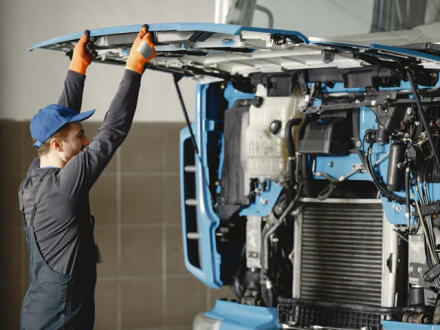
Paying for equipment training can feel heavy before a student even picks up a wrench. Tuition, tools, boots, safety gear, fuel, and lost work hours add up fast. For a student in New Hampshire who wants to work on loaders, excavators, graders, or diesel-powered machines, that total can easily reach $4,000 to $18,000 depending on the program, tool needs, and commute.
The good news is simple: New Hampshire heavy equipment repair scholarships are not limited to one type of student. High school seniors, first-year students, community college students, and even university students in related fields can all find real funding if they search in the right places.
This guide lays out 10 practical paths. Each one focuses on where students can find money, what kind of application works, and how to avoid the common mistake of chasing only the big awards. A student who stacks one $2,500 state-based award, two $1,000 local awards, and one employer reimbursement can cut a large part of training costs without taking on extra debt.
The goal here is not fancy advice. It is a usable plan. By the end, students will know where to look, what to submit, and how to improve their odds of winning scholarships for heavy equipment, diesel, and equipment repair training in New Hampshire.
1. Start With New Hampshire Trade And Technical School Scholarships
Students should begin with trade schools and technical programs because those awards usually fit their career path best. A school that trains diesel or equipment technicians often knows which local donors want to fund students headed into hands-on work, not four-year academic majors.
A smart first move is to contact the financial aid office and the department chair on the same day. In many schools, the aid office handles broad awards while the program chair hears about shop-specific funds from equipment dealers, repair shops, and local contractors.
A student should ask for these exact categories:
- Program-specific scholarships for diesel, mechanics, or heavy equipment repair
- Tool or supply grants that cover starter kits, steel-toe boots, or diagnostic equipment
- Need-based aid tied to state residency
- Completion scholarships for students who finish the first term with strong attendance
Concrete numbers matter here. If a tool starter set costs $1,200, and boots, gloves, and eye protection cost another $180, even a "small" shop award can make a big dent.
Some students also broaden their search with statewide databases and career-centered platforms such as the scholarship listings, which can help surface trade-friendly awards faster than a general web search. That matters because many local scholarships receive far fewer applicants than national awards, sometimes under 40 submissions for a single pool.
The best rule: start where the training happens. Schools often know about money that never shows up on page one of a search engine.
2. Target New Hampshire Heavy Equipment Repair Scholarships For High School Students
High school students have an edge if they start early. Many scholarship committees like applicants who already show clear career direction, and "I want to repair heavy equipment" stands out more than a vague plan.
For New Hampshire Heavy Equipment Repair Scholarships for High School Students, the strongest applications often come from students who can point to specific experience. That might be:
- Agriculture mechanics classes
- Auto shop or welding electives
- Part-time work at a farm, garage, landscaping business, or excavation crew
- FFA, SkillsUSA, or technical center participation
A student does not need a full résumé. One strong example works. A senior who spent 8 hours every Saturday for 6 months helping maintain skid steers for a local landscaping company has a better story than someone who only says they "like engines."
State and local foundation awards can also overlap with technical goals. A student looking for community-based aid may find useful options through listings such as the New Hampshire Charitable Foundation scholarships, which often connect local donors with New Hampshire students pursuing postsecondary education.
High school counselors are still useful here, even for trade-bound students. They often know which town, rotary, regional employer, and memorial scholarships drew only 15 to 30 applicants in the last cycle. That is a much better lane than a nationwide award with 5,000 applicants.
For this group, timing is huge. Starting in the fall of senior year gives students time to collect references, transcripts, and proof of career interest before deadlines pile up.
3. Apply For Community College Programs That Support Diesel And Equipment Repair Training
Community colleges are one of the strongest routes for future technicians. They often cost less than private training programs, and many offer certificate or associate pathways that line up with employer demand in construction, trucking, and equipment service.
For students searching New Hampshire Heavy Equipment Repair Scholarships for College, community colleges deserve extra attention because they may combine several forms of aid:
- Institutional scholarships
- Workforce grants
- Federal Pell Grant support for eligible students
- Short-term emergency funds for books, fuel, or tools
New Hampshire students can also use state education resources to compare postsecondary options through the state's postsecondary overview. That helps students verify approved schools and training pathways before applying.
The money adds up faster than many students expect. If tuition is $6,500, books run $900, and transportation for a 32-mile round trip costs about $28 per week in fuel and wear, the full price of attendance becomes much bigger than the tuition line alone.
A student should also ask whether the program has employer partners. Some colleges place students into co-ops, internships, or paid shop roles after the first term. Even 12 hours a week at $18 per hour can cover fuel, hand tools, and a portion of tuition.
Community colleges are practical, affordable, and often overlooked by students who assume "real" scholarships only sit at four-year schools. That assumption leaves money on the table.
4. Look For New Hampshire Heavy Equipment Repair Scholarships For First-Year Students
First-year students should not assume the scholarship hunt ends after senior year. In fact, many awards are designed for students who have already enrolled and shown that they can handle attendance, deadlines, and shop safety.
That makes New Hampshire Heavy Equipment Repair Scholarships for first-year students especially important. Committees often want proof that a student is serious, and the first semester provides hard evidence.
A first-year applicant should highlight:
- Attendance rate, ideally above 90%
- Completed shop projects
- Instructor feedback
- Any earned certifications, even entry-level safety or OSHA training
- A GPA or program standing if the scholarship asks for it
This is also a good place to look at trade-related awards outside a college's own office. For example, equipment-focused opportunities like the Heavy Equipment Parts Express scholarship may fit students building a career around machinery, parts, service, or repair.
One concrete example: a student who starts school with no funding may pay $2,100 out of pocket in the first term. If that student later wins two spring awards worth $1,250 each, the second term becomes far easier to manage.
The key is momentum. A first-year student now has shop hours, instructor references, and maybe a photo set of completed brake, hydraulic, or electrical work. That material turns a generic application into a believable one.
5. Search For New Hampshire Heavy Equipment Repair Scholarships For College Students Continuing Their Training
Continuing students often have better odds than brand-new applicants. They can show progress. And progress matters in technical training, where employers and donors want to see that a student keeps showing up, keeps learning, and keeps finishing jobs.
For New Hampshire Heavy Equipment Repair Scholarships for College students who are continuing their training, the best angle is measurable growth. A student should not just say they are committed. They should prove it with numbers.
Useful proof includes:
- 2 or more completed semesters
- A GPA such as 3.1 or 3.4, if strong
- Perfect lab attendance or near-perfect attendance
- Completed engine, hydraulic, welding, or electrical modules
- Part-time work hours in a related shop
This is also where general New Hampshire awards can support a trade path if the student explains the connection well. Options such as the New Hampshire FB scholarships may be especially relevant for students with rural, agricultural, or farm equipment experience.
A concrete scenario helps. A student who repaired hay baler hydraulics on a family farm and later completed 240 lab hours in diesel diagnostics has a strong story for awards linked to agriculture, mechanics, or rural workforce needs.
Continuing students should also ask whether scholarships renew. A $1,500 annual award with a GPA requirement can be worth $3,000 or more over a two-year program. That is far more useful than chasing a flashy one-time prize with long odds.
6. Explore New Hampshire Heavy Equipment Repair Scholarships For University Students In Related Fields
Not every future heavy equipment specialist is in a pure repair program. Some students attend universities and study construction management, mechanical engineering technology, industrial technology, or related fields that still connect to equipment service and fleet operations.
That is why New Hampshire Heavy Equipment Repair Scholarships for University students can still be worth pursuing, even when the degree title looks broader. A student might plan to work in fleet maintenance, equipment reliability, service operations, or field support after graduation.
A strong university-focused search should include:
- Departmental scholarships in engineering or technology
- Construction industry awards
- State and regional foundation scholarships
- Career-path essays that tie university study to equipment maintenance work
Some New Hampshire institutions also publish aid information directly, and school-based funding can be part of the mix for students in related fields. For example, UNH financial aid outlines scholarships, grants, and broader aid options that may support students whose coursework connects to equipment systems, powertrains, or construction operations.
Students should make the link explicit. If a mechanical technology student has spent 120 hours in a fabrication lab and wants to manage fleet maintenance for an excavation contractor, that is relevant. So is a construction student who can explain how downtime on a $280,000 excavator affects job schedules, labor costs, and safety.
University students win more when they connect theory to field use. That connection makes the application feel grounded, not abstract.
7. Check Industry Associations And New Hampshire Heavy Equipment Repair Association Scholarships
Industry groups can be a gold mine because their donors already care about skilled trades. They want more technicians in the pipeline. That makes association funding one of the smartest routes for students interested in New Hampshire Heavy Equipment Repair Association Scholarships.
These groups may include construction, arboriculture, agriculture, engineering, or equipment-related organizations across New Hampshire and New England. Their scholarship committees often value students who plan to stay in the region and work in high-need fields.
A student should search for associations tied to:
- Construction and road building
- Arboriculture and land management
- Agriculture and farm equipment
- Diesel service and fleet maintenance
- Building trades and site work
One example is the New England Chapter ISA scholarships, which can matter for students whose goals touch tree equipment, utility work, or field machinery used in arboriculture.
Another useful angle is adjacent industry funding. A student who wants to maintain skid steers, trenchers, and compact loaders for land-development work may fit awards such as the Plan New Hampshire scholarship program if they connect their career goals to construction and the built environment.
Here is the real advantage: niche associations often draw smaller pools. A regional industry award with 27 applicants gives a student far better odds than a broad technical scholarship with 1,400 applicants. That is not luck. That is smart targeting.
8. Focus On Employer-Sponsored Scholarships From Construction, Excavation, And Equipment Companies
Employers often fund scholarships for one practical reason: they need workers. Heavy equipment repair is not an abstract field. Contractors, quarries, equipment dealers, and excavation firms lose money when machines sit still.
A single breakdown on a jobsite can cost serious money. If an excavator crew of 4 workers sits idle for 6 hours at a blended labor and overhead cost of $85 per hour per person, the downtime can top $2,000 before parts and schedule delays are counted. That is why employers invest in future technicians.
Students should look for support from:
- Equipment dealerships
- Excavation contractors
- Road and utility companies
- Aggregate and paving firms
- Parts suppliers and service companies
Some trade-focused awards are directly connected to industry. The Heavy Equipment Parts Express scholarship is one example of a parts-centered scholarship that fits students interested in equipment repair and support roles.
Employer-backed scholarships may also come with extras that matter just as much as the cash:
- Paid summer work
- Internships
- Tool discounts
- Interview priority after graduation
A student should ask local employers a direct question: "Does the company offer tuition help, scholarships, or reimbursement for diesel or equipment repair training?" That one sentence can uncover funding that never appears online.
And yes, small local firms sometimes give $500 to $2,000 quietly to one or two students each year. Those awards are often the easiest to miss.
9. Strengthen Your Application With Hands-On Experience And Career-Focused Materials
Scholarship committees remember proof, not buzzwords. A student who shows what they have done in a shop, field, farm, or garage will usually beat a student with a vague essay.
Hands-on experience does not need to be glamorous. It just needs to be real. A student who spent 14 weekends changing filters, tracing hydraulic leaks, cleaning electrical connections, or helping with undercarriage inspections already has useful material.
Strong application materials usually include:
- A short résumé with work hours, shop classes, certifications, and volunteer roles
- A career goal statement with a clear job target such as field technician, shop mechanic, or fleet maintenance tech
- One or two recommendation letters from an instructor, employer, or supervisor
- Photos or project descriptions when allowed
Students from difficult financial situations should also remember that life circumstances can qualify them for broader support. For example, the New Hampshire Hope Starts Here Scholarship may help students facing housing instability while they pursue training.
A good essay uses specifics. Instead of "they have always liked fixing things," a better line is: "They rebuilt a mower deck spindle, replaced two hydraulic hoses on a compact tractor, and logged 96 hours assisting at a local repair shop."
That kind of detail feels honest. It also makes the reviewer picture the student in the trade, which is exactly the goal.
10. Avoid Missing Money By Tracking Deadlines, Smaller Awards, And Local Funding Sources
Students lose scholarships for boring reasons all the time. They miss deadlines. They forget transcripts. They skip a $750 award because it feels too small. Then they borrow that same $750 later.
A better system is simple: track every scholarship in one place and apply in batches. A spreadsheet with 8 columns is enough: name, amount, deadline, requirements, essay status, transcript status, recommendation status, and submission date.
Students should also pay attention to local funding. Town scholarships, county groups, memorial funds, and employer-backed awards may receive fewer than 20 applications. That is often the best value in the whole search.
Where To Find The Best Scholarship Leads
The strongest leads usually come from places closest to the student's actual path.
Start with:
- Financial aid offices at trade schools, community colleges, and universities
- Technical center counselors and shop instructors
- Local employers in excavation, paving, trucking, and equipment sales
- Regional foundations and civic groups
- Free scholarship platforms that sort by profile and interest
Students who want a broad search plus local filtering often use a free matching platform like StudentScholarships, where scholarship discovery and career guidance sit in one place. That kind of tool can cut research time by 2 to 3 hours per week during peak application season.
One more tip: a student interested in technical or STEM-adjacent work can still look at neighboring fields. Even awards like the David G. Kent Scholarship may be worth reviewing if the student's coursework includes applied math or technical study.
What To Include In A Strong Application Packet
A complete packet beats a rushed one almost every time. Missing pieces sink good candidates.
The packet should include:
- Completed application form with no blank required fields
- Transcript
- Résumé with exact dates and hours
- 1 to 2 recommendation letters
- Personal statement with a clear equipment-repair goal
- Proof of enrollment or acceptance
- FAFSA or financial documents, if requested
A strong packet also uses numbers. "They worked 18 hours per week at a tractor dealership" sounds much stronger than "they have some job experience." Precision wins.
New Hampshire Heavy Equipment Repair Scholarships FAQs
What types of scholarships are available for heavy equipment repair students in New Hampshire?
Students can find scholarships from trade schools, community colleges, universities, industry associations, and employers that support heavy equipment repair training and related fields in New Hampshire.
How can high school seniors in New Hampshire increase their chances of winning a heavy equipment repair scholarship?
High school seniors should highlight specific hands-on experience like agricultural mechanics classes, FFA participation, or part-time work in related fields, and start their scholarship search early in the fall of their senior year.
Are there scholarships specifically for first-year heavy equipment repair students in New Hampshire?
Yes, many scholarships target first-year students who demonstrate strong attendance, completed projects, instructor recommendations, and certifications, proving their commitment to the field.
Where should New Hampshire students start searching for heavy equipment repair scholarships?
Students should begin with financial aid offices and program departments at trade schools, community colleges, and universities, as these often have program-specific awards and local donor-funded scholarships.
Can continuing heavy equipment repair college students in New Hampshire apply for scholarships?
Continuing students often have better chances by showing measurable progress like completed semesters, strong GPA, attendance, and hands-on experience in their applications.
What benefits do employer-sponsored scholarships provide for heavy equipment repair students?
Employer-sponsored scholarships often include tuition assistance, paid internships, tool discounts, and job interview priority, supporting students who plan to work in construction, excavation, or equipment service.






