

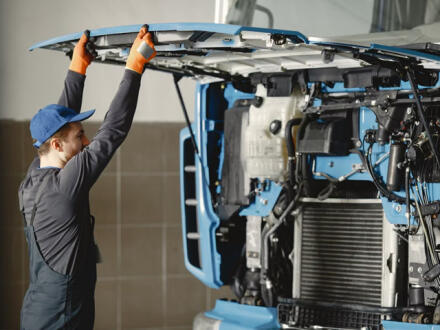
Students who want to work on bulldozers, excavators, loaders, and diesel-powered equipment often run into the same problem fast: tools cost money, tuition costs money, and training takes both. A heavy equipment repair path in Kentucky can include technical college, community college, university study in a related major, short-term certificates, or paid apprenticeships. The funding side can feel messy.
This list clears that up. It focuses on Kentucky heavy equipment repair scholarships and related aid options that can lower the bill for students who want to enter the field. That includes high school seniors, first-year students, technical program students, and university students studying subjects tied to equipment service, diesel technology, agriculture mechanics, or industrial maintenance.
The goal is simple: help students spot which awards fit them first. Some options are pure scholarships. Others are employer-funded awards, state aid, foundation scholarships, or workforce grants that can cover tuition, books, safety gear, and sometimes even transportation.
This article also explains what scholarship committees usually want to see from future mechanics and technicians. A strong applicant does not need a perfect story. But it helps when they can show steady grades, hands-on interest, and a clear reason for choosing heavy equipment repair.
For students comparing costs, that effort can pay off in a big way. A single $1,500 award can cover several textbooks, steel-toe boots, and part of a term's tuition. Stack two or three awards, and school starts to look a lot more possible.
1. Kentucky Heavy Equipment Repair Scholarships For High School Students
High school seniors should start here because the easiest money is usually the money claimed early. Many Kentucky scholarships accept applications before graduation, and some do not require a declared heavy equipment repair major as long as the student can show a plan to enter a skilled trade.
A practical starting point is the KEES award page. Kentucky Educational Excellence Scholarship funds are tied to GPA, which matters for students heading into diesel or equipment repair programs right after high school. A student with a strong record can walk in with state money already attached.
Students in rural counties should also look at agriculture-linked awards. Heavy equipment repair overlaps with farm machinery service, welding, hydraulics, and engine diagnostics. That makes the Young Farmer award relevant for some applicants, especially those who already maintain tractors, balers, or skid steers on family land.
Good high school applications usually include:
- A GPA of 2.5 or higher
- One teacher or shop instructor recommendation
- A short goals essay of 300 to 500 words
- Proof of trade, agriculture, or technical interest
A concrete example helps. A student who rebuilt a mower engine, logged 120 hours in an ag mechanics shop, and plans to study diesel technology gives a committee something real to remember.
2. Kentucky Heavy Equipment Repair Scholarships For First-Year Students
First-year students often miss good aid because they assume scholarships are only for high school seniors. That is not true. Kentucky Heavy Equipment Repair Scholarships for first-year students can come from local foundations, trade-related donors, and school-based funds after enrollment.
Community and regional funds are worth real attention. The Central Kentucky Community Foundation awards can fit first-year students who are staying close to home while training for a hands-on career. Local awards are often less crowded than national contests. If 85 students apply instead of 2,500, the odds change a lot.
Women entering nontraditional trades should also look at the Women Leading Kentucky program. Heavy equipment repair is still male-dominated, so applicants who can explain why they want to enter the shop, field service, or fleet maintenance side of the industry may stand out.
The first term matters more than many students think. A student who earns a 3.2 GPA in the first 12 credit hours shows immediate follow-through. That one semester can unlock more aid for the second term.
A useful rule: first-year students should spend 2 hours per week for 6 weeks on applications. That simple routine can produce 8 to 12 solid submissions instead of one rushed essay the night before the deadline.
3. Kentucky Heavy Equipment Repair Scholarships For College Students In Technical Programs
Students already enrolled in diesel, equipment service, industrial maintenance, welding, or power systems programs should search for program-specific money first. This is often the closest match to true Kentucky Heavy Equipment Repair Scholarships for College students.
One example worth tracking is the HE Parts Express award. It aligns well with students training for parts, service, and repair roles around construction or industrial equipment. Even when a scholarship is not limited to Kentucky, it can still help a Kentucky student reduce tool and tuition costs.
Technical students should build their search around the actual work they expect to do. That includes:
- Diesel diagnostics
- Hydraulic systems repair
- Preventive maintenance
- Fleet service documentation
- Electrical troubleshooting
The labor-market case is strong. The U.S. Bureau of Labor Statistics lists $61,960 as the median pay for diesel service technicians and mechanics. That number gives scholarship committees a clear picture: the applicant is entering a skilled field with measurable demand, not drifting into a vague plan.
A good technical-program essay sounds specific. "They want to become a heavy equipment field technician who can diagnose a no-start issue on a wheel loader in under 45 minutes" is stronger than "they like working with machines." Precision matters. So does evidence, like a completed OSHA safety class, a Snap-on student tool purchase, or 240 lab hours in a diesel shop.
4. Kentucky Heavy Equipment Repair Scholarships For University Students Exploring Related Majors
Not every future heavy equipment technician starts in a trade-only program. Some students begin at a university and move toward agricultural engineering technology, mechanical systems, construction management, or industrial technology. That path can still support a heavy equipment repair career, especially in equipment management, service operations, or product support.
This is where Kentucky Heavy Equipment Repair Scholarships for University students become a broader category. The scholarship may be linked to agriculture, rural leadership, or technical study rather than the exact phrase "heavy equipment repair." For example, the Kentucky FB awards can make sense for students whose future work connects farm and land equipment with repair knowledge.
University students should also pay attention to the school's own aid office. The University of Kentucky's financial aid and scholarships page shows how institutions bundle grants, scholarships, and other support into one package. That matters because a student might reduce a bill through three smaller sources instead of one big award.
A practical example: a student majoring in agricultural systems management might take fluid power, engine systems, and equipment operation courses while working summers at a dealer. That combination can position them for service manager or product support roles later.
Eligible Majors, Certificates, And Training Paths To Consider
Students do not need one exact program title. Committees often accept related training paths if the career goal is clear.
Common fits include:
- Diesel technology
- Agricultural mechanics
- Industrial maintenance technology
- Welding technology
- Construction equipment technology
- Mechanical engineering technology
- Hydraulics or fluid power certificates
A student who combines 18 credit hours in mechanical coursework with part-time shop work has a stronger case than someone who only lists a general interest in machinery.
5. Kentucky Heavy Equipment Repair Association Scholarships And Industry-Sponsored Awards
Industry-backed money can be some of the best money because the sponsor often wants to hire people like the applicant later. These awards may come from equipment dealers, parts suppliers, trade associations, rental companies, and employer foundations.
That makes Kentucky Heavy Equipment Repair Association Scholarships an important search phrase, even when the exact award title varies from year to year. Students should think beyond one statewide group and include dealer networks, ag equipment associations, and equipment parts companies.
The HE Parts Express page is a good example of an industry-connected scholarship lead. It fits students whose goals involve heavy equipment parts, service support, and repair-related careers.
Industry awards usually favor applicants who already show job readiness. Strong signals include:
- A valid driver's license
- Basic tool ownership
- Work history in a shop, farm, or yard
- An instructor who can speak to reliability
A hiring-minded donor often reads for one thing: "Would this student show up at 6:30 a.m. and solve problems safely?" A short story can answer that. For example, a student who changed cutting edges on a loader bucket, diagnosed a battery drain, and worked 28 Saturday shifts at a family repair shop gives the committee evidence, not fluff.
These awards also help students network. A single scholarship interview can turn into a summer internship, and that can lead to full-time work.
6. Community College Scholarships For Diesel And Heavy Equipment Repair In Kentucky
Community colleges are often the most direct path into this field. Tuition is usually lower, schedules can be more flexible, and many programs connect fast to local employers. For a student focused on job entry, community college scholarships can stretch farther per dollar than a big-name campus option.
This section matters because many readers looking for Kentucky Heavy Equipment Repair Scholarships for College are really comparing community college programs. A $2,000 scholarship on a lower tuition bill can cover a much larger share of costs than the same amount at a more expensive school.
Students should search in three layers:
- School-wide scholarships
- Program-specific technical awards
- County or regional foundation scholarships
Rural and youth-focused awards can sometimes fit students in diesel or equipment tracks if the student's background lines up. The KCF Youth award is one example of a lead students can review when building a wider Kentucky aid list.
At the school level, applicants should ask about funds for:
- Books and lab fees
- Safety glasses and boots
- Starter toolkits
- Transportation help
That last point matters. A student commuting 38 miles each way to a diesel lab can spend hundreds on fuel over a term. Small awards that cover real trade-school costs often make the difference between staying enrolled and dropping a class.
7. Apprenticeship, Workforce, And Skilled Trades Funding Options Beyond Traditional Scholarships
Not all useful money comes with the word "scholarship" in the title. Some of the best support for future equipment technicians comes through workforce grants, apprenticeships, employer tuition help, and short-term training funds.
This matters because heavy equipment repair is a skills-first field. An employer may care more about whether a student can read a fault code, use a multimeter, and work safely around hydraulic pressure than whether they attended a four-year campus.
Students should explore:
- Registered apprenticeships
- Workforce board grants
- Employer-sponsored tuition reimbursement
- Tool assistance programs
- Short-term certificate funding
Financial aid offices regularly package grants, scholarships, and loans together, which is why many schools describe aid as a mix rather than one award type. The grants, scholarships, and loans overview shows that aid categories often stack instead of compete.
A strong example is a student who works 24 hours per week at an equipment dealer while finishing a one-year diesel certificate. If the employer pays for one class, the school covers books, and the student wins a $1,500 scholarship, the combined result can reduce debt fast.
Students using Studentscholarships.org can also widen the search beyond one niche award. A broad scholarship search pool helps students find trade-friendly options they would likely miss by searching only "heavy equipment repair scholarship Kentucky."
8. Merit-Based Vs Need-Based Kentucky Heavy Equipment Repair Scholarships
Students often ask which type is easier to win. The honest answer: the best scholarship is the one that matches the student's actual profile. Merit-based awards look hard at grades, leadership, attendance, or technical performance. Need-based awards care more about income and financial pressure.
For heavy equipment repair students, both types matter. A student with a 3.8 GPA and SkillsUSA experience may score well in merit pools. Another student supporting younger siblings, working evenings, and still holding a 2.9 GPA may be a strong need-based applicant.
Need-based applications usually ask for:
- Household income details
- FAFSA-related information
- Family size
- Special financial circumstances
Merit-based applications usually ask for:
- GPA or class rank
- Test scores, if required
- Activities or awards
- Teacher or employer recommendations
The strongest strategy is stacking. A student can win one merit award for academic work and one need-based award for financial hardship. That mix is common, and it can cover more than a single source alone.
How To Decide Which Awards Deserve Your Time First
Students should rank scholarships by fit, payout, and effort.
A quick scoring method works well:
- 5 points if the student clearly meets every eligibility rule
- 3 points if the award is $1,000 or more
- 2 points if the essay can be reused from another application
- 1 point if the deadline is still 14 days away or more
An application with 11 points out of 11 should go first. This keeps students from spending 3 hours on a weak long-shot when they could finish two stronger applications in the same time.
9. What Scholarship Committees Look For In Heavy Equipment Repair Applicants
Committees do not expect every applicant to have rebuilt a dozer transmission. But they do want proof that the student understands the work. Heavy equipment repair is physical, technical, and safety-sensitive, so vague passion statements rarely land well.
Most reviewers look for five things:
- Clear career direction
- Dependability
- Hands-on experience
- Basic academic follow-through
- A reason the funding matters
Dependability is huge. A student who worked 9 months at a farm supply store, showed up on time, and handled customer parts orders can be more compelling than someone with stronger grades but no work record.
Committees also like details that sound true to the trade. Good examples include:
- Troubleshooting a no-crank issue
- Replacing hoses on a hydraulic system
- Keeping a preventive maintenance log
- Using a torque wrench correctly
Essays should answer practical questions. Why this field? Why Kentucky? Why now? If the student grew up watching a parent lose work time when a backhoe sat broken for 11 days, that story explains both the career choice and the value of repair skill.
One more point: clean, complete applications win. A sharp essay can still lose if the transcript is missing or the recommendation letter arrives late.
10. How To Build A Strong Application For Kentucky Heavy Equipment Repair Scholarships
A strong application does not need fancy language. It needs specific proof, clear structure, and zero missing pieces. Students should aim for the kind of application a reviewer can understand in 90 seconds.
The basic build looks like this:
- Start with a simple master resume. Include GPA, shop classes, work history, certifications, and volunteer hours. One page is enough for most students.
- Write one core essay of 450 to 650 words. Then adapt it for each award.
- Ask for two recommendations early. One teacher and one supervisor is a strong mix.
- Collect documents in one folder. Transcript, FAFSA info, certificate scans, and activity lists should be easy to grab.
- Track deadlines on one sheet. Students who manage 10 deadlines in one place miss fewer chances.
The essay should include one real scene. For example: "They spent 3 hours in the school shop tracing a voltage drop that kept a diesel skid steer from starting." That sentence does more work than a full paragraph of generic ambition.
Students can also use platforms that simplify discovery and submissions. Studentscholarships.org is useful because it brings scholarship leads and career guidance together in one place, and many applications take only a couple of minutes once the core materials are ready.
Before hitting submit, students should do a final 5-point check:
- Name spelled correctly
- Program or major listed clearly
- Essay answers the prompt
- File names are clean
- Contact information works
Kentucky Heavy Equipment Repair Scholarships FAQs
What types of scholarships are available for heavy equipment repair students in Kentucky?
Kentucky offers scholarships for high school seniors, first-year students, technical program enrollees, and university students studying related fields like diesel technology and agricultural mechanics. These include merit-based, need-based, and industry-sponsored awards covering tuition, tools, and safety gear.
How can high school students in Kentucky qualify for heavy equipment repair scholarships?
High school seniors should maintain a GPA of 2.5 or higher, obtain a recommendation from a teacher or shop instructor, submit a short goals essay, and show hands-on trade or technical interest. Awards like the Kentucky Educational Excellence Scholarship and Young Farmer Scholarship are common options for eligible students.
Are there special scholarship opportunities for women pursuing heavy equipment repair careers in Kentucky?
Yes, the Women Leading Kentucky program supports women entering nontraditional trades like heavy equipment repair. Applicants who explain their motivation to join this male-dominated field may have an advantage in winning scholarships tailored for women in skilled trades.
What should scholarship committees look for in a strong heavy equipment repair applicant?
Committees value clear career direction, dependability, hands-on experience, solid academic performance, and a compelling reason why financial aid matters. Specific examples of technical skills, work history, and trade involvement strengthen applications.
Can first-year college students studying heavy equipment repair-related programs in Kentucky get scholarships?
Definitely. First-year students can apply for local foundation awards, school-specific scholarships, and trade-related funds. Maintaining a strong GPA early in their studies and dedicating time regularly to scholarship applications improves chances of success.
What are the best strategies to build a strong scholarship application for heavy equipment repair in Kentucky?
Develop a concise resume with grades, shop classes, work experience, and certifications; write a tailored essay with specific trade examples; request recommendations early; organize all documents and track deadlines carefully. This approach helps create clear and competitive applications.




