

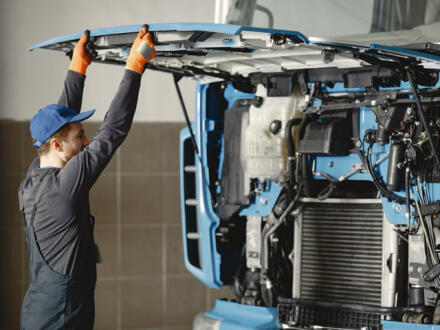
Paying for operator training, diesel classes, or a related college program in Montana can feel expensive fast. Tuition, tools, boots, fuel, and housing can push a short training path into the thousands of dollars before a student even starts the first lab.
The good news: Montana equipment operators scholarships are not limited to one type of student. High school seniors, first-year students, community college students, and university students can all find funding paths that fit. Some awards come from trade groups. Others come from local foundations, employers, unions, and state aid programs.
This list breaks down 10 practical scholarship and funding options students should look at first. It also shows how to stack smaller awards with grants, how to find local trade money that never shows up in national lists, and which programs make the most sense for students heading into heavy equipment operation, construction, diesel, welding, civil technology, or agricultural mechanics.
Montana is a strong place for trade-focused careers. The state labor market keeps demand high for workers who can handle equipment, site prep, hauling support, maintenance, and construction tasks. That means scholarship committees often like applicants who can show a clear job goal, solid attendance, and a plan to work in-state after training.
1. Montana Equipment Operators Association Scholarships To Target First
If a student is searching for the most relevant starting point, Montana Equipment Operators Association Scholarships should sit near the top of the list. Industry-specific awards usually beat general scholarships on fit. A committee tied to construction or equipment work is more likely to value shop classes, FFA, 4-H, part-time labor, CDL plans, and mechanical skill.
Students should look for awards from Montana trade associations, contractor groups, and construction partners before broad national databases. A smaller applicant pool can raise the odds. For example, a local scholarship with 40 applicants is usually a better bet than a national program with 4,000 applicants.
A smart strategy is to combine trade-focused applications with nearby agriculture and labor-related awards. Montana students with rural, farming, or ag mechanics backgrounds often overlap with operator career paths. That makes options like the Montana Farmers Union award and the Associated Trades Division award worth adding early.
Eligibility Priorities And Typical Application Materials
Most committees look for proof of direction, not polished essays full of big words. They want signs that the student will finish training and enter the field.
Typical priorities include:
- Montana residency
- Enrollment in a trade, college, or university program tied to construction or equipment work
- GPA minimums, often 2.5 to 3.0
- Community service, work history, or ag involvement
- A short essay on career goals
- 1 to 3 letters of recommendation
Typical application materials:
- Transcript
- FAFSA results, if need-based aid matters
- Resume with work experience
- Acceptance letter or proof of enrollment
- Essay with a clear job plan
A strong essay often includes details like this: a student worked 18 hours per week at a gravel yard, learned preventive maintenance on loaders, and wants operator training to move into highway or site work within 12 months of graduation.
2. Montana Equipment Operators Scholarships For High School Students Planning Ahead
Montana Equipment Operators Scholarships for High School Students matter because early applicants can line up money before senior spring turns chaotic. Students who wait until April often miss local deadlines that close in January, February, or early March.
High school students should start with programs connected to agriculture, career and technical education, county fairs, 4-H, FFA, and vocational clubs. Those experiences translate well to equipment work because they show safety awareness, responsibility, and comfort around machinery.
The Montana 4-H Foundation scholarships are a good example of this overlap. A student who spent 6 years in 4-H with welding, livestock, or mechanics projects can often build a strong scholarship story even before formal operator training starts.
High school applicants should focus on four things:
- Attendance and reliability
- Hands-on classes such as welding, small engines, ag mechanics, or construction tech
- A clear plan for training after graduation
- Adult references who can describe work ethic in concrete terms
A precise application beats a flashy one. If a student helped maintain tractors on a 1,200-acre family farm or logged 140 volunteer hours at fairgrounds setup, that detail matters.
They should also ask counselors about local vocational awards from Elks lodges, county foundations, and school-area contractors. In many Montana towns, the best scholarship is not the biggest one online. It is the $500 to $1,500 local award with 12 applicants and a committee that already knows the student's school.
3. Montana Equipment Operators Scholarships For First-Year Students Entering Training Or College
Montana Equipment Operators Scholarships for first-year students fill a common gap. A student may graduate high school, choose a diesel, heavy equipment, or construction program, and then realize first-semester costs hit all at once. Tuition is only part of it. Tools, PPE, commuting, and books can add another $800 to $2,500 depending on the program.
First-year students should target scholarships aimed at career starters, not just continuing students. Committees know the first year is the point where many students drop out for money reasons.
Strong first-year applications often mention:
- The exact program and school
- The expected credential, such as certificate or AAS degree
- A likely job path after completion
- A simple budget that shows real need
This is also where broader scholarship matching tools help. A student using a free database with filters for state, trade interest, and education level can save hours compared with random web searches. On Studentscholarships.org, applicants can sort through a wide range of funding options in one place instead of chasing scattered deadlines.
Students entering trade programs should also ask admissions staff how scholarship timing works. Some schools release institutional money before the bill is due, while outside awards may arrive 30 to 60 days later. That timing can affect whether a student needs a payment plan.
A practical example: if tuition is $4,200, tools are $950, and boots plus safety gear cost $210, even two small scholarships of $750 each can keep a student from putting the first semester on a credit card.
4. Montana Equipment Operators Scholarships For College Students In Two-Year Programs
Montana Equipment Operators Scholarships for College students are often strongest at the two-year level. Community and technical colleges attract students training for direct-entry jobs in construction, diesel service, welding, surveying support, and heavy equipment operation.
That matters because many scholarship committees want a short, practical route to employment. A two-year student who can explain, in plain words, how a program leads to field work may stand out more than a vague applicant with no timeline.
Students in certificate or associate programs should look for:
- Departmental scholarships through technical divisions
- Foundation awards tied to workforce training
- Vocational scholarships from service clubs
- Industry awards for welding, diesel, or construction tech
The Montana State Elks vocational scholarships fit this lane well because they support career-focused training rather than only four-year paths.
A useful move is to ask the program chair one direct question: Which three outside scholarships did students in this department actually win last year? That gets better answers than asking for "any scholarships." Faculty often know the names of local donors, contractor-backed awards, and memorial funds that have helped students before.
Students should also track renewal rules. Some two-year awards require:
- A minimum 2.5 GPA
- Full-time status such as 12 credits
- Continued progress in the same major
If a student loses a renewable award worth $1,000 per semester, that can erase the savings from choosing a lower-cost college in the first place.
5. Montana Equipment Operators Scholarships For University Students Pursuing Related Degrees
Not every future operator starts in a stand-alone trade program. Montana Equipment Operators Scholarships for University students can also apply to people studying construction management, civil engineering technology, agricultural engineering, environmental science, or land and equipment support roles.
University paths make sense for students who want time in the field first and then a move into supervision, estimating, project coordination, fleet management, or public works. A student who understands both machines and paperwork can become very valuable.
This route often costs more, so stacking aid matters. At a public university, a student may combine department aid, private scholarships, work-study, and need-based grants. Offices like the Montana State financial aid office help students understand grants, loans, scholarships, and payment options in one place.
Related university applicants should build essays around a clear connection between the degree and operator-heavy industries. Good examples include:
- Studying civil technology to work on road grading and site development
- Using an ag systems degree to manage fleets and large equipment maintenance
- Pairing construction management with summer excavating work
Concrete experience helps. If a student spent 2 summers flagging on highway projects, or 320 hours maintaining skid steers and mini excavators, that should be in the application.
University students can also benefit from adjacent scholarships like the John Korsbeck memorial award, especially when their background ties to Montana agriculture, rural work, or equipment-heavy industries.
6. Heavy Equipment, Diesel, And Construction Trade Scholarships Across Montana
Students should not limit the search to scholarships with the exact phrase "equipment operator" in the title. In Montana, the better funding path is often a cluster of related trade scholarships that support the same career outcome.
That includes awards for:
- Heavy equipment operation
- Diesel technology
- Welding
- Construction trades
- Agricultural mechanics
- CDL and transportation support training
Why does that work? Because employers often hire for overlapping skills. A student who can inspect hydraulics, read grade stakes, handle a skid steer, and perform basic maintenance is more employable than someone with one narrow skill.
This is where smaller memorial and trade awards can add up. The Bud Daniels memorial award and the Barry "Spook" Stang memorial award are the kind of Montana-specific opportunities students should scan for, especially if they come from ag, rural, or working-trades communities.
Students should build one master application folder with:
- A 1-page resume
- A 300-word essay
- A 500-word essay
- Transcript PDF
- FAFSA summary
- Two recommendation letters
That setup can cut application time from 90 minutes to about 20 minutes per scholarship. And yes, that time savings matters when a student is juggling classes, work, and hauling gear across town.
A student who applies to 12 scholarships at an average of $750 each does not need to win all 12. Winning 3 awards still brings in $2,250.
7. State Grants And Need-Based Aid That Pair Well With Operator Scholarships
Scholarships get most of the attention, but grants and need-based aid often do more to lower the actual bill. The best strategy is usually stacking both.
A Montana student in operator training or a related program should file the FAFSA as early as possible. Need-based aid can include federal Pell Grants, state-supported help, campus aid, and work-study. Unlike loans, grants usually do not need to be repaid.
Financial aid offices can explain how scholarships affect the aid package and whether outside awards reduce loans first or replace grants. The University of Montana student financial services office outlines common aid categories, billing help, and payment support that many students overlook.
This matters because timing and packaging can change the out-of-pocket number a lot. For example:
- Tuition and fees: $5,600
- Books and supplies: $1,100
- Grant aid: $3,000
- Outside scholarships: $2,000
That drops the remaining direct cost to $1,700 before work-study, savings, or employer help.
Students should ask three exact questions:
- Will outside scholarships reduce loans first?
- Can tool costs count toward attendance costs?
- What happens if an award arrives after the bill due date?
Those answers can shape which funding path works best. A student with strong need may get more value from a smaller scholarship that stacks cleanly with grants than from a larger award with tight restrictions.
8. Employer, Union, And Industry-Sponsored Awards For Future Equipment Operators
Employer and union money is often the most overlooked path on this list. That is strange, because these groups have a direct reason to fund students: they need trained workers.
Construction firms, excavation companies, highway contractors, aggregate operations, and equipment dealers often support students through tuition help, tool support, or local scholarships. Some programs are formal. Others are simple one-page applications handled by a company office or local labor partner.
Students should pay close attention to employers who offer:
- Summer work that turns into sponsorship
- Paid internships
- Tuition reimbursement after a probation period
- Scholarships tied to a work commitment
A precise example beats a generic request. If a student can tell a contractor, "They completed 220 hours around loaders and compactors and want diesel training to qualify for field support work," that carries more weight than "They like construction."
Local labor and industry groups may also support students through related trade awards. The Montana Cattlemen's scholarship is not an operator scholarship on paper, but it can fit students whose background is ranch, ag mechanics, hauling, and heavy equipment use.
How To Find Local Sponsorships Through Contractors And Training Partners
Students can find local funding by building a short contact list and asking better questions.
A simple search plan:
- List 15 employers within driving distance
- Add equipment dealers, gravel pits, excavation firms, and road contractors
- Call the office, not just HR
- Ask whether they support students in diesel, welding, CDL, or operator training
Training programs can help too. Instructors often know which companies donated boots, hired graduates, or paid for one semester of school. A student who asks 3 instructors, 2 advisors, and 5 local contractors may uncover more real funding than hours spent on a giant national scholarship site.
9. Scholarships For Women, Rural Students, And Other Underrepresented Trade Applicants
Some of the strongest niche funding options are aimed at students who are less represented in the trades. That includes women, rural students, first-generation college students, tribal students, and applicants from small towns with limited local training access.
These scholarships matter because operator and construction programs have historically skewed male. The result is simple: a woman entering diesel, heavy equipment, or construction may qualify for awards that a general applicant pool never sees.
The Women's Leadership Committee scholarships and the Montana CattleWomen memorial scholarship are strong examples of funding that can fit women with agricultural, leadership, or rural backgrounds that connect naturally to equipment careers.
Rural students should also use distance, travel, and housing costs in their essays. A student commuting 74 miles each way to a training site has a very different cost profile than someone living 8 miles from campus.
Good scholarship points for underrepresented applicants include:
- Being the first in the family to attend college or trade school
- Growing up in a town with limited postsecondary options
- Balancing work, caregiving, and training
- Entering a field where representation is still low
The key is specificity. "They want to encourage women in the trades" is weak. "They were the only female student in a class of 17 welding students and logged 160 shop hours" is strong.
10. Local Foundation And Community Scholarships That Support Montana Career Training
Local foundation money is where many Montana students quietly put together the last part of a financial aid package. These awards may look small at first glance, but $500 here and $1,000 there can cover books, fuel, boots, welding gloves, or a month of rent.
Community foundations, memorial funds, county organizations, school district scholarships, and civic groups often support career training, not just four-year degrees. That makes them a strong fit for future operators.
The Montana Community Foundation scholarships are a useful place to start because foundation systems often house multiple funds with different criteria under one roof.
Students should also ask about scholarships from:
- Local banks and credit unions
- Rotary and Kiwanis clubs
- County fair boards
- Farm organizations
- Regional employers
- Family memorial funds managed through schools
A practical approach is to build a spreadsheet with deadline, amount, eligibility, essay length, and status. Students who track 20 local applications in one sheet are much less likely to miss an easy deadline.
The best part of community scholarships is local context. A committee in Havre, Miles City, Kalispell, or Dillon may value a student's work record, family background, and reputation more than a big statewide committee would.
That local edge is real. If a student has lived in one county for 12 years, worked at the same co-op for 2 summers, and wants to stay in Montana after training, community-based awards may be the most realistic funding on the board.
Montana Equipment Operators Scholarships FAQs
What types of students are eligible for Montana equipment operators scholarships?
Montana equipment operators scholarships are available for high school seniors, first-year students, community college students, and university students enrolled in trade-related programs such as heavy equipment operation, diesel, welding, and agricultural mechanics.
How can high school students prepare to qualify for equipment operator scholarships in Montana?
High school students can improve eligibility by participating in hands-on classes like welding or ag mechanics, joining FFA or 4-H, maintaining strong attendance, building a clear training plan, and obtaining adult references that highlight their work ethic.
What materials are typically required when applying for Montana equipment operator scholarships?
Applications usually require proof of Montana residency, enrollment confirmation in a relevant program, transcripts, FAFSA results for need-based aid, a resume highlighting work experience, a short essay about career goals, and one to three letters of recommendation.
Are there specific scholarships in Montana for women or underrepresented groups pursuing trades?
Yes, scholarships like the Women’s Leadership Committee Scholarships and Montana CattleWomen Memorial Scholarship support women and underrepresented applicants pursuing trades such as diesel, heavy equipment, or construction, helping promote diversity in these fields.
How can Montana students combine scholarships with other financial aid for operator training?
Students should file the FAFSA early to access federal and state grants, and coordinate scholarships with grants and work-study programs. Financial aid offices can assist in understanding how scholarships affect loans and grants, optimizing the overall funding package.
What strategies help Montana students find local scholarships for equipment operator training?
Students should contact local employers, contractors, community foundations, and labor groups. Asking instructors and advisors about local awards and using a spreadsheet to track applications and deadlines can also increase chances of securing smaller but valuable local scholarships.






