

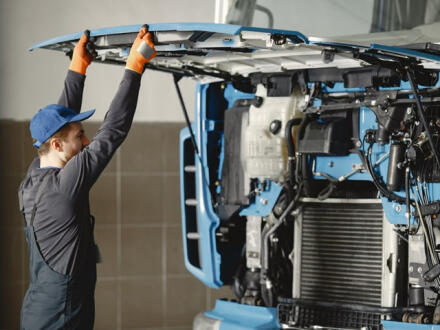
Training for diesel work can cost less than many students think. The hard part is knowing where to look, what to apply for, and how to stack different funding sources without missing deadlines.
For students searching for New Hampshire diesel mechanics scholarships, the best options often come from more than one place. A student might combine a campus award, a state grant, a tool stipend, and a small local scholarship to cut a $9,000 training bill down by $3,000 or more.
That matters because diesel programs are hands-on. Tuition is only part of the price. Students also run into lab fees, steel-toe boots, safety glasses, hand tools, and transportation to class or a job site. A starter tool set alone can easily hit $600 to $1,500, depending on the program and brand requirements.
This list breaks down 10 practical scholarship and funding paths for high school seniors, first-year students, current college students, and learners choosing short-term technical training. It also includes tips for stronger applications and ways to combine scholarships with FAFSA, grants, and employer help.
For students using scholarship platforms to sort options faster, sites such as StudentScholarships can help narrow the search by state, major, and training path. But the real edge comes from applying in layers, not one at a time.
1. New Hampshire Community College Scholarships for Diesel Technology Students
Community colleges are often the first stop for diesel training, and they're one of the best places to find aid. For many students, campus-based scholarships are easier to win than national awards because the applicant pool is smaller.
In New Hampshire, students should start with the financial aid and foundation offices at community colleges that offer transportation, automotive, or diesel-related technical study. A campus award of $500, $1,000, or $2,000 may not sound huge, but it can cover books, lab fees, or the first round of tools.
Common campus scholarship filters include:
- GPA thresholds, often 2.5 or 3.0
- Enrollment in a certificate or degree program
- New Hampshire residency
- Financial need shown through FAFSA
- A short essay of 250 to 500 words
Students should also look beyond "diesel" in the title. Many awards sit under broader buckets like transportation, skilled trades, career and technical education, or workforce training.
A strong search usually includes the college portal plus broader scholarship tools. On StudentScholarships, students comparing local options may also run across regional pages such as the Plan NH awards, which show how New Hampshire-focused funding is often organized by foundation or profession rather than by one exact major.
One simple rule helps here: apply to every campus scholarship that fits at least 80% of the criteria. Many students self-reject too early and leave money sitting on the table.
2. New Hampshire Diesel Mechanics Scholarships for High School Students Planning Ahead
The best time to chase diesel funding is often before graduation. New Hampshire Diesel Mechanics Scholarships for High School Students can include local trade awards, CTE scholarships, and community foundation grants that close months before college move-in.
High school students should talk with three people early:
- A school counselor
- A CTE or shop teacher
- A local community foundation contact
That short list matters because many local scholarships get only 10 to 40 applications. Compare that with national scholarships that can draw 1,000 or more applicants.
Students planning ahead should build an application file with:
- A resume capped at 1 page
- An unofficial transcript
- 2 recommendation letters
- A short personal statement about diesel, heavy equipment, or trucking goals
- Proof of community service, work hours, or FFA/SkillsUSA involvement
Agriculture-related scholarships can also connect well with diesel interests, especially for students aiming at farm equipment or heavy machinery repair. That's why pages like NH Farm Bureau awards can be worth a look for students whose experience includes ag mechanics, welding, or tractor maintenance.
A concrete example: a senior with a 3.1 GPA, 180 hours at a part-time equipment shop, and a 400-word essay about keeping fleet vehicles running in winter often stands out more than a student with stronger grades but no hands-on story.
Planning ahead also gives students more chances to meet early spring deadlines, which is where a lot of the local money sits.
3. First-Year Awards for Students Entering Diesel Mechanic Programs
New Hampshire Diesel Mechanics Scholarships for first-year students are built for learners crossing the gap between high school and technical college. This group often has the widest mix of options because colleges, state programs, and community groups all want to support first-time enrollment.
First-year awards usually focus on one of three things:
- Academic promise, such as a 2.7 to 3.5 GPA
- Financial need
- Commitment to a skilled-trades career path
Students entering a diesel mechanic program should pay close attention to orientation packets and admissions emails. Some schools offer automatic consideration for foundation scholarships, while others require a separate form, essay, or donor thank-you note.
A practical budgeting example helps. If first-semester tuition and fees total $4,850, and a student wins:
- $1,000 from a college foundation
- $750 from a local rotary-style scholarship
- $600 in tool support
that cuts the immediate out-of-pocket bill to $2,500 before grants or payment plans.
This is also the stage where broad scholarship databases save time. A student sorting opportunities by major and location might use a free scholarship finder, then narrow down to New Hampshire and skilled trades. That matters because first-year applicants can easily miss 5 to 12 good-fit awards simply from scattered deadlines.
The strongest first-year applications usually explain one thing clearly: why diesel, why now, and what job comes next. A straight answer beats a fancy essay every time.
4. New Hampshire Diesel Mechanics Scholarships for College Students Already Enrolled
Students already in school often assume the big scholarship window has passed. It hasn't. New Hampshire Diesel Mechanics Scholarships for College students can open after the first term, especially when donors want proof that a student can handle lab work, attendance, and shop expectations.
Being enrolled gives applicants a few advantages. They can show actual grades in technical classes, instructor feedback, and work-based learning hours instead of only high school records.
Useful proof points include:
- A GPA of 2.8 or higher in college coursework
- Attendance above 90%
- Completion of 1 or 2 diesel lab courses
- Part-time shop or fleet experience of 100+ hours
Some schools release program-specific money after fall grades post. Others award emergency funds for retention, which can help with a surprise bill for brake tools, coveralls, or certification fees.
Students dealing with housing or financial instability should also look beyond major-specific awards. Local support pages like the Hope Starts Here award show how some scholarship paths are tied to life situation rather than academic department.
A student already enrolled should also ask one direct question at the aid office: "Are there departmental scholarships that are not on the public site?" That single question can uncover small awards worth $250 to $1,500.
And yes, those smaller awards matter. Three separate $500 awards cover $1,500 of real costs, which might mean books, tools, and a month of gas to get to class.
5. New Hampshire Diesel Mechanics Scholarships for University Students in Related Technical Fields
Not every future diesel technician starts in a diesel-only program. Some begin in mechanical technology, engineering technology, heavy equipment systems, or fleet management. That's where New Hampshire Diesel Mechanics Scholarships for University students in related technical fields come into play.
These students should search by career destination, not just major title. A learner studying mechanical systems with a goal in commercial truck service may fit scholarships meant for applied engineering, industrial technology, or transportation systems.
This path matters because university aid can be larger. Departmental awards may run $1,000 to $5,000, especially when donors support technical workforce development.
A university student should scan:
- Engineering technology departments
- Applied sciences scholarships
- Transportation or logistics programs
- State and local foundation awards tied to technical careers
For example, a student focusing on engines, hydraulics, or power systems may find a better fit in technical or engineering-adjacent funding than in a scholarship labeled only "diesel." On StudentScholarships, pages like the David G. Kent award remind students that subject overlap can matter: a scholarship may sit under one discipline but still reward strong technical performance and clear career intent.
Students at four-year schools should also compare campus aid pages. University financial aid offices often package grants, scholarships, work-study, and loans in one place. At UNH, the financial aid office outlines those categories clearly, which helps students see where scholarships fit alongside other funding.
A precise application angle works best here: "This student wants to work on Class 8 trucks, diesel powertrains, and fleet diagnostics." That is much stronger than "They like mechanics."
6. New Hampshire Diesel Mechanics Association Scholarships and Industry-Backed Awards
Industry-backed money can be one of the smartest targets on this list. New Hampshire Diesel Mechanics Association Scholarships and similar trade-supported awards often go to students who already show clear interest in trucks, heavy equipment, fleet service, or construction machinery.
These awards tend to value work ethic over polished essays. A student with 250 shop hours, a reference from a service manager, and a steady attendance record may beat a student with prettier wording but less proof.
Industry groups often look for:
- Commitment to the trade
- Instructor or employer recommendations
- Enrollment in a technical program
- Interest in staying in the regional workforce
A solid example comes from construction-related diesel support. The AGC diesel scholarships page notes awards of $1,500 to $2,500 and shows how trade associations put real dollars behind equipment and diesel training.
Students should not get hung up on exact state borders when the organization's mission overlaps with their training path. Regional trade groups sometimes accept nearby applicants, especially when programs feed the same labor market.
This funding path also lines up with real hiring pressure. The diesel repair field depends on technicians who can handle diagnostics, emissions systems, and hydraulic components, not just turn wrenches. That skill mix gives industry groups a reason to invest early.
In plain terms: if a scholarship is backed by people who hire diesel techs, it deserves a spot near the top of the application pile.
7. Employer-Sponsored Scholarships From Trucking, Fleet, and Equipment Companies
Some of the best funding does not come from a school at all. It comes from employers who need trained people badly enough to help pay for class.
Trucking companies, municipal fleets, bus systems, dealerships, and equipment firms may offer:
- Scholarships worth $1,000 to $5,000
- Tuition reimbursement after each term
- Paid internships at 15 to 30 hours per week
- Tool allowances of $300 to $1,200
- Job offers tied to a work commitment
This path works especially well for students who already know they want a local job after training. A fleet company with 80 trucks has a strong reason to support a student who can grow into preventive maintenance, diagnostics, and road-call work.
The trade-off is simple. Employer money may come with conditions such as:
- Maintaining a 2.5 GPA
- Staying employed for 6 to 24 months
- Working a certain schedule during school breaks
That's not always a bad deal. If a company covers $3,000 in tuition and provides a paid summer shop role, the student gains money, experience, and a cleaner path to full-time work.
A good move is to ask local employers one direct question: "Do you have tuition help for diesel students or entry-level technicians?" Many students never ask, so these opportunities stay quiet.
Students can also use scholarship search platforms to keep employer-funded options in the same place as school awards, which saves time when application season gets busy.
8. State Grants, Workforce Funding, and Technical Education Aid in New Hampshire
Scholarships are only one part of the picture. State grants, workforce programs, and technical education aid can lower costs faster because they often apply directly to tuition.
New Hampshire students should start with FAFSA, then ask about state and workforce options through their school and local career centers. The state's postsecondary education page shows the main higher-education structure and helps students identify where official aid information sits.
A student's funding stack may include:
- Federal Pell Grant money if eligible
- State or school need-based grants
- Workforce Innovation and Opportunity Act support in some cases
- Short-term training assistance
- Transportation or book help tied to employment programs
A concrete example: if a student receives a $2,400 Pell Grant, a $1,000 campus scholarship, and $500 in tool support, a $5,200 term bill drops to $1,300 before any payment plan.
This section matters because grant money usually does not need to be repaid. That makes it more valuable than borrowing the same amount.
Students should file FAFSA early, respond to verification requests fast, and keep copies of tax and income documents. Missing one email can delay aid by 2 to 6 weeks.
For students using a central scholarship hub, it also helps to keep local and state funding searches organized in one list rather than scattered across screenshots, inboxes, and sticky notes.
9. Scholarships for Apprenticeships, Certificate Programs, and Short-Term Diesel Training
Not every diesel student wants a two-year degree. Some want a 12-week, 6-month, or 1-year certificate that leads to a job fast. That route can be a smart fit, especially for adult learners, career changers, or students who want to start earning sooner.
Scholarships for short-term diesel training often come from:
- Workforce agencies
- Employers
- Technical schools
- Community foundations
- Trade associations
These awards may be smaller, often $500 to $2,000, but the program cost may also be lower. If a certificate costs $3,800, a $1,500 award covers a much bigger share than it would in a longer program.
Apprenticeships can reduce costs even more because students earn while they learn. A paid apprenticeship at $18 per hour for 20 hours per week produces roughly $1,440 over a four-week month before taxes. That cash flow can cover fuel, food, and part of tuition.
Students should ask whether the training includes:
- ASE prep
n- Tool discounts
- Paid shop time
- Placement with a fleet or dealership
Some certificate students also qualify for broader local scholarship pools. On StudentScholarships, the NH Charitable Foundation listings show how community-based funding can reach students across different education formats, not only four-year degrees.
The key is simple: when a program is short, deadlines come fast. Students should apply for funding before enrollment paperwork is fully finished, not after classes begin.
10. Local Foundation and Regional Scholarship Opportunities Worth Applying For
Local and regional scholarships are often the most overlooked money on the board. That's a mistake because these awards may draw only 15 to 60 applicants, and many are open to students entering technical fields, community college programs, or workforce training.
Good places to look include:
- Community foundations
- Rotary and Lions clubs
- County business groups
- Memorial scholarships
- Regional workforce nonprofits
Some awards are broad enough to fit diesel students even if the title does not mention mechanics. Students who search only for the word "diesel" can miss a lot of usable money.
That is where a broad scholarship directory helps. A student using StudentScholarships might compare regional pages such as the NH Charitable Foundation options or the Plan NH awards already mentioned earlier, then cross-check deadlines and fit. Even one local win of $750 can cover books, gloves, and safety gear for a term.
A sharp local application usually shows place-based ties. That can mean:
- Living in the county for 4 years
- Graduating from a named high school
- Working 12 hours per week at a local shop
- Volunteering 40 hours in the community
How to Strengthen Your Application for New Hampshire Diesel Mechanics Scholarships
Students win more often when the application sounds specific and grounded. A better essay says, "They rebuilt a hydraulic pump on a compact loader and realized they liked fault-finding," not "They have always loved engines."
The strongest applications usually include:
- 1 clear career goal
- 2 recommendation letters from teachers, employers, or shop supervisors
- A resume with exact hours, duties, and certifications
- A short essay of 300 to 500 words with one concrete story
Numbers help. "They logged 220 hours in auto lab and earned perfect attendance for one semester" is stronger than "They work hard."
Students with unusual circumstances should say so plainly. Housing instability, caregiving, long commutes, or paying $55 per week for fuel can explain why even a small scholarship matters.
How to Combine Scholarships With FAFSA, Grants, and Tool Assistance
The cheapest training plan usually mixes several aid types at once. A diesel student might build a package like this:
- $2,400 Pell Grant
- $1,000 campus scholarship
- $750 local foundation award
- $500 employer tool stipend
That adds up to $4,650. If the student's annual direct school costs are $6,200, the remaining gap is $1,550 before payment plans or wages from part-time work.
This is also where organization matters. A simple spreadsheet with 6 columns, award name, amount, deadline, login, status, and follow-up date, can prevent missed paperwork.
Students who want a quicker way to sort awards by fit can use the broader scholarship directory alongside FAFSA and campus aid notices. The goal is not one perfect scholarship. The goal is a stack that makes school affordable.
New Hampshire Diesel Mechanics Scholarships - Frequently Asked Questions
What types of scholarships are available for New Hampshire diesel mechanics students?
Students can find diesel mechanics scholarships from community colleges, local foundations, industry associations, employers, and state programs. These awards may cover tuition, tools, or training expenses and can often be stacked for greater financial support.
How can high school students in New Hampshire prepare to apply for diesel mechanic scholarships?
High school students should connect early with school counselors, CTE teachers, and local foundation contacts. Building an application with a resume, transcripts, recommendations, and a personal statement about their diesel-related goals strengthens their chances.
Are there specific scholarships for first-year diesel mechanic students in New Hampshire?
Yes, many colleges and organizations offer first-year awards based on academic promise, financial need, or career commitment. These typically require clear career goals and may require essays or orientation submissions.
Can currently enrolled college students in New Hampshire still apply for diesel mechanic scholarships?
Absolutely. College students can apply for scholarships after starting their program by showing grades, lab work, attendance, and practical experience. Some awards also help with emergency or retention funding.
How do industry-backed Diesel Mechanics Association scholarships in New Hampshire work?
Industry scholarships often prioritize candidates with demonstrated work ethic, relevant shop hours, and recommendations. They support students committed to regional fleet or heavy equipment careers and usually value practical experience over essay polish.
What are the benefits of combining New Hampshire diesel mechanic scholarships with FAFSA and state grants?
Combining scholarships with FAFSA and state aid maximizes funding and reduces out-of-pocket costs. Grants typically do not need repayment, so layering aid like Pell Grants, campus awards, and tool stipends can make training more affordable.






