

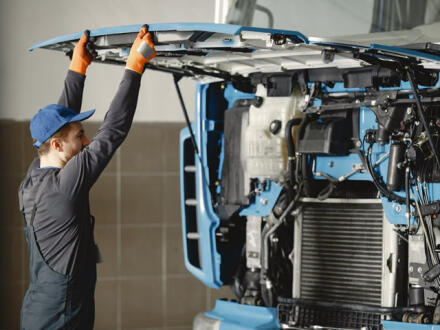
Training to become a diesel equipment technician in Arkansas can lead to steady work, but the price of school can still feel heavy. Tuition, tools, safety gear, books, and transportation can push the first-year bill well past $4,000 to $12,000, depending on the program and whether the student attends full time. That number gets real fast when a student also needs steel-toe boots, hand tools, and fuel money for the drive to campus.
The good news is that Arkansas Diesel Equipment Technician Scholarships are not limited to one source. Students can stack state scholarships, college aid, grants, employer funding, and local awards. In many cases, combining two or three smaller awards can cut costs by $2,500 to $7,000 in a single school year.
This list breaks down 10 practical funding options for high school seniors, college students, transfer students, and adults starting technical training. It covers statewide programs like the Academic Challenge Scholarship, workforce aid for short-term training, school-based awards, employer-sponsored help, and overlooked local scholarships. It also points out where diesel students often fit, even when an award does not use the word "diesel" in its title.
For students who want a faster way to sort through options, platforms such as StudentScholarships.org can help narrow the search by school level, field, and state. That matters because missing one deadline can cost $500, $1,500, or even a full semester of help.
1. Arkansas Academic Challenge Scholarship For Diesel Equipment Technician Students
The Arkansas Academic Challenge Scholarship is one of the first places diesel students should look. It is a state-funded program that can support students attending approved colleges and technical pathways in Arkansas, and award amounts often reach several thousand dollars per year depending on enrollment and school type.
For a diesel equipment technician student, this matters because the scholarship is not limited to four-year academic majors. If the training program qualifies under state rules, the money can help cover tuition, fees, and sometimes reduce the need for private loans.
A strong example is a student attending a diesel technology program with 15 credit hours in a term. If tuition and fees total $3,800, a state scholarship covering even half of that removes a major barrier.
Students should pay close attention to:
- Arkansas residency requirements
- Academic benchmarks from high school or prior college work
- Enrollment status, such as full-time or part-time rules
- FAFSA completion deadlines
A practical place to compare details is the state scholarship listing, which helps students review award basics before filing state aid forms. For diesel students, this is often the foundation award that makes the rest of the funding plan work.
2. Arkansas Workforce Challenge Scholarship For Hands-On Technical Training
The Arkansas Workforce Challenge Scholarship is built for job-focused training, so it fits diesel equipment technician students especially well. It is aimed at short-term, high-demand programs where students need skills fast and employers need workers now.
Diesel technology lines up with that goal. Arkansas employers in trucking, agriculture, construction, and equipment service need technicians who can diagnose engines, electrical systems, hydraulics, and emissions issues. The U.S. Bureau of Labor Statistics reports a median annual pay of $60,640 for diesel service technicians and mechanics nationwide, which helps explain why state workforce aid targets this field.
This funding can be useful for students who:
- Want a certificate instead of a degree
- Need help paying for a short training block
- Plan to enter work quickly
- Are returning adults changing careers
A common scenario is a student in a 16-week diesel maintenance program who needs $1,900 for tuition and lab fees. Workforce aid can cover a large share of that bill when a regular scholarship would not.
Students should ask the financial aid office whether their diesel program is listed as an approved high-demand pathway. If it is, this option can be one of the fastest ways to reduce out-of-pocket cost.
3. College-Specific Arkansas Diesel Equipment Technician Scholarships For College Students
Many students search statewide awards first and miss the money sitting at the school itself. Arkansas Diesel Equipment Technician Scholarships for College often show up as department awards, technical division grants, retention scholarships, and emergency completion funds.
That matters because school-based aid is usually less crowded than a big statewide competition. A diesel student at a community college might be competing against 40 to 120 applicants, not several thousand.
Common college-specific options include:
- Program scholarships from the applied technology department
- Foundation awards for career and technical education
- Tool or book stipends for lab-heavy programs
- Need-based grants from the school's donor fund
A student should ask three direct questions: "Do you have diesel program awards?" "Do you have technical education foundation scholarships?" and "Do you have tool assistance?" Those questions often uncover $500 to $2,000 that never appears on a public scholarship search.
Students using scholarship search tools can also compare technician-related awards such as the automotive technician option, which is not diesel-specific but still fits students training in vehicle service pathways. The overlap between automotive and diesel funding is bigger than many applicants think.
4. University And Transfer Aid Options For Arkansas Diesel Equipment Technician Scholarships For University Students
Some diesel students begin at a technical or community college and then transfer into a university program tied to operations, fleet management, agricultural systems, or technology education. That is where Arkansas Diesel Equipment Technician Scholarships for University students can matter.
Transfer aid is often based on GPA, completed credit hours, and continued enrollment. A student who finishes an associate-level diesel path and transfers with a 3.25 GPA may qualify for merit aid, transfer awards, or college-specific scholarships at a public university.
This route is useful for students who want to move beyond repair work into:
- Service management
- Equipment sales support
- Fleet operations
- Technical instruction
- Agricultural equipment systems
At some Arkansas institutions, scholarship packages for transfer students can exceed $3,000 to $5,000 per year. University-based merit aid may also stack with smaller outside awards.
One example students can review is the A-State merit award, which shows how university scholarship structures can support strong academic performance after transfer. For diesel students thinking long term, this path can turn a hands-on certificate into a broader career ladder.
5. High School Senior Scholarships For Future Diesel Equipment Technicians In Arkansas
High school seniors have a real advantage: they can apply before the first tuition bill lands. Arkansas Diesel Equipment Technician Scholarships for High School Students include state awards, local donor scholarships, career and technical education grants, FFA-related funding, and school foundation awards.
Students planning to work on trucks, tractors, combines, trailers, or heavy equipment should not wait until graduation. Scholarship deadlines often hit in late winter or early spring, which means a student who starts in May may already be too late for $1,000 to $4,000 in aid.
A strong senior-year plan includes:
- Filing the FAFSA as early as possible
- Asking the counselor for all CTE and skilled trades scholarships
- Applying for state aid and school-specific aid at the same time
- Keeping grades steady through the final term
For students with financial need, the Promise scholarship page is worth reviewing because need-based state support can combine with merit or local awards. A student heading into diesel technology can build a better funding package by treating senior year like application season, not waiting season.
Eligibility Tips For Arkansas Diesel Equipment Technician Scholarships For High School Students
Students improve their odds when they match each application to the award's actual rules. A diesel-minded senior with a 2.8 GPA, strong attendance, and 120 volunteer hours may beat a higher-GPA student if the local donor values work ethic and trade interest.
Helpful steps include:
- Keep a one-page activity sheet with GPA, test scores, work hours, and certifications
- Ask two adults for recommendation letters at least 30 days before the deadline
- Mention real diesel experience, such as helping repair a hay baler or changing injectors on a pickup
- Include FFA, 4-H, ag mechanics, welding, or shop class work
Concrete details matter. "Worked part time at a farm equipment shop for 11 months" is much stronger than "likes engines." Scholarships reward proof.
6. First-Year Student Awards That Support Diesel Technology Programs
First-year students often miss aid because they assume scholarships are only for seniors in high school. That is not true. Arkansas Diesel Equipment Technician Scholarships for first-year students can come from colleges, private donors, student success programs, and completion initiatives aimed at keeping new students enrolled.
This category matters because the first year is often the most expensive. Students may need tuition, lab fees, tools, and transportation all at once. A first-term diesel student can easily face $800 in tools, $300 in books, and $150 or more in safety gear before classes really start.
Awards for first-year students usually focus on:
- Initial enrollment in an approved program
- FAFSA completion
- Satisfactory academic progress
- Attendance or persistence milestones
A useful comparison point comes from technician scholarship models in other states, such as the dealer association example. Even though it is outside Arkansas, it shows how industry groups support first-year technical students with practical funding. That pattern often appears locally too.
Students should also ask whether the school offers mini-grants for tools or emergency transportation. A $600 tool stipend can be just as valuable as a tuition scholarship if it keeps the student in lab.
How To Find Arkansas Diesel Equipment Technician Scholarships For First-Year Students
The smartest search method is simple: look beyond the word "diesel." Many awards are filed under technical education, workforce training, transportation, agriculture, mechanics, and skilled trades.
A first-year student can build a short list in one afternoon by checking:
- The college financial aid office
- The school foundation page
- Department chairs in diesel or transportation programs
- State grant portals
- Scholarship platforms with program filters
Search tools save time when they narrow choices by state and field. On StudentScholarships.org, students can sort through category pages instead of digging through unrelated awards one by one. That can cut a search from 4 hours to about 45 minutes.
The key is volume with focus. Ten solid applications usually beat two perfect ones.
7. Arkansas Diesel Equipment Technician Association Scholarships And Industry-Backed Awards
When students search for Arkansas Diesel Equipment Technician Association Scholarships, they are really looking for trade-group money tied to diesel, trucking, equipment, construction, or mechanics. These awards may come from associations, dealer groups, contractor networks, or trade foundations.
Industry-backed scholarships stand out because they often value shop experience, work ethic, and career intent more than class rank alone. A student with a 3.0 GPA and 600 hours working around diesel equipment may look very strong to a trade committee.
Possible sources include:
- Contractor associations
- Trucking associations
- Equipment dealer groups
- Independent repair associations
- Agricultural organizations
One useful example is the diesel trade award page, which shows how contractor-linked scholarships can support students entering diesel and equipment service fields. The dollar amount may look modest at first, often $1,500 to $2,500, but those awards usually stack well with grants and school aid.
Students should also watch for scholarships attached to conferences, trade shows, or member businesses. Sometimes the application is only 500 words and a transcript. That is a very fair trade for a few thousand dollars.
8. Employer-Sponsored Scholarships From Trucking, Agriculture, And Heavy Equipment Companies
Employer-sponsored funding is one of the most direct ways to pay for diesel school. Trucking fleets, farm operations, equipment dealers, and repair companies need trained technicians, so some of them help students pay for training in exchange for a work commitment.
This is especially common in rural areas where replacing one experienced diesel mechanic can take months. An employer may offer $2,000, paid tools, or even reimbursement for 100% of tuition if the student agrees to work after graduation.
Typical employer-backed offers include:
- Tuition reimbursement after each passed term
- Scholarships tied to internships
- Paid apprenticeships with class support
- Signing bonuses after program completion
Agriculture-related employers are worth special attention in Arkansas. Students from farm backgrounds may fit funding tied to cattle, ag business, or equipment support. For example, the cattlemen scholarship listing reflects how agricultural groups sometimes support students whose career paths connect to farm operations, equipment upkeep, and rural industry.
The best move is to ask local employers one clear question: "Do you help pay for diesel school?" Many students never ask, and that leaves money sitting on the table.
9. Federal And State Grants That Can Be Combined With Diesel Scholarships In Arkansas
Grants are not the same as scholarships, but they belong in every diesel student's funding plan. The biggest reason is simple: they usually do not need to be repaid if the student remains eligible.
The main federal option is the Pell Grant, which is awarded based on financial need. For many technical students, Pell money is the base layer that makes school possible. State grants and institutional need-based aid can then sit on top of it.
A smart stack might look like this:
- $3,000 from a state scholarship
- $2,500 from a Pell Grant
- $1,000 from a local donor award
- $600 in tool support from the school
That adds up to $7,100 before loans enter the picture.
According to the National Center for Education Statistics, grants remain one of the largest forms of student aid for undergraduates at public institutions. For diesel students in Arkansas, the FAFSA is the trigger for much of that support, so filing it early matters.
Students should also ask about work-study, emergency completion grants, and transportation help. A student who drives 38 miles each way to lab may qualify for aid that does not appear on the first award letter.
10. Local Foundation And Community Scholarships That Diesel Students Often Overlook
Local money is often the easiest money to miss. Community foundations, county donor funds, civic clubs, co-ops, memorial scholarships, and regional employers often offer awards with smaller applicant pools and simpler forms.
A diesel student in Arkansas may compete against 15 to 60 local applicants instead of thousands statewide. That alone can improve the odds. And local committees usually like students who plan to stay in the area and work in needed trades.
Strong local sources include:
- Community foundations
- Electric cooperatives
- Rotary and Kiwanis clubs
- County fair or livestock organizations
- Local banks and farm bureaus
Students should start with the community foundation database, then ask the high school counselor and college foundation office for county-level lists. In many communities, awards range from $500 to $2,500, and students can apply for several at once.
This is also where precise storytelling helps most. A student who writes about diagnosing a no-start tractor at 5:30 a.m. before school gives the committee a picture they can remember. Local donors fund real people, not generic essays.
Arkansas Diesel Equipment Technician Scholarships: FAQs
What types of scholarships are available for diesel equipment technician students in Arkansas?
Arkansas offers various scholarships including state-funded programs like the Arkansas Academic Challenge, workforce aid for technical training, college-specific awards, industry-backed scholarships, and local foundation grants, which students can combine to reduce school costs significantly.
How can the Arkansas Academic Challenge Scholarship support diesel technician training?
The Arkansas Academic Challenge Scholarship helps cover tuition and fees for approved diesel technician programs, often awarding several thousand dollars per year based on enrollment and residency, easing the financial burden for students in qualified training pathways.
Are there scholarships specifically for first-year diesel equipment technician students?
Yes, first-year students can access scholarships through colleges, private donors, student success programs, and industry initiatives focused on keeping new technical students enrolled, which may include funds for tuition, tools, and safety gear.
How do employer-sponsored scholarships work for diesel technician students in Arkansas?
Employers in trucking, agriculture, and heavy equipment sectors may offer tuition reimbursement, internships, apprenticeships, or signing bonuses in exchange for work commitments after graduation, providing direct financial support to diesel students.
What federal grants can Arkansas diesel students combine with scholarships?
Diesel students can receive federal Pell Grants based on financial need, which often supplement state scholarships and local awards, collectively reducing out-of-pocket expenses without repayment requirements.
Where can I find local scholarships for diesel equipment technician training in Arkansas?
Local scholarships often come from community foundations, electric cooperatives, civic clubs, and regional employers. Applying for these awards, such as through the Scholarship Application - Arkansas Community Foundation Scholarships, can improve odds due to smaller applicant pools.




