

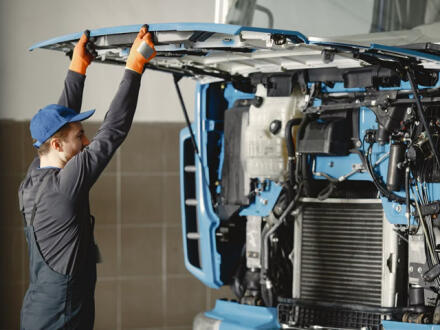
Training to become a diesel engine mechanic in Louisiana can lead to steady work, solid pay, and a hands-on career that keeps trucks, farm equipment, buses, and heavy machines running. But tuition, tools, fees, books, and transportation can add up fast. A one-year or two-year diesel technology program can cost several thousand dollars before a student even buys steel-toe boots or a socket set.
That's why Louisiana diesel engine mechanic scholarships matter so much. Students can often stack more than one source of aid, including local scholarships, state grants, school-based awards, employer sponsorships, and need-based aid. In many cases, a student who applies widely can cut costs by hundreds or even thousands of dollars.
This guide breaks the search into 11 practical paths. It covers Louisiana diesel engine mechanic scholarships for high school students, Louisiana diesel engine mechanic scholarships for first-year students, Louisiana diesel engine mechanic scholarships for college, and Louisiana diesel engine mechanic scholarships for university learners in related fields. It also points out funding options tied to employers, associations, and workforce programs.
For students who want a faster way to sort options, Studentscholarships.org can help narrow the list and surface applications that fit a student's background, program, and career plans. The goal here is simple: help future diesel techs find real money for school and avoid leaving aid on the table.
1. Louisiana Community And Technical College Scholarships For Diesel Programs
Community and technical colleges are often the first stop for diesel students in Louisiana. They usually offer the lowest tuition rates and the most direct route into diesel technology, heavy equipment repair, or industrial maintenance.
A student should start with the college's own scholarship office and the diesel department. Many campuses have awards for career and technical education students, not just academic honors students. On a campus where tuition and fees total roughly $4,000 to $5,500 for an in-state student, even a $1,000 award can cover a big share of costs.
Strong places to ask include:
- Foundation scholarships through the college
- Program awards for transportation or manufacturing students
- Local donor scholarships tied to workforce fields
- Emergency completion grants for students close to graduating
Students in rural parishes should also look for agriculture-linked aid. A diesel student who plans to work on tractors, combines, pumps, or fleet service trucks may fit awards with an ag connection, such as the Louisiana FB scholarship application.
The smart move is to apply early and ask one direct question: "Do you have scholarships limited to diesel, automotive, welding, industrial, or workforce students?" That one question often uncovers smaller awards worth $500 to $2,000 that never show up in broad scholarship searches.
2. High School Senior Scholarships For Future Diesel Engine Mechanics In Louisiana
High school seniors have a real advantage. They can apply before graduation, before college bills hit, and before competition gets tighter. This is one of the best lanes for Louisiana diesel engine mechanic scholarships for high school students.
Many of these awards are not labeled "diesel mechanic." Instead, they reward students who show work ethic, technical interest, FFA or 4-H involvement, shop experience, or a plan to enter a trade program. A student who rebuilt a mower engine, worked on a family truck, or spent 180 hours in an ag mechanics class already has a useful story.
A few smart targets include:
- Parish education foundation scholarships
- CTE or career-center awards
- FFA and 4-H scholarships
- Scholarships from local co-ops, farm groups, and energy groups
A student active in youth leadership or agriculture should review the Louisiana 4-H scholarship application. Another strong option for students who can show practical thinking is the Louisiana problem solver scholarship.
A clear application example helps. Instead of writing "they like machines," a student should say, "They replaced injectors on a diesel pickup with their uncle over two Saturdays and decided engine diagnostics felt like puzzle-solving." Specific details stick.
3. First-Year Student Scholarships For Diesel Technology Majors
First-year students miss a lot of money because they assume only seniors can win scholarships. That's not true. Louisiana diesel engine mechanic scholarships for first-year students often come from campus foundations, local employers, and trade-related donors who want to support new students before they drop out for money reasons.
The first semester is expensive. A student may face tuition, lab fees, tools, safety gear, and transportation at the same time. A basic tool package alone can run $600 to $1,500, depending on the program. That makes small awards useful, not trivial.
First-year applicants should focus on three things:
- Proof of enrollment in diesel technology or a related major
- Attendance and GPA from high school or the first term
- A short statement that connects training to a job goal
This is also a good stage to use scholarship platforms that shorten the search process. Studentscholarships.org is useful here because students can sort opportunities faster and often find applications that take under 2 minutes to start.
Students who have construction equipment interests can also keep an eye on diesel-adjacent awards such as the AGC NYS diesel scholarship application. It is not Louisiana-specific, but it fits the same heavy-equipment and diesel career track.
A first-year student who applies to 12 scholarships with an average award of $1,000 only needs one or two wins to make a real dent in costs.
4. Louisiana Diesel Engine Mechanic Scholarships For College Students Continuing Their Training
Returning college students often have a stronger case than new applicants. By the second year, they can point to lab performance, attendance, instructor recommendations, and real skills. That makes this category important for Louisiana diesel engine mechanic scholarships for college students.
A continuing student can show progress in ways a high school senior cannot. For example:
- Completed 24 credit hours in diesel or related coursework
- Kept a 3.2 GPA while working 20 hours per week
- Passed courses in hydraulics, electrical systems, or engine diagnostics
- Finished a summer internship with a local fleet shop
Those details matter because scholarship committees want proof that the student will finish. Nationally, certificate and associate students often stop out because of money, work, or family pressure. A student who can show persistence becomes easier to fund.
This is also the point where department chairs and instructors can help. They may know about donor funds that never get broad advertising. In one practical case, a continuing student with a 2.9 GPA and strong shop attendance may beat a 3.8 GPA student who has no diesel work history, simply because the donor wanted students already committed to the trade.
Students should ask every term whether any reapplication scholarship exists. Some schools require a fresh form each semester. Missing that deadline can cost a student $750 to $2,500 with no warning.
5. University-Level Scholarships For Students Pursuing Diesel, Mechanical, Or Related Fields
Not every future diesel tech stays in a two-year program. Some move into bachelor's paths tied to mechanical engineering technology, industrial technology, construction management, or agricultural systems. That is where Louisiana diesel engine mechanic scholarships for university students can matter.
These awards usually do not say "diesel mechanic" in the title. But they can still fit students who want careers in power systems, fleet management, heavy equipment support, service operations, or manufacturing maintenance.
Good university scholarship targets include:
- Mechanical or industrial technology department awards
- Engineering technology scholarships
- Agriculture systems or equipment support awards
- Foundation scholarships for transfer students
Need-based and merit-based university aid can also be stacked. At LSU, financial aid and scholarship information is handled through its financial aid office, which outlines common aid categories students may combine.
This route works especially well for students who want to move beyond wrench work into diagnostics, management, product support, or field service engineering. A student who spent 2 years in diesel technology and then transfers into a related university program can turn shop experience into a stronger application than someone with only classroom work.
One sharp angle is to frame diesel as applied mechanical problem-solving. That phrase helps a committee understand why a diesel student belongs in a broader technical field.
6. Louisiana Diesel Engine Mechanic Association Scholarships And Industry Foundation Awards
Trade associations and industry foundations are often overlooked, which is good news for applicants. Fewer people apply, and the committees usually like students who already know the field they want.
Louisiana diesel engine mechanic association scholarships may come from transportation groups, equipment associations, utility groups, or trade bodies tied to energy, construction, and service work. Even when the award is not diesel-only, it may support students entering jobs that keep engines, fleets, and infrastructure operating.
One useful example is the Louisiana gas association scholarship application. A diesel or mechanical student interested in utility fleets, service vehicles, compressors, or field maintenance could be a fit depending on the award rules.
Students should also search for:
- Trucking association foundations
- Equipment dealer association scholarships
- Utility and pipeline scholarships
- Construction and road-building industry awards
The key is matching the essay to the sponsor's actual work. If the committee supports fuel distribution or utility operations, the student should mention specific roles like fleet maintenance, generator service, or field equipment repair. That sounds much stronger than saying they simply "love engines."
For Louisiana diesel engine mechanic association scholarships, relevance often beats perfect grades. A student with a 3.0 GPA and a clear connection to the sponsor's industry can be very competitive.
7. Employer-Sponsored Scholarships From Trucking, Equipment, And Fleet Companies
Some of the best funding comes from employers who need technicians badly. Diesel shops, truck fleets, equipment dealers, marine service companies, and agricultural operations all face hiring pressure. The American Trucking Associations has reported a long-running driver shortage, and technician shortages often follow the same pattern inside fleet operations.
Employer-sponsored aid usually falls into a few formats:
- Scholarships for local students entering diesel programs
- Tuition reimbursement after a student starts work
- Tool allowances worth $500 to $2,000
- Paid internships tied to a work commitment
This path can save a student more than tuition alone. A company might cover one term of school, provide 12 weeks of paid work, and offer a starting toolbox. That can easily be worth $4,000 to $8,000 in combined support.
Students should contact:
- Regional trucking firms
- Caterpillar, John Deere, and heavy equipment dealers
- Waste management and municipal fleets
- Bus companies and school transportation departments
A short email works if it is specific. The student should say where they attend school, what diesel program they are entering, and whether they are interested in internships, sponsorships, or reimbursement. Many companies do not advertise these programs widely. They simply respond when a serious applicant shows up.
8. Workforce Development Grants And State Training Programs In Louisiana
Workforce grants are different from scholarships, but they can lower costs just as much. In some cases, they are better because students do not compete against hundreds of essay applicants.
Louisiana workforce programs often support short-term training, high-demand occupations, and students with financial need or employment barriers. Diesel technology can qualify when it connects to transportation, logistics, agriculture, industrial maintenance, or heavy equipment repair.
Students should ask their school and local workforce office about:
- WIOA-funded training support
- State workforce grants for high-demand fields
- Help with books, tools, or transportation
- Job placement support during or after training
This matters because non-tuition costs can derail a student fast. A 34-mile commute, two tanks of gas each week, and a $900 tool bill can break a budget even when tuition is partly covered.
A student should not ask only, "Do they have scholarships?" They should ask, "Do they have grants, workforce funds, or training support for diesel technology?" That broader question often opens more doors.
For students who are unemployed, underemployed, or changing careers, workforce money can be the difference between delaying school and starting next term. It also pairs well with other Louisiana diesel engine mechanic scholarships, which makes stacking aid a real strategy, not just a nice idea.
9. School-Specific Financial Aid Through Diesel Technology Departments
The diesel department itself may know about aid that the main financial aid office barely mentions. That is especially true at technical colleges where instructors work closely with local employers and donors.
Department-level funding may include:
- Scholarships reserved for diesel majors
- Awards for students with strong shop performance
- Donor funds from local repair businesses
- Tool or certification support
A student should talk to three people, not one:
- The financial aid office
- The diesel program chair
- The college foundation office
Each office sees different funding. One might know about a $1,200 retention scholarship. Another may have a donor who pays testing fees for students earning industry certifications.
This is also where recommendation letters matter most. An instructor who can say, "They diagnosed a no-start issue in lab using a meter, wiring diagram, and fuel-pressure data," gives the committee something real to trust.
Students who use scholarship search tools should still verify details with the department. Online databases are useful for discovery, but department staff often know whether the award is active, how many students won last cycle, and what the donor tends to value. That kind of inside detail can sharpen an application fast.
10. National Skilled Trades Scholarships That Louisiana Diesel Students Can Use
Students should not limit the search to Louisiana-only awards. National skilled trades scholarships can work well for diesel, heavy equipment, welding, industrial maintenance, and applied technology students.
These programs often have a bigger applicant pool, but they also may have larger budgets. A national award of $2,500 can cover a term at many technical colleges. Some also allow use for tools, certifications, or required supplies.
Good categories to search include:
- Skilled trades scholarships
- Transportation and diesel scholarships
- Heavy equipment or construction technology awards
- Manufacturing and industrial maintenance scholarships
This path matters because a diesel student's profile often overlaps several trades. A student who studies diesel engines may also work with hydraulics, electrical systems, welding, brakes, and diagnostics. That makes them eligible for more awards than they think.
The best applications use specific language. Instead of saying "trade school," a student should name the exact program, credential, and goal: associate degree in diesel technology, focused on fleet maintenance for Class 8 trucks. That level of detail helps a national committee place the student quickly.
For Louisiana diesel engine mechanic scholarships for college students, national awards are often the best way to fill the remaining gap after local and school-based aid is already applied.
11. Need-Based Aid That Can Be Combined With Diesel Mechanic Scholarships
Need-based aid is the stacker. It often works alongside scholarships instead of replacing them, which makes it one of the most useful funding paths on this list.
Students pursuing Louisiana diesel engine mechanic scholarships should still file the FAFSA as early as possible. Federal Pell Grant awards can be worth several thousand dollars for eligible students, and many colleges use FAFSA data to unlock their own grants. A student who skips that form can lose aid from more than one source.
Need-based help may include:
- Federal Pell Grants
- State or campus grants
- Work-study
- Emergency aid for food, housing, or transportation
A practical example: if a student gets a $2,000 scholarship, a $3,500 Pell Grant, and $800 in department tool support, that is $6,300 in total aid. For some certificate programs, that can cover most direct school costs.
Students should also watch "last dollar" rules. Some grants fill only the remaining balance after other aid is posted. That is not bad, but it changes how the package works.
Best Application Strategies For High School, College, And University Applicants
The strongest applicants do three things well: they apply early, they stay organized, and they sound specific.
Here are the best tactics:
- Build a scholarship sheet. Track deadline, amount, essay length, transcript need, and recommendation status.
- Reuse core essays carefully. One 350-word essay can become five strong applications with small edits.
- Use numbers. "They logged 220 shop hours" beats "they worked hard."
- Ask for letters early. Give teachers or instructors at least 14 days.
- Show fit. Match the application to diesel, heavy equipment, agriculture, or fleet service when possible.
- Apply across levels. High school, college, and university students should all mix local, school, state, and national options.
A student with average grades can still win. Clear goals, on-time forms, and strong details often beat vague essays from stronger students on paper.
Louisiana Diesel Engine Mechanic Scholarships FAQs
What types of scholarships are available for students pursuing diesel mechanic training in Louisiana?
Louisiana offers scholarships through community colleges, high school programs, universities, trade associations, employers, and workforce grants. These include awards for technical education students, high school seniors, first-year students, continuing college students, and those in related university fields.
How can high school students in Louisiana qualify for diesel engine mechanic scholarships?
High school seniors can apply for scholarships that reward technical interest, FFA or 4-H involvement, and work in ag mechanics or trade fields. Applying early and highlighting specific hands-on experience, such as rebuilding engines or related projects, strengthens applications.
Are there scholarships specifically for first-year diesel technology students in Louisiana?
Yes, many scholarships target first-year diesel students via campus foundations, local employers, and trade donors to help cover tuition, fees, and tool costs. Proof of enrollment, attendance, GPA, and a clear job goal statement boost chances.
What role do employer-sponsored scholarships play in funding diesel mechanic education?
Employers like trucking companies and equipment dealers often offer scholarships, paid internships, tool allowances, and tuition reimbursement to attract technicians. These supports can be worth thousands and sometimes require a work commitment post-training.
How can students combine need-based aid with diesel mechanic scholarships in Louisiana?
Filing the FAFSA early unlocks federal Pell Grants, state and campus grants, work-study, and emergency aid. These need-based funds stack well with scholarships, reducing overall costs for tuition, tools, and transportation.
Where can Louisiana diesel engine mechanic students find association and foundation scholarships?
Students can seek aid from state transportation groups, equipment dealer associations, utility companies, and construction industry foundations. Tailoring essays to sponsor industries, such as fleet maintenance or generator repair, increases competitiveness.




