

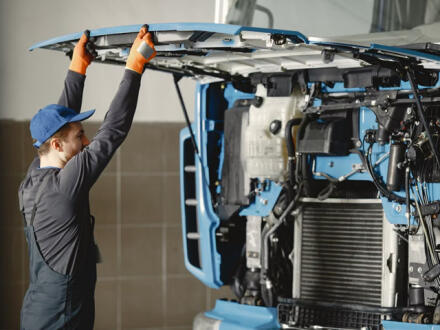
A diesel tech education can lead to solid pay, steady demand, and work that feels real at the end of the day. Students in Arizona who want to repair heavy trucks, farm equipment, construction machines, or fleet vehicles often look at community college certificates, associate degrees, or transfer-friendly technical programs. Then the price tag shows up.
That's where Arizona diesel engine mechanic scholarships can make a big difference. A single $1,500 scholarship can cover a term of books and tools at some programs. Stack three awards worth $2,000 each, and a student can cut $6,000 from training costs before loans even enter the picture.
The good news is that scholarship money for diesel-focused students does exist. Some awards are built for high school seniors. Some fit first-year students. Others come from employers, trade associations, engineering groups, and broader transportation funds that still apply to diesel careers.
This guide breaks down 7 practical scholarship paths Arizona students should look at first. It focuses on the routes most likely to help a student pay less for trade school or college, including community college funding, transfer options, employer support, and industry awards. It also points out where students often miss money simply because the scholarship title doesn't say "diesel" in big letters.
For students who want a shorter list and a smarter starting point, the goal here is simple: find the money, match it to the program, and apply early enough to actually win it.
1. Arizona Community College Diesel Technology Scholarships
Community college is often the most direct route into diesel training, and for many Arizona students, it is also the lowest-cost starting point. Tuition at a public two-year school is usually far below private trade school pricing, so even a modest award can have real weight.
A student in a diesel technology program with a $4,800 annual tuition bill could cut that amount by 31.25% with a $1,500 scholarship. Add a $900 tool grant, and the savings become even more noticeable.
Arizona students should start with three funding buckets:
- College foundation scholarships tied to one campus
- Career and technical education awards for transportation or applied technology
- Need-based aid layered on top of merit awards
Many community colleges post scholarship windows for one short stretch, sometimes 30 to 60 days. Missing that window is one of the most common mistakes.
Students can also widen the search with diesel-related listings on free scholarship platforms. For example, awards such as the Yanmar/SAE option can fit students whose programs connect to engines, equipment, and applied mechanical work.
Who Qualifies and What Programs Usually Count
Eligibility usually depends on the school, the scholarship donor, and the exact program code. A diesel student does not always need a scholarship with "diesel" in the title to qualify.
Programs that often count include:
- Diesel technology certificates
- Heavy equipment or truck maintenance programs
- Automotive technology tracks with diesel coursework
- Transportation technology or industrial maintenance pathways
Common requirements include:
- Minimum GPA, often 2.5 to 3.0
- Enrollment in at least 6 credit hours
- Arizona residency for some awards
- FAFSA or school aid form on file
- A short essay about career goals
A practical example helps. If a student enrolls in a two-semester diesel certificate, carries 9 credits, and keeps a 3.1 GPA, that student may qualify for both a campus foundation scholarship and a trade-specific award.
Some students also match with broader mechanical or engineering-adjacent funding, such as the ASME scholarship listings, especially when coursework includes engines, thermodynamics, fabrication, or system diagnostics.
2. Scholarships for Arizona Diesel Engine Mechanic High School Students
High school seniors have a timing advantage that older applicants do not. They can apply before graduation, before a full tuition bill lands, and before work hours start crowding out deadlines. That makes Arizona Diesel Engine Mechanic Scholarships for High School Students an especially strong category.
A student who applies to 12 scholarships with an average award of $1,000 does not need to win all 12. Winning just 2 awards still puts $2,000 toward tuition, books, safety boots, or a starter tool set.
The best high school scholarship sources usually include:
- School counseling offices
- Career and technical education teachers
- Local community college foundation pages
- State and national scholarship databases
- Employer or dealership outreach programs
Students in welding, auto, ag mechanics, FFA, SkillsUSA, or shop programs often have stronger applications than they think. A diesel scholarship committee likes proof that a student already enjoys turning wrenches, solving mechanical problems, or working with equipment.
That is why related awards matter too. A student planning a diesel path may still fit programs like the ASCO scholarship program when the application highlights hands-on technical goals.
How to Build a Strong Application Before Graduation
The strongest applications usually show three things: clear career direction, recent hands-on experience, and basic reliability. Scholarship committees read dozens or hundreds of essays. Specific details stand out.
A weak line says, "They like engines." A stronger line says, "They rebuilt a small diesel injector assembly in shop class, placed 2nd at a regional SkillsUSA event, and logged 86 volunteer hours helping maintain farm equipment."
Students should build an application folder with:
- A resume limited to 1 page
- An unofficial transcript
- 2 recommendation letters
- A list of awards, certifications, and shop projects
- A draft essay of 250 to 500 words
Good application material often includes concrete proof such as:
- GPA: 3.2
- Attendance: 97%
- Part-time work: 14 hours per week
- Shop projects completed: 6
Students who want to study a mechanical field can also search broader technical scholarships, including the ASABE engineering scholarship, if their goals connect to agricultural or equipment systems. That can be a smart fit for Arizona students who plan to work on tractors, harvest equipment, or diesel-powered ag machinery.
3. Arizona Diesel Engine Mechanic Scholarships for First-Year Students
First-year students miss money all the time because they assume scholarships are mostly for incoming freshmen or top seniors. That is not true. Arizona Diesel Engine Mechanic Scholarships for first-year students often appear after a student already starts classes and proves they can handle the work.
That matters because many diesel programs have an early filter. Some students enter with interest, but by the end of the first term, only the committed students are still there. Scholarship committees notice that.
A first-year student with 18 completed credits, a 3.0 GPA, and good shop attendance may look stronger than a brand-new applicant with no postsecondary record. A $2,500 renewal-style award can cover a large share of the second year of an associate program.
Students should look for funding tied to:
- Program persistence
- Academic improvement
- Department recommendations
- Tool and equipment support
- Second-semester or second-year applications
This is also the point where broader transportation scholarships can make sense. Railroad, equipment, and heavy mechanical systems scholarships sometimes fit diesel students if the coursework lines up. One example is the AREMA scholarship path, which can appeal to students interested in large mechanical systems and transportation infrastructure.
A solid first-year strategy looks simple:
- Finish the first term with clean grades.
- Ask one instructor for a recommendation before finals week.
- Keep a photo log of projects.
- Track every scholarship deadline in one sheet.
That last step sounds small, but it works. A student who tracks 10 deadlines is far more likely to submit 8 complete applications than someone relying on memory and sticky notes.
4. University And Transfer Scholarship Options for Diesel-Focused Students in Arizona
Not every diesel student stops at a certificate or associate degree. Some move into applied engineering, fleet management, operations, manufacturing, agricultural systems, or technology management after community college. That is where Arizona Diesel Engine Mechanic Scholarships for College and transfer funding become useful.
A transfer student who completes two lower-cost years at community college and then earns a bachelor's degree can reduce total education costs by thousands. If the first two years cost $5,000 per year and the next two cost $11,000 per year, the four-year total lands at $32,000 before aid. A $4,000 transfer scholarship cuts that total by 12.5%.
Transfer scholarships often reward students who:
- Finish an associate degree
- Maintain a 3.0 or higher GPA
- Enter an approved major
- Attend full time
- Show leadership or work experience
Diesel-focused students should not get stuck on job titles. A person who wants to diagnose heavy equipment today may want to supervise a fleet shop later. A transfer route can support that shift.
Some students also fit engineering-adjacent awards such as the Edward D. Hendrickson scholarship, especially if their studies connect to suspension systems, commercial vehicles, or heavy-duty transportation.
Arizona Diesel Engine Mechanic Scholarships for University Students
Arizona Diesel Engine Mechanic Scholarships for University students usually appear under broader labels. The scholarship may say mechanical engineering, vehicle systems, transportation, agricultural engineering, or industrial technology rather than diesel mechanic.
That does not mean diesel students should skip it.
A student studying mechanical systems with a focus on engines, emissions, hydraulics, or equipment diagnostics can often make a strong case. The key is to connect the coursework to a diesel-centered career path in the essay.
Strong university applications often show:
- 60 transfer credits completed
- A GPA between 3.0 and 3.5
- Paid work in a shop or fleet yard
- Leadership, such as training new student workers
- A direct career plan for graduation
Broader technical awards can help here too. The ASHRAE undergraduate scholarships may fit students whose studies involve engines, thermal systems, or energy use, even if the end goal remains diesel service or equipment support.
This route is less common than community college funding, but for the right student, it can open the door to service manager, field engineer, or equipment specialist roles with higher long-term earnings.
5. Employer-Sponsored Diesel Scholarships, Tool Grants, And Apprenticeship Funding
Employer money is one of the best scholarship paths because it often comes with more than cash. A dealership, fleet, equipment company, or repair group may offer tuition help, paid training hours, tools, uniforms, and a job path in one package.
For a diesel student, that can beat a stand-alone award. A $1,200 tool grant plus $3,000 tuition reimbursement plus a paid internship at 20 hours per week adds up fast.
Arizona students should look at employers such as:
- Truck dealerships
- Construction equipment dealers
- Municipal fleets
- Agricultural equipment companies
- Regional logistics and bus operations
Many employers prefer students already enrolled in diesel training. Others recruit high school seniors through career programs. A few national scholarships also line up with employer-style priorities, especially when the student wants to work with heavy-duty engines or mechanical systems. The Benny Bootle scholarship is one example of a broader technical award that may help students building that path.
The money is useful, but the real value often comes from reduced friction. A student with a funded tool set and a guaranteed interview starts ahead of the student still trying to borrow sockets from classmates.
What Companies Often Expect in Return
Employer-funded awards almost always come with conditions. That is not a bad thing. It just means students should read the fine print before accepting anything.
Common expectations include:
- Working for the company after graduation for 6 to 24 months
- Keeping a minimum GPA, often 2.5 or 3.0
- Staying enrolled full time
- Completing summer work or a paid internship
- Repaying some funds if the student quits early
A clear example: a company may offer $4,000 per year for tuition and tools, then ask for 12 months of employment after graduation. If the entry-level job pays $24 per hour, that commitment may be a fair trade.
Students should ask four direct questions before signing:
- Is the money a scholarship, reimbursement, or loan-for-service?
- What happens if grades dip below the minimum?
- Does the work commitment start right after graduation?
- Are tools and safety gear included in writing?
The strongest employer deal is not always the biggest number. The best package is usually the one that combines money, training, and a realistic job offer without trapping the student in vague terms.
6. Arizona Diesel Engine Mechanic Association Scholarships And Industry Foundation Awards
Association funding is easy to miss because students often search only for school names or the word "college." That leaves money on the table. Arizona Diesel Engine Mechanic Association Scholarships and industry foundation awards can be a strong match for students who plan to stay in transportation, equipment service, or heavy mechanical work.
Trade groups like to support the next generation because the labor shortage is real. If a region needs more diesel technicians, a scholarship is one way to build that pipeline.
A student who applies to 5 association awards worth $1,500 each is chasing $7,500 in possible aid. Even one win can cover books, specialty tools, testing fees, and part of tuition.
Association and foundation awards often favor students who show:
- Long-term interest in the trade
- Membership or family connection to the industry
- School or community involvement
- Instructor recommendations
- A clear plan for employment
Some related awards come from engineering, equipment, and transportation groups rather than diesel-only organizations. Those are still worth a look if the essay explains the connection between the scholarship mission and the student's work with engines, power systems, or commercial vehicles.
Where to Find Association-Based Opportunities
Students usually find association-based scholarships in three places: trade group websites, scholarship databases, and school department bulletin boards. That sounds basic, but it works.
A practical search list includes:
- State trucking or transportation associations
- Equipment dealer associations
- SAE-related scholarship listings
- Railroad and transit foundations
- Mechanical and manufacturing societies
Using a free scholarship platform can cut search time. Instead of scanning dozens of sites one by one, students can filter for technical and transportation awards through broader scholarship matches and then shortlist the ones that fit diesel goals.
Students should also ask one direct question at the program office: "Which outside groups gave money to diesel students last cycle?" That one sentence can surface opportunities that never show up in a search result.
The best applications in this category usually include specifics like engine rebuild hours, CDL interest, fleet internship experience, or a plan to work on Class 8 trucks, loaders, or farm machinery. Committees remember details. They forget generic essays fast.
7. General Skilled Trades And Transportation Scholarships Arizona Students Should Not Ignore
Some of the best funding for diesel students does not mention diesel at all. That sounds backward, but it is true. General skilled trades, transportation, mechanical systems, and engineering scholarships often have wider eligibility than students expect.
This matters because a diesel student can build a competitive profile across several lanes at once. Someone studying fuel systems, brakes, hydraulics, and diagnostics may qualify under trades, transportation, manufacturing, agricultural mechanics, or engineering technology.
A student who limits the search to the exact phrase "diesel mechanic scholarship" might find 8 decent leads. Expand the search to related fields, and that same student may find 25 to 40.
Good categories to search include:
- Skilled trades scholarships
- Transportation industry awards
- Mechanical or engineering technology funds
- Agricultural equipment and power system scholarships
- Workforce development grants
This wider net can help with Arizona Diesel Engine Mechanic Scholarships for College when the program title is broad or when a student is in a transfer track.
Students should pay close attention to wording like:
- "Related technical field"
- "Mechanical systems"
- "Transportation equipment"
- "Industrial maintenance"
- "Heavy vehicle technology"
A diesel student might also qualify for campus aid and general financial aid support. Many colleges encourage students to complete all aid steps early because grants, work-study, and scholarships can stack. Offices like financial aid and scholarships often explain this process clearly, even though each school sets its own rules.
The smart move is simple: apply narrow, then apply broad. Start with diesel-specific awards. Then move into transportation and skilled trades funds. That approach gives students more shots on goal without changing their career plan.
Arizona Diesel Engine Mechanic Scholarships: Frequently Asked Questions
What types of scholarship programs are available for diesel engine mechanic students in Arizona community colleges?
Arizona community college students can access scholarships from college foundations, career and technical education awards, and need-based aid. Eligible programs include diesel technology certificates, heavy equipment maintenance, and automotive technology with diesel coursework, often requiring a minimum GPA and Arizona residency.
How can high school students in Arizona prepare strong applications for diesel mechanic scholarships?
High school seniors should highlight clear career goals, hands-on experience like shop projects or SkillsUSA participation, maintain good GPA and attendance, and include recommendation letters along with a concise essay to stand out in the competitive scholarship process.
Are there scholarship opportunities for first-year diesel mechanic students in Arizona?
Yes, first-year students often qualify for scholarships based on academic persistence, program engagement, and recommendations. Students maintaining good grades and attendance after their first term can pursue renewal-style awards and employer-sponsored grants supporting tools and tuition.
What employer-sponsored funding options exist for diesel mechanic students in Arizona?
Employers such as truck dealerships, equipment dealers, and municipal fleets may offer scholarships, tool grants, and paid internships. These packages usually require service commitments post-graduation and maintaining academic progress, providing valuable work experience along with financial support.
Can Arizona diesel mechanic students receive scholarships if their programs do not explicitly mention 'diesel'?
Yes, many scholarships are available through broader skilled trades, transportation, mechanical systems, and engineering fields. Students should search awards with related keywords like 'heavy vehicle technology' or 'industrial maintenance' to increase funding opportunities beyond diesel-specific titles.
What transfer or university scholarship options are available for diesel-focused students in Arizona?
Students transferring after community college can access scholarships rewarding GPA, leadership, and full-time enrollment in majors related to mechanical engineering or industrial technology. Awards like the Edward D. Hendrickson Scholarship support those focusing on commercial vehicles and suspension systems.







