

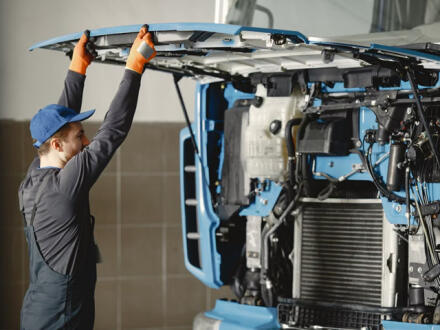
Training for a diesel career can cost less than a four-year degree, but it still adds up fast. Tuition, tools, safety gear, transportation, and certification fees can push a student's first-year bill into the $4,000 to $15,000 range, depending on the school and program length. For a family already watching every dollar, that number feels heavy.
The good news is that Alabama Diesel Engine Mechanic Scholarships are not limited to one type of student. High school seniors, first-year students, community college students, and even people taking a university route tied to fleet, industrial, or engineering work can all find funding paths. Some awards come from Alabama schools. Others come from employers, trade groups, engineering organizations, or state aid programs.
This guide breaks the search into 6 practical funding paths. It shows where diesel technology students can look first, how to tell if an award really fits heavy equipment or engine repair training, and what application details matter most. It also keeps the focus on Alabama students who want hands-on careers, not vague college advice.
For students who want a faster way to sort options, platforms such as StudentScholarships.org help group scholarships by field, school level, and location, which can cut hours off the search. But the biggest advantage still comes from knowing which bucket to search first. That's where this list helps.
1. State Workforce And Skilled Trades Scholarships In Alabama
State workforce aid is often the first place students should look. These programs may not always use the phrase diesel engine mechanic in the title, but they often cover career and technical education, workforce certificates, or high-demand trade training.
In Alabama, students should pay close attention to state grant programs, workforce development funds, and school-based aid tied to public two-year colleges. According to the National Center for Education Statistics, average published tuition and fees at public two-year schools are far lower than four-year rates, but the total bill still grows once books, fuel, and supplies are included. A diesel student who spends $1,200 on tools and protective gear can feel that gap right away.
A smart search starts with these buckets:
- Need-based aid, including federal Pell Grant eligibility through the FAFSA
- State-supported workforce grants offered through public colleges or training systems
- Institutional awards for career tech students
- Regional scholarships tied to residency, especially rural or county-based funding
Students with strong grades should also screen broad academic awards because those funds can still reduce total cost, even if the program itself is diesel. A student comparing statewide options may find academic aid in Alabama useful when grades are above the minimum cutoffs.
Another good tactic is to ask the financial aid office one direct question: "Can this award be used for diesel technology, heavy equipment, or industrial maintenance?" That single sentence saves time and avoids applying for money that only fits transfer degrees.
How To Tell Whether A Program Covers Diesel Technology Or Heavy Equipment Training
The program description matters more than the scholarship title. A fund may sound general, but the eligibility rules usually reveal whether diesel students qualify.
Students should scan for exact phrases such as:
- Career and technical education
- Applied technology
- Industrial systems
- Heavy equipment training
- Workforce credential
- Transportation technology
They should also verify the award works for the school's official program code. If a college lists diesel under "Automotive/Diesel Technology," "Medium/Heavy Truck Technology," or "Industrial Maintenance," that wording often helps match the scholarship to the major.
A practical example: one student may assume a workforce grant covers all shop programs, then learn it excludes short-term certificates under 16 credit hours. Another student may find the opposite: a grant that works best for short, job-ready training.
The cleanest checklist looks like this:
- Confirm the major or CIP/program code.
- Confirm the minimum credit hours.
- Confirm whether funds cover tuition only or also books and tools.
- Confirm whether the student must attend half-time or full-time.
That extra 15-minute review can prevent a missed award worth $1,500 to $4,000.
2. Alabama Diesel Engine Mechanic Scholarships For High School Students
Alabama Diesel Engine Mechanic Scholarships for High School Students often start with broad senior-year awards, not diesel-only awards. That surprises a lot of families. But many local scholarships can still be used at a community college or technical school that offers diesel training.
High school students should begin early in senior year and build a list in three groups:
- Local scholarships from counties, civic groups, employers, and foundations
- School-specific scholarships from the college they plan to attend
- Career-field scholarships tied to engineering, transportation, mechanics, or trades
This matters because local pools are often smaller. A county scholarship with 42 applicants gives better odds than a national award with 4,200 applicants.
Students in central parts of the state may find regional options through location-based scholarship listings. Students from military families may also fit programs like the Alabama American Legion award, depending on eligibility.
Strong shop experience helps, even when the award is not diesel-specific. A student who rebuilt a small engine, completed welding units, worked on a family truck, or logged hours in an agriculture mechanics class has a real story to tell. Admissions staff and scholarship readers remember concrete examples.
A good application essay does not say "they love engines." It says they spent 18 Saturdays helping replace injectors, learned torque specs, and figured out why a no-start problem came from fuel delivery rather than the battery.
Best Ways To Build A Strong Application Before Graduation
The best applications are built months before the deadline. Senior spring is too late to invent a record.
Students can strengthen their file with a few clear moves:
- Keep a resume with jobs, FFA, SkillsUSA, shop classes, volunteer hours, and certifications
- Ask for two recommendation letters from teachers, shop instructors, or employers who know their work habits
- Save proof of attendance, GPA, and transcripts in one folder
- Track any OSHA, CDL permit, welding, or equipment training already completed
Numbers help here too. If a student worked 12 hours a week at a farm equipment shop or maintained 27 school buses as part of a co-op shadow, that should go in the essay.
A simple application strategy works better than a dramatic one:
- Apply to 10 to 15 scholarships, not just 2 or 3
- Reuse a base essay, but change 25 to 30 percent for each prompt
- Submit at least 7 days early to avoid transcript or portal delays
Students interested in technical or engineering-adjacent options can also screen broader career-field awards such as mechanical engineering scholarships, especially if their diesel path may later expand into diagnostics, design, or equipment systems.
3. Alabama Diesel Engine Mechanic Scholarships For First-Year Students
Alabama Diesel Engine Mechanic Scholarships for first-year students matter because many students miss funding after high school. They assume the senior-year search is over. It isn't.
A first-year diesel student often has new advantages. They now have a college transcript, instructor references, a declared major, and sometimes lab performance data. That makes applications more specific and more believable.
Students should search in the first 6 to 10 weeks of school for:
- Scholarships restricted to enrolled students
- Awards for technical majors
- Department scholarships through the diesel, transportation, or industrial division
- Retention grants for students making satisfactory academic progress
This is especially useful because first-semester students can show immediate commitment. If they already passed a safety lab, completed 8 credit hours, and maintained a 3.2 GPA, that tells a better story than a general senior-year statement.
Some students also qualify for broader Alabama institutional aid if they attend a university-connected pathway. For those cases, in-state merit options can lower overall cost, even if diesel is part of a related applied or industrial track rather than a stand-alone major.
A common mistake is waiting until spring. By then, some departmental awards have already closed. Students should ask one staff member in the first month: "Which scholarships are only open after enrollment?" That question often uncovers money not listed on the public homepage.
What Freshmen Should Prepare Before Their First Semester Begins
Freshmen who prep early usually submit stronger applications with less stress. The paperwork is simple, but it needs to be organized.
Before classes start, they should gather:
- Final high school transcript
- FAFSA confirmation and Student Aid Index details
- Immunization and enrollment records
- A list of expected costs, including boots, gloves, meters, and tool sets
- A short personal statement focused on diesel goals
They should also build a budget. For example, a student may face:
- $3,960 in tuition and fees
- $1,140 in books and supplies
- $680 in tools
- $1,800 in fuel and commuting costs for the term
That itemized budget gives scholarship reviewers a sharper picture than "school is expensive."
First-year students should also line up one instructor or work supervisor for future recommendations. If they wait until the deadline week, the letter will probably be generic. If they ask after 30 days of class attendance, the recommender can mention punctuality, shop safety, and diagnostic skill.
For students sorting broad college options, a resource page focused on engineering-related scholarships can help uncover adjacent funding paths that still support technical training.
4. Alabama Diesel Engine Mechanic Scholarships For College Programs At Community And Technical Schools
For many students, this is the strongest route. Alabama Diesel Engine Mechanic Scholarships for College are often easiest to use at community and technical schools because diesel training usually lives there already. The program is direct, the timeline is shorter, and the cost is lower.
Alabama's public two-year system gives students access to career training that can lead to work in trucking fleets, heavy equipment repair, agriculture equipment service, and municipal maintenance. A certificate may take less time than an associate path, while still building employable skills fast.
Community and technical school funding usually comes from four sources:
- Federal aid such as Pell Grants
- School foundation scholarships
- Program-specific awards from transportation, construction, or industrial departments
- Employer reimbursement or sponsorships
Construction-related groups can also matter because diesel mechanics support fleet uptime on job sites. Students in heavy equipment or contractor-linked pathways may find Alabama AGC scholarship options relevant when their training connects to construction equipment service.
A clear cost comparison helps. One student might complete a short certificate for $5,200 total, while another chooses a longer associate option at $9,800 total with more electrical diagnostics and engine systems coursework. Neither is automatically better. The right choice depends on how quickly the student wants to start work and whether they want room to move into management or advanced troubleshooting later.
How To Compare Certificate, Associate Degree, And Career Training Funding
Students should compare the training path and the funding path at the same time. A cheaper program is not always the lowest-cost outcome if it offers fewer scholarships or no tool allowance.
Here is a simple comparison table:
| Program Type | Typical Length | Common Funding Fit | Best For |
|---|---|---|---|
| Certificate | 2 terms to 1 year | Pell, workforce grants, school emergency aid | Students who want fast entry into the field |
| Associate Degree | 2 years | Pell, merit aid, foundation scholarships, employer help | Students who want broader diagnostics and advancement options |
| Career Training / Nondegree | Short-term | Employer sponsorship, selective workforce funding | Working adults or students testing the field |
Students should compare these exact points:
- Does the award cover credit or noncredit training?
- Does it pay for tools and books, or tuition only?
- Can it be renewed after one term or one year?
- Does the program feed into ASE prep or employer partnerships?
The answer can swing value by $2,000 or more. A scholarship that includes tools may beat a larger tuition-only award.
5. Alabama Diesel Engine Mechanic Scholarships For University Pathways And Related Degrees
Not every diesel student wants a straight shop-floor route. Some aim for fleet management, engineering technology, equipment systems, industrial maintenance leadership, or agricultural machinery support. That is where Alabama Diesel Engine Mechanic Scholarships for University pathways can make sense.
A university route usually costs more, so students need a sharper funding plan. But it can also open different roles later, including service management, technical sales, operations supervision, and applied engineering support. The U.S. Bureau of Labor Statistics continues to show strong demand for technicians and mechanics who can work with complex electronic and diagnostic systems, which supports students who want deeper technical training.
University funding often includes:
- Merit scholarships tied to GPA and test scores
- Departmental scholarships in engineering, industrial technology, or agriculture
- Foundation aid linked to donor interests
- Transfer scholarships for students coming from two-year colleges
Students with top grades may find high-value options through awards such as the presidential academic scholarship. Others who fit engineering-related study can search adjacent awards like the BMW engineering scholarship when their long-term path includes vehicle systems, manufacturing, or technical design.
The key is honesty about the goal. If a student wants to diagnose Class 8 truck systems and get to work quickly, a community college diesel track may fit better. If they want to manage fleet maintenance for 120 vehicles across several counties, the university route may pay off later.
When A University Route Makes Sense For Diesel, Fleet, Or Industrial Careers
A university path makes sense when the student wants more than entry-level wrench time. It is often a better fit for students who enjoy diagnostics, data, systems thinking, and leadership.
Good signs include:
- They want to move into fleet operations or maintenance supervision
- They like electronics, hydraulics, and control systems as much as mechanical repair
- They may transfer from a two-year diesel program after proving the field fits
- They want long-term mobility across trucking, mining, agriculture, or manufacturing
A concrete example helps. Student A wants a paycheck in 12 months and likes hands-on repair all day. Student B wants to start in maintenance, then move into planning downtime, parts flow, labor scheduling, and shop performance. Student B may gain more from a university-linked industrial or engineering technology degree.
Students should ask each school for outcome data:
- Job placement rate
- Median starting pay
- Transfer pathways
- Employer partners
If a school can show 83 percent job placement within 6 months or a transfer path that saves 30 credit hours, that is useful evidence, not marketing fluff.
6. Alabama Diesel Engine Mechanic Association Scholarships And Industry-Sponsored Awards
This is where students often find the most career-specific money. Alabama Diesel Engine Mechanic Association Scholarships and industry-sponsored awards may come from contractors, truck dealers, equipment makers, trade groups, or parts suppliers that need skilled workers badly.
These awards are valuable for two reasons. First, they are often tied to real labor demand. Second, they can lead to internships, apprenticeships, tools, or direct job interviews.
Industry funding may come from:
- Dealership groups
- Construction associations
- Engineering foundations
- Manufacturer scholarship programs
- Local employers with service fleets
A student who wants heavy truck or contractor-equipment work should not ignore out-of-state or national trade awards if they can still be used in Alabama. For example, a listing such as the diesel scholarship application shows how trade groups often structure awards around technician demand, even when the sponsoring organization is not local.
Some adjacent engineering and diversity-focused awards also fit students whose diesel path overlaps with mechanical systems or industrial technology. One example is the Black American engineering scholarship, which may be relevant for students building a broader technical career plan.
Industry-backed awards can range from $1,000 tool stipends to $5,000 tuition packages. In some cases, the hidden value is bigger than the check. A paid internship at $18 per hour for 20 hours a week over 12 weeks equals $4,320 before taxes.
Where To Find Trade Associations, Employer Scholarships, And Dealership Support
Students should search beyond the school website. Many trade awards sit in places students do not expect, including association pages, workforce boards, local employers, and equipment dealers.
Good places to look include:
- State and regional contractor associations
- Truck, tractor, and heavy equipment dealership networks
- Public works and fleet maintenance employers
- Industry foundations in engineering, transportation, and manufacturing
- Scholarship databases that sort by trade, state, and program level
A strong search routine takes about 45 minutes per week:
- Search one new scholarship database filter.
- Email one diesel instructor or department chair.
- Call one local employer and ask whether they sponsor students.
- Track deadlines in one spreadsheet.
Students should also ask employers specific questions:
- Do they reimburse tuition after 90 days of work?
- Will they buy starter tools worth $600 to $1,500?
- Do they support ASE or manufacturer certifications?
- Is there a work-school schedule that keeps class hours intact?
That direct contact matters. A service manager may not advertise help online, but may still support one local student each year because the shop needs technicians now, not someday.
Alabama Diesel Engine Mechanic Scholarships FAQs
What types of scholarships are available for Alabama diesel engine mechanic students?
Alabama diesel engine mechanic students can access scholarships from state workforce programs, community colleges, technical schools, industry associations, and universities, including awards for high school seniors, first-year students, and technical or engineering majors.
How can high school students in Alabama qualify for diesel mechanic scholarships?
High school students should apply for local scholarships, school-specific awards, and career-field scholarships related to mechanics or trades. Strong shop experience and well-prepared applications, including resumes and recommendation letters, improve their chances.
Are there scholarships that cover tools and supplies for diesel technology students?
Yes, some Alabama scholarships cover tuition plus additional expenses like books and tools. Students should verify if awards include tool stipends or equipment costs to maximize financial support beyond tuition alone.
What funding options exist for Alabama students pursuing diesel mechanic training at community colleges?
Community and technical college students can access Pell Grants, school foundation scholarships, program-specific awards, and employer sponsorships designed to support short-term certificates or associate degrees in diesel and heavy equipment technology.
When is the best time for first-year diesel students in Alabama to apply for scholarships?
First-year students should search for scholarships within the first 6 to 10 weeks of enrollment, as many awards are restricted to enrolled students and department scholarships close early. Early preparation of transcripts and personal statements is essential.
Can university pathways provide scholarships for diesel-related careers in Alabama?
Yes, students pursuing related university degrees in industrial maintenance, engineering technology, or fleet management can find merit and departmental scholarships, including high-value awards that support long-term career goals beyond hands-on mechanic roles.







