

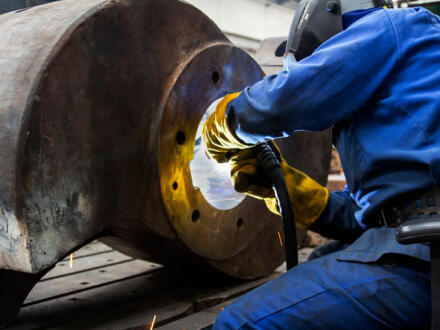
Paying for training in welding, drafting, manufacturing, or construction management can feel expensive fast. Tuition, tools, steel-toe boots, books, lab fees, and fuel for the commute can stack up long before a student lands that first shop job.
That's why Mississippi steel fabricating scholarships matter. They can reduce out-of-pocket costs, shrink loan balances, and make it easier for students to stay focused on class instead of juggling extra shifts. For students who want to work with structural steel, metal fabrication, welding systems, or industrial engineering, there isn't just one route to funding. There are several.
Some awards come straight from steel industry groups. Others come from community colleges, local foundations, employers, and statewide scholarship programs that fit fabrication-related study. A student may piece together a package from three or four smaller sources and cover far more than expected.
This guide breaks down 11 practical scholarship paths for high school students, first-year students, community college learners, and university students in Mississippi. It also covers what makes an application stronger, what eligibility rules show up most often, and how students can combine aid without wasting time on dead ends.
For anyone searching for Mississippi Steel Fabricating Scholarships for High School Students, Mississippi Steel Fabricating Scholarships for College, or Mississippi Steel Fabricating Scholarships for University, these are the routes worth starting with.
1. Mississippi Steel Fabricating Association Scholarships To Check First
Industry-group awards should usually go at the top of the list. They're the closest match to a fabrication career path, so they often ask for exactly what these students already have: shop classes, welding experience, CAD work, safety training, or interest in metals.
A strong first stop is Mississippi Steel Fabricating Association Scholarships and similar steel-industry programs with national reach. Some AIST-related awards, for example, can reach $3,000 for a one-year scholarship, and selected intern-focused programs support students preparing for hands-on steel careers.
Useful paths include:
- steel scholarship options tied to broader steel studies
- steel intern funding for students aiming at plant or fabrication experience
- Memorial awards tied to engineering, operations, or production careers
These awards often favor students who can show a direct line between school and work. A student who says, "They completed 180 hours of welding lab work and plan to move into structural fabrication," sounds stronger than a student who says, "They like building things."
Before applying, students should check four details:
- Major or training area
- Minimum GPA, often around 2.5 to 3.0
- Enrollment status, such as full-time or part-time
- Career interest in steel or manufacturing
This route is usually the cleanest fit for students who want scholarship money that actually matches their trade plan.
2. Mississippi Steel Fabricating Scholarships For High School Students Planning Ahead
The best time to start is earlier than most students think. A high school junior who begins a scholarship file in the fall often has a huge advantage over a senior who starts two nights before the deadline.
Mississippi Steel Fabricating Scholarships for High School Students often reward preparation. That means dual-credit classes, CTE participation, SkillsUSA activity, welding certificates, and teacher recommendations can all matter. Even a part-time job in a machine shop or farm repair business helps tell a clear story.
A useful example is a student who logs 96 hours in a school welding lab, competes in a fabrication contest, and keeps a 3.2 GPA. That student already has three proof points before senior spring starts.
High school students should build these materials early:
- A one-page resume with classes, shop projects, and work hours
- A list of awards, even small ones like perfect attendance in CTE
- Contact details for 2 to 3 teachers or supervisors
- A short personal statement about their career goal
Students searching wider scholarship boards may also find Mississippi-based awards that can pair with fabrication funding. A local example is the high school scholarship listing, which can help students widen the financial base while they pursue industry-specific aid.
Planning ahead matters because many scholarships are lost for simple reasons: no transcript, weak essay, or missed deadline by 24 hours.
3. First-Year Student Scholarships For Future Steel Fabrication Majors
First-year students sit in a sweet spot. They've already chosen a program, but they still qualify for many "new student" awards before campus aid gets thinner in later terms.
Mississippi Steel Fabricating Scholarships for first-year students usually work best for students entering welding technology, machine tool technology, drafting, industrial maintenance, civil engineering technology, or construction-related majors. These students should look for scholarship language that mentions manufacturing, metals, infrastructure, or engineering support.
A practical move is to combine broad industry awards with a first-year campus package. The average annual published tuition and fees at public in-state institutions can run into the thousands of dollars, so even $1,000 to $3,000 can cover books, PPE, and a chunk of tuition.
Good first-year strategies include:
- Apply before orientation, not after classes start
- Reuse one core essay and customize 3 to 5 lines for each award
- Ask a welding instructor or CTE teacher for a recommendation with specific shop examples
- Mention measurable outcomes, like a 5G pipe weld pass or a CAD portfolio with 12 drawings
Students exploring industry listings can compare options like the engineering link program, which connects well with students moving toward steel design and fabrication systems.
First-year applicants win when they sound committed. Scholarship readers want proof that the student won't drift away from the major after one semester.
4. Mississippi Steel Fabricating Scholarships For Community College And Technical Programs
Community colleges are one of the strongest paths into fabrication work in Mississippi. They usually cost less, move faster, and connect students to employer needs in welding, industrial maintenance, drafting, and construction trades.
That makes Mississippi Steel Fabricating Scholarships for College especially valuable at the two-year level. Programs at schools such as East Mississippi Community College and Mississippi Gulf Coast Community College often line up with the kind of training steel fabricators actually hire for: blueprint reading, FCAW or SMAW welding, layout, and shop safety.
Concrete costs matter here. A student may spend $800 on tools, $150 on boots, $90 on gloves and jackets, and several hundred more on books and fees. A small scholarship can wipe out those program extras.
Students in technical programs should target:
- Departmental scholarships from career-tech divisions
- Foundation awards at the college level
- Local employer training support
- Industry scholarships that accept certificate or associate students
This path works well for students who want to enter the workforce in 12 to 24 months. It also helps adults returning to school. A laid-off worker with fabrication interest may find a short-term welding credential more realistic than a four-year route.
And because many technical programs have smaller applicant pools than general academic awards, the odds can be better than students expect.
5. Mississippi Steel Fabricating Scholarships For College Students Already Enrolled
Students already in college shouldn't assume most scholarship money is gone. In fact, enrolled students often have stronger applications because they can point to real college grades, instructor feedback, and lab performance.
Mississippi Steel Fabricating Scholarships for College can fit second-semester students, rising sophomores, and transfer students who have already proved they can handle the work. A GPA of 3.0, attendance in a welding lab, and one recommendation from a fabrication instructor often tell a more credible story than a high school transcript alone.
This is also the point where specialty awards become easier to target. For example, a student interested in plant safety or steel operations may fit opportunities like the safety steel award, especially if they can describe a lab safety routine or OSHA-related coursework.
Students already enrolled should update these items every term:
- Resume with current credits completed
- Transcript after each semester
- Portfolio photos from projects
- Faculty contacts who can write detailed references
A good essay here sounds concrete. "They cut scrap waste by 18% during a class project by redesigning the layout sequence" is memorable. "They work hard" is not.
Enrolled students also have one more edge: they know if the major is truly the right fit. That confidence shows up on the page.
6. Mississippi Steel Fabricating Scholarships For University Engineering And Construction Pathways
Not every future steel fabricator plans to stay on the shop floor. Some students want to move into structural engineering, construction management, manufacturing engineering, or steel design. That's where Mississippi Steel Fabricating Scholarships for University can fit.
University students should search for funding tied to engineering, infrastructure, and construction systems. The steel industry needs people who can design connections, review load paths, estimate jobs, and coordinate fabrication with field installation. According to the U.S. Bureau of Labor Statistics, civil engineers have median annual pay of $99,590, which helps explain why these programs attract serious scholarship support.
Relevant scholarship paths can include memorial and engineering awards such as the bridge company scholarship. That kind of award fits students interested in heavy steel, transportation structures, and fabrication tied to bridge work.
University applicants should show:
- Math and physics readiness
- Design software skills such as AutoCAD or SolidWorks
- Interest in structural steel, construction, or manufacturing
- Internship plans with fabricators, erectors, or plants
A strong example might mention a statics course, a 3.4 GPA, and a capstone model that used 24 bolted connections. Specific details help committees picture the student in the field.
For students who want to move from steel fabrication into engineering leadership, this path can open bigger award amounts and stronger career networks.
7. Workforce Development Grants Linked To Welding, Drafting, And Fabrication Training
Not all aid comes through classic scholarships. Workforce grants can be just as useful, especially for short-term training, certificates, and adults changing careers.
These grants often support high-demand fields where employers need workers now. Welding, CNC operation, drafting, and industrial maintenance regularly show up because they feed construction, shipbuilding, utilities, and manufacturing. In many cases, grant money can cover tuition, fees, books, or tools for programs that run 16 weeks, 9 months, or 1 year.
Schools such as Northwest Mississippi Community College often highlight career-tech options that line up with regional workforce demand. Students may also find help through state workforce offices, community college aid departments, and local training partnerships.
This route works especially well for:
- Recent high school graduates who want fast entry into work
- Adults who need retraining after a layoff
- Part-time students who do not fit traditional scholarship patterns
- Students who need tool or equipment help right away
A concrete example: a welding student may get tuition support plus $600 in required gear assistance, which can be the difference between enrolling and postponing.
The key is to ask one direct question at every school office: "What workforce funding supports fabrication-related training here?" That single question often surfaces aid that never appears in a public scholarship search.
8. Employer-Sponsored Awards From Mississippi Manufacturers And Fabricators
Some of the best funding never comes from a big public application pool. It comes from employers who need skilled workers and would rather help train them than struggle to hire later.
Mississippi manufacturers, machine shops, steel service centers, and fabricators may offer tuition reimbursement, sponsored scholarships, tool stipends, or paid internships. A paid internship alone can be worth $4,000 to $8,000 across a term, depending on hours and wage rate. That counts as real education support, even if it isn't labeled a scholarship.
This path is strongest for students who already have local ties. Maybe they worked summers in a fab shop, know a supervisor through family, or met recruiters through a college welding fair.
Students should ask employers about:
- Tuition help after 1 semester of employment
- Paid training tied to welding certifications
- Scholarship contests for employees' children
- Internship-to-hire programs in fabrication or drafting
A smart move is to track employer-backed awards alongside open scholarships. For students using a free matching platform, a search hub like StudentScholarships.org can shorten the list-building process and surface niche options faster.
Employer awards are practical. The company already knows what skills it needs, and the student can explain exactly how the program leads to that job. That makes the application feel grounded, not theoretical.
9. Local Foundation And Regional Scholarships That Pair Well With Industry Awards
Students often focus so hard on industry scholarships that they miss easier local money. That's a mistake. Regional foundations, county awards, and community funds can stack neatly with steel-related aid.
The best approach is pairing one industry award with 2 to 4 local scholarships. A student who wins $2,500 from a steel group and $1,000 from a county foundation suddenly has real coverage for tuition and tools.
Mississippi students should look at local giving networks such as the Community Foundation for Mississippi or the Community Foundation of Northwest Mississippi, depending on where they live. These organizations often connect donors with scholarship funds for region-specific students, first-generation learners, or technical education paths.
Students can also widen the net with Mississippi-specific listings such as the Mississippi service scholarship. It may not be steel-specific, but it can still reduce the bill.
Local awards often ask for community ties, volunteer hours, or residency proof. That means a student with 40 hours of service, strong attendance, and a clear career plan may stand out even without a perfect GPA.
These scholarships pair well with industry awards because they usually fill different parts of the cost gap. One may cover tuition. Another may cover transportation, books, or housing.
10. Application Materials That Make Steel Fabricating Scholarship Essays Stronger
A strong application usually wins before the essay even starts. Good materials make the reader trust the story.
For Mississippi steel fabricating scholarships, the best applications show proof. That means numbers, project details, and a direct career goal. An essay becomes stronger when it says the student completed 3 fabrication projects, passed a welding performance test, or worked 22 hours per week while taking shop classes.
The strongest materials usually include:
- A focused resume with tools, processes, and work hours
- A transcript that shows math, CTE, drafting, or welding classes
- One sharp recommendation from an instructor who has seen the student work
- Project evidence, such as photos, sketches, or portfolio samples
Essay details that help:
- Name the program and why it fits
- Explain the exact job goal, such as fitter, welder, estimator, or structural engineer
- Show one obstacle, like paying for $1,200 in program costs
- End with a concrete plan after graduation
Students applying for more advanced awards may find options like the engineering memorial award relevant when their essay leans toward technical leadership.
The weak version says, "They want to succeed." The strong version says, "They want to complete a welding technology credential, earn AWS certifications, and move into bridge fabrication within 18 months."
11. Common Eligibility Requirements To Review Before You Apply
A lot of students waste hours on scholarships they were never eligible for. A 15-minute review of the rules can save that frustration.
Most Mississippi steel fabricating scholarship paths use a familiar checklist. The exact rules change, but these requirements show up again and again:
- Residency, such as Mississippi residence or attendance at a Mississippi school
- Enrollment status, often half-time or full-time
- Program fit, including welding, drafting, manufacturing, engineering, or construction
- Minimum GPA, commonly 2.5, 3.0, or higher
- Transcript and recommendation letters
- Deadline compliance, sometimes down to the minute
Students should also watch for less obvious rules. Some awards are only for dependents of employees. Some require internship interest. Others exclude graduate students or require U.S. citizenship or specific visa status.
A practical screening method is to make a simple list with five columns: award name, deadline, GPA, major, and documents. A student comparing 12 scholarships this way can cut wasted effort fast.
How To Combine Scholarships, Grants, And School Aid
Stacking aid is where many students make the biggest gains. Federal Pell Grant awards can reach several thousand dollars for eligible students, and school aid can fill part of the remaining gap. Add one industry scholarship and one local scholarship, and the numbers can change quickly.
A workable mix might look like this:
- Pell Grant support
- One campus foundation award
- One steel industry scholarship
- One local or regional Mississippi scholarship
- Employer tuition help or a paid internship
Students should always ask the financial aid office whether outside awards reduce other aid. Sometimes they do. Sometimes they simply replace loans, which is the better result.
The goal is simple: build the package, line by line, until tuition, fees, tools, and transport are covered as fully as possible.
Frequently Asked Questions about Mississippi Steel Fabricating Scholarships
What are Mississippi Steel Fabricating Association Scholarships and who should apply?
These scholarships are industry-group awards for students pursuing steel fabrication careers. Ideal applicants have welding experience, CAD skills, or safety training, maintain a 2.5-3.0 GPA, and show strong interest in manufacturing or steel work. [Scholarship Application - AIST Steel Scholarships] offers relevant opportunities.
How can high school students prepare early for steel fabricating scholarships in Mississippi?
High school juniors should build a resume with shop classes, welding hours, SkillsUSA involvement, and teacher recommendations. Dual-credit and CTE courses, plus shop work, strengthen applications for scholarships like the [MML High School Scholarship]. Early preparation increases chances of winning aid.
Which scholarships are available for community college students pursuing steel fabrication in Mississippi?
Community college students can access departmental, foundation, and local employer-sponsored scholarships for welding, drafting, and fabrication. Schools like [East Mississippi Community College] align programs with industry needs, making scholarship awards helpful for covering tools and tuition.
What options exist for university students interested in steel engineering or construction management scholarships in Mississippi?
University students focusing on structural engineering or construction management can find scholarships tied to manufacturing and infrastructure, such as the [Matsuo Bridge Company Scholarship]. Candidates should showcase math skills, CAD experience, and internship plans related to steel fabrication careers.
Are there workforce development grants supporting welding and fabrication training in Mississippi?
Yes, workforce grants provide funding for short-term welding and drafting certificates. Institutions like [Northwest Mississippi Community College] offer career-tech aid covering tuition and tools, supporting recent graduates or adults retraining for fabrication roles in high-demand industries.
How can students combine multiple scholarships and grants for steel fabricating education in Mississippi?
Students should stack federal Pell Grants, campus awards, steel industry scholarships like the [Don B. Daily Safety Steel Intern Scholarship], local foundation aid from the [Community Foundation for Mississippi], and employer tuition support to cover tuition, tools, and fees effectively without wasting eligibility.









